
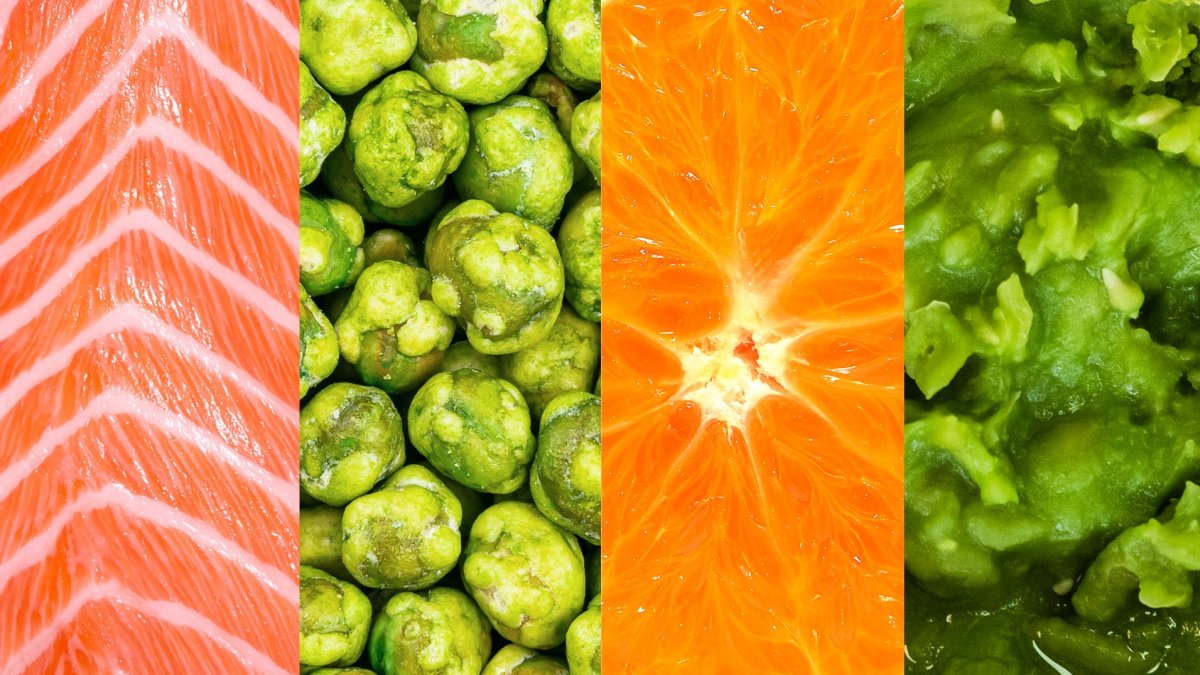
It’s probably no surprise that the listerine-coloured soft drinks, radioactive sweets and rainbow-hued breakfast cereals that we see on supermarket shelves are artificially coloured. But while these are easy culprits to spot, there are other, deceptively natural looking foods whose appearances have also been enhanced through dyes or chemical processing. Many common and seemingly healthy foods are injected, sprayed, or formulated with artificial dyes and chemicals to make them look fresher, riper, or more appetising, says food scientist and founder of ATM Food Innovations, Dr Adrian Massey. “There are several ways manufacturers influence the appearance of food, including adding colourings, controlling pigments through animal feed, using processing techniques that preserve or change natural colours, and adding ingredients that prevent discolouration”. Shorts Human beings are visual creatures, so appearance is one of the first things we notice about food, says Kate Arnold, a nutrition consultant specialising in gut health. No one wants to eat a bowl of white, monotone cereal. Manufacturers understand this well and will use the psychology of colour to signpost quality, create consistency in batches of food, and exaggerate different flavours, all to influence sales. This isn’t largely a problem, but the issue is “when appearance can become a substitute for nutritional judgement.” Not all dyes are bad, urges the experts, but some are better than others. Food colourings can be natural or synthetic, and those authorised as food additives in the UK are subject to safety assessments and conditions of use, says Arnold. “Natural pigments include beetroot red, paprika extract, beta-carotene and annatto. However, natural doesn’t automatically mean safer. These ingredients may undergo extraction, processing and concentration.” There are legitimate concerns surrounding certain synthetic colours, particularly in relation to evidence suggesting behavioural effects in children. Six colours require a specific warning on relevant UK food labels concerning possible adverse effects on children’s activity and attention: Tartrazine (E102), Quinoline Yellow (E104), Sunset Yellow (E110), Carmoisine (E122), Ponceau 4R (E124), Allura Red (E129). If a food needs colour adding, it’s usually been heavily processed. Research has associated diets high in ultra-processed foods with increased risks of obesity, type 2 diabetes and cardiovascular disease. “However, it’s still unclear how much of this association is attributable to processing itself, rather than the fact that many ultra-processed products are also high in calories, salt, sugar or saturated fat and low in fibre,” says Arnold. Here, experts flag the foods that are sometimes dyed and tampered with, and what it means for health. Salmon Farmed salmon is given dyed feed to ensure it has an orangey-pink colour (Photo: Thai Liang Lim/Getty Images/iStockphoto) Salmon has long been revered for being a nutritional powerhouse, and consumers associate deeper pink salmon with better quality, even though colour alone doesn’t establish freshness, nutritional quality or safety. “Wild salmon’s pink hue comes naturally from eating krill and shrimp, which contain astaxanthin, a pink pigment that also serves as a powerful antioxidant,” says BANT-registered nutritional therapist Becki Hawkins. “Farmed salmon would be greyish without it, so it’s added to their feed. The feed is usually made synthetically, and farmers can even choose the shade from a colour chart.” Salmon is still one of the best sources of omega-3s and a healthy source of protein. Wild salmon can have a slightly better nutritional profile, so look for wild-caught fish, such as Alaskan Sockeye, Pink, or Keta if you’re concerned. Imitation crab (seafood sticks) Imitation crab is exactly that: imitation. Despite its appearance, it’s not usually made from crab, but surimi, a processed white-fish protein paste, often using fish such as Alaska pollock or hake, and the familiar red or orange exterior is deliberately created to resemble cooked crab. “Manufacturers can use colourings such as paprika extract and carmine (E120), the red pigment extracted from cochineal insects, which is generally considered safe but can trigger anaphylactic shock in sensitive individuals,” says Massey. The key thing to keep in mind is that they are absolutely ultra-processed foods that lack the nutritional value of real seafood. Ham and processed meats The curing salts that give processed meat its colour have been linked to bowel cancer (Photo: Tang Ming Tung/Getty Images/Digital Vision) If there is one category to be wary of and cut back on, all the experts say, it is processed meats. “Cooked pork is naturally greyish brown, and ham stays pink thanks to curing salts called nitrites and nitrates,” says Hawkins. “They help stop harmful bacteria, but they can form compounds linked to bowel cancer, and the World Health Organisation classifies processed meat as a known carcinogen.” Hawkins isn’t saying we should never have a bacon sandwich, but along with ham, salami, chorizo and hot dogs, “they shouldn’t be everyday foods”. Wasabi peas The striking green appearance of your wasabi peas can often come from added colourings. This isn’t always the case but it’s good to take a look at the label. “For example, certain products use a combination of tartrazine (E102), a yellow colouring, and Brilliant Blue (E133) to create the familiar bright green appearance,” says Massey. “Interestingly, E102 is one of the six colourings associated with potential effects on children’s activity and attention.” From a nutritional perspective, Arnold says we should be more interested in the salt content, the coating ingredients and the portion size than simply the fact that the peas are green. Citrus fruit Nutritional therapist Becki Hawkins recommends buying unwaxed citrus fruit and giving it a wash if you are going to use the zest (Photo: Oscar Wong/Getty Images/Moment RF) “Oranges and other citrus fruits can sometimes be internally mature while their peel still contains green chlorophyll,” says Massey. So after harvesting, to get that vibrant colour to come out, the fruit can be exposed to “carefully controlled concentrations of ethylene gas, a naturally occurring plant hormone, in specialised treatment rooms.” This process is called “degreening”, rather than an artificial colouring being sprayed onto the fruit, so it isn’t one to worry about. “I would be cautious about assuming that every uniformly orange fruit has been artificially dyed,” says Arnold. “The UK has specific rules governing which colours may be used in foods.” But Hawkins says that it’s more important to look out for artificial waxes, especially if using the zest for baking or cooking. “Lots of lemons and oranges are waxed, often with a fungicide, to keep them shiny and help them last,” she says. “If I’m using the zest, I always buy it unwaxed and give it a good scrub.” Dried fruit, glacé cherries, and flavoured yoghurt Bright orange dried apricots or fruit have usually been treated with sulphur dioxide to stop them browning, say the experts. “You can buy ‘unsulphured’, untreated ones but they’re not as pretty on the eye,” says Hawkins. “They’re dark brown and sticky. I personally think they taste better. Glacé and cocktail cherries in the UK are one of the few foods still allowed a red dye called erythrosine (E127). The USA has moved this to ‘banned from food’.” So shoppers should keep an eye out on the label. “Strawberry-flavoured products are not necessarily as intensely pink or red as consumers expect,” says Massey. “Depending on the product and what is permitted, manufacturers may use fruit ingredients, concentrates or added colourings to create a stronger or more consistent colour.” Mushy peas Next time you’re craving fish and chips, be conscious of the sides that might go with them. Whether you buy them tinned or from the chippy, dried peas lose their colour in processing, reminds Hawkins. “That vivid green often comes from tartrazine (E102) and brilliant blue (E133). Tartrazine carries a warning for children’s behaviour, so check the label.” Should we fear food dyes? Ultimately, expert advice is to read labels intelligently rather than obsessively. “We need to understand what we are buying, not become frightened of every unfamiliar ingredient,” says Arnold. She encourages consumers to become more comfortable with natural variation. “A slightly irregular apple, a less vividly coloured orange or a brown dried apricot is not necessarily nutritionally inferior to a more attractive equivalent.” As for shopping exclusively in expensive health-food stores or buying everything organic, there is simply no need. “My practical advice is to compare ingredient lists, check actual fruit content, look at salt and sugar levels, and choose minimally processed foods where practical. When it comes to purchasing fish and meat, buy from reputable retailers, and pay attention to storage and use-by dates.” “As a nutritionist, I am far more concerned about the overall quality of our diet than the occasional food colouring,” says Arnold. “But consumers absolutely deserve to know when appearance has been engineered to influence what they buy. A balanced diet rich in vegetables, fruit, legumes, wholegrains, nuts and good-quality protein will have a far greater impact on long-term health than worrying about the occasional coloured food.”
The seven surprising foods dyed for colour – and when to worry
Full Article
Original Source
Read the full article at Inews →KhanList aggregates and links to publicly available news content. We do not host full articles from third-party sources. Always verify important information with original sources.