
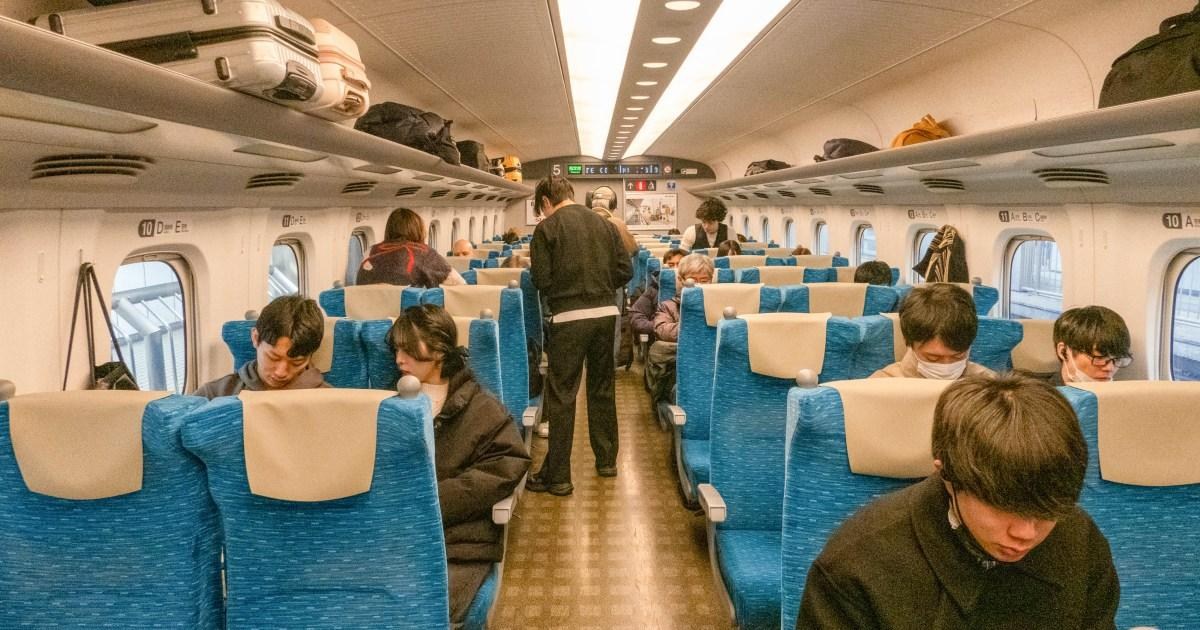
Japan’s iconic bullet train serves upwards of 400,000 passengers a day (Picture: Getty Images) A bum bag and a furrowed brow aren’t the only things that single you out as a tourist. In Japan, a famously polite and rule-following nation, visitors are outing themselves with public transport etiquette. The Metro Travel desk has previously reported on Japanese locals getting fed up of travellers ‘speaking loudly on trains, buses, and subways’. A study, commissioned by the Japan Private Railway Association, showed 69% of the 5,202 people surveyed said loud behaviour on trains bothers them in a major way. But previously, Tokyo resident Chieki Ikemoto told us about another frustrating habit — one she wishes visitors would educate themselves about. The Shinkansen connects cities across the country (Picture: Artur Widak/NurPhoto via Getty Images) ‘One thing I’d love travellers to know about is the “reserved seat with oversized baggage area” policy,’ she says. ‘Long-term travellers usually have a lot of luggage. To keep the aisles clear, I’d highly recommend they book the seats at the very back of the car where there’s extra space for large bags.’ The policy Chieki is referring to mainly applies to the routes available on bullet train lines, or Shinkansen. What is your opinion on the reserved seat with oversized baggage area policy in Japan? It's a great idea to keep the aisles clear.Check It seems complicated for tourists to navigate.Check I think luggage forwarding services are a better option.Check I don't have a strong opinion on this.Check Sign up to The Getaway Expert, your exclusive seven-day guide to travelling with confidence from Metro's travel editor, Alice Murphy. A must-do for visitors, Japan’s iconic high-speed trains serve around 432,000 passengers a day. Ask Metro Use AI to go deeper into the stories you care about – powered by Metro and trusted publications. It’s a novel and efficient way to travel. The Tokyo to Osaka bullet train journey, for example, takes just two hours, compared to between 8 and 10 hours on local trains. However, on TikTok, videos show tourists struggling with luggage squashed against their legs or blocking the aisle. Seasoned travellers have called it a ‘rookie mistake’, while one regular bullet train user said: ‘Look around you and can see most of those people with big luggage are foreigners.’ And, unsurprisingly, this mishap tends to be inconvenient for everyone, with 42% of the survey’s respondents saying they have low tolerance for tourists carrying oversized suitcases and bags. Japanetic, a Japanese etiquette blog written by resident Niko Mezuro, explains that public transportation in Japan operates on a culture of silence and mutual respect. ‘This unwritten rule stems from the Japanese concept of not bothering others (meiwaku wo kakenai) and maintaining harmony in shared spaces’. How do the oversized baggage tickets work? These particular tickets are marketed for anyone travelling with luggage with a total of three dimensions between 161 and 250 cm. They’re the same price as reserved seats in ordinary cars, but they are in pretty high demand. The amount of tickets available vary, with an average of just five seats up for grab per train. They can be purchased either online or from a JR station ticket office. Located behind the back row of seats, there should be signage on the floor which shows where the ‘reserved seat with oversized baggage area’ ticket holders can place their luggage. Tickets can be purchased online or from a JR station ticket office (Picture: RICHARD A. BROOKS/AFP via Getty Images) However, due to the rather complicated baggage system on-board the Shinkansen line trains, it can sometimes become confusing as to who is entitled to use this space. To avoid any awkwardness, make sure to check your ticket (which will say ‘Your reservation is seats with an oversized baggage area’). If you haven’t been able to make a reservation, you are still allowed to store luggage in baggage racks, footwell spaces, and deck baggage storage areas. The trick that takes the stress out of seeing Japan Navigating Japan can be a real headscratcher. Public transport is excellent, efficient and exciting, but can be tricky to work out, whether that’s airport transfers, the mono rail or local trains, longer city-to-city journeys or Shinkansen, the famous bullet train. You can spend hours on travel blogs or ChatGPT, digging out the best approach to passes and pricing. And chances are, you’ll still get it wrong. Now Omio, a Berlin-based travel comparison and booking website, promises to remove the confusion. The German platform allows travellers to search, compare and book tickets for the country’s entire transport network, all in one place. It covers all major international gateways and key regional hubs, meaning you can book your trains and coaches before you land. Simply choose how you’d like to travel, either with point-to-point tickets (best for fixed itineraries) or the Japan Rail Pass, which is better for flexible exploring. And get going. This article was originally published on May 5, 2026. Do you have a story you’d like to share? Get in touch by emailing MetroLifestyleTeam@metro.co.uk Our Top Shopping Picks The skincare formula that finally took the guesswork out of my routine Families can save up to 20% on summer 2027 holidays in Club Med's four-day sale Cold mornings are coming and this is the dressing gown I want to live in Most of us aren't getting enough fibre – this easy supplement could change that My honest review of the new UKLash Lash Lift Gel Arrow MORE: The 3-word phrase all parents need to know, as kids filmed ‘playing chicken’ on train tracks Arrow MORE: Why it’s essential to pack a tennis ball in your carry-on luggage Arrow MORE: Eurostar passengers can now fall asleep in London and wake up in Germany The Getaway Expert Your exclusive seven-day guide to travelling with confidence from Metro's resident travel expert, Alice Murphy.
The ‘rookie’ public transport habit that shows Japanese locals you’re a tourist
Full Article
Original Source
Read the full article at Metro →KhanList aggregates and links to publicly available news content. We do not host full articles from third-party sources. Always verify important information with original sources.