
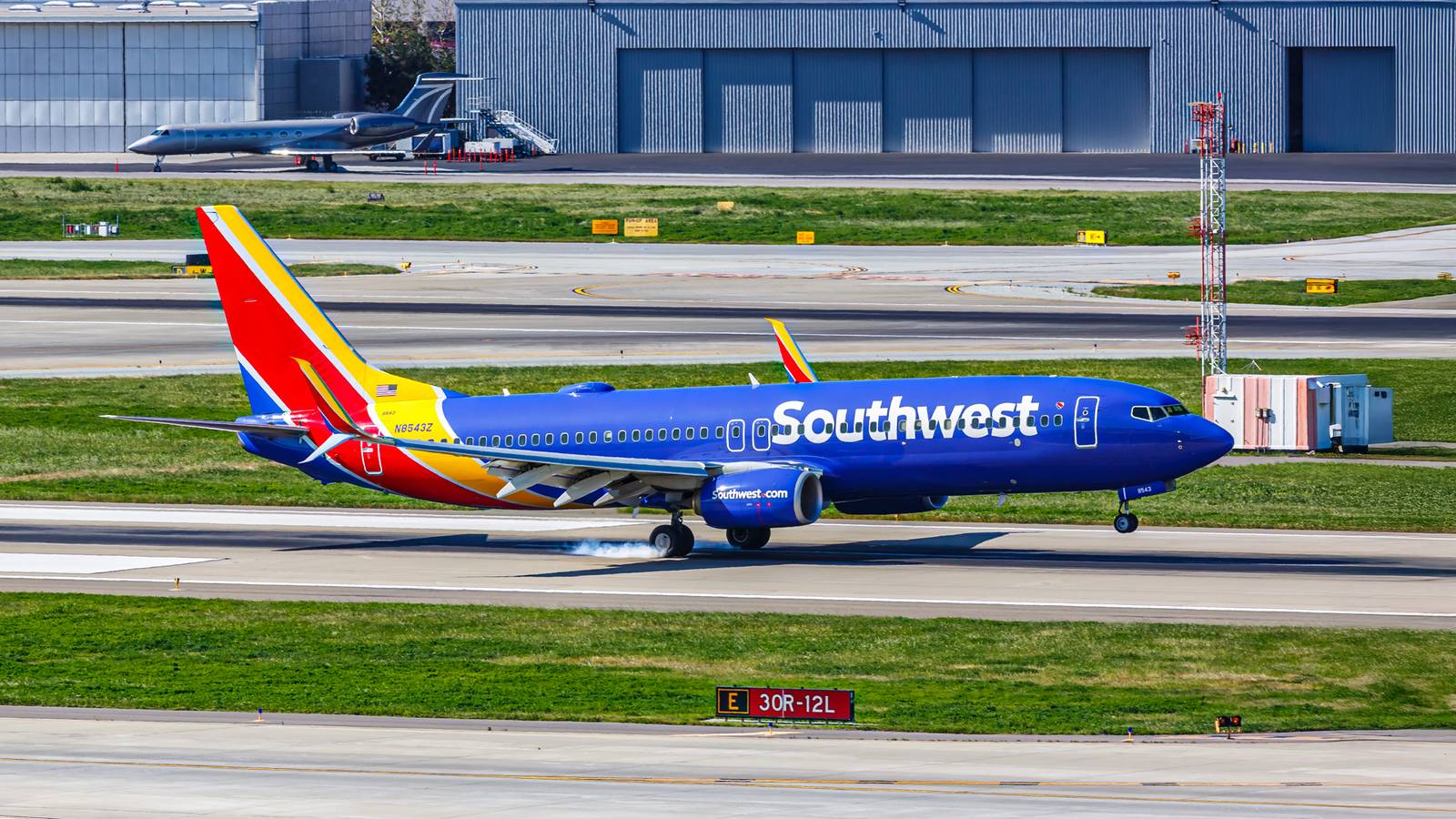
Published Oct 17, 2026, 11:00 AM EDT Daniel comes to Simple Flying with a business focused approach to the aviation world. Daniel enjoys analyzing strategy and how companies move against each other to gain a step ahead in the skies. Besides strategy, Daniel also has a passion for aircraft design and the history of aviation. Based in New York It's common for smaller airlines to operate only one type of aircraft: this keeps maintenance costs low and improves operational flexibility. What's uncommon is for an airline with nearly 800 aircraft to only use a single type of aircraft, and yet this is exactly what Southwest Airlines does. Apart from a brief period operating used 727s, the airline has always only flown the Boeing 737, and fleet simplicity has always been a core part of the airline's business model. Soon, the carrier will take this to a new level. The benefit of Southwest's single-type fleet strategy is that every pilot can fly every plane, and the carrier has only one set of parts. Furthermore, any aircraft can be swapped out with another easily, and all operations staff only need to be trained to manage one type of aircraft. Of course, this isn't quite 100% true, as Southwest operates multiple 737 variants within its fleet and they do have some differences, albeit quite minor. However, the famed hybrid airline does intend to streamline the fleet even further in the future. Southwest Airlines' Fleet Simplification Credit: Angel DiBilio | Shutterstock Southwest Airlines currently operates 799 aircraft, split between 268 737-700s, 188 737-800s, and 343 737 MAX 8s. In practice, the 737-700s and 737-800s are quite similar, but there are some design differences between the two. Meanwhile, the 737 MAX 8 has different engines, different cockpit displays, and some minor parts differences. It's primarily the engine differences between the 737 MAX and the 737NG that introduce the greatest costs, although it's still far cheaper than adding an entirely new aircraft type. The airline has ordered 500 737 MAX 8s in total as well as 269 737 MAX 7s, for a total of 769 737 MAX aircraft. It is the largest customer for the 737 MAX, as well as for the 737 line as a whole. It's also notable for being the only airline to still have the MAX 7 on firm order (all other customers have converted their firm orders to other models). When the 737 MAX 7s arrive, Southwest will have four 737 variants in its fleet, split between two 737NG models and two 737 MAX models. However, this won't last for long, as Southwest aims to remove both the 737-700 and 737-800 by 2031, consolidating to just the MAX 7 and MAX 8. Given the carrier's current order book, it will likely need to exercise more of its options to enable this plan to continue, but Southwest's plans to become an all-MAX airline within the next five years remain incredibly striking. The 737-700s make sense, as they are aging and the least economical type in the fleet, but the removal of the 737-800s is particularly noteworthy, as Southwest hasn't been operating the variant for that long. Why Southwest Is Focusing On The MAX Credit: Markus Mainka | Shutterstock On average, Southwest's 737-700s are only 20 years old. This isn't particularly old for an airliner, but Southwest tends to have high fleet utilization and also operates a large number of shorter flights with its fleet, increasing the fleet's cycle counts. With their age, lifetime utilization, and relatively poor operating economics, it's time for them to go, and the 737-700s would have been retired at a much faster rate had it not been for delays with the MAX 7. As the aircraft is now certified, it won't be too long until Southwest begins flying it and removing 737-700s even faster. The 737-800s, on the other hand, are only 11 years old on average. They're young and still cost-effective, yet the airline will retire these planes as well. This will allow the Dallas-based airline to consolidate to just the 737 MAX 7 and 737 MAX 8. These are identical to one another apart from the fuselage length, which was not the case with the 737-700 and 737-800. The main benefit of this consolidation is the flexibility improvements, reduced fuel costs systemwide, as well as the fact that all Southwest planes will now use a single type of engine. Another benefit for Southwest with the 737-800s is that the aircraft is in high demand on the secondary market. While Southwest can get aircraft quickly due to the size of its orderbook, it's otherwise hard for airlines to get new 737s due to the program's massive backlog, making used 737-800s with still-excellent economics quite appealing. As Southwest isn't looking to grow dramatically, it can sell the 737-800s for strong prices while streamlining its fleet and improving fleetwide fuel burn. Southwest's Transition From Small To Large 737s Credit: Avi Johnson | Shutterstock Within the 737 line, the 737-200 was replaced by the 737-500, which was succeeded by the 737-600. The 737-300 was sized above the 737-200 and 737-500, while Boeing replaced it with the 737-700. The 737-800 is a successor to the 737-400, which was sized up again from the 737-300. Southwest operated nearly 200 737-300s, along with a much smaller number of 737-200s and only 25 737-500s. However, it abstained from the 737-400 while it built up a fleet of 514 737-700s. Southwest had already grown to become a major force in the US domestic market by the late 1990s, when it first started operating the 737-700. It was with this aircraft, however, that the airline grew to become a behemoth throughout the country. Southwest Airlines Fleet (Per Planespotters.net) Total Ordered & Operated Boeing 737-200 62 Boeing 737-300 195 Boeing 737-500 25 Boeing 737-700 514 Boeing 737-800 207 Boeing 737 MAX 7 269 Boeing 737 MAX 8 500 Southwest would only order the 737-800 in 2010 due to growing capacity constraints, and the airline ordered 207 in total. It wasn't until the 737 MAX family that the airline began focusing on the larger 737 variants, as its MAX 8 order book is about 85% larger than its order numbers for the MAX 7. The MAX 8 now has enough range to perform practically any mission necessary within Southwest's network. It's also a significantly more economical aircraft than the MAX 7 on account of its higher capacity. In addition, the MAX 8 has much better field performance than the 737-800. Southwest has ordered a significant number of 737 MAX 7s and influenced the aircraft's design changes compared to the 737-700, but it's the MAX 8 that will continue to serve as the mainstay of Southwest's fleet. Keeping The Older 737s Modern Credit: Robin Guess I Shutterstock Although Southwest has been removing 737NGs, they still make up a significant portion of the fleet, and there are still five years to go until the airline's 2031 deadline. As such, Southwest has been actively refurbishing its 737-700s and 737-800s with interior enhancements. Earlier in 2026, the airline completed refurbishing its entire fleet with extra legroom seats, keeping capacity at 175 for the 737-800s and MAX 8s. Meanwhile, the 737-700s lost a row of seats, cutting capacity to 137 passengers. The airline is currently retrofitting USB ports onto all aircraft that are expected to remain in service long-term, which is a fairly straightforward process for the MAX 8s and 737-800s. However, the 737-700s feature older seats that cannot support in-seat power, and 172 are set to receive Collins Aerospace Meridian seats with USB ports. In addition, the airline is installing the Boeing Sky Interior with mood lighting and the Boeing Space Bins on some 737-800s, but it's unclear whether the 737-700s will receive them. The Boeing Sky Interior and Boeing Space Bins can be installed together or separately, but both are quite expensive products on their own, and retrofitting them requires a supplemental type certificate for each model. While the 737-700 fleet is large, a significant portion of the fleet is set to leave within the next few years, and these planes are aging. Southwest has confirmed plans to enhance the interiors of its 737s, but plans for the 737-700s specifically are more opaque. Breaking The Single Fleet Ideology Credit: Ryan Fletcher I Shutterstock Southwest has significantly overhauled its business model in recent years, eliminating benefits like two complimentary checked bags for all passengers while adding products such as lounges and extra legroom seating. Fundamentally, these changes are about boosting ancillary revenue while also increasing customer loyalty by adding features and products offered by the largest US airlines. One area where the company has been focusing is long-haul flying, as it's been adding new partnerships with foreign airlines, and it may now be considering starting its own long-haul operations. It was initially speculated that Southwest would go transatlantic with the 737 MAX 8 to reach nearby countries like Iceland, and this may still be under consideration. However, recent reporting suggests that Southwest is now seriously considering ordering widebodies, and that the Boeing 787 is being looked at particularly closely. This isn't a confirmed order or even a plan, but it would be the first time that Southwest buys anything that isn't a 737. Ultimately, the airline is looking to eliminate reasons for a Southwest loyalist to book with another airline. While a 737 MAX 8 could fly to Keflavik, using widebodies enables the airline to expand to all of Europe and potentially Asia too. In addition, a widebody like the 787 could serve Hawaii from bases like Nashville or Baltimore. While it would be a huge departure from the airline's historic business model and is only speculated for now, this is the direction that the company is moving towards. As such, it wouldn't be a surprise to see Southwest buy 787s in the distant future.
The Real Reason Why Southwest Airlines Is Trying To Get Rid Of Its Boeing 737NGs As Quickly As Possible
Full Article
Original Source
Read the full article at Simpleflying →KhanList aggregates and links to publicly available news content. We do not host full articles from third-party sources. Always verify important information with original sources.