
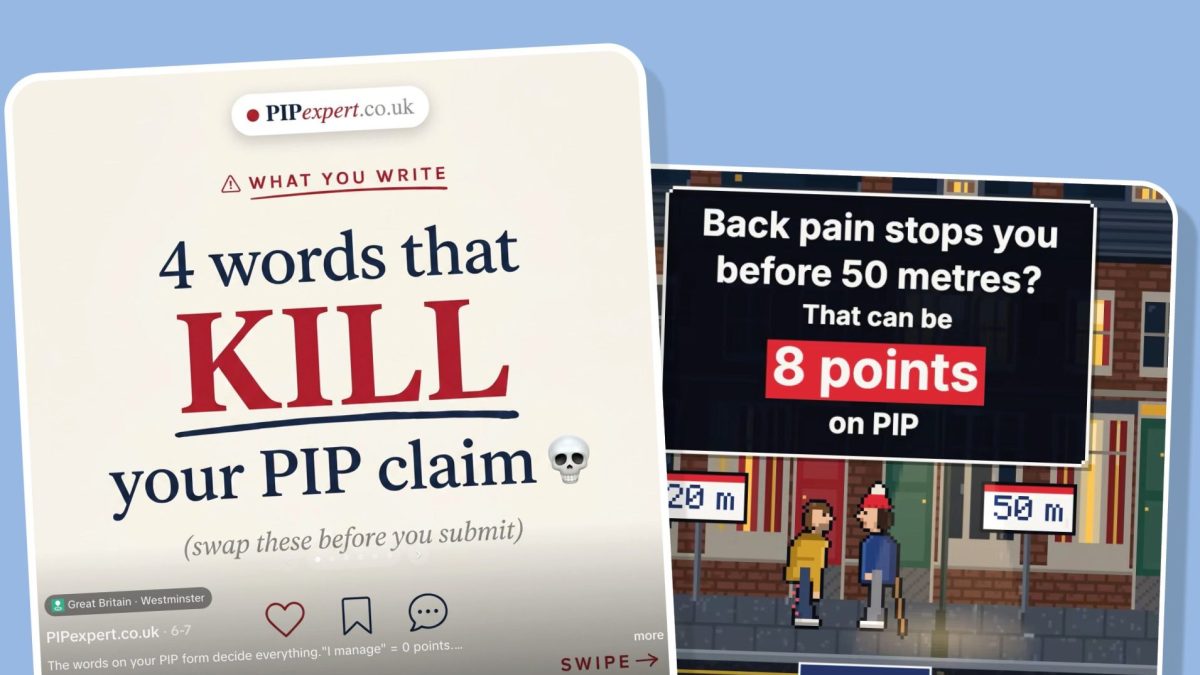
Disabled people have been warned against following bad advice on how to boost claims for personal independence payments (PIP) posted by online influencers. Concerns have been raised about the role of so-called “sickfluencers”, often faceless accounts offering paid advice on how to claim PIP as the Government plans an overhaul of the benefit system. Labour’s disability minister Stephen Timms has set out a series of suggested PIP reforms, including new impact assessments that will look at the individual costs faced by claimants. Noah Bear Nyle, a prominent influencer with 260,000 followers on TikTok defended those, like him, who offer “fact-based” guidance. But some influencers were giving misleading advice suggesting that there were ready-made answers that can help someone “win” PIP, he said. With so much uncertainty and fear about the Government’s potential PIP reforms ahead, there is a danger that desperate people seek the wrong kind of advice, added Nyle. Some people are also charging for benefit claim advice – though the Government has plans to “clamp down” on paid advisory work when it comes to benefit claims. ‘Fully written answers ready to copy’ Currently qualifying for PIP is based on how someone functions when it comes to various activities, called “descriptors”, such as cooking a meal or bathing unaided. Once an application form is submitted, along with relevant medical evidence, a telephone, video or face-to-face assessment leads to points being awarded. Pipexpert.co.uk urges would-be PIP claimants not to tell assessors that they can dress themselves (Photo: TikTok)Eight points lead to a “lower” PIP award, while 12 points lead to the “higher” amount, for both daily living and mobility elements. At the higher rates, PIP is worth up to almost £800 a month. Karol Slusarczyk, who runs the website pipexpert.co.uk, offers different packages of advice to would-be PIP claimants to describe their condition “the right way to get what you’re owed”. For £49.99, Slusarczyk offers a full report with “personalised guidance for your entire PIP claim”. For £99.99, the “done for you” package offers people “fully written answers ready to copy straight” into their PIP form. Slusarczyk also offers material to help prepare for a PIP assessment, including “model spoken answers” and a “printable cheat card”. Social media accounts give tips on the phrases which will help people maximise their claims (Photos: TikTok) Benefits experts have previously warned that it was misleading for anyone to suggest that there are standard answers to the questions on PIP forms. Assessors want detailed personal information, they told The i Paper. ‘Firmly against benefit fraud’ Slusarczyk told The i Paper he agreed there was “no standard answer that wins PIP, and I do not sell one”, adding that the answer templates that he provides are tailored to the person’s conditions and circumstances. “The answers are written to be used on the form, and I have never hidden that, but they are not boilerplate. Each one is produced from that individual’s own conditions and their own description of their day,” said Slusarczyk. “Customers are told to edit the details into their own words where needed, they complete and submit the form themselves, and they sign the declaration on it confirming the information is true. Nothing is submitted to the DWP by me.” Slusarczyk said he was “firmly against benefit fraud, and nothing I sell is designed to help anyone obtain money they are not entitled to”. The website contrasts the cost of benefits tips against a hypothetical payout (Photo: pipexpert.co.uk) Slusarczyk, who was born in Poland and came to the UK eight years ago, said he had come to understand the PIP system as a disabled person with scoliosis, “which has left me with a curved spine and chronic problems with my knees”. He said he founded Pipexpert “because the benefits system fails people who cannot describe their own disability in the words the law requires”, adding “genuine entitlement” was going unmet “because a form was filled in badly”. Some of Pipexpert’s posts on TikTok earlier this year suggested there are certain words that “kill” a PIP claim and certain sentences that can score PIP points. Slusarczyk said he had since changed the style of his TikTok content so the posts are now “calmer and more informative” rather than using “dramatic headlines”. ‘You don’t need buzz words’ Nyle, a 44-year-old benefits expert who gives advice on TikTok and YouTube, said his own advice was “fact-based” aimed at helping people struggling to work things out on their own. But the influencer, a single parent from Wales who claims universal credit, said he does not give one-to-one advice on specific PIP cases – directing people to Citizens Advice instead. Noah Bear Nyle gives benefits advice on TikTok (Photo: noahbearnyle/TikTok) Nyle said the positive side of influencer advice helped explain complex benefit processes in “conversational language”. But Nyle said there was misleading advice suggesting there are easy ways to boost your chances of getting PIP. “Suggesting you can win it with certain answers, suggesting ‘here are the right words to say’ – that’s never been how you get PIP. You don’t need buzz words. “Anyone who suggests there is some kind of formula answer is the total opposite of what assessors are looking for. The assessor needs to get to know you, your life, and how your impacted. There aren’t any standardised answers that can win you PIP.” Influencers could say, ‘Get PIP while you can’ Nyle warned there could be a surge in bad advice, as Andy Burnham’s Government prepares to decide on its benefit reform plans. It follows both the Timms Review and the report by youth employment advisor Alan Milburn – who has called for PIP to be scrapped for under 25s. Timms has recommended a new impact assessment, including questions about someone’s costs, alongside the points-based test. “If people don’t have extra costs, then this is not the benefit for them,” the minister said. “Potentially some influencers could say, ‘Get PIP while you can’,” said Nyle. “If there is a move to looking at specific additional costs, you could see people suggesting, ‘Here’s a list of what to say in extra costs for PIP’,” the influencer added. Timms has rejected the chance to restrict PIP for certain conditions, despite calls by the Conservatives and Reform UK to stop people with ADHD from claiming the benefit. However, Milburn criticised private ADHD and autism clinics in his own report, arguing they should have NHS funding restricted over a “cash for diagnosis” culture. Timms revealed earlier this month that the Government will set out plans to crack down on paid advice relating to benefits. “We will be introducing a new Code of Practice in the coming weeks that clamps down on activity by claims management companies undertaking benefit claims activity, and includes a £0 fee cap,” he said. The Government is expected to give a response to both reviews next month before publishing a white paper on its benefit reform plans early next year. Stephen Timms said the Government would immediately accept two of his 15 key recommendations 1. Reducing unnecessary award reviews for people whose health conditions are lifelong, progressive or unlikely to improve. The review says: “People described the cumulative negative impact of having to engage with the process repeatedly and the administrative burden this presents. The stress and fear caused by award reviews was raised by a lot of respondents.” 2. Introducing a fast-track route for people with severe, well-evidenced conditions and those nearing the end of life. Assessments were the most complained about area of PIP, with 70 per cent of respondents saying they did not “adequately capture fluctuating conditions, mental health conditions, neurodivergence, fatigue, pain or the combined impact of multiple conditions.” The review says: “There should be two fast-track pathways. The first, receiving end-of-life care should be the fastest route to an award. The second would be for people with serious, well-evidenced conditions whose impact on their daily life is clear, including people with lifelong conditions where needs are unlikely to reduce. People on these pathways should receive an award without a full assessment and any subsequent review should avoid unnecessary reassessment.” It is not yet clear how “severe”, “well-evidenced” and “progressive” will be defined.
The PIP influencers selling £100 packages of benefits tips
Full Article
Original Source
Read the full article at Inews →KhanList aggregates and links to publicly available news content. We do not host full articles from third-party sources. Always verify important information with original sources.