
Planet Earth is structured like an onion, with overlapping layers revealing details about the planet's formation and evolution. Like all the rocky planets of the Solar System, it is differentiated between a crust and upper mantle composed of silicate minerals and an iron-nickel core. This process of differentiation occured during the planet's early history, when heavier elements sank to the interior, leaving rocky material on top. Meanwhile, one of the most crucial building blocks of life (carbon) is distributed throughout Earth's layers. The vast majority of it resides in Earth's core, an estimated 0.09% to 2.0% by weight, or two-thirds of the planet's overall carbon budget. Until now, scientists believed Earth's carbon originated in the inner Solar System, much like its silica and metal budget, and was part of our planet's early formation. However, a new study led by researchers at Yale and Columbia suggests that this carbon originated in the outer Solar System and didn't arrive here until the late stages of planetary development. Their study, published in the Proceedings of the National Academy of Sciences (PNAS), was led by Yves Mousallam, a Lamont–Doherty Earth Observatory, Columbia University, a researcher from the Department of Earth and Planetary Sciences at Columbia University and the American Museum of Natural History. Their work is based on an analysis of magma droplets from historic volcanic eruptions in Hawai'i, such as the Keanakākoʻi eruptions from 1500 to 1840 and the Kīlauea Iki eruption in 1959. The 2006 Cleveland Volcano Eruption viewed from space. Credit: NASA Magma droplets (or "melt inclusions") are bits of molten rock found inside crystals that formed from molten magma. Each droplet is essentially a snapshot of a moment in time, telling scientists what Earth's interior was erupting at the time. This, in turn, provides clues as to what Earth's interior composition looked like throughout its history. In the past, it was thought that analysis of Earth's "core carbon" was impossible, but Moussallam and his team managed to do just that. The lava droplets they analyzed sampled different parts of the volcanic plume, and the researchers found a uniquely heavy carbon-13 signature in some. They concluded these came from parts of certain plumes that represented the boundary area between the Earth’s core and mantle. “This is the first observational estimate of the isotopic composition of carbon in Earth’s core,” said co-author Damanveer Grewal, an assistant professor of Earth and planetary sciences in Yale’s Faculty of Arts and Sciences. “We interpret this as carbon leaking from the core." The team further determined these carbon samples could not have come from the carbon-poor rocky material that existed in the inner Solar System billions of years ago when Earth was still forming. However, the carbon-13 was a perfect match to carbon-rich meteorites known as carbonaceous chondrites, which originate in the Outer Solar System and are known to contain organic compounds and water. Prof. Grewel led this part of the research, and noted that there was only one window of opportunity for the delivery of this carbon. Had it arrived at an earlier stage in Earth's formation, much of it would have been ejected back into space. Had it arrived later, when Earth had cooled and become differentiated, it would not have made it to the core. The only remaining possibility was it had was introducted during the finalcamee of Earth's main assembly, also known as the giant impact or late accretion phase. This culminated about 4.5 billion years ago when Theia, a Mars-sized protoplanet, collided with Earth, giving rise to the Earth-Moon System. In addition to resolving the mystery of where Earth's carbon came from, the study also has potential implications for geologists hoping to learn more about Earth's history, particularly during periods of intense volcanic activity. Further Reading: Yale News, PNAS
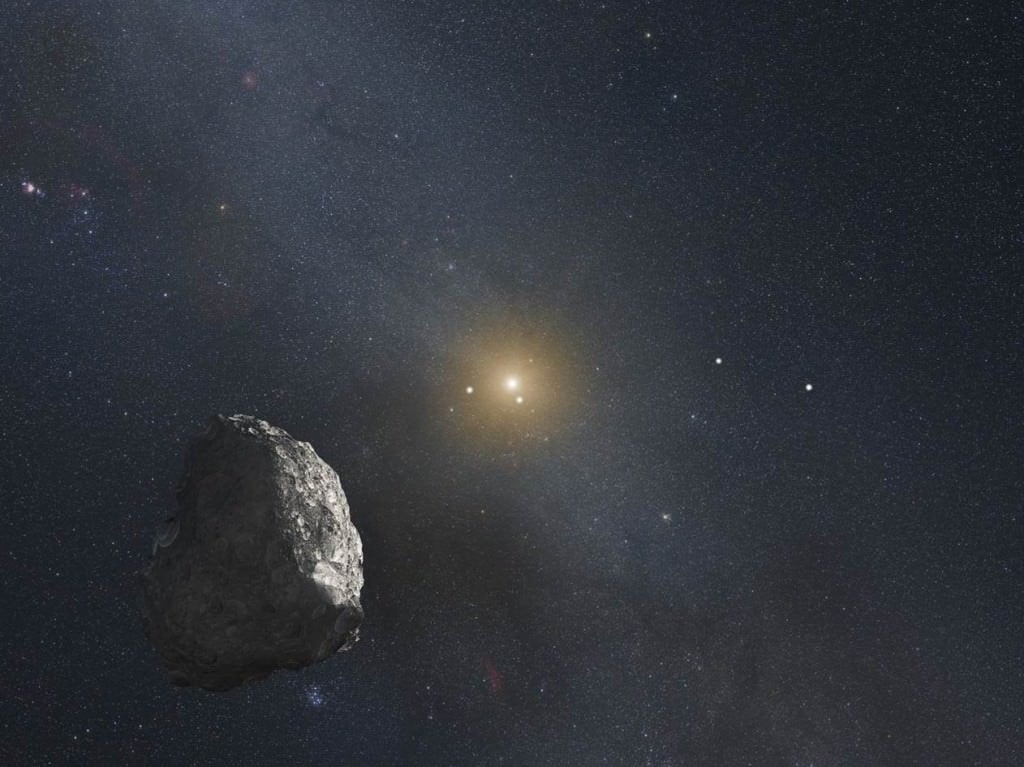
The Outer Solar System May Have Provided Earth's "Core Carbon"
Full Article
Original Source
Read the full article at Universetoday →KhanList aggregates and links to publicly available news content. We do not host full articles from third-party sources. Always verify important information with original sources.