
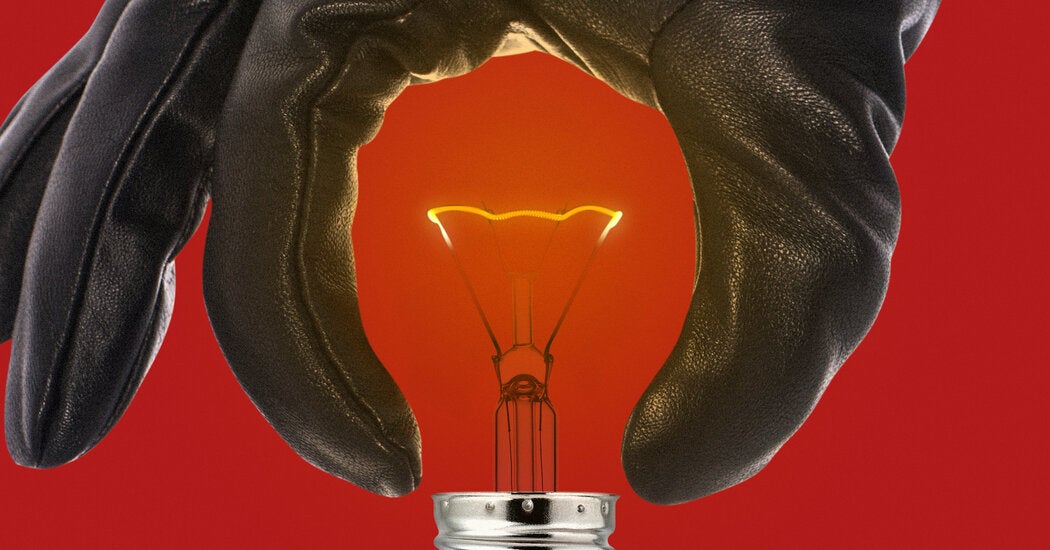
AdvertisementSKIP ADVERTISEMENTGuest EssayNov. 15, 2026, 6:00 a.m. ETCredit...Illustration by Sam Whitney/The New York TimesWilliam EvaninaMr. Evanina served as director of the National Counterintelligence and Security Center from 2014 to 2021.The world is understandably focused on the seamy side of the Jensen Huang spy story. The United States government has assessed that the Chinese businesswoman Alice Huang was working for Chinese intelligence services as she carried on a romantic relationship with Mr. Huang, the Nvidia chief executive, who is no relation. The success of this alleged “honey pot” operation, targeting one of the most powerful and important leaders in the race for artificial intelligence technology, would be a coup of the highest order for any intelligence service.Yet to understand why the Huang affair has already been so damaging, it helps to see the larger picture of Beijing’s intelligence efforts against the United States, and where Ms. Huang may fit into them. Her value as an asset for the Chinese government (which has denied the allegations) was not just as a sexual partner for Mr. Huang, but as a business partner.In its long-term competition for global economic primacy with the United States, China is seeking to steal everything it can from us. Over the past few years, China’s progress in this effort is like nothing we have ever witnessed. The U.S. economic loss from China’s theft of intellectual property and trade secrets is estimated to run between $300 billion and $600 billion per year — or as much as $6,000 for a family of four after taxes. Secretary of State Marco Rubio has called what is happening the largest theft of intellectual property in the history of the world.One big reason for China’s success is its use of what counterespionage officials call “nontraditional” intelligence collectors. These are not official spies or trained intelligence professionals. They are engineers, businesspeople, academics and professionals, often doing legitimate work and research for investment firms, academic partners and joint ventures. Sometimes they knowingly work for the Chinese government; other times they are unwitting agents doing the work of intelligence collection without knowing it.Ms. Huang may be the most infamous nontraditional collector to date. As head of the Singapore-based data center firm Megaspeed, she is said to have facilitated the purchase of $4.8 billion in A.I. chips from Nvidia over the past two years; U.S. authorities have investigated whether those chips made their way to China in violation of American prohibitions on such transfers.It’s not just chips that China is after. Beijing’s unofficial spies have ranged through every corner of American society. Of course, they have targeted government officials: In 2024, federal prosecutors accused a former aide to the New York governors Kathy Hochul and Andrew Cuomo of acting as an undisclosed agent of influence in Albany for China. Former Representative Eric Swalwell carried on a relationship with a suspected Chinese spy from 2012 to 2015.But China’s nontraditional collectors have penetrated American business even more deeply. Over the last few decades, the United States has prosecuted Chinese attempts to steal hybrid seeds from Monsanto, titanium dioxide for white paint from DuPont, glass insulation from Pittsburgh Corning, and jet engine trade secrets from G.E. Aviation, to mention only a small fraction of the known incidents. In the Monsanto case, a Chinese national was captured after literally digging up the seeds on a farm in Iowa.China is able to field these nontraditional collectors because it is an authoritarian state. Its National Intelligence Law requires that all businesses and citizens cooperate with China’s intelligence services, providing any information requested by the Chinese government and all data sought by national, military or public security authorities.This includes third-party data, like the financial, email and phone records that a digital retailer or communications platform might have access to. The analogy would be a U.S. company entering into a business deal or partnership with a company from another country being required to provide any and all information they possess to the National Security Agency, C.I.A. and F.B.I.How can the country defend against this kind of sprawling effort? It involves America’s private sector as much as our government counterintelligence services. Any chief executive officer or board of directors engaged in the industries of highest interest to Beijing must first understand the threat. If you are a U.S. business seeking to enter a business relationship with a company in or from China, you must know that your data will likely be obtained and provided to the security services of the Chinese government. A short version of Beijing’s wish list of targets for theft includes aerospace, deep-sea technology, biotechnology, information technology, manufacturing, clean energy, electric battery technology, and DNA/genomics.Expecting an American company to effectively defend against a world-class intelligence service in all these areas is unrealistic. The United States needs to come up with its own, democratic answer to China’s authoritarian, all-of-society approach. To help defend our country’s interests, chief executives and boards of directors must begin to lead our national security efforts.To start, I recommend the creation of a panel of chief executives from the major technology companies who can advise and inform Congress, the intelligence community, and U.S. government entities on the national security challenges they face. Membership should be diverse and include financial services, telecommunications, energy, biopharmaceutical, manufacturing, aerospace, transportation, private equity and venture capital. The goal should be as much to focus attention and effort on the competition as to answer the harder problems of how to defeat every attempt by nontraditional spies. At the same time, the U.S. government must drastically increase its cooperation with American corporations, speeding the provision of actionable intelligence to U.S. corporate leaders not only about the threat they face, but also ways to limit the damage and to provide mitigation strategies.None of this is to play down the success of the honey pot operation that Ms. Huang and her Chinese handlers apparently ran against Mr. Huang and Nvidia. In the wake of the saga, U.S. counterintelligence officials will be scrambling to figure out what Mr. Huang told Ms. Huang about his corporate strategy and long-term goals, and what he said about his conversations with President Trump, Treasury Secretary Scott Bessent, Mr. Rubio and Commerce Secretary Howard Lutnick.But to start defending ourselves in this global competition, we first have to understand the nature of the espionage effort China is making against us — and just how widespread it is. Economic security is national security, and it is on all of us in and out of government to find effective, democratic ways to protect our companies and our country. The costs of our continuing vulnerability are too high.William Evanina served as the top U.S. counterintelligence official under Presidents Barack Obama and Trump. He was previously a chief of counterespionage at the C.I.A. and a special agent at the F.B.I.Source photographs by akova and malerapaso/Getty Images.The Times is committed to publishing a diversity of letters to the editor. We’d like to hear what you think about this or any of our articles. Here are some tips. And here’s our email: letters@nytimes.com.Follow the New York Times Opinion section on Facebook, Instagram, TikTok, Bluesky, WhatsApp and Threads.Related ContentAdvertisementSKIP ADVERTISEMENT
The Nvidia Spy Case Is About Much More Than Sex
Full Article
Original Source
Read the full article at Nytimes →KhanList aggregates and links to publicly available news content. We do not host full articles from third-party sources. Always verify important information with original sources.