
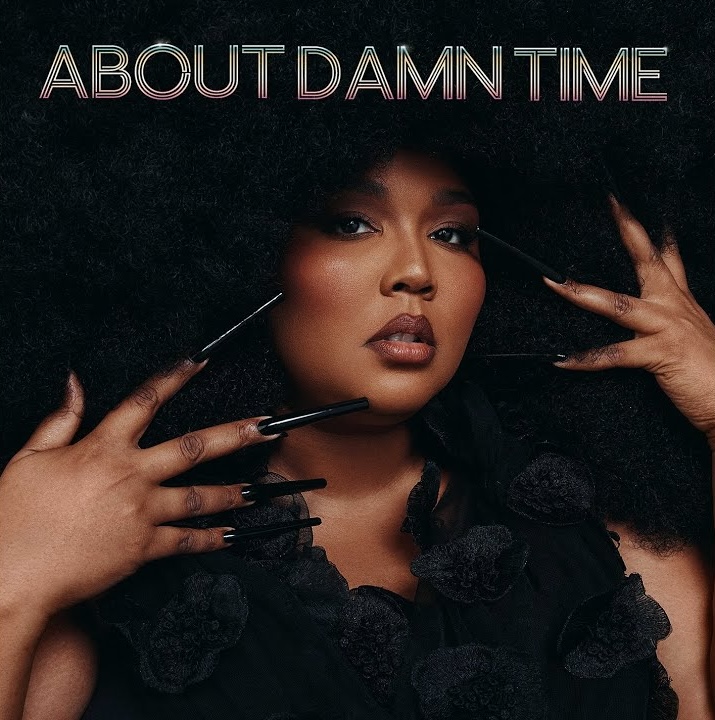
July 30, 2022STAYED AT #1:2 WeeksIn The Number Ones, I'm reviewing every single #1 single in the history of the Billboard Hot 100, starting with the chart's beginning, in 1958, and working my way up into the present. The column is now biweekly, alternating with The Alternative Number Ones on Mondays. Book Bonus Beat: The Number Ones: Twenty Chart-Topping Hits That Reveal the History of Pop Music.A couple of weeks ago, the Democrats retook the House and the Senate in the midterm elections, crushing even the most confident polling projections and suggesting that maybe this country is ready to reject the past few years of outright fascism. As the scale of the blue tsunami became apparent, my timeline flooded with celebratory jokes, most of which were some variation on "woke is back, baby!" This one stood out: "Lizzo music sounding good asfff tonight" — the obvious joke being that it took an event of this magnitude to make anyone want to hear Lizzo again.In the popular imagination, Lizzo might be the ultimate representative of a certain type of millennial optimism that went out of style real quick. For a few years, Lizzo was a true avatar of corporate-friendly self-empowerment. She cranked out ebullient earworms and engaged in viral hijinks, all while radiating a joyous pride that, at least for a minute, felt vaguely revolutionary. She was a large Black woman who celebrated the qualities that the world once held against her, so her success seemed like a sign of Obama-style hope. As in: If this person can find ways to love herself, maybe things will be OK!It wasn't that simple, of course. Lizzo's fall from grace was fast and severe, and it happened for reasons that went beyond the undeniably shifting cultural tides. About a year after the self-celebratory disco-funk jam "About Damn Time" became Lizzo's second #1 hit, a bunch of her former dancers sued her for alleged abuses, which she denied and which clashed hard with the Lizzo brand. Various lawsuits are still working their way through the system today. The effect was devastating, especially since her denials stunk of self-pity. Lizzo's hit streak didn't end just because the world became a more toxic place. It ended because Lizzo's own toxicity became increasingly difficult to ignore.Lizzo came to embody certain Obama-core values, so it's a little surprising to realize that her whole run of hits was firmly rooted in the Trump era. (Unfortunately, the Biden presidency still counts as the Trump era.) If every accusation against Lizzo is true, she still wouldn't be even close to the list of our most fucked-up successful pop acts. Another star could've easily bounced back from those accusations, the way Trump kept wriggling out of jams until a few weeks ago. But Lizzo built herself up as a ray of human sunshine. When you do that, people hold you to higher standards.Lizzo's relentlessly bright and chipper style would've worn thin even without those accusations because nobody can continue to make Target-commercial jams forever. Her hits were too corny, too embarrassing. But in the fleeting moment that she was on top, Lizzo did make some solid Target-commercial jams. Maybe it would take nothing less than a complete political realignment to make Lizzo music sound good asfff in this day and age, but that doesn't mean it can't happen.Lizzo sailed to stardom on the back of "Truth Hurts" and "Good As Hell," two years-old songs that achieved sudden and simultaneous viral-hit status in 2019. ("Good As Hell" peaked at #3. It's a 4.) When those singles took off, Lizzo went into extreme publicity-blitz mode. She was always on TV or on my laptop screen, often twerking while playing the flute. (At one point, she twerked while playing an 19th-century crystal flute that once belonged to James Madison.) Her songs kept showing up in commercials. She performed at the Grammys and toured arenas. But even though Lizzo was as visible as one could be, her songs weren't necessarily instant hits.Lizzo first started rolling out the follow-up to her breakout album Cuz I Love You in 2021. That's when she got together with fellow viral star Cardi B — they'd both played strippers in the 2019 crime caper Hustlers — and released the defiant single "Rumors." I thought that song was pretty good, and it did decently well on the charts, debuting at #4 before fading. (It's a 7.) But that apparently wasn't good enough, and "Rumors" never appeared on a Lizzo album. She went back to work, talking about her own perfectionist tendencies. Almost a year later, she gave it another shot, putting all her marketing power behind "About Damn Time," her second shot at a first single. This time, it worked.When Lizzo's 2022 album Special came out, she proudly trumpeted that she'd written nearly 200 songs, going to great lengths to make sure that the public got the strongest possible 12-song set. If that's true, it's unfortunate. Special is a mess. The record hammers its elementary self-love message over and over, never letting any kind of ambiguity creep in. The songs are pure rah-rah feelgood sloganeering, with no wit or nuance or variation. The interpolations couldn't possibly be more basic or obvious: Coldplay's "Yellow," the Beastie Boys' "Girls," Lauryn Hill's "Doo Wop (That Thing)." At the end, there's a spoken-word interlude from Lizzo herself about the importance of her message: "This was what I felt like not only I needed to hear but you needed to hear, and the whole world needs to hear." It's downright insulting, like movie characters looking into the camera to explain the moral of the story.Lizzo made Special with longtime collaborators like producer Ricky Reed and co-writer Theron Thomas. (Thomas is half of the dancehall-adjacent Virgin Islands duo R. City, who reached #6 with the 2015 Adam Levine collab "Locked Away." It's a 6.) She also brought in a few proven outside collaborators like Blake Slatkin, the former Benny Blanco intern who has already appeared in this column for his work on 24kGoldn and Iann Dior's "Mood" and the Kid Laroi and Justin Bieber's "Stay." Lizzo thought she was done with the album before Reed and Slatkin brought the skeleton of "About Damn Time" to her. But when she heard the demo, she knew it was a hit.Slatkin told Billboard that he and Lizzo had already been working on Special for months, and they thought they'd made a great album. Someone else had other ideas: "The first week of January, we got a call saying, 'Just try one more song. We think you guys can get one more thing.'" Slatkin doesn't say who made that call, so I have to assume it's some record-label person. That person was right, anyway. Slatkin says, "I know four chords on the piano — I barely play — and I was just playing around in the studio in the middle of an idea, trying to distract myself to come up with something. Ricky heard the chords and was like, 'Wait, that’s something!' I thought he was joking with me."That piano part might've sounded familiar. Whether intentionally or not, "About Damn Time" uses the piano melody and general groove from "Hey DJ," the funky roller-disco jam that the hip-hop radio-host duo known as the World's Famous Supreme Team released in 1984. Mariah Carey convinced Q-Tip to sample that exact same song on her own 1997 chart-topper "Honey," so that track has been a durable inspiration source for a long, long time. Because of the interpolation, all four songwriters of "Hey DJ," including the late Sex Pistols svengali Malcolm McLaren, got writing credits on "About Damn Time."Lizzo and Blake Slatkin have both told the same story, which is that Lizzo didn't want to go to the studio that day unless she knew she was working on a hit. Slatkin and Ricky Reed played her the "About Damn Time" track on FaceTime, and she said she'd be there in 10 minutes. If I were Lizzo, I don't know if I'd tell the story like that, since it implies that she doesn't actually like working on music that much. Most pop stars present as studio rats who are at their happiest when they're messing around with musical ideas that might go nowhere. My general sense is that Lizzo does spend a ton of time in the studio. Maybe she was just tired of working on this particular album and wanted to get it out there. But it's her story, not mine.When she got to the studio, Lizzo came up with the "About Damn Time" hook and the verses. Lizzo and her collaborators say that they knew they had something right away, and they found their groove. Slatkin specifically says that he "ran around the studio screaming" when Lizzo found the second verse's stop-start flow: "In-a-minute/ I'ma-need-a/ Sentimental/ Man-or-woman to pump me up," the part of the song that eventually went viral. They were right to be excited. "About Damn Time" is a nonstop barrage of shiny uplift, and it hides bubbly hooks inside different bubbly hooks. It might be the platonic ideal of a Lizzo song — not the best Lizzo song, necessarily, but the one that sounds most like Lizzo's whole thing boiled down to its essence.Once they had the basic elements down, the producers kept working on the track for months. They brought in horns and guitars and jazz-funk musician/Kendrick Lamar collaborator Terrace Martin, who's credited with additional production and vocoder. They went through different versions and arrangements; Slatkin estimates something like 30 recording sessions. In all that time, they optimized the song's groove, which has some serious muscle. Even though Reed and Slatkin play a lot of the instruments themselves, "About Damn Time" doesn't strictly sound like it was assembled in ProTools. The strutting slap-bass and xylophone shimmers are pure pastiche, and they've got a mathematical precision to them, but they still find a physical groove.Lizzo knows what to do on the song, too. She delivers an upbeat hook, singing in ways that let you hear her smile. Her flute gets involved, too. She doesn't really rap on "About Damn Time" the way she does on a lot of her songs, but she does chant in the pocket. Her melodies never sound effortless or offhand, but she attacks them with an overachiever's exuberance. It would all work a lot better for me if the lyrics didn't sound like advertising copy."About Damn Time" arrived toward the end of a gleaming disco-pop renaissance. Sonically, the track is not too different from what Dua Lipa was making a year and a half earlier; maybe that's why Lizzo and Lipa both sounded so comfortable on the Barbie soundtrack in 2023. But Lipa was using those grooves to deliver functional pop songs, while Lizzo used them as a vehicle for therapy-speak slogans. Too many of her lines read like bumper stickers: "It's bad bitch o'clock," "Tell me how you're healin'," "I'm way too fine to be this stressed." Maybe that really is a message that some people need to hear. But the way Lizzo delivers it, it comes off as overeager pandering, though at least it's catchy overeager pandering.Lizzo really pushed "About Damn Time" on the public. She made a choreography-heavy video with director Christian Breslauer, turning a support-group meltdown into a fantastical solo dance party. She previewed the song on James Corden's Late Late Show, then sang it with Corden during one of his Carpool Karaoke bits. The first time she performed "About Damn Time" in full, she did double duty as host and musical guest on Saturday Night Live. She even tried to frame the song as a response to global events, telling Apple Music, "'About Damn Time' can lead into so many conversations. It's about damn time I feel better, it's about damn time we get out this pandemic, it's about damn time we get the first black female Supreme Court Justice." (Ketanji Brown Jackson was sworn into the Supreme Court shortly after the song came out.)Even with all the bells and whistles, "About Damn Time" was not an immediate smash. It came out in April 2022 and debuted at #50, then spent months climbing the Hot 100. Naturally, the thing that really pushed the song over the top was a TikTok dance challenge. Lizzo didn't come up with the "About Damn Time" dance; an influencer and choreographer named Jaeden Gomez did. But Lizzo latched on to the dance trend, and she went viral for a video in which she scolded people for not doing the dance with enough pizazz. Here, for instance, is Reese Witherspoon doing that whole thing along with Lizzo's video. That clip doesn't even use the song, but it still helped the song go more and more viral.Once "About Damn Time" became a TikTok trend, radio got on board. As my colleague Chris Molanphy wrote at the time, that combination made for a rare and temporary alliance of younger and older listeners. A few months after its release, "About Damn Time" finally picked up enough steam to knock Harry Styles' "As It Was" out of the #1 spot. "About Damn Time" wasn't the first song to dislodge "As It Was," but the other songs that interrupted its reign debuted at #1 and then slipped after a week or two. After its arduous climb, "About Damn Time" seemed like it might stick around at #1. Styles sent Lizzo a bouquet to congratulate her.But America wasn't done with "As It Was" yet. "About Damn Time" got two weeks at #1 before it fell back down the chart, and "As It Was" returned to #1 in September, after a couple of other tracks had their own brief reigns. "About Damn Time" still stayed in the top 10 until October and lasted the better part of a year on the Hot 100. Lizzo's album Special came out just before "About Damn Time" reached its apex, and it debuted at #2. The LP didn't have any other real hits, though. Her follow-up single, the Flashdance-soundtrack pastiche "2 Be Loved (Am I Ready)," peaked at #55.Maybe real life got in the way. About a year after "About Damn Time" reached #1, three of Lizzo's former backup dancers sued her for sexual harassment and creating a hostile work environment, among other infractions — allegations that contrasted sharply with the public image that the star had cultivated. She denied everything and put out a statement saying, "I'm hurt but I will not let the good work I've done in the world be overshadowed by this." More allegations followed. A few months later, she posted an Instagram message about how tired she was of all the negative attention she was getting: "I didn't sign up for this shit — I QUIT." She didn't really quit, though she may as well have.Before any of this, Lizzo had performed "About Damn Time" and "Special" at the 2023 Grammys, and she won Record Of The Year for the former. After the lawsuits, though, things got bleak. Lizzo has only had a couple of minor Hot 100 appearances in the past couple of years. In 2023, one of Lizzo's close friends, the future Number Ones artist SZA, showed up on a remix of "Special," and it peaked at #52. Last year, Lizzo sang the hook from 4 Non Blondes' "What's Up?" on the Cardi B track "What's Goin On," which peaked at #63. It's one of the worst songs I've heard in my entire life. ("What's Up?," another terrible song, peaked at #14 in 1993.)Lizzo put out a long string of extremely unsuccessful singles over the next few years. I thought her Barbie soundtrack song "Pink" was good, but it didn't chart. Neither did any of the would-be lead singles from the Special follow-up that Lizzo kept pushing back. Last year, Lizzo tried to reignite things by releasing a rap-centric mixtape called My Face Hurts From Smiling. It didn't work. Earlier this year, Lizzo finally released her album Bitch, a spectacular failure on every level. Not only did none of its singles sniff the Hot 100, but Bitch didn't even make the Billboard 200 album chart. Before the record even came out, Lizzo blamed streaming-service algorithms for its lack of success. It was rough.Lizzo worked hard to become a pop star, and her ascent was an unlikely feelgood story. But now, she's floundering in an internet environment where online commentators closely watch the charts and take vicious glee at pointing out flops, and she's the easiest target they could ever want. Lizzo's fall-off has been truly dramatic. I'm sure some of that is down to what she called the algorithm's "racist & fat phobic" tendencies. Other pop stars are allowed to fail and fuck up before coming back. Perhaps Lizzo should be granted that same grace. Still, I'm not exactly rooting for her to prove everyone wrong.I can't believe I'm saying this, but look at Macklemore. Macklemore, much like Lizzo, had a brief run of inescapable, annoying pop-rap crossover hits that were initially driven by virality but then became radio staples. Once those runs were done, that was it. Macklemore was not getting back on the pop charts, and he seemed to understand that. Now, he's suddenly relevant again, and it's not for his music, which is still annoying. It's because he believes in a righteous cause enough to take a public stand. He has become a public advocate for a free Palestine, voicing a position that most Americans agree with but that people in power aren't trying to hear. That stance got Macklemore kicked off an Ed Sheeran stadium tour. His public statements have cost him some money, but the efforts to silence him make him have helped turn him into a sympathetic, admirable figure. He stands for something.Lizzo stands for something, too, and what she stands for is "let Lizzo be a pop star again." This is less inspiring. She has probably cost herself some money, too, by talking about how people aren't sufficiently respectful of her accomplishments, but it hasn't been the kind of thing where anyone can be like, "Even if you don't like her music, you have to respect her." At this point, I don't know what it would take to bring Lizzo back to prominence. Maybe it's possible. Maybe we'll just need a couple more transformative, exultant election nights.GRADE: 5/10BONUS BEATS: In the end-credits scene of 2023's Family Plan, a straight-to-Apple TV+ movie that I will never watch, the titular family sings along with "About Damn Time" — everyone, that is, except the dad, former Number Ones artist Mark Wahlberg. He doesn't sing along. He's too cool. Here, look:BONUS BONUS BEATS: Kelly Clarkson has been in this column a few times, though her own automated-bird-related public-image struggles are too recent to appear in any of the columns about her. Here's Lizzo and Clarkson performing "About Damn Time" together on a 2025 episode of Clarkson's talk show.THE 10S: Kate Bush released the mystical twinkle-boom incantation "Running Up That Hill" in 1985, and it initially became her biggest-ever Hot 100 hit, peaking at #30. Then came Stranger Things. In 2022, "Running Up That Hill" became an actual significant plot element on the Netflix show, and it turned into a no-shit global blockbuster hit, peaking at #3 behind "About Damn Time." I'd make a deal with God if I only could write a Number Ones column about "Running Up That Hill" instead of Lizzo, but that didn't happen. (I did get to write an Alternative Number Ones column about Bush, though.) Come on darlin', let's exchange the experience. "Running Up That Hill" is an obvious 10.The Number Ones: Twenty Chart-Topping Hits That Reveal The History Of Pop Music is out now via Hachette Books. It's bad book o'clock.
The Number Ones: Lizzo’s “About Damn Time”
Full Article
Original Source
Read the full article at Stereogum →KhanList aggregates and links to publicly available news content. We do not host full articles from third-party sources. Always verify important information with original sources.