
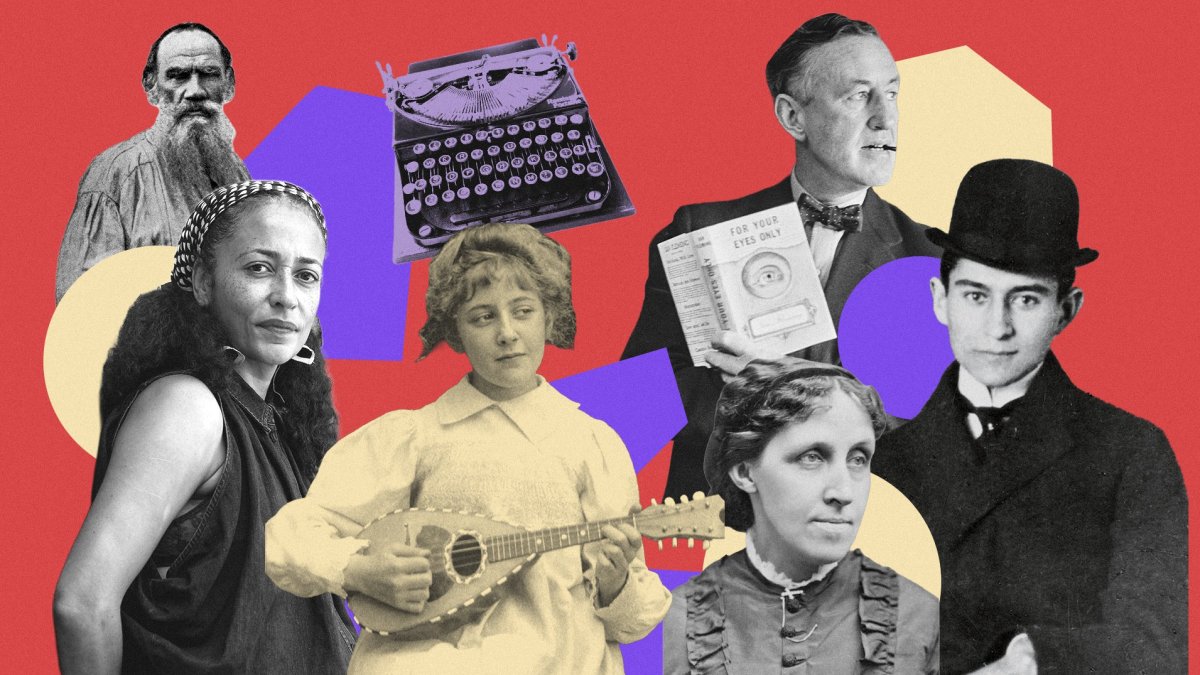
Writers pour years of creative, intellectual and emotional labour into their books – so they are generally delighted when they find an enthusiastic readership and remain in print for decades. But there are exceptions. Sometimes writers come to resent their books’ success and even, as shown by the following list of authors who came to dislike their masterpieces, regret publishing them… Leo Tolstoy Anna Karenina & War and Peace War and Peace (1865) and Anna Karenina (1878) are two of the greatest novels ever written in any language. With births, deaths and everything in between, all life is contained in the former’s account of the Napoleonic invasion of Russia and its aftermath, while the latter, with its transcendental farming passages and devastating denouement, is about much more than the adultery at its centre. Both novels have been through countless translations, and new generations find fresh qualities in the text. They are inexhaustible – but their author, who dedicated himself to religious writing later in life, grew to regard them as trivial and even felt ashamed to be their author. Louisa May Alcott Little Women The story of the March sisters in snowbound rural New England has delighted readers for more than a century, and been adapted for the screen several times, but its author was against it before it had even begun. Alcott did not want to write Little Women (1868) and did so under pressure from her publisher. She called it “moral pap for the young” and was astonished by its success. Some of her resentment centred on her readers and publisher clamouring for Jo March – whom Alcott wanted to remain, like the author, “a literary spinster” – to be married off. Alcott gave in, having Jo marry at 26 the German professor Friedrich Bhaer in the sequel Good Wives. Franz Kafka The Trial In 1924, knowing he would soon die from complications of tuberculosis, the 40-year-old Kafka asked his friend, Max Brod, to destroy his unpublished manuscripts. These included the novels The Trial, The Castle and Amerika – three of the most original and haunting books of the 20th century – which the Czech writer believed unworthy of publication. Debate about the ethics of Brod’s decision to defy his late friend’s wishes, organise their publication and promotion after his death, rages on. But what is undeniable is that, without these novels, which influenced Vladimir Nabokov, Gabriel García Márquez and other major figures, world literature would be far poorer. AA Milne Winnie-the-Pooh In his stories of Winnie-the-Pooh, Piglet and even the curmudgeonly donkey Eeyore, which first appeared in 1926 and were inspired by the real-life Christopher Robin Milne’s toys, the author created a forest universe in which young readers could simultaneously get lost and recognise elements of their own worlds. From Tigger’s bouncing to Owl’s wisdom, Milne’s characters are vivid types and their voices sing off the page. But Milne grew unhappy about their popularity, which eclipsed that of the novels and plays he wrote for adults. EH Shepard, who illustrated the Pooh books, felt similarly and dismissed him as a “silly old bear”. Agatha Christie Poirot Christie and Hercule Poirot made their literary debuts together in her first book, The Mysterious Affair at Styles, in 1920. The detective appeared in another 32 novels and more than 50 stories, and is her most famous character. But Christie felt she was a victim of Poirot’s success, and his popularity meant she felt obliged to keep writing about him long after she would have liked to concentrate on other projects. Christie felt irritated by Poirot, calling him “insufferable… an egocentric creep”. Fans argue about the depth of Christie’s antipathy towards Poirot and point out that she came back around to him later in her life. Even so, imagine how the author would feel to know that the Belgian detective is still cracking cases 50 years after her death. Kingsley Amis Lucky Jim Amis’s 1954 debut, about a young university lecturer, was one of the funniest novels of the 20th century and the mere memory of some scenes, such as the burned bedsheet, and phrases (an academic essay’s “funereal parade of yawn-enforcing facts”), prompts laughter. Written in post-war Britain, when ordinary people were no longer content with the status quo, it does a good line in intelligently channelled political anger. Amis grew to feel his first novel overshadowed everything he wrote subsequently, even his Booker Prize-winning The Old Devils (1986). Still, when asked whether Lucky Jim was an albatross around his neck, he saw the funny side, replying: “It’s better than having no albatross at all.” Ian Fleming The Spy Who Loved Me Fleming fell out of love with this 1962 James Bond novel, which is narrated by a young Canadian woman, Vivienne “Viv” Michel, whose story the author claims to have found lying on his desk. At a motel in the Adirondack Mountains, Bond saves Viv from two mobsters and seduces her in typical 007 style. Fleming was concerned that readers of his Bond books had come to view his protagonist as a hero and intended The Spy Who Loved Me, with its female narrator, as a cautionary tale. But after the book was panned by reviewers, he regretted his experiment with a woman narrator and insisted the makers of the film adaptation rewrite the plot. Zadie Smith White Teeth When it appeared at the beginning of 2000, Zadie Smith’s debut provided a watershed moment in modern English fiction. The novel tackled mixed-race identity and class, announcing the arrival of a bold new voice who was just 24. Funny, irreverent and ambitious, Smith’s sprawling story of two elderly friends and their families in north-west London opened the door for a new generation of writers and its influence continues to be felt today. Smith, however, is not convinced of its greatness and has expressed embarrassment about her celebrated debut, calling it “the literary equivalent of a hyper-active, ginger-haired, tap-dancing 10-year-old.” Annie Proulx Brokeback Mountain Many writers have been troubled by the effect a film adaptation has on readers’ perceptions of their work. Anthony Burgess, for example, complained that the film of A Clockwork Orange glorified violence and prompted misreadings of his novel. After Ang Lee’s film of her story “Brokeback Mountain”, which appeared in her superb collection Close Range (1999), Proulx said: “I wish I’d never written the story.” She complained of “hassle and problems and irritation”, and receiving letters from fans who proposed happier endings for the story. Hopefully, the influx of money, which would have accompanied the adaptation, was a consolation.
The nine masterpiece novels hated by their authors
Full Article
Original Source
Read the full article at Inews →KhanList aggregates and links to publicly available news content. We do not host full articles from third-party sources. Always verify important information with original sources.