
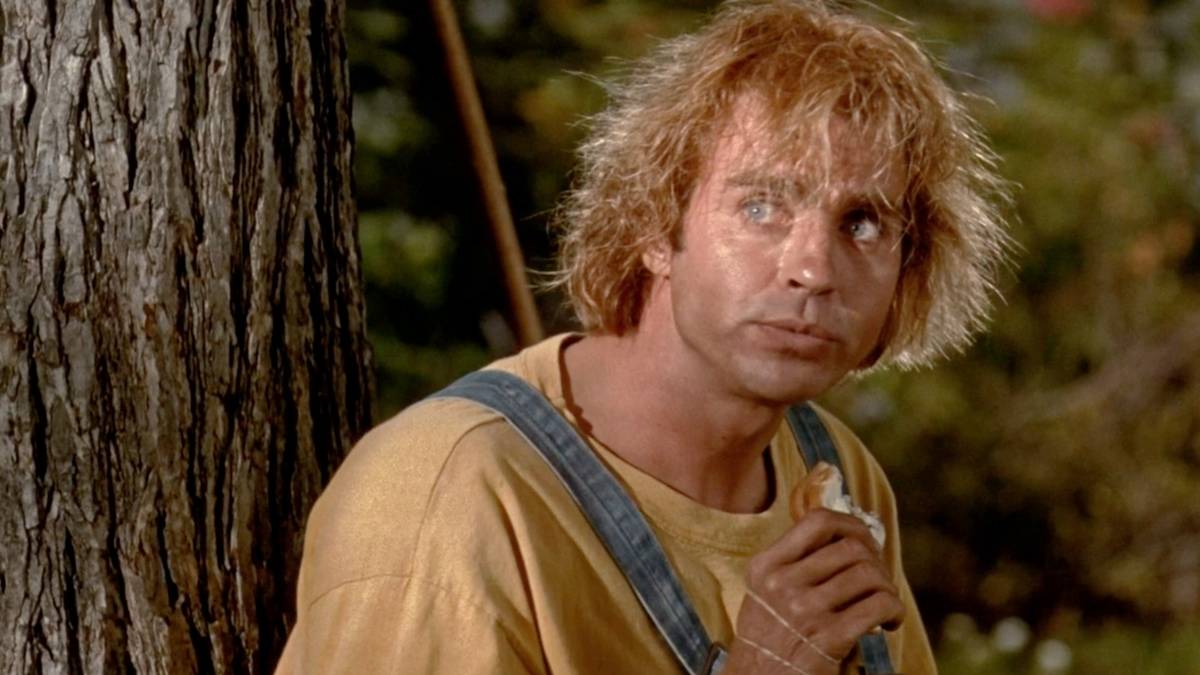
Published Oct 7, 2026, 7:51 AM EDT Erik Hawkins is an award-winning writer and editor who's been obsessed with cinema since he was old enough to hold Roger Ebert's Video Home Companion in his hands. He lives in NYC, where he rabidly watches everything from the newest releases to the more odd and obscure, and regularly shares his thoughts on Letterboxd. From ghost-writing fiction and webisodes in South America to local news, trial coverage, and politics in NYC, he's rarely put down his laptop over the past 15 years. Being the single most adapted author in history, Stephen King has seen a staggering 60-odd films and more than 20 small-screen works produced based on his fiction. But only one has pissed him off enough to spur legal action — and somehow, it was not Children of the Corn (2020). Rather, it was middleweight sci-fi/horror craftsman Brett Leonard, with his in-name-only 1992 adaptation of The Lawnmower Man, that earned King's ire. Only nominally based on King's short story of the same name from the Night Shift collection, The Lawnmower Man was an elaborate showcase for (at the time) groundbreaking CGI effects; its screenplay (originally called CyberGod) was written long before King's name or a single element from his story were grafted onto it. Leonard intended the film to be a futuristic sci-fi thriller that demonstrated the dangers of virtual reality — an extremely odd fit for King's bizarre supernatural story, which featured a demonic lawn care specialist in the employ of the god Pan. Today, the film is a hysterically fun curiosity that one Letterboxd reviewer cannily referred to as "Scanners for the Sega Saturn generation" — and the 140-minute director's cut is now streaming on Prime Video. What Is 'The Lawnmower Man' About? Image via New Line Cinema Pierce Brosnan (just a couple of years before his debut as James Bond) stars as Dr. Lawrence Angelo, a scientist doing research into cognitive enhancement via virtual reality and psychoactive drugs, with his work overseen by the mysterious "Shop" (one of the film's few connections to King's work). Jeff Fahey plays Jobe, an intellectually disabled gardener and lawn care worker — and it's worth a moment's pause on him. Viewed today, Fahey's performance (and the character in general) more than touch the problematic. Jobe is performed almost as what The Onion used to call a "Faulknerian Idiot Man Child," complete with ill-fitting overalls and wild hair. He may as well be chewing on a piece of straw. Jobe is also severely mistreated by everyone around him, complete with ableist slurs. His plight doesn't last long, though. Angelo uses the simple gardener as a lab rat for his VR experiments, turning him into the aforementioned "CyberGod" and granting him super-intelligence and telekinesis. Unsurprisingly, Jobe uses his newfound power first for sex in the virtual world, then to get revenge on everyone who mistreated him. Leonard's film boasts copious expensive scenes set in the virtual realm from here on out, and they were genuinely impressive at the time, though today they're mainly good for a laugh. (In a bizarre twist of fate, the effects studio that produced the film's CGI sequences would later become Rockstar Games, and produce further technological marvels like the Grand Theft Auto series.) Why Stephen King Hated 'The Lawnmower Man' More Than Any Other Adaptation The rights to King's original story bounced between several producers all the way back to 1978, including the legendary Dino De Laurentiis. Unsurprisingly, the roughly 12-page story proved difficult to adapt into a feature film, and in 1990, the story was simply grafted onto Leonard and Gimel Everett's original CyberGod script. The only King material remaining is a sequence of an autonomous lawnmower chewing up a man named Harold Parkette (albeit with the supernatural element removed), as well as references to the "Shop." Still, the author's name was featured prominently above the title in marketing material and the original opening credits. King was not impressed, and sued twice — once upon the film's release, when it grossed some $30 million, then again when it came out on home video, still bearing his name. The matter was eventually settled for $2.5 million. Remarkably, King did give the film some very faint praise when it first released, declaring that it was "not a real bad picture," according to Far Out. It was a whole lot of drama for a film that didn't end up having as much of a cinematic footprint as Leonard likely intended — though it remains a beloved cult classic in some circles. Today, the whole Lawnmower Man cinematic saga can be found easily online, with a faithful short adaptation from 1987 streaming on YouTube, and Brett Leonard's full 140-minute director's cut streaming on Prime Video. Release Date March 6, 1992 Runtime 108 minutes Director Brett Leonard Writers Gimel Everett, Brett Leonard
The Movie Stephen King Hated More Than Any Other Adaptation Is Now Streaming
Full Article
Original Source
Read the full article at Collider →KhanList aggregates and links to publicly available news content. We do not host full articles from third-party sources. Always verify important information with original sources.