
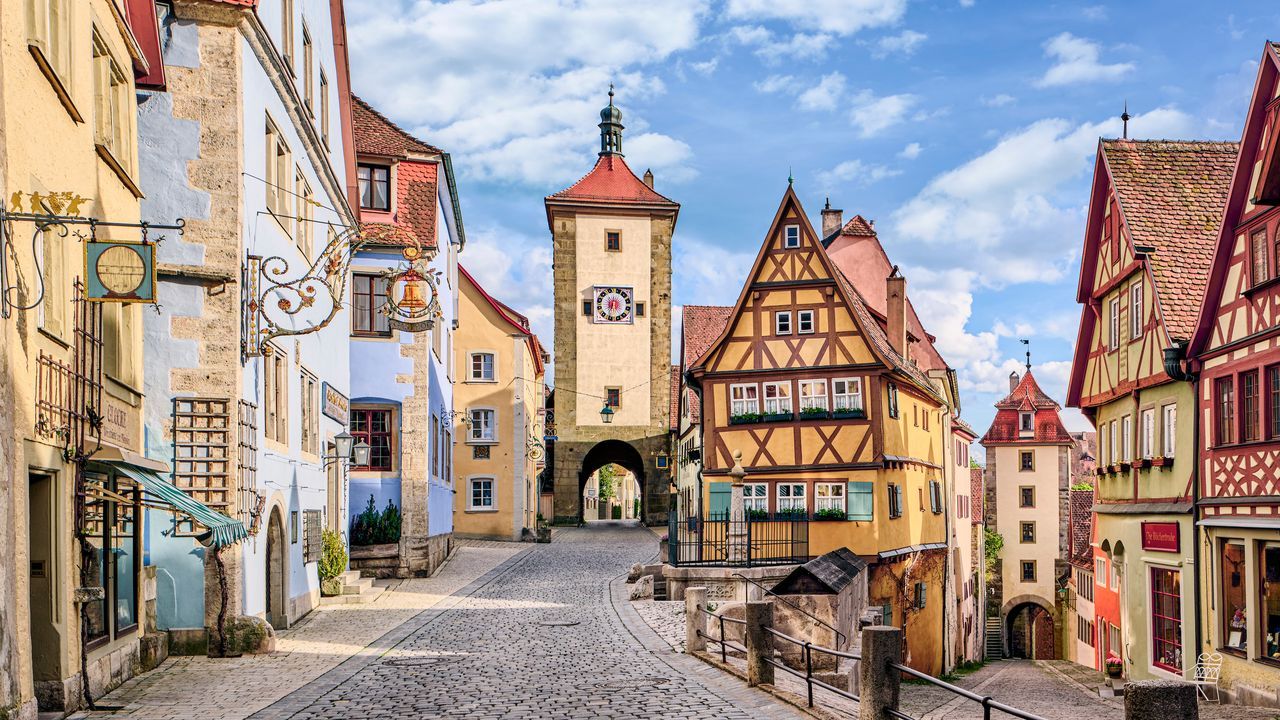
These secluded destinations let visitors experience character and serenity far from the beaten pathPhoto: Getty Images/Harald NachtmannVisiting one of the most beautiful villages in the world feels like stepping back in time, from the unique architecture to the stunning surrounding scenery. But it’s hard to feel transported when you’re surrounded by throngs of tourists also in search of small-town charm. While plenty of villages like Oia, Greece, and Positano, Italy, have become popular destinations, there are still gorgeous, relatively under-the-radar spots where you can enjoy the quaint atmosphere without the crowds. While some are a bit more off the beaten path than the crowded spots listed in every guide, you’ll be rewarded with panoramic views, undisturbed natural wonders, striking architecture, and rich history. Read on to discover 17 of the most beautiful villages that you’ll want to add to your bucket list, from an English hamlet that looks plucked from a fairy tale to a color-packed town in Colombia.Photo: Stefano Zaccaria/Getty ImagesReine, NorwaySet in Norway’s Lofoten archipelago, the picturesque village of Reine has been a fishing hub since the 18th century and today is home to around 300 people. Mountains surround the small island community in the Arctic Circle, and bright red and yellow traditional fishermen’s cabins, or rorbuer, dot the landscape. Outdoorsy travelers can take in the fjords via kayak or hike Reinebringen, where visitors climb the stone stairway built in 2019 using traditional Sherpa techniques. At the end of the Lofoten archipelago and a short drive from Reine is the village of Å, which is known for its Norwegian Fishing Village Museum and the Lofoten Stockfish Museum. Visit from late May to mid-July to experience the Midnight Sun, or try to catch the Northern Lights from September to March.Photo: Amith Nag Photography/Getty ImagesHallstatt, AustriaTravel an hour east of Salzburg, and you’ll find the charming lakeside village of Hallstatt, Austria. The Alpine town was once a hub of salt mining and is still home to the world’s oldest salt mine. UNESCO named Hallstatt a World Heritage site in 1997, recognizing the town of 800 for its industrial history, which dates back to the Bronze Age, and its natural beauty. Walk through the cobblestone streets of the city center and take in the colorful 16th-century buildings and their postcard-worthy flower boxes. If you’re planning a trip in winter, make sure to be there on December 8th to experience the annual Christmas market. Visitors can get a bird’s-eye view of Hallstatt by taking a hike or a scenic cable-car ride to the Five Fingers Viewing Platform, or go underground to explore the Dachstein Giant Ice Cave. The village’s most offbeat attraction is the Hallstatt Charnel House at the St. Michael’s Chapel, which features 600 painted skulls.Photo: imagedepotpro/Getty ImagesPérouges, FranceFrance’s Auvergne-Rhône-Alpes region is filled with dreamy destinations, but one of the most beautiful may be Pérouges, northeast of Lyon. Part of the Plus Beaux Villages de France, an association of rural villages, the walled medieval town has graced the silver screen as the setting for several period films, including The Three Musketeers, Fanfan la Tulipe, and The Bride. Tour the fortified Sainte-Marie-Madeleine Church, which dates back to the 16th century, then walk through the cobbled streets lined with half-timbered buildings and try a Galette de Pérouges, a sweet pastry that’s the town’s specialty. Pérouges hosts a medieval festival each June complete with troubadours, traditional artisans, and battling knights.Photo: Getty ImagesLa Conner, Washington, USALocated about an hour and a half from Seattle, La Conner is a small town on the banks of the Skagit River. With a population of 965, the area is known for its strong arts community and cultural centers such as the Museum of Northwest Art and the Pacific Northwest Fiber Arts Museum. The historic downtown is lined with boutiques, local art galleries, and dining in addition to a scenic boardwalk along the waterfront.Photo: Getty Images/Feng WeiOrta San Giulio, ItalyWhile Lake Como and Lake Maggiore may get all the attention, Lake Orta has equally enchanting scenery without the crowds. The main town on this overlooked lake is Orta San Giulio, a quaint hillside village set on a peninsula. Climb to the top of the Sacro Monte, where 20 chapels filled with frescoes and statues of San Francesco d’Assisi are nestled within a national park. A short boat ride away is Isola di San Giulio, a small island home to a Benedictine monastery and the Romanesque Basilica of San Giulio. Walk the route of silence and meditation, which goes along the perimeter of the island, and take in the views.Photo: Getty Images/Thomas JanischFrigiliana, SpainFrigilana in southern Spain is often called one of the prettiest of the Pueblos Blancos—or White Villages—in Andalucia, and it’s easy to see why. The picturesque whitewashed town is nestled on a mountain ridge overlooking the Mediterranean Sea, and the village has been home to various settlements since the Neolithic period, including Phoenician, Roman, and Moorish communities. The Moorish era left a lasting impact on the architecture of the city, particularly in the upper Mudéjar district, where visitors will find winding, stepped streets. Frigiliana is known for its Festival de las Tres Culturas, which takes place every August and celebrates the three cultures that have inhabited the village: Christian, Jewish, and Muslim.Photo: Getty ImagesTaxco de Alarcón, MexicoIf you’re planning a Mexico getaway, skip San Miguel de Allende and head to Taxco de Alarcón instead. Located about three hours from Mexico City, Taxco was once a major mining center and is still known for its silverwork. The hillside city is filled with Spanish Colonial architecture, as well as the spectacular Baroque-style Church of Santa Prisca, which was built by mine owner José de la Borda in the 1750s. Stroll through Plaza Borda, the village’s main public square, to take in the church and Casa Borda, a 1759 building that now houses the city’s cultural center.Photo: Getty ImagesGordes, FranceThe commune of Gordes in the Provence-Alpes-Côte d’Azur region of France has a rich history, beginning as a fort of the Vordenses, a Celtic tribe. Stone houses and buildings line the hillside, and narrow cobblestone streets wind up to the medieval castle, which was expanded and transformed during the 14th and 16th centuries. The village was a resistance center during World War II and was awarded the Croix de Guerre metal. Following the war, the town became an artistic hub, attracting artists such as Marc Chagall, Victor Vasarely, and Pol Mara. Visitors can also explore the nearby Village des Bories, a collection of over 20 dry stone huts, some of which date back to the Bronze Age.Photo: Getty Images/Peter AdamsCastle Combe, Wiltshire, EnglandThe charming village of Castle Combe in the Cotswolds feels like something out of a fairy tale—though its Norman castle is long gone. The town’s three main streets converge at the medieval Market Cross, a freestanding stone-and-wood structure built when the village was a major center of the cloth industry. Opposite the Market Cross sits St. Andrews, a 13th-century church with a nave and tower added in the 14th and 16th centuries, respectively. The tower features fan-vaulted ceilings and is home to one of the oldest working faceless medieval clocks in the country. Stroll past the Cotswold-stone houses to take in the views of the town and By Brooke from the bridge.Photo: Getty Images/Barna TankoGuatapé, ColombiaLocated a few hours west of Medellín, the village of Guatapé is bursting with color. Each building features vivid zócalos, fresco-like panels that brighten the lower façades. Dazzling designs decorate every street and square, making the village a color lover’s dream. The lakeside town is also known for El Peñon de Guatapé, an over-650-foot-tall rock jutting out of the landscape. Visitors can climb to the top via a 740-step staircase that winds up a crack in the face of the rock.Photo: Getty Images/Glen PearsonMoulay Idriss Zerhoun, MoroccoSpread over two hills near Mount Zerhoun, the whitewashed village of Moulay Idriss Zerhoun was the first Muslim city in North Africa and is now an important pilgrimage site. The mausoleum of the town’s founder, Moulay Idris I, is located in the beautifully decorated Zawiya Moulay Idris I in the center of the village. Moulay Idriss Zerhoun is filled with stunning examples of Islamic architecture, including the Sentissi Mosque, which features a cylindrical minaret—the only one in Morocco—covered in a green-and-white zellige tile mosaic that spells out a surah (chapter) from the Koran.Photo: Getty ImagesOgimachi, Shirakawa-Go, JapanOgimachi is the largest village in the Shirakawa-Go region, which along with Gokayama, was named a UNESCO World Heritage site in 1995. The area is known for its collections of traditional gassho-zukuri farmhouses. The homes, some of which are more than 250 years old, feature steep thatched roofs that resemble hands in prayer, and some now operate as Minshuku, family-operated bed-and-breakfasts. Visit the Gassho-zukuri Minkaen, an open-air museum featuring farmhouses and other buildings moved from the surrounding areas for preservation, and hike (or take a shuttle bus) to the Shiroyama viewpoint to take in the village from above.Photo: Getty Images/Jan van der WolfGiethoorn, NetherlandsThe picturesque village of Giethoorn is known as the Venice of the Netherlands thanks to its hand-dug canal systems, which were created 800 years ago by peat farmers. The heart of the village is car-free, so you can explore on foot, by bike, or by boat. Charming 18th- and 19th-century farmhouses with thatched roofs sit on the islands, which are connected by 176 bridges. Rent a punter boat—they’re all electric, so no rowing needed!—and cruise through the canals.Photo: Getty ImagesLamu, KenyaSet on an island of the same name on Kenya’s northeastern coast, Lamu is the oldest Swahili settlement in East Africa. The beautifully preserved town was named a UNESCO World Heritage site in 2001, and the village is known for its architecture, which draws influences from Swahili, Arabic, European, Indian, and Persian styles and utilizes mangrove timber and coral stone. Visit Lamu Fort, a fortress built between 1810 and 1823, which now houses a library and an exhibition space, as well as the Lamu Museum, located in a former home built in the early 1900s. Because of the narrow, winding roads, cars are a rarity, so be prepared to travel by motorbike or on one of the island’s more than 6,000 donkeys.Elizabeth Stamp is a freelance lifestyle and design writer and editor based in Los Angeles. For AD, she reports on everything from cutting-edge architecture to far-flung destinations to the homes of the royal family. She previously worked on staff at Architectural Digest and ELLE DECOR and has contributed to CNN ... Read More
The Most Beautiful Villages: 17 Throughout the World You’ve Probably Never Heard Of
Full Article
Original Source
Read the full article at Architecturaldigest →KhanList aggregates and links to publicly available news content. We do not host full articles from third-party sources. Always verify important information with original sources.