
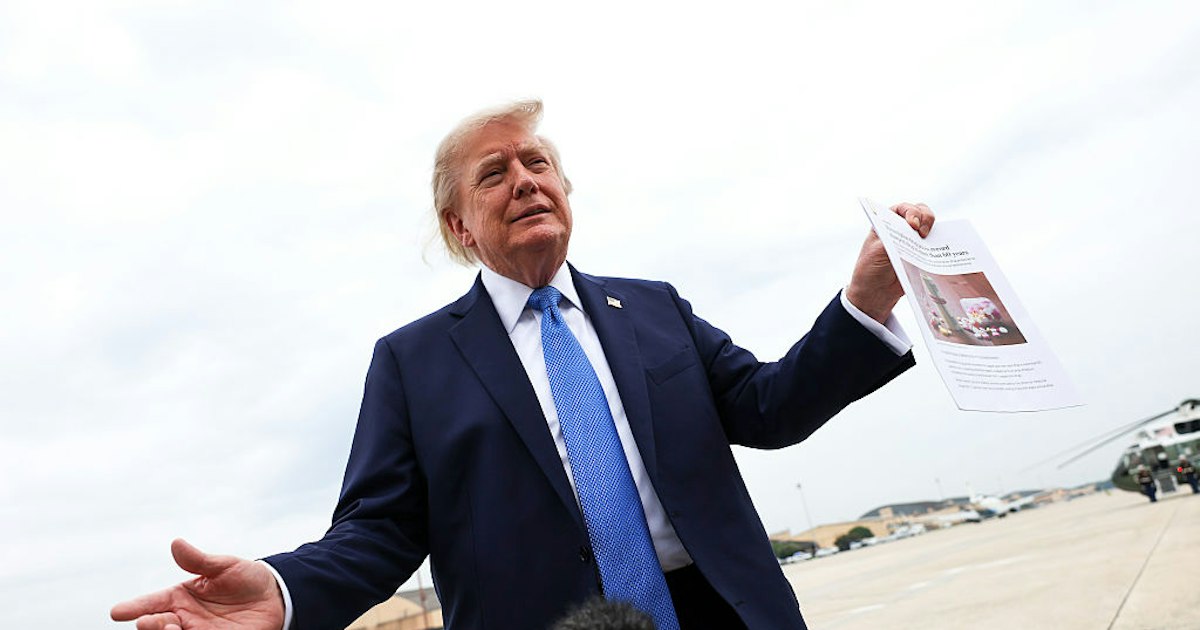
Media Surely this time it’ll work! Photo by Samuel Corum/Getty Images It’s the apocalypse season, when the media revs into high gear predicting the end of democracy, the outbreak of fascism, maybe a civil war, even outright Nazism. While the instant framing device is tomorrow’s midterm elections, which they expect President Donald Trump to cancel, nullify, buy, or steal, the drumbeat has been steady. Because if not the midterms, it’s the Reflecting Pool, or the ballroom, or the arch, or the Gulf of America. These are all used as shorthand for Hitlerian self-aggrandizement, of all that is wrong with gilt decoration. The New Republic just says plainly: “Trump Is Planning a November Coup d’État.” The secretary of the Air Force under Biden calls for the military to disobey any crazy Trump orders ahead of the midterms. A “conservative legal icon” writes that Trump plans to “wage the final battle” against democracy. A lot of people seem in favor of fighting back: In a recent poll, 59 percent of Democratic respondents said they would feel “very positive” or “somewhat positive” if they learned a junta removed Trump and seized control of the American government (hyped-up rhetoric can have real-world impact). The former Treasury Secretary Robert Rubin even warns, “President Trump’s clearly expressed desire is to interfere with and even usurp the midterm elections. November 3 could be a defining test for the rule of law in this country, and both our democracy and our prosperity are on the line.” More bad news as another column declares the Republican Party has a fascism problem in its ranks. The Nobel Prize–winner Paul Krugman predicts Trump will issue a Hitlerian “Nero Decree” if the Republicans lose the midterms, ordering American monuments like the Kennedy Center burned. Jittery Tom Friedman of the New York Times is worried because “the future of democracy” is on the line come November 3. Friedman is still recovering from the ravages of January 6, which he said reminded him of the war-torn Beirut he covered as a cub reporter. Friedman’s newspaper loves to cite whatever thing is happening at the moment (ICE, some Army general fired) as a new Reichstag moment. But if you prefer your fascism night terrors as speculative fiction, two new books offer sketches of the coming Blue–Red civil war. Meanwhile, another new book, purporting to be a straight history, 53 Days: How Hitler Dismantled a Democracy, hits all the familiar notes, and throws in that Hitler, too, had coarse manners and sought to build a ballroom extension onto the Reichstag building itself. One of the really sad cases is Art Spiegelman, who of all people should know better. Spiegelman wrote the graphic novel Maus some 40 years ago, summing up his father's recollections of the Holocaust. He portrayed the Jews as mice, the Nazis as cats, and those who collaborated as pigs. Spiegelman now warns there are many touch points between what happened near the middle of the 20th century and what is happening now, citing ICE raids, for example, as evidence of creeping fascism. He claims Trump has “very effectively dismantled” the country’s democratic ideals. He feels the president “is cutting off civil liberties and using his powers to squelch dissent” and he finds himself watching in alarm as ordinary Americans suffer a “new indignity every day.” He has no hesitation in describing the administration as fascist, and so demands a justified “counter revolution” to take down Trump. “This is worse than most things I know,” Spiegelman concludes about America. “I just don’t see how we get out of this.” People have become hysterical, and this hysteria clouds their judgment even as it fills their wallets. Politics today can sound like a thriller novel in which institutions collapse spectacularly on page one to set the story in motion. Every headline not supporting your own beliefs becomes evidence “democracy is dying.” It is a helluva lead-in to the midterms. So are they right? Is it 1930s Germany out there? No. Germany in the 1930s was a very different place from America in 2026. The nation was ravaged by the First World War, the subsequent reparations, and the hyperinflation of 1923. The Great Depression brought mass unemployment, banking failures, and political paralysis. The Nazis’ elevation to power was preceded by years of political violence—brownshirts in the streets, busting up rival parties’ meetings, and beating Jews. And Hitler was never elected “dictator;” he was appointed chancellor by President Paul von Hindenburg after conservative politicians decided they could use him to achieve their own goals. Germany had already crossed from political crisis into systematic suspension of civil liberties and the destruction of opposition parties. Hitler, as we are famously told, dismantled the Weimar Republic in just 53 days. American journalists have now been predicting such a feat for the better part of a decade. Reality aside, there is still that word, fascism, which is thrown around too casually. ICE abuse, however tragic, or a court decision you do not agree with are not the stepping-stones to fascism. People used to instead use perfectly workable terms like illiberal, populist, expansion of executive power, objectionable, or constitutionally aggressive. Today “fascism” is a synonym for them all; and as with all faux prophecies, everything is a sign. Subscribe Today Get daily emails in your inbox So what is behind the pre-midterm media juggernaut rushing to proclaim our imminent doom? To be sure, a large amount of the fear mongering is simply the economics of attention. Nazi stuff generates clicks and likes. “Democracy is dying” is a shocking headline. The problem is that once you go full Nazi, there is nowhere else to go rhetorically. You end up digging in, trying to defend a bad position, knowing you can't top yourself but still have a podcast to fill. Where once a top-line media outlet could run a balanced piece headlined something like “American institutions continue to function, but several norms are under pressure,” it now has to do a Chicken Little routine to get anyone's attention. The words have lost their shock value. Another possibility is that the media is using fear to motivate voters in the service of its own political agenda. While the op-eds in liberal publications often focus on Trump’s slump in support, they ignore the contempt with which many voters hold the Democratic Party after the Biden years. The idea that fear or hatred of Trump will automatically translate into Democratic votes is condescending toward voters. The idea seems to be that as long as enough voters can be scared enough, they’ll at least reluctantly vote Democrat. If a population can be made to believe the other side is not merely wrong but an existential threat to democracy, voting Democrat becomes a moral obligation and the voter a patriot. It is a very cynical trick being played. We are not in the early days of fascism. Democracy does not mean that politics isn’t ugly, or that there aren’t instances of corruption or abuses of power, or even that there aren’t bad presidents. Democracy, in fact, is a system for correcting those things. The media needs to back off the scare tactics and have a little faith in the people.
The Media Whip Up Another Round of ‘Fascism’ Fears for the Midterms
Full Article
Original Source
Read the full article at Theamericanconservative →KhanList aggregates and links to publicly available news content. We do not host full articles from third-party sources. Always verify important information with original sources.