
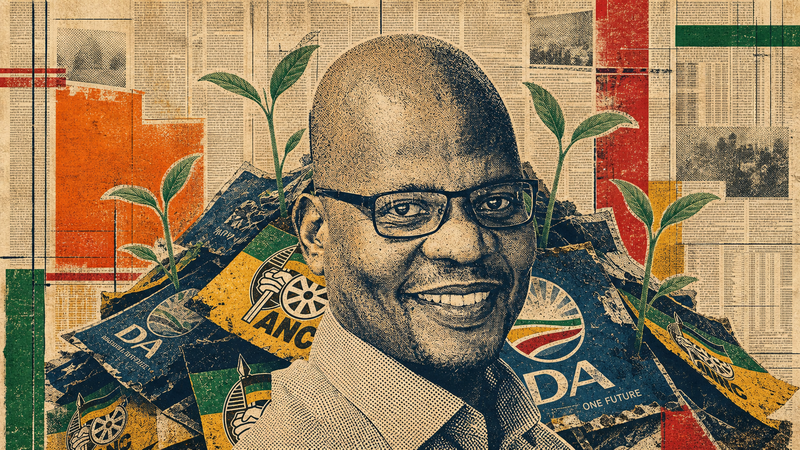
This week the alarm was being sounded about the performance of the Alternative for Germany (AfD) party in state elections in the east of that country. Barely 13 years since its formation, the populist, racist, xenophobic, Islamophobic and homophobic AfD secured nearly 44% of the vote in Saxony-Anhalt. A rout had been predicted but not even the most optimistic AfD leaders or the most pessimistic outlook from the mainstream Christian Democratic Union and Social Democratic Party saw that coming. It was the same in Britain a few months ago when the equally obnoxious Reform UK trumped the governing Labour Party and the opposition Conservatives. Current polling indicates that if an election were held today the party, which has just a handful of MPs, would be in pole position to form a government. The Tories, once the standard bearer of conservative opinion, would be reduced to a distant third. After decades on the margins, France’s National Front is now within reach of the presidency and leading the largest bloc in parliament.Yet, here at home there is this persistent argument that small parties are an irritant and that voting for them is like throwing your precious vote into a giant landfill where it will disappear into the rubbish and gunge. This narrative has been perpetuated by both the ANC and the DA. It suited both. When the ANC was still the majority party it feared that tiny parties would gnaw at its vote share and give its opponents leverage that they did not deserve. So the ANC preached to its traditional support base that the only way their vote would be useful would be to vote for the party currently in government since only it could effect the improvements in their lives and in their communities.For its part, the DA believed that “fragmentation” in opposition ranks was slowing down its project of building a viable alternative to the ANC. So it argued in favour of voting for a consolidation of opposition forces, shorthand for all smaller players coalescing around itself.Both parties’ perspectives (and the view of many political observers) was that South Africa’s democracy would follow the pattern of those countries with two dominant parties, with single players picking up the bits. To them the choice was supposed to be between the left-of-centre former liberation movement and the centre-right self-proclaimed custodian of liberalism. Race mattered immensely in this equation as the ANC played up the DA’s milky complexion and the latter sought to project itself as the most diverse political force in the country and draw from the black, green and gold party’s base.History, however, has other ideas.Several splinters over the years, the emergence of smaller players as well as disengagement from formal politics has seen the ANC cut down from a party wielding a comfortable majority of more than 60% to one that sits at 40% and is in decline. Despite the ANC’s precipitous decline, the DA has failed to capitalise and turn the disengagement into support for itself. Stuck in the early 20 percents, the DA has now set a realistic national target of 25%, which would make it one of the big bulls as the ANC’s downward trend continues. With the ANC possibly coming down to about 30% by the 2029 general election, the DA surmises, the two could either continue leading the current super-coalition or lead one itself. Thinking within the ANC goes along the same lines but there is still great suspicion of the DA, so, depending on the outcome of the party’s national conference next December, it could cobble a coalition that excludes the DA.Whichever scenario plays out, the smaller parties will play a pivotal role in tilting the balance of power. This is exactly what happened in 2024 and South Africa is healthier for it. The much-maligned smaller parties kept many of the disenchanted within the political system. There are many African voters who were previously ANC voters but would not touch the DA with a barge pole. Likewise there are white voters and others from minority groups who had found a home in the DA but were increasingly feeling alienated by the party. They opted to give the emergent parties a chance and sent an array of clowns and competent leaders to Parliament and the legislatures.Small is bigRather than see their votes as a waste, we should appreciate what was achieved by the proliferation of parties that met the threshold. One just has to look at the leadership of some of the portfolio committees that are chaired by MPs from small parties to see that small alternatives do add value. You also have to look at the input of small-party members in those committees and those in the ad hoc committees.Concern about the instability in municipal governments as a result of the proliferation of political parties is well placed, but legislation currently making its way through Parliament should shield South Africans from this chaos in future. The other negative here is the ethnicisation of our politics, which has seen opportunists exploit real and imagined grievances of various national groups in our country. Populism is another danger, as desperate conditions drive voters to parties that promise the impossible. These will be much harder to deal with and require a reimagination of our country and leadership that reaches across ethnic groups and also tells truths to people.But these should not tar the emergence of smaller parties. As in the examples stated above, parties start small and answer to certain needs of a nation at a particular point in history. The answers to our challenges may not lie in the major parties, so we should allow voters to explore options, no matter the size. The parties we deride today may just be the major parties of the future. The DA is correct. We will never again have a dominant party in the country, so let’s allow the seeds of the smaller parties to grow. If they do not answer the questions the people will consign them to the cemetery. And if they do, who knows how close to the sky they will fly. DM
THE LOWLY NEWSPAPERMAN: When big parties fail, SA has smaller options — and it’s not a wasted vote
Full Article
Original Source
Read the full article at Dailymaverick →KhanList aggregates and links to publicly available news content. We do not host full articles from third-party sources. Always verify important information with original sources.