
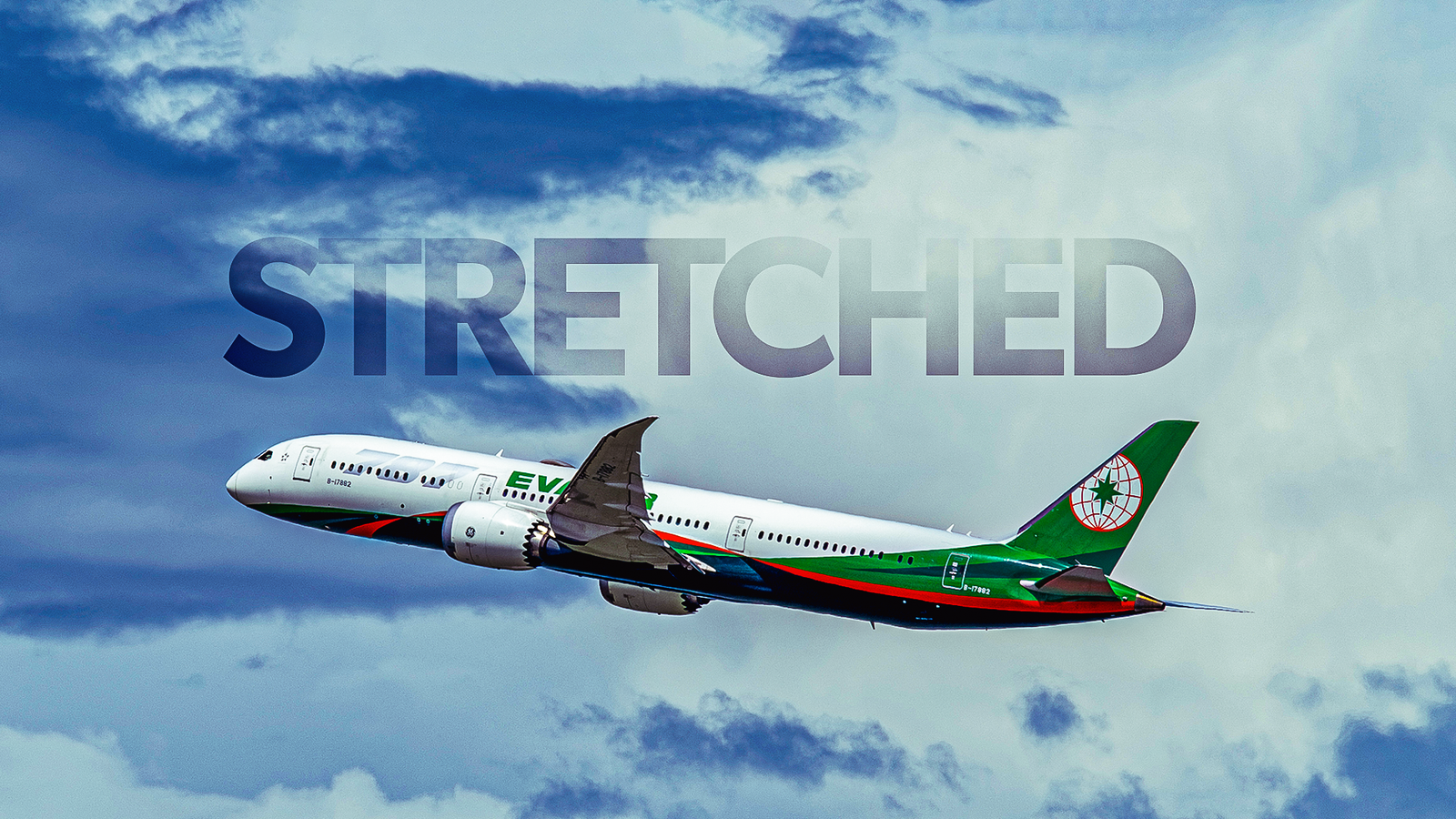
Published Oct 14, 2026, 7:00 PM EDT Journalist - Steven has a varied background in communications, and it was this passion for writing combined with his in-depth knowledge of the aviation industry that led him to Simple Flying. A keen linguist, he also has experience in translation and interpreting. Based in Palma, Spain For years, much of the non-stop connectivity between Taiwan and the US has been concentrated along the West Coast. That geography changed on June 26, 2026, when EVA Air began flying non-stop between Washington Dulles International Airport (IAD) and Taipei Taoyuan International Airport (TPE). The new service is more than another addition to the airport's international schedule: at approximately 7,800 miles (12,552 km), it is now its longest non-stop route. The four-times-weekly service also gives Taipei a much more substantial role in serving the US East Coast, placing Taiwan directly into a market historically dominated by connections through major Japanese and South Korean hubs. Operated with a Boeing 787-9, the route combines Washington DC's business, diplomatic, and international traffic with EVA Air's extensive network beyond Taiwan Taoyuan International Airport. It created a direct link that previously did not exist between the region and Taiwan. A New Longest Route At Washington Dulles The scale of the new service becomes apparent when its distance is considered. The Washington-Taipei route stretches for roughly 7,800 miles (12,552 km), making it the longest non-stop flight from Washington Dulles International Airport. The distance also places the route firmly in the ultra-long-haul category, with scheduled flight times extending well beyond 15 hours, depending on direction and conditions. EVA Air operates the route four times per week, with Washington DC departures scheduled on Tuesdays, Thursdays, Saturdays, and Sundays. The return service leaves Taipei on Mondays, Wednesdays, Fridays, and Saturdays, creating a schedule that gives travelers several weekly options without requiring the airline to commit a widebody aircraft to the route every day. For Washington Dulles International Airport, the arrival of such a long-haul service to Asia is significant because international traffic already represents an important part of the airport's operation. Data from the US Bureau of Transportation Statistics shows that the facility handled more than 10.5 million international passengers in 2025. Airport officials have continued to pursue additional links to Asia and other underserved markets. EVA Air's arrival therefore fits into a wider effort to expand the airport's role as the international gateway for the Washington DC region. EVA Air's Boeing 787-9 The aircraft selected for the route is the Boeing 787-9, a type well suited to long-distance services where airlines need to balance range, capacity, and operating economics. EVA Air's Washington DC service uses a three-class configuration with 26 Royal Laurel Class seats, 28 Premium Economy seats, and 224 Economy Class seats, giving the aircraft a total of 278 seats That configuration provides a relatively substantial premium cabin for a route aimed partly at Washington's business and institutional traffic. Premium Economy is particularly relevant because the Washington DC service features EVA Air's newer fourth-generation Premium Economy product. Rather than positioning the cabin simply as a larger version of standard Economy, the airline has placed greater emphasis on personal space and comfort. On a flight that can last 15 hours or more, that intermediate cabin gives passengers another option between a full business-class fare and the standard Economy cabin. The three-cabin approach also reflects the different groups the airline expects to serve. Washington is home to multinational companies, international institutions, NGOs, and diplomatic activity, while the wider region provides a large population base for leisure and VFR traffic. EVA Air has also highlighted the region's concentration of high-value corporate and institutional travelers when explaining the route's potential. Why Washington Matters Credit: James Kirkikis | Shutterstock The business case for a non-stop Taipei service is closely tied to Washington DC's position beyond its role as the seat of the US federal government. The region is a major economic center with multinational corporations and international organizations, while its universities, research institutions, and technology companies generate additional international travel demand. EVA Air specifically identified the area's political and economic importance when announcing the route in February 2026. The airline expects the service to generate more than $61 million in annual economic impact for the US National Capital Region. That figure is an estimate from EVA Air and the Metropolitan Washington Airports Authority rather than a measurement of realized economic activity. Ranking Destination Passengers 1 London Heathrow (LHR) 817,000 2 San Salvador (SAL) 643,000 3 Frankfurt (FRA) 629,000 4 Paris Charles de Gaulle (CDG) 502,000 5 Istanbul (IST) 357,000 However, it illustrates how airport authorities and the airline view the route as extending beyond passenger convenience. The non-stop link creates a direct connection between two major economic regions that previously required an intermediate stop. Data from the US Bureau of Transportation Statistics shows that last year, London Heathrow Airport (LHR) was the busiest international destination from the airport. There is also a substantial Taiwanese community and business presence in the broader Washington DC area, giving the route a potential base of passengers traveling for family, professional, and institutional reasons. At the same time, travelers originating around Washington DC can use Taipei Taoyuan International Airport as a gateway to destinations across Asia. Washington Dulles International Airport has therefore gained both a point-to-point service and an additional one-stop option for markets beyond Taipei itself. Taipei Becomes An East Coast Gateway The route changes the geography of how Taipei can compete for US traffic. Before the Washington DC service, much of EVA Air's US network naturally favored Pacific gateways such as Los Angeles International Airport (LAX), San Francisco International Airport (SFO), and Seattle-Tacoma International Airport (SEA), where the transpacific distance is considerably shorter. Adding Washington DC creates a much deeper East Coast presence and reduces the need for passengers in the region to travel through another US or Asian gateway. Taipei Taoyuan International Airport also gives EVA Air an important advantage because passengers do not necessarily have Taipei as their final destination. The airline can use its Taipei hub to connect Washington DC travelers with destinations across the Asia-Pacific region, allowing the Washington DC service to function as part of a broader network rather than simply as a standalone city pair. This matters for travelers heading to markets where direct service from Washington DC is unavailable or less frequent. That puts Taipei into a competitive position alongside established Asian transfer points such as Tokyo Narita Airport (NRT) and Incheon International Airport (ICN) for East Coast travelers. Airlines including All Nippon Airways, Japan Airlines, Korean Air, and Asiana Airlines already connect the Washington region to Asia through their respective hubs and networks. EVA Air's proposition is different. Indeed, its passengers fly directly to Taiwan before continuing onward through Taipei Taoyuan International Airport rather than changing aircraft at a Japanese or South Korean hub. Part Of A Wider Taipei Expansion Credit: Soos Jozsef I Shutterstock EVA Air's Washington DC service is part of a broader expansion of its North American network. With Washington DC added, the airline reached ten nonstop North American gateways, as detailed below. The Dallas/Fort Worth International Airport (DFW) addition in 2025 and Washington Dulles International Airport (IAD) launch in 2026 are particularly notable because they extend EVA Air beyond the traditional West Coast pattern. Airport Airport Code Chicago O'Hare International Airport ORD Dallas/Fort Worth International Airport DFW Houston George Bush Intercontinental Airport IAH Los Angeles International Airport LAX New York John F. Kennedy International Airport JFK San Francisco International Airport SFO Seattle-Tacoma International Airport SEA Toronto Pearson International Airport YYZ Vancouver International Airport YVR Washington Dulles International Airport IAD Together, the routes broaden the geographic footprint of Taiwan's North American network. The trend is not limited to EVA Air. Taipei-based Starlux Airlines began non-stop service between Phoenix Sky Harbor International Airport (PHX) and Taipei Taoyuan International Airport (TPE) on January 15, 2026, using the Airbus A350-900. The service initially operated three times per week before increasing to four weekly flights in March. It provided another example of a Taiwanese carrier using a new-generation widebody to establish a direct link from a US market that previously lacked non-stop Asia service. A Different Kind Of Transpacific Competition Credit: EVA Air The arrival of EVA Air at Washington Dulles International Airport also illustrates how modern widebody aircraft have changed the economics of long-distance network planning. The Boeing 787-9 can serve a route of this length without requiring the passenger volumes associated with the largest widebody aircraft, allowing an airline to test demand with a more moderate capacity level. Four weekly frequencies provide another degree of flexibility while establishing a regular presence in the market. For passengers, the most visible change is the elimination of an intermediate stop. A journey between Washington and Taiwan previously required travelers to connect elsewhere, whereas EVA Air now offers a single aircraft from Washington Dulles International Airport to Taipei Taoyuan International Airport. The value of that time saving becomes particularly apparent on an itinerary extending across thousands of miles, where avoiding a connection can remove several hours from the overall journey. The early performance has also provided an indication of interest in the service, with load factors of over 90% in July 2026. Of course, a single month of performance does not establish a long-term trend and should not be treated as a forecast for the route's future. What is clear, however, is that the service has given Washington Dulles International Airport a new transpacific link, given EVA Air a major East Coast presence, and made Taipei a more direct part of the Washington, DC region's international aviation map.
The Long-Haul Carrier Now Flying Washington Dulles' Most-Stretched Route At 7,800 Miles
Full Article
Original Source
Read the full article at Simpleflying →KhanList aggregates and links to publicly available news content. We do not host full articles from third-party sources. Always verify important information with original sources.