
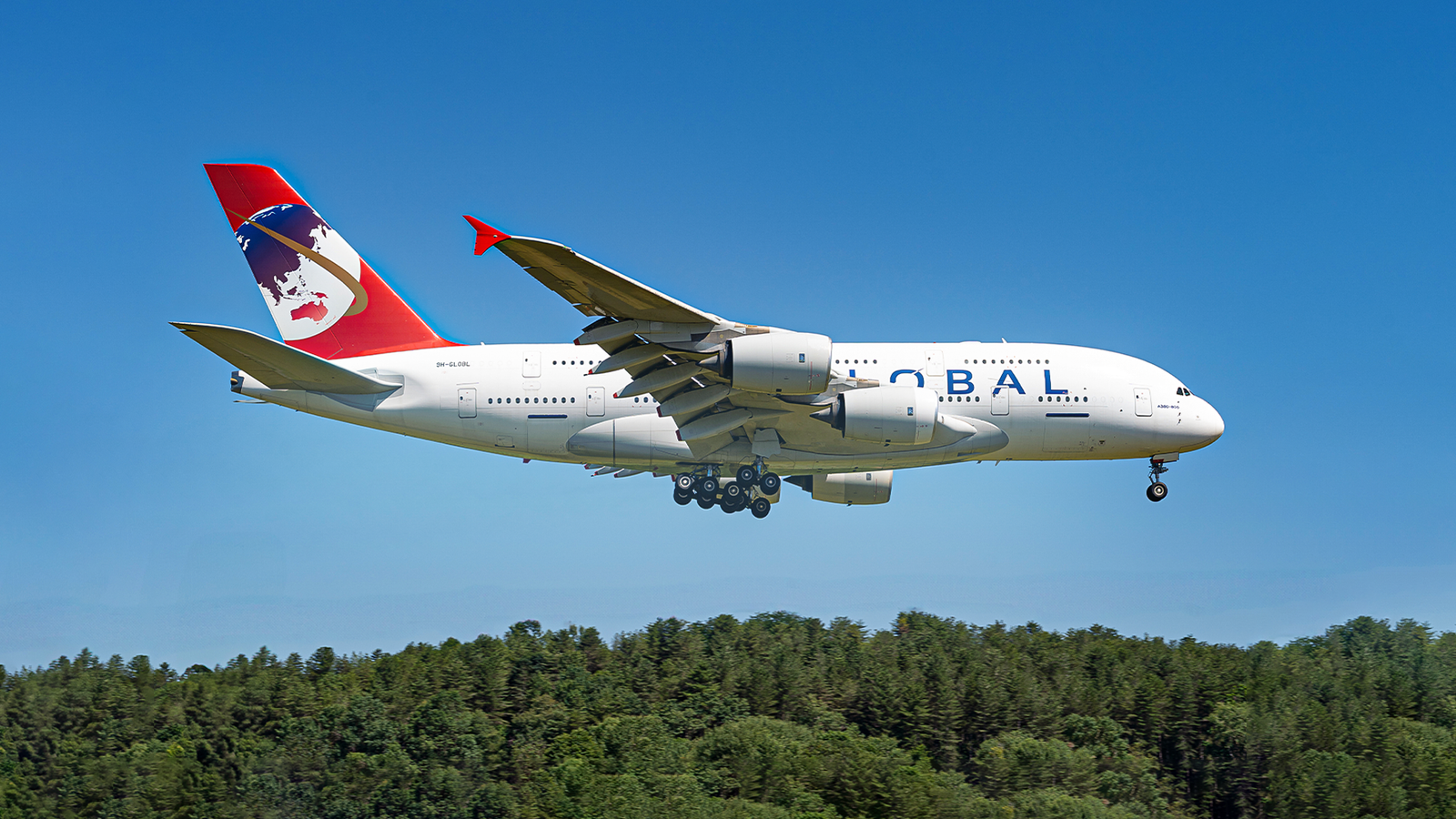
Published Sep 20, 2026, 12:00 PM EDT Airline and Airport Management Graduate, Student Commercial Pilot and Commercial Aviation Writer. Based in London & Nagoya Global Airlines, a British aviation startup operating without its own air operator certificate, has built its entire enterprise around acquiring pre-owned Airbus A380 aircraft to launch long-haul passenger flights. It is a truly ambitious plan, but one that may never reach the heights it promised, as in the High Court of Justice in London, creditors have initiated formal proceedings to force the startup into compulsory liquidation. The legal confrontation centers on whether a virtual airline can survive mounting debts and static maintenance expenses while its sole airframe sits idle in France. Chief Executive Officer James Asquith continues to publicly assert that Global Airlines will return its jet to service before Christmas 2026 with new routes connecting the United Kingdom to the Maldives. However, insolvency filings, creditor claims represented by law firm Vedder Price LLP, and the fact that the airframe 9H-GLOBL has been parked at Tarbes-Lourdes-Pyrénées Airport (LDE) since July 16, 2025, present a starkly conflicting operational picture. A Startup In Turmoil Behind the glossy marketing lies a brutal legal reality. On May 29, 2026, winding-up petition CR-2026-004213 was filed in the High Court, otherwise known as the most nuclear option in English corporate law, designed to freeze bank accounts and force compulsory liquidation. High Court hearings before Insolvency Judge Barber on July 15 and September 2 placed the startup's entire commercial future on a knife-edge. It is a staggering legal threat for an enterprise with an operational lifespan measured in hours rather than years. 9H-GLOBL completed just two roundtrips (four total flights) under a damp lease with Hi Fly Malta, logging 62 flight hours across 20 operational days before slumping back into long-term storage. A similar winding-up petition in August 2025 was narrowly resolved out of court, demonstrating that creditors are increasingly using High Court filings to force overdue payments. The legal squeeze tightens further with a mandatory September 30, 2026 deadline to submit 2025 audited accounts to Companies House, a filing that will publicly expose the startup's balance sheet. Internal instability has already breached the boardroom, marked by the high-profile exits of OnlyFans co-founder Tom Stokely and former Chief Commercial Officer Richard Stephenson, alongside the quiet May 2026 appointment of directors Michael Joseph Belitz and Dylan Salamon. While executive leadership blames the grounding on global backlogs for mandatory 12-year heavy airframe checks, parking a dormant four-engine superjumbo generates relentless overhead. Storage fees, insurance, and corrosion control continuously erode capital reserves without a single dollar of ticket sales to stem the bleeding. It is a classic solvency trap, where a high-maintenance asset burns cash against zero operational revenue while High Court deadlines close in. Storing An Aircraft Is Not Free The marketing appeal of acquiring a secondhand Airbus A380 comes from its initial price tag. While a factory-new widebody usually costs hundreds of millions of dollars, used A380 airframes trade between $25 million and $60 million. However, that acquisition price masks a far larger capital trap. Restoring a dormant superjumbo to airworthy status is impossible without extensive heavy maintenance, including comprehensive checks, engine recertification, and structural inspections that can easily double the initial outlay. Chief Executive Officer James Asquith has consistently pointed to severe global maintenance, repair, and overhaul backlogs as the main reason for the prolonged grounding of 9H-GLOBL. Widebody maintenance slots are undoubtedly tight across Europe, but static storage at Tarbes-Lourdes-Pyrénées Airport (LDE) is far from free. Storage fees, humidity control, engine preservation runs, and insurance premiums build up a steady monthly cash outflow. Without completing these heavy maintenance milestones, an airframe cannot fulfill the rigorous airworthiness requirements needed to achieve long-term operational clearance. Every month spent waiting for a maintenance slot prolongs total dependency on wet-lease partners and consumes cash reserves that should support airline setup. Instead of generating revenue across transatlantic corridors, the dormant jet is really a passive cost center draining startup capital. No Operating License? Relying on a third-party damp-lease provider like Hi Fly Malta offered a quick operational shortcut, but it failed to shield the startup from regulatory scrutiny or mounting debts. Operating under another carrier's registry allowed 9H-GLOBL to complete its four transatlantic flights, but Civil Aviation Authority records confirm Global Airlines has still not formally acquired its own United Kingdom Air Operator Certificate. Without an independent license, the startup remains a virtual airline, completely unable to control its own flight schedules, route rights, or operational destiny. The operational model created a punishing financial trap known as double capital expenditure. The startup absorbed high hourly block rates to pay Hi Fly for crews, maintenance, and insurance while simultaneously carrying the fixed ownership, leasing, and storage overhead for its parked airframe. When cash flow dried up, the damp-lease arrangement collapsed after just 20 operational days, leaving the airline with zero revenue mechanism, with its primary asset accumulating static preservation fees in France. Unresolved legal disputes and the absence of a UK Air Operator Certificate completely block access to essential long-haul airport infrastructure. Slot coordinators at London Heathrow and London Gatwick need to see proven financial liquidity and regulatory licensing before allocating high-value takeoff and landing slots. With creditors circling in London and no direct operational control over its fleet, the startup cannot establish global distribution channels or interline agreements, locking it out of the commercial revenue required to survive. Just A Parts Bank When Airbus ended A380 production at 251 aircraft, it created a hard ceiling on the global supply of superjumbo components. For legacy carriers committed to flying the type well into the 2030s, sourcing certified replacement parts directly from manufacturers became an increasingly expensive and time-consuming job. Consequently, the dormant airframes became critical part donors to help fuel the supply of parts. This market dynamic creates a direct conflict between Global Airlines and its creditors. To lessors and debt holders facing overdue liabilities, an idle aircraft is a prime candidate for rapid capital recovery through part-out specialists. Liquidating the airframe into certified used serviceable material generates immediate cash returns without incurring further operational risk. Conversely, allowing an undercapitalized startup without its own air operator certificate to retain the aircraft merely increases mechanical wear on key systems while accumulating unpaid maintenance and storage debts. Ultimately, this economic reality leaves the startup trapped by the modern aviation finance rulebook. As High Court proceedings advance in London, the push toward compulsory liquidation reflects a clear industry consensus: underfunded passenger operations carry unacceptable financial risk compared to part harvesting. Rather than inaugurating new long-haul routes, 9H-GLOBL remains caught in the pull of a global disassembly market that treats the superjumbo not as a flagship passenger jet, but as a high-value collection of spare parts. What Will Happen To The Lone A380? Credit: DV8 Photos | Shutterstock Should liquidation proceedings force the sale of 9H-GLOBL, the secondary market for four-engine widebody aircraft offers virtually no commercial safety net. While secondary twin-jet airframes like the Boeing 767 or Airbus A330 frequently find profitable second lives through passenger-to-freighter (P2F) conversions, the double-deck nature of the A380 renders main-deck cargo loading unviable and economically prohibitive. Consequently, scrapping the aircraft seems the most likely next move. This trajectory closely mirrors the fate of earlier secondary superjumbo experiments, most notably Hi Fly’s operation of registration 9H-MIP. Despite securing temporary ad-hoc charters and humanitarian flights, the aircraft accumulated unsustainable daily standing costs whenever grounded. When Hi Fly retired the jet to Tarbes–Lourdes–Pyrénées Airport, the airframe was harvested for high-value landing gear, avionics, and Trent 900 engine components to support active legacy operator fleets rather than re-entering commercial service. It is ultimately down to Global Airlines to keep this aircraft in the skies and safe from the scrapyard. Even if the airline does get through this latest challenge to its operation, that will most certainly not be the end of trouble for the startup. 9H-GLOBL may end up being saved, but its service may not last long. Maybe Not The Wisest Decision Credit: Evan El-Amin | Shutterstock The collapse of an independent superjumbo enterprise reinforces a fundamental reality of modern airline economics: ultra-large widebodies need massive route networks, hub feeder traffic, and corporate sales channels to sustain four-engine operating overhead. Attempting to look over these requirements with a standalone airframe leaves a carrier exceptionally vulnerable to fuel price spikes, maintenance delays, and ground handling issues. With High Court enforcement actions advancing and storage fees accumulating, the ultimate fate of 9H-GLOBL will serve as a definitive benchmark for secondary widebody valuations. If an airframe with newly refurbished cabin interiors and low total flight cycles cannot secure a sustainable buyer or lessor, the commercial viability of non-legacy A380 operations will likely not be replicated ever again. For prospective long-haul entrants, the lesson is unequivocal. Future disruptors aiming to challenge established transatlantic carriers must build their networks around fuel-efficient twin-engine platforms, leaving the epoch of four-engine mega-transports firmly in the hands of global legacy giants.
The London Court Hearing That Could End The Startup Trying To Revive The Airbus A380
Full Article
Original Source
Read the full article at Simpleflying →KhanList aggregates and links to publicly available news content. We do not host full articles from third-party sources. Always verify important information with original sources.