
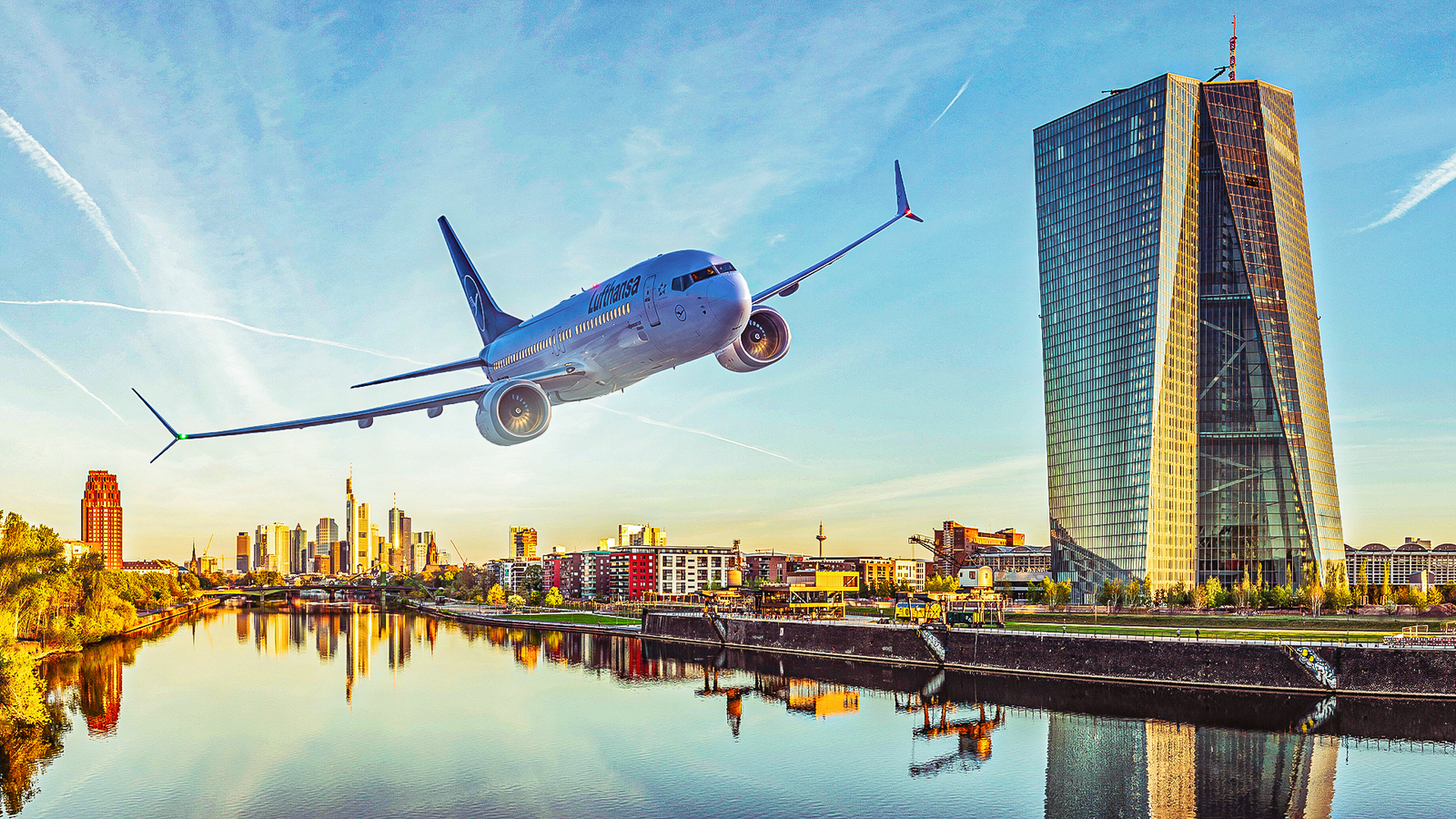
Published Oct 4, 2026, 4:00 PM EDT Based in the UK, Josh is a keen writer with a degree in Military History. Having worked previously as a financial journalist, he has covered the aviation industry extensively, reporting on airlines' results and monthly passenger statistics in the aftermath of the pandemic, alongside the likes of regulation around sustainable fuels, and the prospects for hydrogen-powered commercial flight. He joins Simple Flying with a lifelong love of all things aviation. Sign in to your Simple Flying account Lufthansa has just buoyed its order for Boeing 737 MAX aircraft. By exercising options for an additional 20 aircraft earlier in September, the German flag carrier took its order book with Boeing for such models to a total of 60. Interestingly, this meant the carrier had moved to bolster its commitment to the latest generation of Boeing 737s after having previously ditched the family altogether around a decade ago. Details are, naturally, relatively few and far between at this stage. On the one hand, the Boeing 737 MAX 10 involved in the latest deal remains uncertified. On the other hand, Lufthansa Group incorporates an array of airline subsidiaries, many of which could take the aircraft. Needless to say, uncertainties remain. So, what do we know so far? Lufthansa’s Latest 737 Order Worth $3.4 billion Lufthansa detailed in mid-September that the group’s supervisory board had approved a decision to take an increased allocation of 737 MAX aircraft from Boeing. Namely, this would involve 20 737 MAX 10s, for which purchase options had been secured through a prior order made in 2023. This previous order encompassed 40 Boeing 737 MAX 8s. For the additional aircraft, Lufthansa noted the extra 20 737 MAX 10s carried a list value of $3.4 billion. That equates to the official baseline price from Boeing, however, rather than the actual value of the deal. Airlines and manufacturers instead typically negotiate lower prices, so the price paid could be substantially different from that disclosed by either. Either way, the decision meant Lufthansa would be exercising and splashing out on 20 of the 60 737 MAX purchase options included in the 2023 deal. These, it noted, would help to gradually replace aging Airbus A320 family aircraft throughout the group. They would also offer greater flexibility in capacity than those solely included in the prior order. Boeing 737 MAX 8 And Boeing 737 MAX 10 While the 737 MAX family was largely developed with airlines' cost-cutting in mind, the four distinct variants offer different strengths in practice. Lufthansa opting for both the 737 MAX 8 and 737 MAX 10 will leave it with options around capacity and range. Namely, Boeing states the 737 MAX 8 can typically house space for between 160 and 180 passengers in a two-class configuration. The maximum range for the model is 3,500 nautical miles (6,480 km). By acquiring 737 MAX 10s alongside these, Lufthansa will also have aircraft capable of carrying more passengers — 185 to 210 people across two classes — but with a slightly shorter range of up to 3,100 nautical miles (5,740 km). As Lufthansa wrote earlier in September: “Compared to the older aircraft it is intended to replace, the Boeing 737 MAX 10 consumes around 30 percent less fuel. At the same time, its higher seating capacity reduces unit costs by approximately 20 percent.” Boeing 737 MAX family and specifications, from Boeing: Specification/Aircraft Boeing 737 MAX 7 Boeing 737 MAX 8 Boeing 737 MAX 9 Boeing 737 MAX 10 Seats (two-class) 135-160 160-180 175-195 185-210 Maximum Seats 172 210 220 230 Maximum takeoff weight 177,000 lbs (80,280 kg) 182,200 lbs (82,640 kg) 194,700 lbs (88,310 kg) 197,900 lbs (89,760 kg) Maximum range 3,800 nautical miles (7,040 km) 3,500 nautical miles (6,480 km) 3,300 nautical miles (6,110 km) 3,100 nautical miles (5,740 km) Length 116 feet, 8 inches (35.6 meters) 129 feet, 6 inches (39.5 meters) 138 feet, 2 inches (42.1 meters) 143 feet, 8 inches (43.8 meters) Wingspan 117 feet, 10 inches (35.9 meters) 117 feet, 10 inches (35.9 meters) 117 feet, 10 inches (35.9 meters) 117 feet, 10 inches (35.9 meters) Height 40 feet, 4 inches (12.3 meters) 40 feet, 4 inches (12.3 meters) 40 feet, 4 inches (12.3 meters) 40 feet, 4 inches (12.3 meters) Engine CFM International LEAP-1B CFM International LEAP-1B CFM International LEAP-1B CFM International LEAP-1B The caveat for Lufthansa is that the 737 MAX 10 is yet to be certified. Boeing finalized the type’s test-flight campaign in late July, leaving the bulk of the work still to do in the hands of the Federal Aviation Administration. Boeing chief executive Kelly Ortberg then said in September that this would be completed “very soon." As to when approval does ultimately come, time will tell, with Lufthansa itself flagging that it was not expecting the variant by 2030 anyway. All being well, that timeline could mean Lufthansa operates the 737 again after a near-15-year hiatus. Lufthansa Had Long-Since Ditched The 737 Credit: Lufthansa Indeed, Lufthansa historically flew a substantial number of 737s. Between first purchasing variants over six decades ago and subsequently retiring the family in 2016, Lufthansa racked up a total of 148 orders. In fact, the German carrier introduced the Boeing 737-100 to its fleet roughly a year after the first variant debuted in 1967. Dubbed the City Jet by the airline, the early 737’s design itself was influenced by Lufthansa and became a valuable addition on short-haul routes, such as European city hops. With a range of around 1,620 to 1,782 nautical miles (3,000 to 3,200 km) and a capacity of between 90 and 100 seats, the early model’s capacities were a far cry from those boasted by the newest variants. Lufthansa has yet to introduce any of these, though, having phased out its last Boeing 737-300 variant a decade ago and never ordered any Next Generation models. Instead, the airline moved toward an all-Airbus narrowbody fleet for a time — a strategy it committed to until the 2023 Boeing order. Whether we will see the 737 once again branded in Lufthansa colors after this also remains unclear. Today, Lufthansa Group encompasses a string of subsidiaries, and clarification on which of these will receive the newest variants is still pending. Wider Fleet Renewal At Play Across Lufthansa Group With the initial 737 MAX order in 2023, Lufthansa effectively purchased the jets ahead of time but left the door open to determine which of its specific airlines would ultimately receive them. It subsequently transpired that all 40 of these 737 MAX 8s would be handed over to low-cost subsidiary Eurowings. These in turn would help to replace its Airbus A319s and older A320s, which averaged 17.9 and 14.2 years old, respectively, as of the time of writing, according to Planespotters.net. A similar process is expected for the incoming 737 MAX 10s. Lufthansa has already flagged that these will fill the role of some A320 family jets, which the group operates in large numbers across its subsidiaries. But where these end up, specifically, remains to be seen. Lufthansa Group fleet as of June, from the latest report: Aircraft/Airline Lufthansa Airlines, regional airlines, Lufthansa City Airlines and Discover Airlines SWISS and Edelweiss Austrian Airlines Brussels Airlines Eurowings Lufthansa Cargo Group fleet Airbus A220 - 30 - - - - 30 Airbus A319 39 - 13 29 - - 81 Airbus A320 62 21 29 16 50 - 178 Airbus A320neo 42 12 5 8 8 - 75 Airbus A321 53 6 6 - 6 4 75 Airbus A321neo 19 7 - - 5 - 31 Airbus A330 20 14 - 11 - - 45 Airbus A340 21 7 - - - - 28 Airbus A350 31 6 - - - - 37 Airbus A380 8 - - - - - 8 Boeing 747 26 - - - - - 26 Boeing 767 - - 3 - - - 3 Boeing 777 - 12 6 - - - 18 Boeing 787 18 - 3 - - - 21 Boeing 777F - - - - - 18 18 Bombardier CRJ 23 - - - - - 23 Embraer 29 - 14 - - - 43 Total 391 155 66 48 98 22 740 Ultimately, this will make up a fairly minor part of a much wider fleet renewal program, too. By 2035, Lufthansa expects to take delivery of more than 250 new aircraft. Again, these will be shared out among the string of subsidiaries incorporated into Lufthansa Group. Either way, the scale and speed of the modernization effort are ambitious and will largely depend on factors outside its control. Constraints In Accessing New Aircraft The elephant in the room is that airlines like Lufthansa, attempting to rapidly replace older aircraft with modern, more efficient alternatives, are at the mercy of manufacturers. That is, Boeing and Airbus are juggling such large order backlogs today that carriers are facing huge wait times between purchasing and actually receiving new jets. Come June this year, the total active order backlog of commercial aircraft at the two sat at over 16,000 – 9,216 for Airbus and 6,814 for Boeing — according to market intelligence firm Forecast International. Previously, in December last year, the International Air Transport Association noted that existing orders would take up almost 12 years' worth of current production capacity. It attributed this to engine supply chain bottlenecks, skills shortages, and longer certification processes. Either way, airlines ordering aircraft before having a clear-cut plan for how they will be used has become a common feature of operating in the industry now. Lufthansa appears to have followed similar thinking with its 737 MAX 10 order, getting in line early before explicitly specifying — at least outwardly — how they will be used. That said, it had a trick up its sleeve related to the original 2023 deal with Boeing. One notable point in Lufthansa’s move is the position that exercising its options with Boeing will place it in. Simply put, airlines hold options to effectively reserve delivery slots should they opt to buoy an original order in the future. That means essentially being able to jump the queue — something that is as powerful today as it has ever been, given the squeezed nature of the aviation supply chain. So for Lufthansa, that means it is anticipating getting its hands on the new 737 MAX 10s from “the early 2030s”. Without this, that date could have been far further into the future. What is more, Lufthansa also holds options for a further 40 737 MAX family aircraft if need be. Lufthansa was approached for comment.
The Legacy Airbus Operator Returning To Boeing After A Decade Away From The 737
Full Article
Original Source
Read the full article at Simpleflying →KhanList aggregates and links to publicly available news content. We do not host full articles from third-party sources. Always verify important information with original sources.