
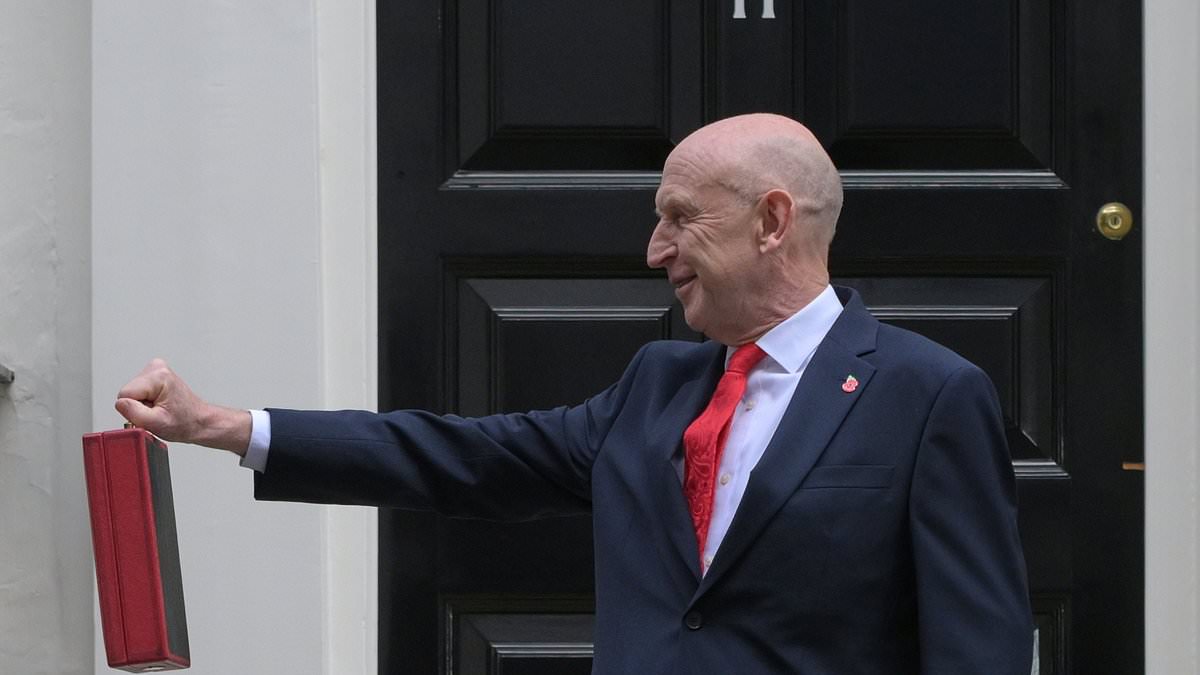
Updated: 08:52 EDT, 28 October 2026 Chancellor John Healey is delivering his first Budget against a challenging economic backdrop.With borrowing costs at a 30-year high and fuel and energy bills rising, Healey has pledged to provide 'breathing space' for households and businesses. It has been trailed as a 'do no harm' package of limited tax hikes helping to pay for cost-of-living support, while delaying big spending decisions on defence, benefits and social care.We will also hear from the Office for Budget Responsibility, which will publish its forecasts and lay bare the economic realities facing the Chancellor. Here's what Healey has announced so far: John Healey has already announced help on energy bills for low-income families Budget built on 'fiscal discipline' The Chancellor opened his Budget by saying it is for the 'working people of Britain, for British businesses, big and small'. He said: 'First, by giving Britain some breathing space on the cost of living and the cost of business,'Second, backing the enterprise of British business to unleash innovation and growth in every postcode'And third, by tackling the big challenges on energy, on national security, on public service transformation and on housing.'The OBR forecasts the Government will spend £14billion more on debt interest this year as Britain battles 'global economic storms'. Borrowing is set to fall to 4.2 per cent this year, reducing to 1.8 per cent in 2030-31, while UK debt as a percentage of GDP is up to 83.2 per cent this year and 83.8 per cent next year, before dipping to 81.7 per cent in 2031-32, the Chancellor said. The budget watchdog expects the Chancellor's fiscal headroom will be £15billion in 2029/30, lower than Rachel Reeves' previous £24billion buffer. Energy bills Healey has already announced he will axe standing charges on gas bills, in a move that will benefit millions of households - but experts warn those in larger homes could be worse off. The Treasury said Healey will today ask the energy regulator Ofgem to remove standing charges 'in 2027 or as soon as possible after'. He said he will set out similar reforms for electricity bills. 'From this point, our priority is first and foremost cheaper energy, with clean power key to achieving this,' he said in his statement. He will extend the VAT cut on domestic energy bills through the winter and pledged to take 25 per cent off business energy bills from April. And finally, households in council tax bands A to D will receive a £100 energy payment paid directly into their accounts. Low-income pensioners avoid income tax The Chancellor has confirmed pensioners whose sole income is the state pension will not pay income tax. Those relying on just the state pension had been set to pay income tax on it for the first time from next April, as the annual amount would breach the income tax threshold of £12,570.SAVE MONEY, MAKE MONEYUp to £300 cashbackUp to £300 cashback£25-£300 cashback on at least £3004.87% cash Isa4.87% cash IsaTrading 212: 1.27% fixed 12-month bonus£2,500 cashback£2,500 cashback£250-£2,500 cashback when opening SippUp to £150 cashbackUp to £150 cashbackOpen a savings account with at least £5,000Welcome bonusWelcome bonusGet up to £200 when you invest £100Affiliate links: If you take out a product This is Money may earn a commission. These deals are chosen by our editorial team, as we think they are worth highlighting. This does not affect our editorial independence. Terms and conditions apply on all offers.
The key points from Chancellor John Healey's first Budget
Full Article
Original Source
Read the full article at Dailymail →KhanList aggregates and links to publicly available news content. We do not host full articles from third-party sources. Always verify important information with original sources.