
5 min readHere’s what you’ll learn when you read this story:A team of researchers at MIT believes vertebrates may have first developed the neural pathways for consciousness 500 million years ago.Ancient deep brain structures from the thalamus to the medulla could hold the keys to specific conscious experiences like thirst.Using transcranial focused ultrasound, the scientists are trying to map where those conscious experiences live in the brain.We’ve been poking around inside each other’s heads since the Stone Age, but we still don’t know what consciousness is or where it comes from. Now, a research team at MIT is suggesting that it’s partly a question of how you define consciousness in the first place—and only once you’ve defined consciousness can you attempt to hunt it down in the brain.“Some people see consciousness as very much tied to cognition, your capacity for complex thought,” explains Daniel Freeman, PhD, one of the MIT scientists involved with a new study probing the brain for the source of consciousness. “Meaning if you didn’t have your bifrontal cortex and all the sophisticated computations that are enabling you to ruminate about the world, then you won’t experience anything at all.”Other scientists tie consciousness to metacognition or the ability to think about yourself. By that definition, a fish, which has no cortex and doesn’t have the machinery to ruminate about itself, experiences nothing. “It’s just a glob of cells,” Freeman says.But his team is taking a different view. They posit that 500 million years ago, early vertebrates first developed neural circuitry in the deep brain that gave us the capacity for conscious experience. From fish to humans, all vertebrates have a remarkably similar blueprint for deep brain structures like the thalamus, cerebellum, and medulla, he explains. His team believes they can identify a finite list of conscious experiences and map out where they live in the brain.Transcranial focused ultrasound (tFUS) makes it all possible. Ordinarily, to stimulate neurons, you’d have to cut a patient’s skull open or subject them to dangerous electromagnetic waves. But with tFUS they can stimulate neurons beyond the cerebral cortex and into the deep brain at the millimeter scale. The low-level ultrasound sends mechanical sound waves into patients’ brains while they’re awake. Then, researchers can ask: “What are you feeling now?”For example, there’s a cluster of cells in the upper brain stem that, when stimulated, seem to cause a surge of intense motivation. Patients whose brains are stimulated in that area say, “Oh my God, I feel really like I am ready to go!’” according to Freeman. “And the surgeon will say, ‘What is it you’re motivated to do?’ And they’ll say, ‘I don’t know, but I feel amazing! Like, this feels awesome!’” he continues.When the frontal cortex and other outer brain structures are stimulated, people can identify little or no difference in how they feel or think. But when the deep brain is stimulated, it’s a very different story. In one study at Stanford, when doctors stimulated patients’ hypothalamus, they reported feeling intense emotions like shame and grief. One patient, when asked what the feeling reminded her of, said it was like when she lost her pet who had been her closest friend—or when she experienced a seizure in public with people watching her.Now it’s hard to ask a monkey or fish about their complex emotional response to brain stimulation, but they do experience things like thirst. Freeman says a specific cluster of cells in the hypothalamus seems to be where the conscious experience of thirst lives because if those cells are damaged, even if the subject is injected with saline solution that would normally make them very thirsty, they’ll feel no thirst. What’s different about humans is that we have tons of projections from the cortex to our deep brain structures, and he believes that what we experience as consciousness is our cortex processing events in the deep brain.“The most complex thing that we experience, the feeling of ruminating about something or our experience of thought is just a complex combination of these primitive experiences generated deep in the brain as a result of cortex, which is doing the complicated processing,” Freeman says. “It’s modulating those same neurons that have been around for 500 million years.”Freeman’s perspective is far from universal, but other scientists have also found signatures they associate with consciousness in the deep brain. Scientists at Ludwig-Maximilians-University Munich, for instance, studied signals in the thalamus, which lies in the center of the brain and functions like a gate for perception and attention. It’s thought to play a key role in supporting conscious states.Instead of tFUS, these scientists investigated patients undergoing deep brain stimulation therapy, a treatment for epilepsy that involves implanting electrodes in the thalamus to reduce the number of epileptic seizures. They discovered a previously unknown rapid activity pattern in the human thalamus which sits at the top of the brain stem connected to the spinal cord.It was a rapid oscillation of neuronal firings, in the frequency range of 20 to 45 Hertz. It occurs exclusively during waking hours and REM sleep, the phase of sleep with rapid eye movements and intensive dreams. But in non-REM sleep, when consciousness is strongly reduced, it disappears. Aditya Chowdhury and Tobias Staudigl, who were both involved in the work, have both stated this could be a biological signal of consciousness, there in the deep brain.Of course, this raises as many questions as it solves. So there are important signs that the deep brain in vertebrates could be a key source of conscious activity. But what about invertebrates? Octopuses, for example, have no spines. But they can escape jars they’ve been fastened into, hunt prey, escape predators, and seemingly bond with humans.For that matter, even simple slime molds can solve mazes to find food.“The fact that an octopus can behave intelligently and do all these things, but has no brainstem whatsoever … it’s possible that they experienced something through the same physical process, but it was instantiated in a different way,” Freeman says. “I have to throw my hands up and say, ‘I don't know.’”If his team can map the universal conscious experience of vertebrates using tFUS, that will be a huge step forward. Somebody else can worry about octopuses.Susan Lahey is a journalist and writer whose work has been published in numerous places in the U.S. and Europe. She's covered ocean wave energy and digital transformation; sustainable building and disaster recovery; healthcare in Burkina Faso and antibody design in Austin; the soul of AI and the inspiration of a Tewa sculptor working from a hogan near the foot of Taos Mountain. She lives in Porto, Portugal with a view of the sea.
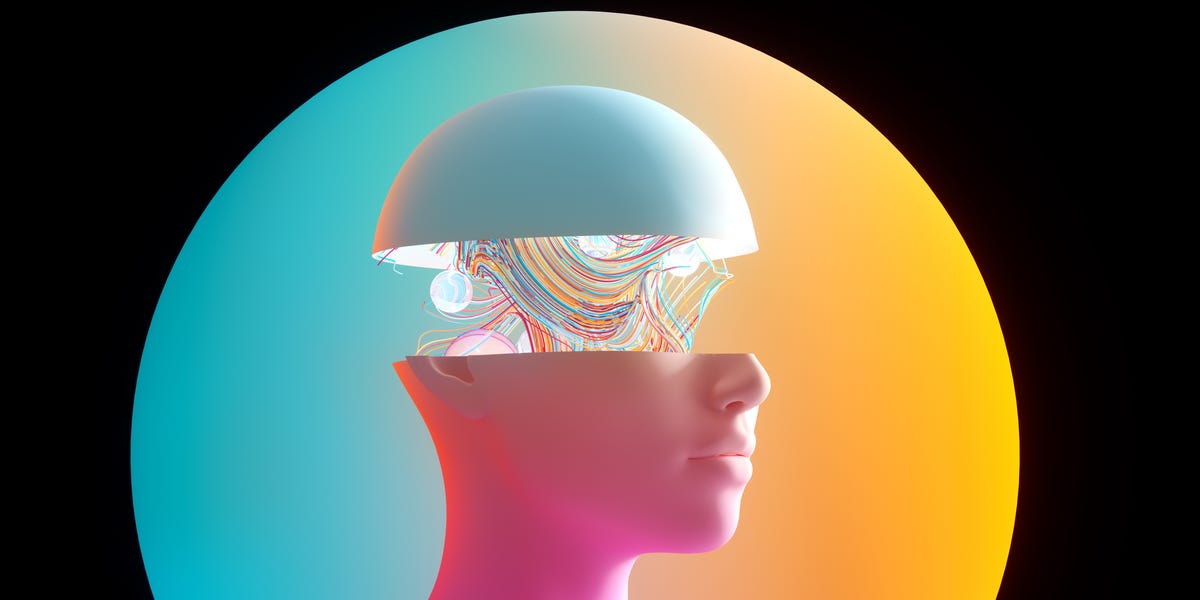
The Hunt for Consciousness Is Moving Deeper Into the Brain
Full Article
Original Source
Read the full article at Popularmechanics →KhanList aggregates and links to publicly available news content. We do not host full articles from third-party sources. Always verify important information with original sources.