
SEPTEMBER 19, 2026 21:03Unfortunately, we have gotten used to snarling haredi (ultra-Orthodox) rabbis and politicians who dismiss the concerns of the general Israeli public and disassociate themselves from the burden (actually, the privilege) of running and defending the State of Israel.By their own admission, all they seek is sinecures for their secluded public, especially the narrowly self-defined Torah/yeshiva “world.”From this distorted, so-called “Torah perspective,” the task of haredi politicians has been to secure haredi interests against Israeli society and to defend “their people” from “our state” – the “impure” and threatening Zionist state.Alas, “our” army is not their responsibility. “Our” economy is not their responsibility either. God alone, “their” God, will take care of the bigger picture, along with the beleaguered Israeli taxpayer who pays through his nose and the “suckers” who serve in the Israeli army.Shas chairman Aryeh Deri, government ministers and members of Knesset attend a plenum session and a vote on a bill to freeze arrests of haredi draft evaders at the assembly hall of the Knesset, the Israeli parliament in Jerusalem, July 14, 2026. (credit: CHAIM GOLDBERG/FLASH90)One might have thought that the trauma, suffering, financial deprivation, and household disruption of the past three years in the general Israeli public and in the “Torani” (ardently Torah observant) Religious Zionist community would shock the haredi community out of its crushingly insular shell.One had hoped that honorable haredi leaders would be stirred toward somewhat increased integration in Israeli society and would nudge forward toward national service in frameworks specially attuned to haredi sensibilities.One might have imagined great haredi leaders participating in at least one or two of the many funerals for fallen soldiers, or showing up at soldier shiva houses to pay condolences, or quietly taking a minyan (prayer quorum) of their boys late at night to pray at the Mount Herzl military cemetery.But nada. No movement at the leadership level. Haredi politicians, like the recently deposed MK Moshe Gafni of the Degel HaTorah/UTJ party, spent 40 years insulting and sneering at the secular and Religious Zionist publics and only doubled down on this over the past three years.Despite October 7, “mainstream” haredi politicians have stuck to the line that “yeshiva boys” (about 100,000 of them) cannot be drafted in any minimal way (whether they are really learning Torah full time or not) or educated any differently.These leaders are purposefully and devastatingly cut off from the war reality that most Israelis are living. Worse still, they are unflinchingly unfeeling toward the broader public, as their spokesmen unfortunately have made clear.This is a historic tragedy that has the potential to crash the modern State of Israel, no less, in the Heavens and on earth.Fortunately, and finally, substantial numbers of haredi Israelis are moving away from this hostile approach. They think for themselves and are seeking alternative political leadership.They realize that the rejectionist, protectionist posture described above may have been sustainable when the haredi community was a small and embattled minority. It cannot provide a vision for a community rapidly becoming a central pillar in Israeli society. It does not provide a satisfying vision for haredi people themselves.Enter the Haredi Public party, running for the Knesset for the first time. The new political party begins from a wholly different premise from that of UTJ or Shas: that they, haredi people, are part of the Israeli story.They do not mean to abandon haredi identity; they believe that haredi Judaism is strong enough to take responsibility for Torah, family, and community, as well as responsibility for sustainable livelihood, defense, civic life, and the future of Israel.As the visionary chair of the new party’s rabbinic committee, Yehoshua Pfeffer said at the party launch event: “Our initiative means moving from a politics of fear to a politics of hope. It means hope that haredi young people will no longer feel forced to choose between belonging to their community and building a responsible life within the Jewish state.“It means that the haredi world believes it can grow, mature, and assume a larger and constructive role in strengthening and defending Israel – without losing its soul.“God did not bring millions of Jews back to the land of our fathers for Israel to fail. Nor did haredi society build its extraordinary world of Torah, family, charity, and community in order to remain forever on the margins of the national story. The next chapter can be different. The question is whether we have the courage to write it.”The new party, led by its articulate and measured chairman Moti Leitner (a hassidic deputy mayor of Beit Shemesh and a software professional), advocates for protecting those who truly learn Torah full-time while advancing meaningful service for all those who do not, and for giving haredi youth the necessary educational tools to succeed in life and contribute to the Israeli economy and society.This means working with, not against, the IDF to create haredi service tracks from hesder programs to special brigades and soft military-industrial and civilian-security national service frameworks.It means rapidly and massively expanding the state-supported haredi school stream that teaches the core curriculum of English, math, science, and civics alongside Torah and Talmud, and which prepares its graduates for potential college study.Leitner explained that the party was born out of deep conversations with representatives of many haredi communities who felt their voice was not being heard and their needs were not represented within the existing haredi political parties. This includes working haredi people, as well as professionally successful women, haredi immigrants from abroad, and more.A voice for opportunity and changeThese haredim also are horrified by the public and often violent shaming of young haredim who serve in the security force, by campaigns of vilification and terror against even great Torah sages who support cautious change in the haredi world, and by rampant corruption in some haredi municipalities and institutions.This haredi public also recognizes that too many of its youth are dropping out of schools and feeding the phenomenon of lost street youth without being offered paths that would legitimate a synthesis of haredi identity and professional and national advancement.Leitner emphasized that the haredi public he represents wants opportunities, not stipends, for haredi young men and women; opportunities to grow and contribute and serve the nation, not to be on the government dole.The Haredi Public party’s decision to put two women near the top of its Knesset candidate list tells you how bold the new party is. This is unprecedented and long overdue for the haredi public – a breath of fresh air.The two haredi women in the party – Dr. Nechumi Yaffe (a political psychologist who once worked for the National Security Council) and Ziva Glanz (founder and CEO of the LaShuv olim network) – are impressive leaders.Rabbi Pfeffer is an intrepid, insightful leader who founded the Iyun Institute at Herut-The Center for Israeli Liberty (formerly the Tikvah Fund), which operates a range of groundbreaking haredi leadership programs and publications.He is a respected religious court judge, served in the IDF, chairs the public board of Netzah Yehuda, the haredi Nahal brigade, clerked at Israel’s Supreme Court, and is a professor at Hebrew University’s law school.Pfeffer is truly a model par excellence of a haredi community leader “taking responsibility” for the future of Israel, not shunning and deprecating Israel. I am proud to consider him a close friend!In fact, I am considering voting for the Haredi Public 40 days from now, even though I do not belong to the ultra-Orthodox community and I dissent from the party platform, which would still give, at least for the next while, a broad exemption from conscription for full-time yeshiva men (not including hesder programs).This new party – this bold new haredi movement – needs electoral support. Recent polls indicate that it has captured the imagination of the haredi street and the support of about 10% of haredi voters, amounting to about 100,000 voters (or 2.5 Knesset seats), and rising.This is an astonishing achievement that portends even greater success in the future, but the minimum threshold for election to the Knesset this year will probably be around 150,000 votes (or four seats).So the new party needs a boost from non-haredi voters who understand the urgency and promise of the Haredi Public and want it to succeed. This will be a worthwhile investment in the long-term health of Judaism and Israeli society!The writer is managing senior fellow at the Jerusalem-based Misgav Institute for National Security & Zionist Strategy. The views expressed here are his own. His diplomatic, defense, political, and Jewish world columns over the past 30 years are at davidmweinberg.com.Follow us on Google
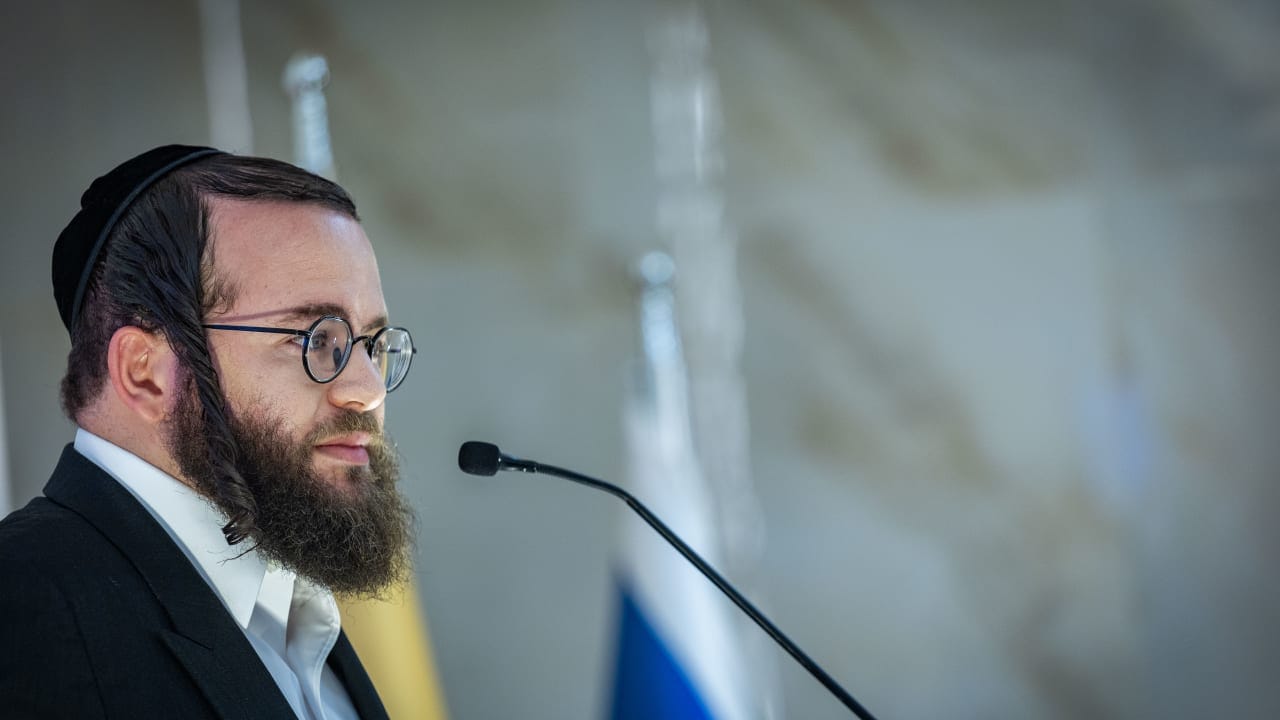
The Haredi Public: A politically responsible voice from Israel's ultra-Orthodox public - opinion
Full Article
Original Source
Read the full article at Jpost →KhanList aggregates and links to publicly available news content. We do not host full articles from third-party sources. Always verify important information with original sources.