
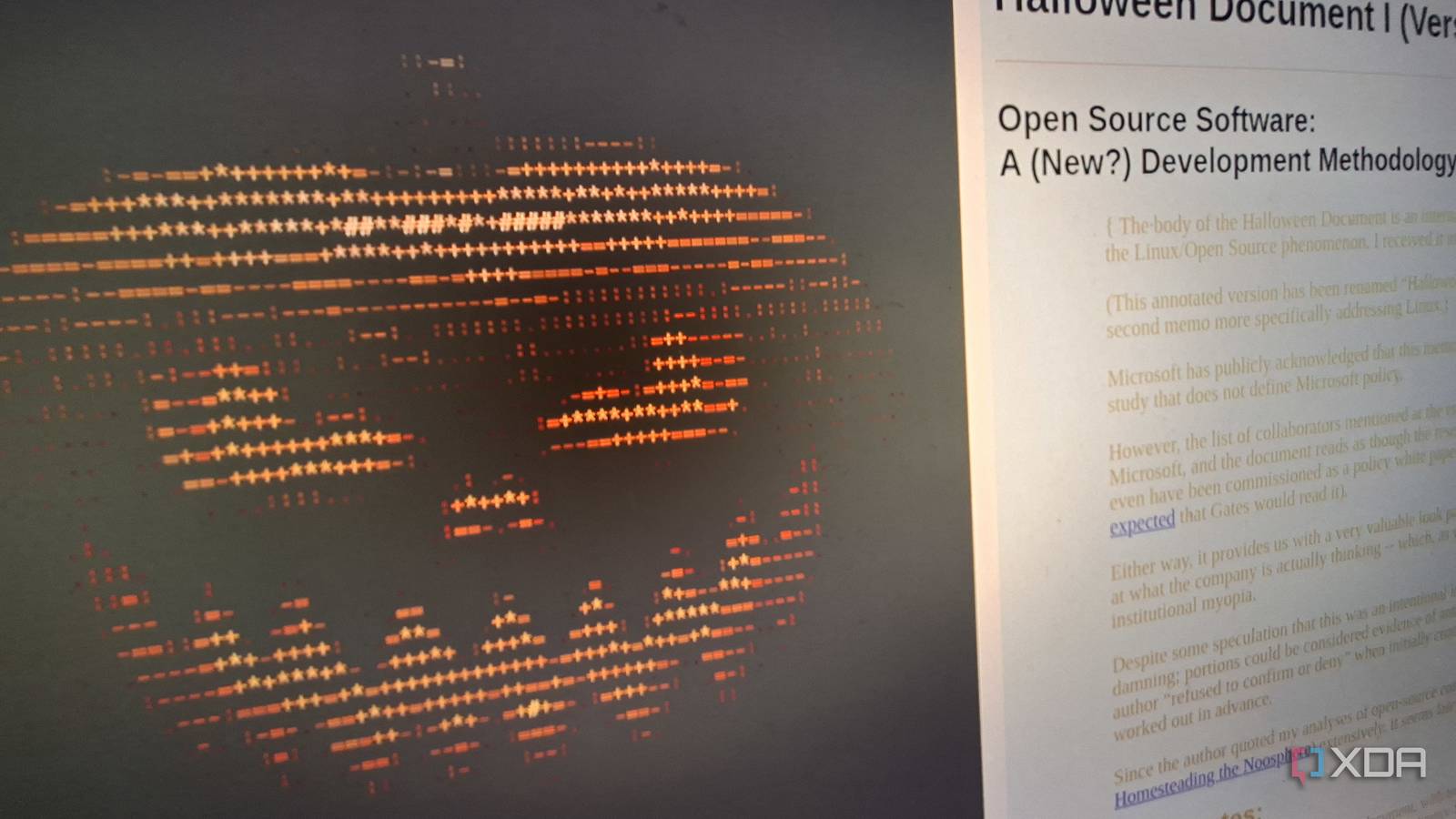
Published Sep 19, 2026, 8:00 PM EDT Simon is a Computer Science BSc graduate who has been writing about technology since 2014, and using Windows machines since 3.1. After working for an indie game studio and acting as the family's go-to technician for all computer issues, he found his passion for writing and decided to use his skill set to write about all things tech. Since beginning his writing career, he has written for many different publications such as WorldStart, Listverse, and MakeTechEasier. However, after finding his home at MakeUseOf in February 2019, he would eventually move on to its sister site, XDA, to bring the latest and greatest in Windows, Linux, and DIY electronics. Linux is the most popular open-source operating system in the world, but its road to this point was not without its perils. Part of its popularity is due to AT&T suing Berkeley over 186 lines of Unix code, which allowed Linux to flourish. Without that lawsuit, who knows where Linux would have been? However, after the OS caught its stride, it quickly found itself in the sights of the biggest OS developer in the world: Microsoft. What followed was a document detailing how Microsoft could extinguish this developing scene, which would eventually be known as the Halloween Documents. The document spells out everything happening in the world of open-source software It's a great read if you're up to it You can read the documents for yourself if you'd like an insight into how Microsoft considered Linux back in 1998. It even contains a miniature guide on what Linux is, which is a great read; itm delivers an insight as to how Microsoft considered Linux back then, and the kind of state the kernel was in. It's easy to read the documents and scoff at the lines that read "Linux is a short/medium-term threat in servers" and "Linux is unlikely to be a threat on the desktop," but this was long before Linux got the foothold it has now. Back then, it was just a seed, and Microsoft's Halloween Documents planned to analyze it for weak points so it could stay ahead of the game. But how could Microsoft open up the gaps in open-source's armor? Unfortunately, its usual tactic relied on FUD: Fear, Uncertainty, and Doubt. This is where Microsoft claimed that a rival was unsafe to use, didn't have good support, and wasn't viable in the long run. Meanwhile, Microsoft's systems were secure, stable, and would last years, so it claimed. Unfortunately for Microsoft, FUD wasn't the correct play here: Loosely applied to the vernacular of the software industry, a product/process is long-term credible if FUD tactics can not be used to combat it. OSS is Long-Term Credible OSS systems are considered credible because the source code is available from potentially millions of places and individuals. So, what was its plan? Well, it wanted to take the strengths Linux had and turn it on its head. While the document says that Linux was a small fry right now, it does admit that "Linux can win as long as services / protocols are commodities." Essentially, as long as vendors could use whatever protocol they pleased interchangeably, open-source will beat Microsoft. To win, Microsoft decided to aim for its core: Generally, Microsoft wins by attacking the core weaknesses of OSS projects. De-commoditize protocols & applications OSS projects have been able to gain a foothold in many server applications because of the wide utility of highly commoditized, simple protocols. By extending these protocols and developing new protocols, we can deny OSS projects entry into the market. The person who uploaded the Halloween Documents to the website above notes that "To put it even more bluntly: 'commodity' services and protocols are good things for customers; they promote competition and choice. Therefore, for Microsoft to win, the customer must lose." Looking back at these plans, I have to agree. Microsoft saw this budding scene where people could make their own rules and set their own standards, and it was far better for the consumer than a proprietary system. The only way to win was to muscle in, make closed standards that relied on dependence on Microsoft, and then ensure it won over the open ones. The phrase "embrace, extend, extinguish" never appears in the Halloween Documents. But the memo's core tactic, extending open protocols with proprietary features to lock competitors out, closely resembles the "embrace and extend" strategy Microsoft executives were already using by the mid-90s. Raymond, in his annotations, drew the same connection. The documents came to light in late October 1998 And now you know the namesake Credit: Source: Getti132/MakerWorld You may have noticed that I was pretty vague about who, exactly, uploaded the Halloween Documents to the above website. Well, this is the part where I tell you that the documents and author comments you're reading on that website aren't just a reproduction of what Microsoft was sending around: those were the exact documents the world saw, with notes from the very person who originally posted them. Eric S. Raymond, who advocated for open-source software, received the documents from an anonymous source, which Raymond believes was not intentionally leaked. Keen to expose what the company was doing, he uploaded the documents at the tail end of October 1998. This earned it the title "the Halloween Documents" and acted as a nasty moment of trick-or-treat for the Redmond giant. Microsoft didn't wait around to respond; it did own up to writing them in early November 1998. However, it tried to play them off as just an engineering analysis instead of policy. The documents helped bolster Linux to weather the storm It had the inverse intended effect This may seem like a pretty insubstantial leak, but at the time, it was huge. It proved three things to the world: that Linux was working, that Microsoft saw it as a potential threat, and what people had to do to keep open-source alive. The open-source community responded strongly; not only did it know the battle plans of its greatest enemy, but it also knew what about open-source software scared it the most. This would essentially give it the secrets to counteracting threats like Microsoft. Almost 30 years later, Microsoft and Linux are still at it, to the point where the former made the Windows Subsystem for Linux just to ensure people don't leave its OS for Team Tux. However, Linux may not be as strong as it is today if it weren't for the Halloween Documents.
The Halloween Documents revealed how Microsoft planned to extinguish Linux, but the open-source community turned it into a weapon
Full Article
Original Source
Read the full article at Xda-developers →KhanList aggregates and links to publicly available news content. We do not host full articles from third-party sources. Always verify important information with original sources.