
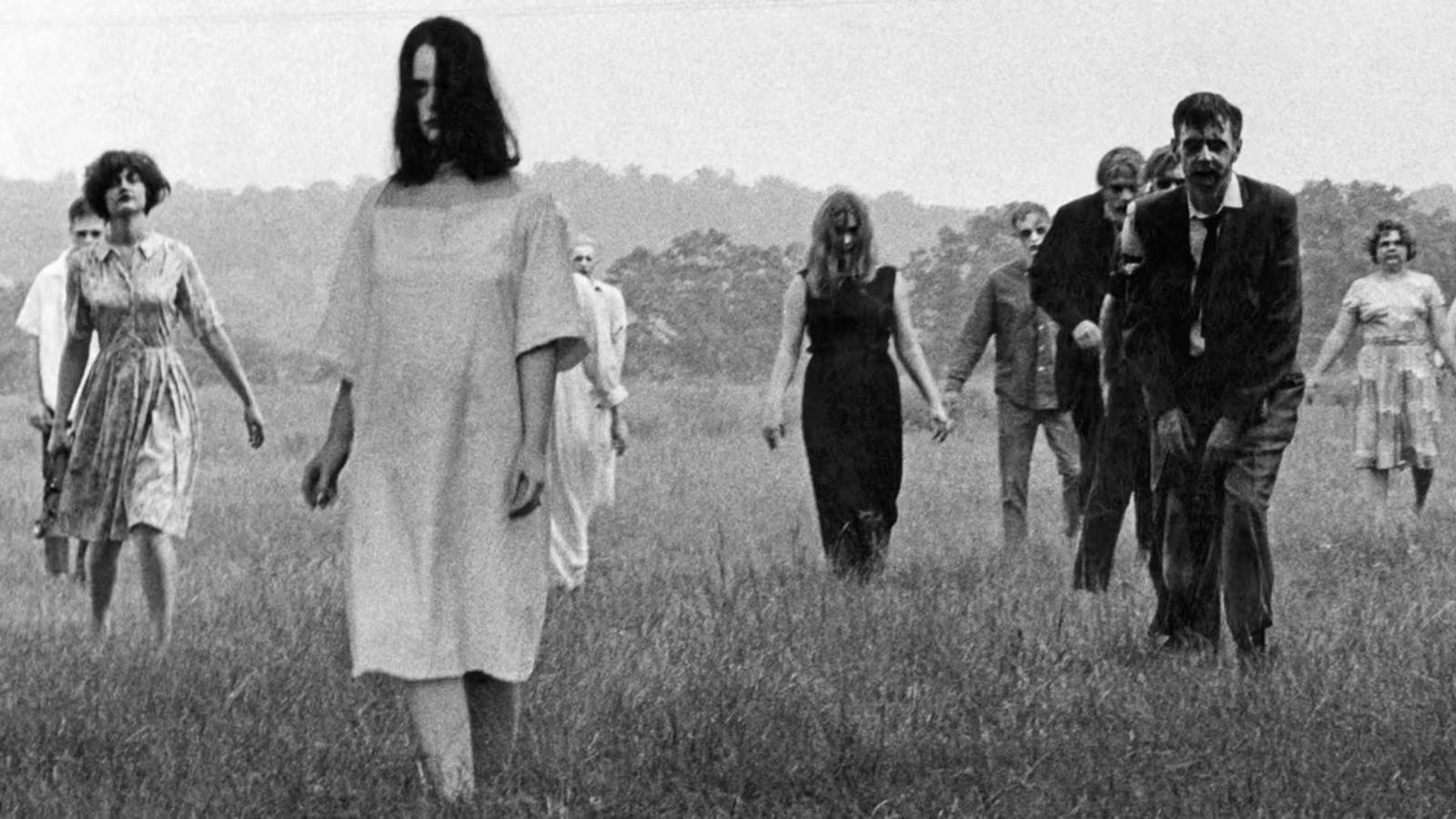
Published Oct 17, 2026, 12:40 PM EDT Richard Craig is a Senior Author at Screen Rant covering film and TV. Richard has also written extensively about horror and film soundtracks, contributing a chapter to the first major academic collection on the folk horror genre, The Routledge Companion to Folk Horror. Richard is also a performing musician and holds an MA in Music and Sound Art. The greatest zombie movie of the 21st century has found a new place to terrify audiences, giving horror fans the perfect excuse to revisit one of the genre's most exhilarating modern classics. With its relentless undead hordes, nerve-shredding suspense, and surprisingly affecting human drama, this modern sensation is a cut above much of its competition. Zombie movies have been shambling across cinema screens for decades, evolving from the slow-moving horrors of George A. Romero's Night of the Living Dead into increasingly frantic tales of societal collapse. More recently, the genre has continued to find fresh life by exploring everything from family relationships to class inequality. However, with so many films competing to deliver the next great undead nightmare, standing out requires more than a few convincing prosthetics and a generous supply of fake blood. The best zombie movies understand that the monsters are only part of the equation. The real horror comes from watching ordinary people confront extraordinary circumstances, especially when their fellow survivors prove just as dangerous as the creatures outside. Few films balance those ingredients as effectively as Yeon Sang-ho's Train to Busan (2016). Combining a brilliantly claustrophobic setting with emotionally grounded characters, vicious zombie attacks, and pointed social commentary, the South Korean zombie film has earned its reputation as a modern masterpiece. Now, viewers have another opportunity to experience the nightmare from the comfort of their own homes. Train to Busan Is Streaming On Peacock Released in 2016, Train to Busan is now available to stream on Peacock, making the acclaimed South Korean horror movie an excellent addition to the platform's Halloween viewing options. The service also carries its live-action sequel, Train to Busan Presents: Peninsula, so viewers can explore more of director Yeon Sang-ho's zombie-ravaged world after the credits roll. The original Train to Busan follows Seok-woo (Gong Yoo), a workaholic father taking his young daughter, Su-an (Kim Su-an), on a train journey from Seoul to Busan. Unfortunately, a rapidly spreading zombie outbreak turns their trip into a fight for survival, with infected passengers transforming the train into a moving death trap. Why Train To Busan Is A Modern Zombie Masterpiece The inspired setting is Train to Busan's first major advantage. A speeding train provides a series of narrow carriages, connecting corridors, and cramped compartments in which the characters have precious little room to escape. Every door becomes a potential barrier between life and death, and every new carriage presents another terrifying obstacle. Unlike sprawling apocalypse movies, Train to Busan rarely allows its characters (or its audience) a moment to breathe. However, the film's greatest achievement is making its passengers feel like real people rather than disposable zombie fodder. Seok-woo begins as a self-absorbed businessman whose relationship with Su-an has suffered because of his work. Seok-woo's gradual transformation gives the story a compelling emotional backbone. Meanwhile, Sang-hwa (Ma Dong-seok) brings bruising physicality and unexpected warmth, while his pregnant wife, Seong-kyeong (Jung Yu-mi), proves that vulnerability and courage are hardly mutually exclusive. The supporting characters are wholly compelling too. Choi Woo-shik's baseball player, Yong-guk, and Sohee's cheerleader, Jin-hee, add youthful vulnerability, while Kim Eui-sung's selfish executive, Yong-suk, exposes the danger of treating survival as an excuse to abandon everyone else. These conflicting responses to catastrophe give the movie its pointed social commentary, exploring class divisions, corporate self-interest, and the consequences of putting personal safety above collective responsibility. Crucially, Train to Busan never lets those ideas overwhelm the entertainment. The zombies move with terrifying speed, piling over one another and swarming through train carriages in spectacularly grisly sequences. Like the greatest zombie movies in history, Train to Busan works equally well as a brutal survival thriller, a critique of social selfishness, and a deeply affecting story about family. The undead might provide the nightmare, but the human characters make it unforgettable. Is Train To Busan's Sequel Worth Watching? The Train to Busan sequel is certainly worth watching for those who adored the original. However, it absolutely does not earn a comparable masterpiece status. Released in 2020, Train to Busan Presents: Peninsula shifts the action to a devastated South Korea four years after the outbreak. Gang Dong-won plays Jung-seok, a former soldier who returns to the quarantined peninsula with a team tasked with retrieving a truck containing millions of dollars. Naturally, the operation goes disastrously wrong. The premise effectively combines zombie horror with a heist movie, delivering high-speed chases, abandoned urban landscapes, and spectacular undead attacks. However, the shift from the original's cramped train to a sprawling post-apocalyptic wasteland sacrifices much of the claustrophobia that made its predecessor so effective. The sequel's bigger action sequences come at the expense of the original's tighter tension and richer character drama. For viewers wanting more of this universe, though, Peninsula is an entertaining enough action-horror romp. The animated prequel Seoul Station (2016) is arguably the more rewarding companion piece. Also directed by Yeon, it depicts the outbreak's beginnings in Seoul, using its bleak urban setting to explore social neglect and economic exploitation. It provides valuable context for the original's world while retaining the franchise's darker social conscience. Both films are worth watching, but neither captures the original's perfect combination of suspense, social commentary, gruesome spectacle, and emotional devastation. Train to Busan remains the undisputed destination for anyone seeking the very best modern zombie cinema. Release Date July 20, 2016 Runtime 118 minutes Director Yeon Sang-ho Writers Park Joo-suk Producers Kim Woo-taek, Lee Dong-ha, Huh Soo Young Sequel(s) Train to Busan Presents: Peninsula
The Greatest Zombie Movie Of The 21st Century Officially Gets A New Streaming Home
Full Article
Original Source
Read the full article at Screenrant →KhanList aggregates and links to publicly available news content. We do not host full articles from third-party sources. Always verify important information with original sources.