
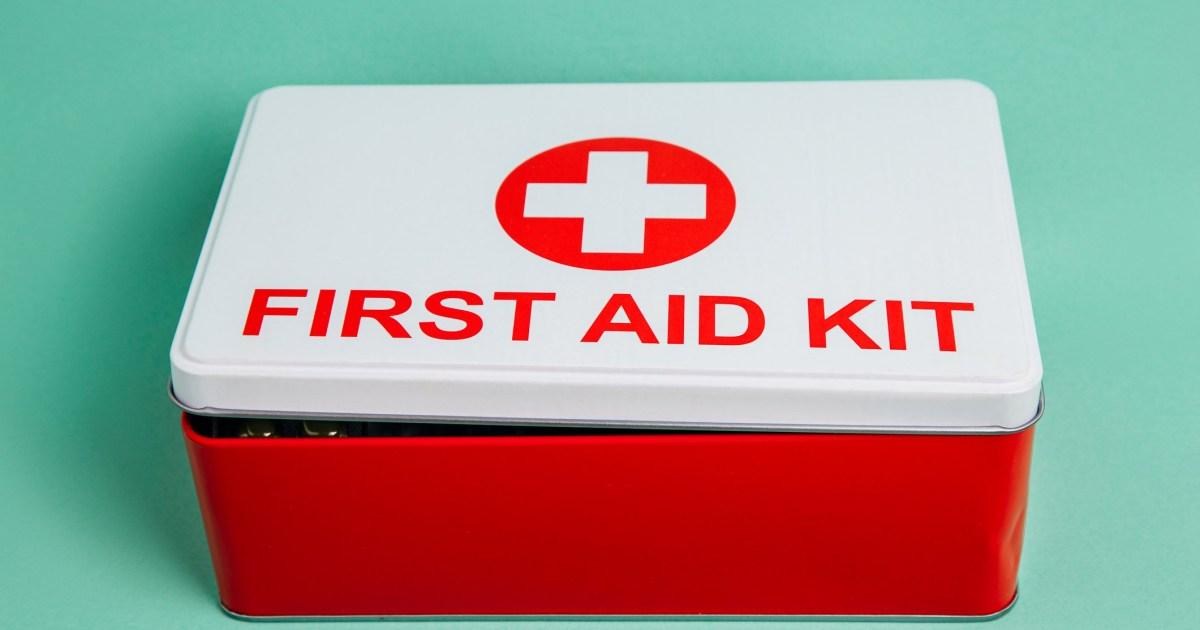
It’s important to keep a first aid kit in case of emergency, but what do you need inside it?(Picture: Getty Images) Growing up, many of us were plonked on the toilet seat after suffering a fall, so our parents could stick some Savlon on it. This would inevitably come from the first aid kit, which was always on hand to keep us safe. These days, though, there’s a rather more dystopian reason most of us need to be keeping a decently stocked little green box at home. The UK government is stepping up its home defence plan, and Andy Burnham’s office is preparing a publicity campaign which will tell households to prepare for extreme weather events or cyber attacks, according to the Financial Times. This preparation will include ensuring Brits have plenty of tinned food and bottled water at home, as well as knowledge about how to cope in a crisis, to free up immediate government resources for the most vulnerable. During an emergency event, any medical help will likely be delayed, which means we’ll need to have the bare minimum on hand in case we need it. The UK government has recommendations for an emergency kit, and this list includes a first aid kit. The guidance recommends stocking it with, at a minimum, waterproof plasters, bandages, a thermometer, antiseptic, eyewash solution, sterile dressings and gloves, medical tape for dressings, and tweezers. If you rely on medication, you’ll also need to prepare ‘several days’ worth, and if you use medical devices or specialist equipment, you’ll need to keep both a paper copy of the instructions and spare batteries, all charged up. Ask Metro Use AI to go deeper into the stories you care about – powered by Metro and trusted publications. While there’s no need to panic, it’s always good to be prepared for the very worst. So, if you’re wondering exactly what you need to have stocked inside a more detailed first aid kit, we’ve got you covered. A fully stocked medical kit will see you through an emergency (Picture: Getty Images) Why it’s important to have a first aid kit at home Dr Penelope Sheehan, GP at Medical Express Clinic, says since most injuries happen at home, it’s best to have some means of dealing with them at hand. She tells Metro: ‘A kit changes what you can safely do yourself versus what needs a same-day GP or A&E. Most cuts, grazes, minor burns and sprains do not need a hospital visit if they are cleaned and dressed properly in the first few minutes. Skip that step, or improvise with whatever’s in the bathroom cabinet, and a simple graze can turn into an infection. ‘I would treat it the same way as a smoke alarm: something you hope never to need, checked occasionally – genuinely useful the one time it counts.’ Every single item you need inside a first aid kit, and why Any first aid kit needs things like plasters and disposable gloves (Picture: Getty Images) Dr Penelope says the first item you need inside your kit is plasters, and in several sizes, since a toddler’s knee and an adult’s finger will require different types. Next, it’s sterile gauze dressings, again, in various sizes. These are for ‘wounds too big for a plaster,’ and Dr Penelope says ‘sterile packaging matters because it stops you introducing bacteria into a fresh wound.’ Wound closure strips are next on the list, and these are ‘for a clean cut that gapes slightly but is not deep enough to need stitches.’ The intention is to hold it together while it heals. ‘Microporous tape will secure gauze and dressings without the harsh pull of ordinary sticky tape, which hurts far more coming off a hairy arm or a child’s skin,’ Dr Penelope suggests, while antiseptic wipes will ‘clean a wound before you dress it.’ Again, dirt getting into a cut is the most common reason a seemingly minor injury can become more serious. ‘Disposable gloves will protect the wound from your hands and your hands from any blood,’ she says. ‘Tweezers with a fine point, for splinters, thorns, and the occasional insect sting left in the skin. ‘Small, blunt-tipped scissors, for cutting tape, dressings, or clothing away from a wound or burn without dragging fabric across it.’ Dr Penelope Sheehan's full list of items for your emergency first aid kit Assorted plasters (several sizes) Sterile gauze dressings (again, several sizes) Wound closure strips Microporous tape Antiseptic wipes or cream Disposable gloves Tweezers (with a fine point) Small, blunt-tipped scissors Sterile saline solution Instant cold pack Elastic bandage Triangular bandage Digital thermometer Paracetamol and ibuprofen Antihistamine tablet or cream Oral rehydration sachets Burns dressing or hydrogel Foil emergency blanket Torch Basic first aid guide or leaflet List of emergency contacts and any relevant medical details. She also suggests including a sterile saline solution for cleaning wounds when running water isn’t an option, as well as an instant cool pack, which can be used for sprains, bumps, and insect stings. She explains: ‘Cooling an injury in the first 20 minutes genuinely reduces swelling; a bag of frozen peas works too. ‘An elastic bandage will also support a sprained ankle or wrist, or hold a dressing firmly in place on a limb. Plasters of all sizes need to be included (Picture: Getty Images) ‘A triangular bandage is the most underused item in most kits. It slings a suspected broken arm, secures a dressing, or improvises a pad for a larger wound.’ A digital thermometer is another must-include, as are paracetamol and ibuprofen, an antihistamine tablet, oral rehydration sachets, and a burns dressing. Then, a foil emergency blanket can be used for a drop in body temperature, while a torch can either illuminate a wound in poor light, or check someone’s pupils if they’ve suffered a head injury. Finally, Dr Penelope recommends including a basic first aid guide or leaflet. ‘Most people, myself included at three in the morning with a screaming child, forget the correct order of steps under stress,’ she says. ‘A laminated card removes the guesswork.’ The government's list of items for your emergency kit Battery or wind-up torch (because they’re safer than candles) Portable power bank Battery-powered or wind-up radio Spare batteries A first aid kit (including waterproof plasters, bandages, a thermometer, antiseptic, eyewash solution, sterile dressings and gloves, medical tape for dressings, and tweezers) Hand sanitiser and wet wipes Bottled water (a minimum of 2.5-3 litres per person per day) Non-perishable food (things that don’t need cooking, including tinned meat, fruit or vegetables), plus any pet food Baby supplies (including nappies and baby formula). Source: Gov UK. Do you have a story you’d like to share? Get in touch by emailing MetroLifestyleTeam@metro.co.uk Deals of the Day Save over £700 on Simba's top-rated mattresses in this limited-time sale Topman’s new-season collection has arrived and prices start at just £10 An Instagram mattress left me with back pain – this one completely changed my mind From £700 MacBooks to discounted iPhones, the best Apple tech for studentsb Save 25% on red light therapy masks, sauna blankets and sleep gadgets in Bon Charge sale Arrow MORE: Sam Vanderpump reveals ‘blow’ to organ transplant hopes after new warning about donation crisis Arrow MORE: Full list of food and drinks being banned in schools across England Arrow MORE: Influencer, 27, dies after liposuction goes wrong, sparking manslaughter probe The Slice Your free newsletter guide to the best London has on offer, from drinks deals to restaurant reviews.
The first aid kit every Brit needs to prep for Doomsday
Full Article
Original Source
Read the full article at Metro →KhanList aggregates and links to publicly available news content. We do not host full articles from third-party sources. Always verify important information with original sources.