
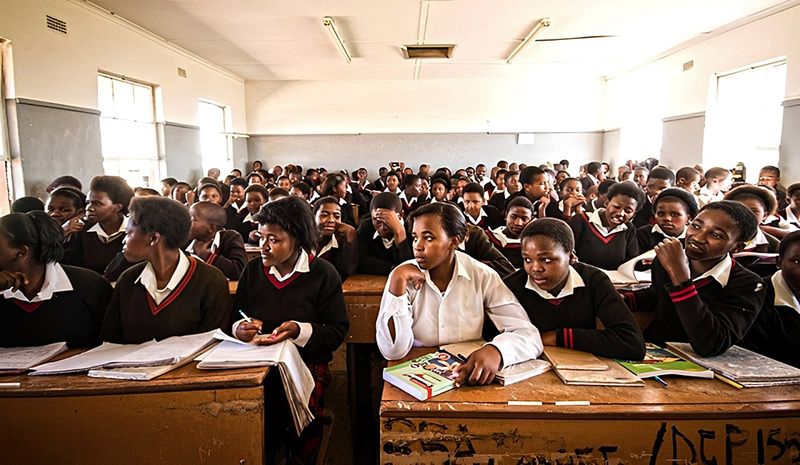
South African Principals Association (Sapa) president Mashudu Ramulumo has called on education departments to take pressure off school leaders, saying principals are increasingly being forced to carry responsibilities that should be handled elsewhere in the education system.Speaking to The Education Desk at Sapa’s conference in Limpopo, Ramulumo said the association wanted provincial departments to build systems that allowed principals to focus on leading schools rather than constantly responding to administrative failures and crises.A major concern is the repeated demand for information from schools. Principals were often required to submit the same information to different sections of education departments, creating unnecessary duplicate work.More than 850 principals gathered for the national conference, where school leaders discussed the challenges facing principals and how schools should prepare for a changing education environment in the world of artificial intelligence (AI).Ramulumo said Sapa would appreciate the departments urgently moving towards a system in which school information is captured electronically and can be accessed by the relevant officials without schools having to repeatedly provide the same data. He added that different directorates often required principals to provide identical information in different formats, taking them away from their main responsibility of managing teaching and learning.“Whichever department is looking for that information, they will get it from the department, not from us. Submissions will be made only once,” he said.He said the answer was to capture school information electronically so officials could access it without repeatedly returning to principals.“This meant clearer lines of responsibility between schools and provincial departments, better administrative systems and stronger support for principals facing increasingly complex demands.“For Sapa, reducing the pressure on principals is ultimately about allowing school leaders to do the job they were appointed to do: lead their schools.”His comment speaks to a burnout survey by the Governing Body Foundation that found that almost 60% of principals were ready to quit their jobs. The survey added that 92% of principals said their administrative workload was higher or much higher than five years ago, while 71% said administrative demands had a high or severe impact on their core duties.Second, Ramulumo wants every school to have an administrator or clerk employed by the department. He said principals were spending too much time on administrative work, while some schools were relying on parents to help pay for administrative staff.Third, he said Sapa wants staffing shortages and overcrowding addressed, saying principals cannot be expected to solve problems created by an inadequate supply of teachers and classrooms.Schools should prepare for a changing education environment in the world of artificial intelligence, the principals urged. (Photo: iStock) Ramulumo said pupil-teacher ratios were fluctuating between one teacher for 35 pupils and one for 40, depending on the available funding.“Please give us, give principals, give schools more educators according to the learners,” he said, adding that infrastructure pressures compounded the problem, with overcrowding and other shortages landing on principals alongside their existing responsibilities.The association is concerned about staffing shortages, overcrowded classrooms and infrastructure challenges, which continue to place pressure on school leaders and teachers. “We have been singing the same song for years. This one seems like a big challenge for the department, but our school leaders deserve better classrooms that are not oversubscribed,” he said. Fourth, Ramulumo wants provincial departments to release norms and standards funding allocations on time to prevent principals from bankrolling schools while they wait for money. Delayed payments could leave schools struggling to pay for stationery, examinations, electricity and water, forcing principals to use their own credit cards or negotiate payment arrangements with suppliers. “When there is no stationery and there is no money a principal is forced to go out and make a plan,” he said.Fifth, Sapa wants schools and their leaders to be prepared for the rise of AI, and that banning it from the classroom was not a solution.The department needed to ensure teachers and principals were trained to use the technology, warning that in some cases pupils were already ahead of their teachers. “Make sure that every principal is able to navigate with AI, train and retrain until they are experts,” he said, adding: “Teach the children to use AI correctly rather than restricting it.”Ramulumo urged the government to tackle connectivity issues, which remained a major barrier, particularly in rural schools where some could not afford data or Wi-Fi. DM This story was produced by The Education Desk, a nonprofit newsroom dedicated to addressing schooling challenges in South Africa.
THE EDUCATION DESK: SA Principals Association president issues 5-step appeal to ease burnout pressure
Full Article
Original Source
Read the full article at Dailymaverick →KhanList aggregates and links to publicly available news content. We do not host full articles from third-party sources. Always verify important information with original sources.