
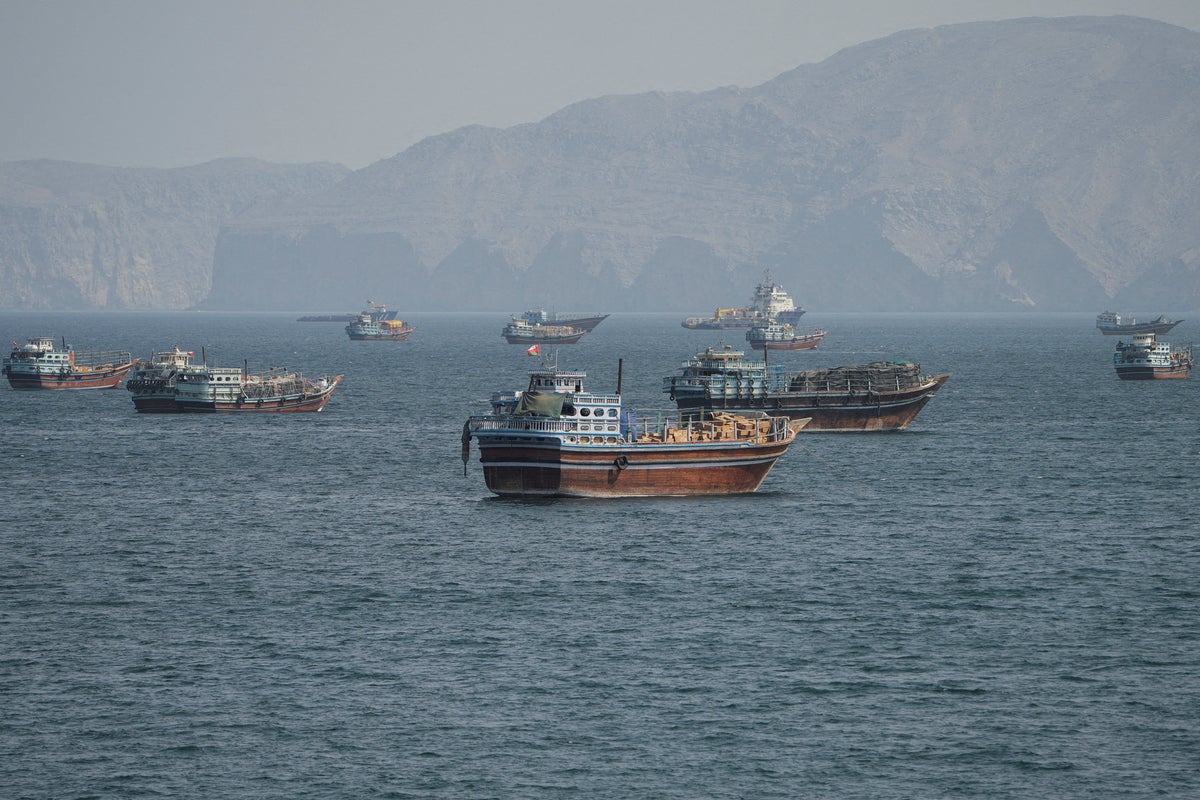
When Donald Trump and Benjamin Netanyahu announced their war on Iran on 28 February, the plan was to launch a limited incursion, topple the Iranian regime within a fortnight and declare a swift victory. But as the conflict approaches its eighth month, a worrying limbo has set in. Negotiations remain deadlocked and the price of oil remains stubbornly above $100 a barrel - a development that had once sparked panic in the markets now barely raises an eyebrow. The Strait of Hormuz, which was effectively blockaded by Tehran when the war began, is experiencing its most violent period of the conflict so far. Oil ships have been the target of an unprecedented number of drone and missile attacks in the past ten days. In a bid to lower oil prices ahead of the US midterm elections, Donald Trump has been forced to lift sanctions on Russia to release diesel exports into the global market amid soaring fuel costs. Experts have told The Independent that persistent chaos in Hormuz, the route for a fifth of the world’s supply of oil and seaborne gas, will have a devastating impact on the global economy - and that the lack of international alarm reflects a concerning “new normal”. (Reuters)Oil settles at $100 a barrelWhen the price of oil first hit $100 a barrel, it sparked headlines worldwide. Experts warned of a global energy crisis that would have a knock-on effect for economies, the cost-of-living, and everything from food to medicine. On 27 February, the price of Brent Crude averaged around $65 to $70, according to the US Energy Information Administration. Once fighting broke out, this surged to over $100, and even briefly reached as high as $120. Despite a brief respite in July following an interim peace agreement that later collapsed, the price of oil has remained at over $100 for much of the last quarter. “The fact that oil has settled around $100 per barrel should not be mistaken for stability,” says Dr Neil Quilliam, an energy policy, geopolitics and foreign affairs specialist, at Chatham House.“Markets have absorbed a degree of unpredictability, but the underlying risks remain significant. “Saudi energy infrastructure remains exposed, and there is ample precedent for attacks causing serious and immediate damage to major installations with global repercussions.”Containers float in the water after a vessel sank near the Strait of Hormuz off the coast of Oman, in this still image obtained from a social media video, released October 14, 2026. (Social media)According to Kpler, oil flows out of the region had reached an average of 15.5 million barrels a day last month, their highest level since the war began. But they have plummeted once again amid new strikes, with only 2.9 million barrels passing on 11 October, their lowest numbers this month. “The return of oil flows should be seen as temporary relief rather than a durable solution, given the extensive military resources required to secure shipping, the large number of vessels involved, and the high insurance and operating costs,” says Dr Quilliam.”The real concern now is less about market sentiment and more about physical supply. As long as the risks to Hormuz and Bab al-Mandab persist, there remains a credible threat to Gulf exports. “That is significant not only for the region but also for the global economy, which remains highly sensitive to disruptions in one of the world's most important energy corridors.”Attacks in Hormuz reach an all-time highAccording to analysis conducted by the Financial Times, 24 ships were hit in the two weeks to 11 October, the most intense period of attacks in the entirety of the war. It is almost double the second worst period, when in the first two weeks of the war in March, 13 ships were hit. “Iran may be developing its anti-ship missile capabilities to improve its ability to target vessels,” the Institute for the Study of War said. Dr Quilliam says that the nature of attacks around the waterway has “evolved over time”. “They have become more frequent, more geographically dispersed and more diverse in their tactics. Alongside missile and drone strikes, there are growing concerns about the use of mines, small boats for reconnaissance and targeting, and other methods designed to compensate for damaged surveillance and radar capabilities. (AP)“One constant throughout has been Iran's willingness to follow through on its threats, which means markets cannot easily dismiss the risk of escalation.”The route has become so treacherous that ship captains are reportedly being paid $100,000 a month to transit. At least 25 seafarers have been killed near the strait, with families left struggling for compensation, according to the New York Times. Food, fuel and the economy impactedA food security crisis in parts of Asia and Africa could be caused by a failure by the US and Iran to agree to a UN-backed plan to move fertiliser through Hormuz, an official overseeing the scheme told Reuters on Wednesday. “The pass-through from the initial locking down of the Strait of Hormuz ... is now starting to be seen,” International Fund for Agricultural Development President Alvaro Lario told Reuters. Disruption to fertiliser shipments and higher fuel transport costs linked to the disruptions in Hormuz are compounded by El Niño and disruptions to Black Sea wheat supplies, adding costs throughout the food supply chain, he said. The International Monetary Fund added to warnings by saying that prolonged war in the Middle East and further disruptions to energy production, shipping routes or critical infrastructure pose the biggest risk to economies in the Middle East and Central Asia.
The disturbing ‘new normal’ in the Strait of Hormuz: Attacks on ships at a record high and oil at $100 a barrel
Full Article
Original Source
Read the full article at Independent →KhanList aggregates and links to publicly available news content. We do not host full articles from third-party sources. Always verify important information with original sources.