
In this report, Crusoe Osagie explains Dele Oye’s unique transformation into an astute economic advocate After leaving the then University of Ife (Obafemi Awolowo University) in 1988 with a sound degree in law, and the Nigerian Law School in 1989, his future seemed well defined. He entered the arena and began to build a unique law firm which was providing very nimble, bespoke legal services. Dele Oye and Associate as he chose to call it, caught the attention of older legal practitioners as the firm announced itself in the Nigerian law scene. His clients cut across sectors: Banking and financial institutions, diplomatic missions, realtors, trading companies, very high net worth individuals among many other. In the early days, his youthful outlook, playful appearance and jovial disposition cloaked his lethal legal capability. Opponents never saw him coming. Clients only jumped off their seats after he delivered outstanding results under impossible circumstances. At a ceremony where he was inducted as the President of the Abuja Chamber of Commerce and Industry Mines and Agriculture, a former governor who was also a former minister described the first time Oye was recommended to him as the lawyer to help him retrieve his landed property that had been seized by powerful forces in the country. According to the former governor, I looked at him, very young and youthful and asked the person who suggested him if it was a joke. He said he later ate his words after Oye methodically navigated the minefield of powerful interest groups behind his predicament and recovered every single property that had been wrongly taken from him. After listening to too many of these stories of his exceptional brilliance in legal practice, one would conclude that this was his forte and believe that it will certainly be within the law profession that his legacies will be established. How wrong that conclusion would be. In the years that followed, the various layers of Oye’s genius became increasingly obvious. Peel off one layer, like an onion, the underlying layer is steering at you. Legal Practice to Institutional Leadership Oye’s professional journey gradually extended beyond legal practice into institution-building, public service and economic development. His growing involvement in different organisations revealed his capacity to mobilise people, strengthen institutions and apply his experience to challenges affecting society. An important milestone was his relationship with his alma mater, Obafemi Awolowo University, Ile-Ife, formerly the University of Ife. Between 2000 and 2004, he served as National President of the university’s Alumni Association, seeking to transform alumni loyalty into practical support for institutional development. His contributions included supporting physical infrastructure, notably hostel accommodation completed in 2004. This initiative addressed student housing needs and reflected his belief that leadership should produce lasting benefits. His subsequent service on the university’s Council further exposed him to governance, administration and institutional planning. These experiences reinforced a principle that would recur throughout his career: leadership should be judged by tangible achievements and the lasting value it creates. ACC and NACCIMA Oye’s legal practice exposed him to the broader difficulties confronting businesses, including inconsistent government policies, regulatory burdens, inadequate infrastructure and limited access to finance. He recognised that such challenges required collective advocacy and sustained engagement with policymakers. From 2008 to 2011, he served as President of the Abuja Chamber of Commerce and Industry. The chamber provided a platform for representing business interests and addressing shared concerns involving taxation, investment, infrastructure, security and the cost of doing business. His legal expertise and commercial experience enabled him to understand both regulatory requirements and entrepreneurs’ practical challenges. The naming of the Dele Oye Hall at the chamber’s premises provides a lasting reminder of his association with the institution. His leadership journey subsequently extended to the Nigerian Association of Chambers of Commerce, Industry, Mines and Agriculture (NACCIMA), where he had previously served in positions including National Deputy President. On June 8, 2023, he was inaugurated as NACCIMA’s 22nd National President. Leading NACCIMA required balancing the different interests of manufacturers, agricultural producers, traders and other businesses while presenting their common concerns to government. At his inauguration, Oye emphasised collaboration with government agencies, industry leaders and international partners to promote trade, investment and economic development. His appointment brought together decades of experience in law, institutional administration and commerce, positioning him to represent Nigerian enterprise at the highest level of the chamber movement. Turkish Connection and International Trade Oye’s leadership also recognised that Nigeria’s economic development depends partly on access to international markets, investment, technology and commercial partnerships. As chairman of the Nigeria–Türkiye Business Council while serving as NACCIMA president, he helped advance efforts to strengthen economic relations between Nigeria and Türkiye. In October 2023, he led a Nigerian business delegation to engagements with the Union of Chambers and Commodity Exchanges of Türkiye, focusing on bilateral trade expansion and investment opportunities in Nigeria. The value of such engagements lies in their ability to produce lasting partnerships, technology transfer, job creation and increased productive capacity. Oye’s approach emphasises that international economic diplomacy must move beyond meetings and goodwill to deliver measurable commercial outcomes. OPS Leadership In February 2025, Oye became Chairman of the Organised Private Sector of Nigeria (OPS), broadening his influence across the business community. The OPS brings together major associations, including NACCIMA, the Manufacturers Association of Nigeria and the Nigeria Employers’ Consultative Association. The organisation provides a platform for coordinating the interests of manufacturers, employers, traders and entrepreneurs in national policymaking. Its importance reflects the private sector’s role in investment, employment, innovation, production and government revenue. Oye called for a united and inclusive private sector, emphasising transparency, cooperation and collective engagement. His challenge was to reconcile diverse business priorities while promoting policies that improve productivity, encourage investment and generate employment. Effective private-sector advocacy, however, requires more than demands for government concessions. It must also advance the national interest through policies that strengthen productive capacity, improve competitiveness and support sustainable economic growth. Professional Ethics Oye’s movement into business leadership did not represent an abandonment of the legal profession. His service as a member of the Body of Benchers between 2016 and 2019 demonstrated his continuing engagement with professional standards and institutional responsibility. He also served for years as Lead Prosecutor to the Legal Practitioners Disciplinary Committee, which considers allegations of professional misconduct against lawyers. These responsibilities reinforced the importance of integrity, fairness, accountability and the consistent application of rules. The same principles underpin a sound business environment, where investors require confidence in contracts, dispute resolution and public institutions. His legal experience therefore provides a foundation for his economic advocacy. Strong institutions, enforceable rules and accountable leadership are essential to preventing disputes, building investor confidence and supporting sustainable commercial activity. Business Representation to Economic Policy Oye’s emergence as Chairman of the Alliance for Economic Research and Ethics Ltd/GTE (AERE) represents a further stage in his professional transformation. The organisation focuses on economic research, policy analysis, ethical governance and public advocacy, including trade facilitation, investment promotion, taxation, economic development and the empowerment of young people and women. Through AERE, Oye’s work increasingly examines whether government policies produce meaningful results rather than merely generating favourable announcements or economic statistics. Better Living Standards Advocate In September 2026, Oye argued that improvements in economic indicators had not translated sufficiently into lower food prices, more affordable credit and better living conditions for millions of Nigerians. While recognising the importance of macroeconomic stability, he maintained that economic reforms should ultimately be judged by their effects on households and businesses. Improved economic indicators become meaningful when they support productive investment, reduce living costs, create jobs and expand opportunities. His position highlights the need to connect national economic progress with the everyday experiences of citizens. Enterprises and Public Expenditure In April 2026, Oye criticised government participation in commercial ventures, citing costly and underperforming projects such as the Ajaokuta Steel Company and refinery rehabilitation initiatives. His argument raises questions about efficiency, accountability and the responsible use of public resources. Although government has essential responsibilities in infrastructure, education, security and regulation, expenditure on persistently underperforming ventures requires scrutiny. The central issue is whether public spending generates measurable benefits and whether alternative uses of those resources could produce better outcomes. This emphasis on results is fundamental to effective economic advocacy. Tax Justice and Accountability AERE has also addressed taxation through its policy brief, Tax Justice Must Have a Human Face: Why Nigeria’s Tax Ombud Matters in the Age of Digital Assets and Multiple Taxation. The organisation advocates a stronger Tax Ombud to protect taxpayers and improve accountability in tax administration. The proposal seeks to balance government’s legitimate revenue needs with fairness, transparency and effective avenues for redress. Businesses and individuals need confidence that tax assessments are lawful and that arbitrary or multiple demands can be challenged. A credible tax system must generate revenue without unnecessarily discouraging investment and entrepreneurship. Oye’s advocacy reflects the connection between legal fairness, public accountability and a supportive business environment. Industrial Policy and Implementation In 2026, Oye warned that Nigeria’s industrialisation ambitions could be undermined by an excessive focus on policy documents without effective implementation. Businesses, particularly small and medium-sized enterprises, face practical constraints involving access to finance, energy costs, transportation, infrastructure and regulatory compliance. Unless these obstacles are addressed, industrial policies may fail to stimulate production, business expansion and employment. The priority, therefore, is to translate policy commitments into practical improvements and measurable economic outcomes. Foreign Investment and Measurable Results In June 2026, AERE criticised expensive overseas delegations that return with memoranda of understanding and diplomatic photographs without delivering measurable investment outcomes. The concern is not that international engagements lack value, but that public expenditure should produce tangible benefits. Nigeria needs foreign investment and international partnerships, supported by effective mechanisms for converting diplomatic relationships into actual commercial activity. Across these policy areas, Oye’s message remains consistent: announcements must lead to implementation, expenditure must produce results, and economic policies must contribute meaningfully to national development. Evolution of an Advocate Oye’s journey demonstrates a progressive expansion in the scale of his responsibilities. He began by representing individual clients in legal disputes, then mobilised alumni to support university development. As chamber president, he represented business interests; at NACCIMA, he coordinated a national network of commercial organisations; and as OPS chairman, he helped bring broader private-sector concerns into the national policy conversation. Through AERE, his advocacy has increasingly focused on the structural and ethical questions shaping Nigeria’s economic future, including taxation, industrialisation, public spending, investment and living standards. This evolution is not a departure from law but an extension of its fundamental concerns with rules, rights, obligations and accountability. The arena has simply expanded from individual disputes to institutional performance and national economic policy. Economic advocacy, however, requires more than forceful criticism. Its credibility depends on reliable evidence, sound research, balanced analysis and practical proposals. AERE’s challenge is to identify policy failures while also developing workable alternatives and evaluating their effectiveness. Layers Continue to Unfold Dele Oye’s career resists a single professional description. He is a lawyer whose experience has extended into institutional governance, a business leader engaged in international trade and an economic advocate concerned with public accountability and national development. His work at Obafemi Awolowo University, leadership of the Abuja Chamber of Commerce and NACCIMA, chairmanship of the OPS, service in professional legal institutions and activities through AERE reveal a continuing movement from individual achievement towards broader institutional engagement. The hostel accommodation developed at Ile-Ife and AERE’s economic policy advocacy may appear different, but both reflect a common concern: how leadership can leave institutions better equipped to serve the people who depend on them. The defining thread in Oye’s career is the pursuit of practical outcomes, institutional improvement and responsible leadership. His transformation from legal practitioner to economic advocate illustrates how professional expertise can be applied to increasingly complex national challenges. Ultimately, the significance of this evolution will depend on the quality of the policies he champions, the strength of the institutions involved and the measurable benefits delivered to businesses and citizens. Just when one might assume that all his capabilities have been revealed, another dimension emerges. The transmogrification, it would seem, is still in progress.
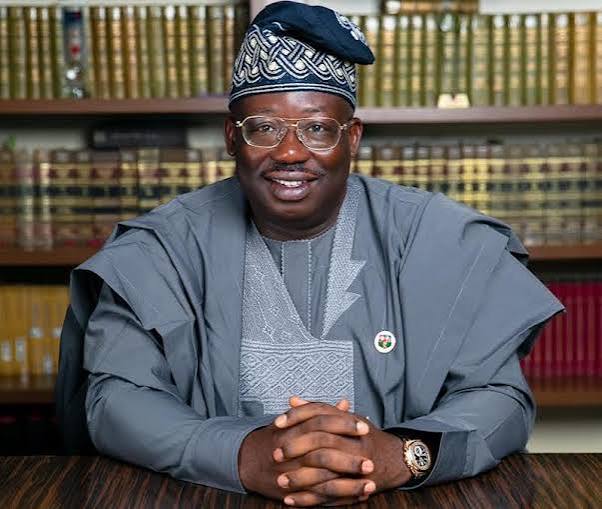
The Dele Oye Transmogrification to Economic Advocacy
Full Article
Original Source
Read the full article at Thisdaylive →KhanList aggregates and links to publicly available news content. We do not host full articles from third-party sources. Always verify important information with original sources.