
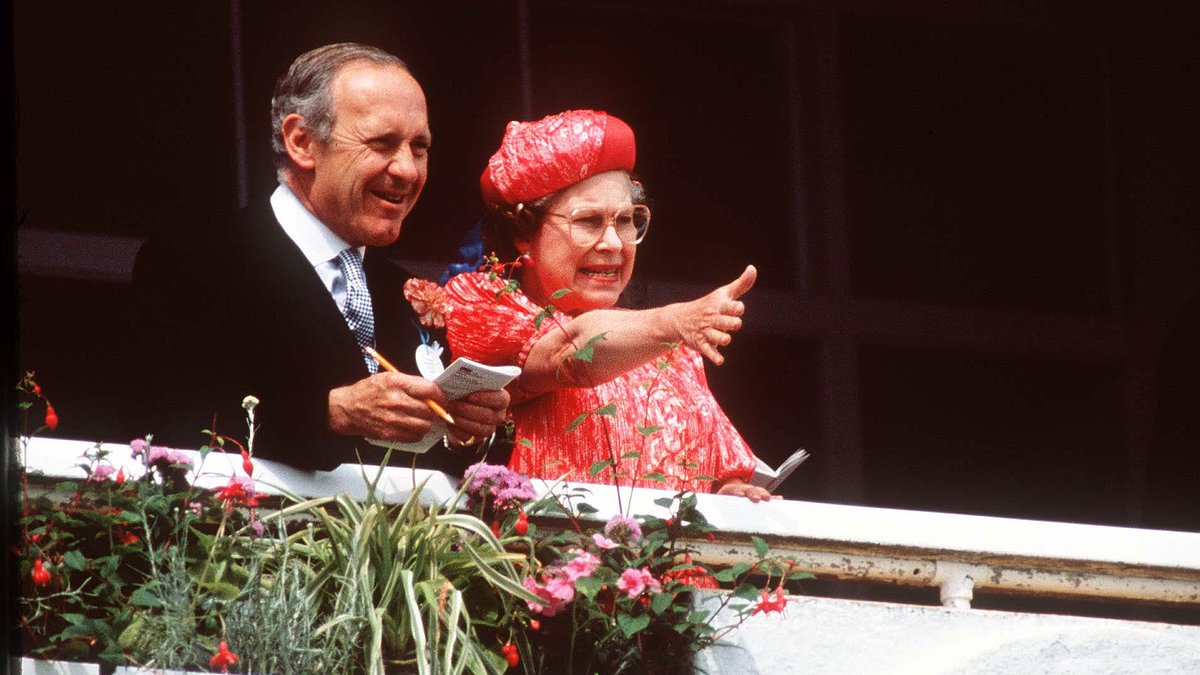
He was the man who dusted off the cobwebs and helped steer the monarchy into the modern media age. The inventor of the walkabout, he also kept the peace between the Palace and Mrs Thatcher - and made the Queen laugh.Sir William Heseltine, who died on October 2 at his home in Western Australia aged 96, was the antithesis of the traditional ‘tweedy’ courtier, the outsider who would become the ultimate insider over a quarter of a century within the Royal Household.Known to all as ‘Bill’, Heseltine’s impact on the monarchy is still felt to this day. Soon after his arrival, he convinced the Queen that, with the Prince of Wales turning 21, it was time for the institution to move with the times and allow television cameras through the door. The result was the 1969 documentary, Royal Family. From the opening scene – showing Prince Charles waterskiing in Malta – to shots of a Balmoral barbecue or the Queen buying Prince Edward an ice cream, this was broadcasting history.Over time, a myth would evolve that the family hated it and that it had to be locked away forever. In fact, the very opposite was true. The family were delighted, and the film was such a hit that, in Britain, it was watched by more people than the other major landmark of that summer – man landing on the moon. It was sold to more than 120 territories worldwide, generating enormous royalties which the Queen gave to BAFTA. The film and television charity used the windfall to buy the grand West End headquarters where BAFTA resides to this day.After several repeats, the film was indeed locked away - which had always been the plan. The late Queen alongside her trusted private secretary, Sir William Heseltine at the Epsom Derby in 1989. Heseltine died at his home in Western Australia on October 2 aged 96As Bill Heseltine told me for my biography of the Queen: ‘We put very heavy restrictions on it because we thought it was not something which should be quarried for other programmes or be shown every few months.’He had set the tone for a new era in royal public relations. The Sixties had left the institution looking dull, outdated and unrelatable. Now, there was a sense of reconnection. In 1970, as the Queen toured New Zealand, he had another suggestion. There had been growing criticism that royal tours had become very dull. The press secretary hatched a plan with his hosts.As he recalled: ‘Out of those various discussions came the idea of instead of stopping at the door of a town hall, the [royal] car might stop 50 or 60 feet down the road and the Queen might get out and walk, stopping occasionally to say hello.’ And that is what she did, even though some old school courtiers argued that the Queen should not converse with people to whom she had not been formally introduced. The world loved it.‘The most important thing of all was it got a name,’ Sir Bill told me for my book. ‘And the person who gets the credit for that is Vincent Mulchrone, who was there for the Daily Mail.’ It was Mulchrone who called it a ‘walkabout', and the name stuck. Once the Queen returned to Britain, everybody demanded ‘a walkabout’ and royalty has been doing them ever since. Members of the British Royal Family, Prince Charles, holding a cello instrument, pictured together with Prince Edward (right) during filming of the television documentary 'Royal Family' in London in 1969 The late Queen with her beloved corgi in the historic documentary that lifted the lid on the Royal Family for the first time This was still a time when the Royal Household was largely run by people with old family and military connections. The young Heseltine, however, was the unstuffy son of a schoolmaster in Western Australia. Having joined the civil service from university, he was soon spotted by Australian prime minister Robert Menzies and became his private secretary at the age of just 25. At the same time, the Queen, as head of the Commonwealth, was keen to expand her entourage and offer a secondment to a bright spark from one of her other realms.Menzies offered up his protégé, and Heseltine spent two years in the royal press office before returning to Canberra. His talents had been noted, however, and in 1965 he was asked to come back to the Palace as deputy press secretary, with whispers of further promotions.Fleet Street found Heseltine much more approachable than the existing press secretary, Commander Richard Colville, whom the Queen had inherited from her father. Whereas the media knew Colville as ‘the Abominable No Man’, due to his abrupt manner, Heseltine argued that the Royal Family had to engage on their own terms with the press, or be ogled from afar like a museum piece.Though the Seventies were dismal for Britain, the monarchy was on a roll. Bill Heseltine was soon promoted from the press office to be one of the Queen’s trio of private secretaries.He played a key role in the Silver Jubilee celebrations in 1977 and organised the Queen’s trip to the chaotic 1979 Commonwealth summit in Zambia. With civil war raging over the border in Rhodesia and credible reports of a plot to blow the Queen’s plane out of the sky, the new PM, Margaret Thatcher, wanted the Queen to cancel. The monarch, fearing irreparable damage to the Commonwealth, refused. In the event, it was a great success.Elevated to senior private secretary, Heseltine turned peacemaker when the Sunday Times ran a devastating 1986 report of the Queen’s ‘dismay’ at Mrs Thatcher’s ‘uncaring’ policies at home and abroad. Though the Queen had said no such thing, it could have been a constitutional crisis. Heseltine soon discovered the source had been the Palace press secretary, Michael Shea, airily ruminating on the Queen’s inner thoughts to a journalist. Shea was moved on and Heseltine mended fences. The late Queen during the first ever royal 'walkabout' during her 1970 tour of New ZealandHe had a further run-in with Downing Street when the Queen stepped down as head of state in Fiji in 1987 after a military coup. Mrs Thatcher was appalled, calling it ‘abdication’, though a British PM was in no position to dictate to the Queen of Fiji. As Heseltine recalled: ‘I got a swing of the handbag’.The Queen much appreciated his droll asides and would fondly recall his story of presenting his passport at border control in Australia only to be told: ‘There’s no ‘t’ in courier, mate.’There were tricky episodes, not least during the 1986 state visit to China. It was Heseltine who had to break the news to the Queen and Duke of Edinburgh that the Duke’s private joke to a group of Edinburgh students – about getting ‘slitty eyes’ –was front page news at home. ‘I had worse moments,’ Heseltine acknowledged, ‘but not many’. He had also been firmly against Prince Edward’s disastrous 1987 television show, ‘It’s A Royal Knockout’, but was outflanked when the Prince went straight to the Queen.In 1990, aged 60, Sir Bill Heseltine retired to Australia. Twice-widowed, with a son and daughter, he would marry a third time in 2016 to Diana, a childhood friend. He had left the monarchy in apparent rude health, yet within two years, the Queen would have her ‘annus horribilis’ with much worse to follow. Sir Bill remained on call for the rest of her life and was always invited for tea when back in the UK.He would bridle whenever it was suggested that his Royal Family film had somehow started the rot by ‘letting daylight in upon magic’. Rather, he would argue forcefully that in a new television age, the monarchy had no choice but to adapt, pointing to a letter from the (then) Lord Chamberlain on behalf of the Queen. It stated: ‘The Household is much in your debt.’
The courtier who modernised the monarchy: ROBERT HARDMAN remembers inventor of the 'walkabout' Sir William Heseltine, who organised 1969 Royal Family film - and made the late Queen laugh
Full Article
Original Source
Read the full article at Dailymail →KhanList aggregates and links to publicly available news content. We do not host full articles from third-party sources. Always verify important information with original sources.