
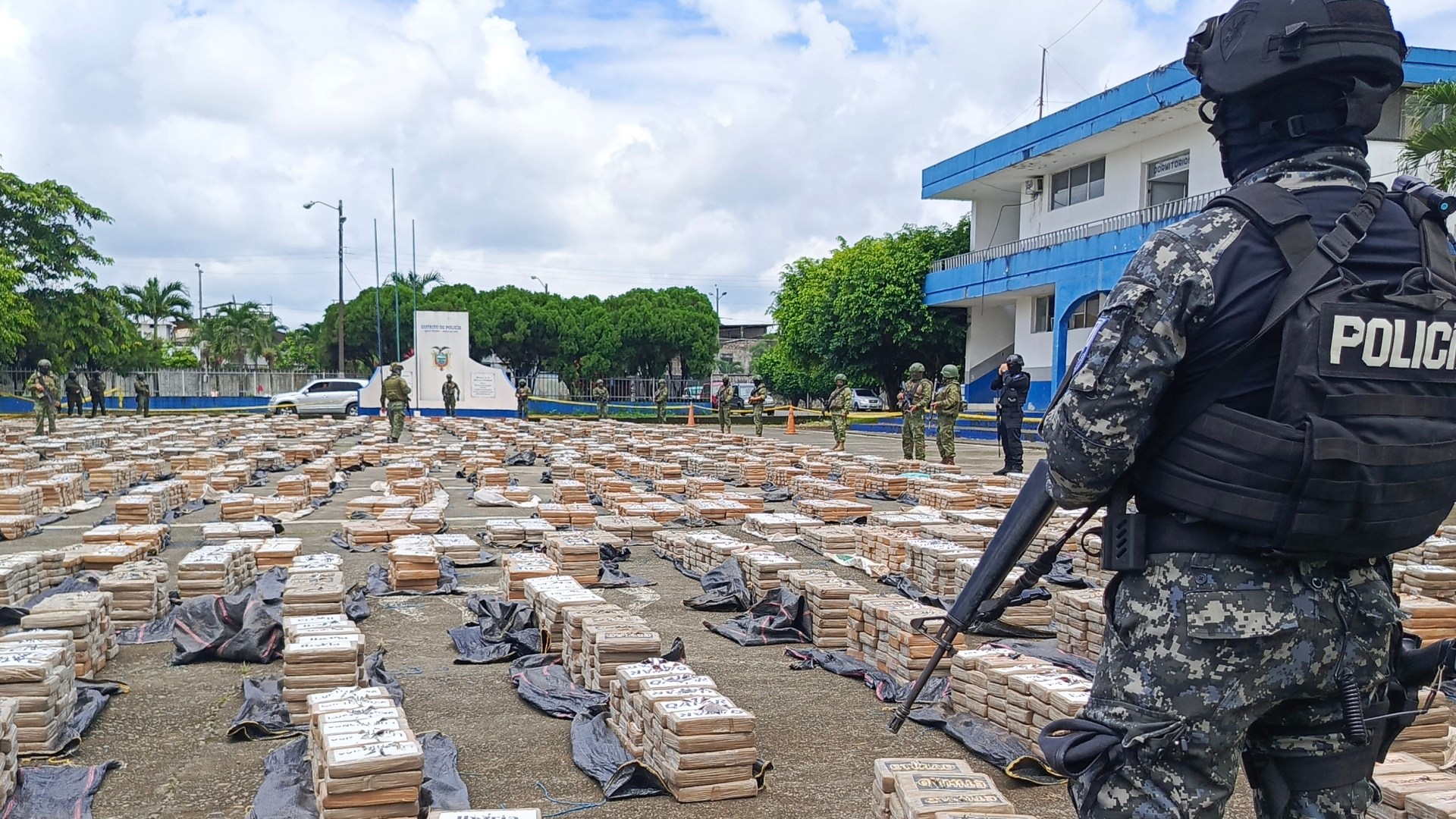
ONCE a paradise playground for thousands of Brit backpackers, Ecuador has rapidly spiralled into a blood-soaked nightmare as ruthless drug smuggling cartels hijack the country. Now dubbed the world’s “cocaine superhighway”, the South American nation has been plunged into savagery as gangs wage war, terrorise locals, and pay off corrupt cops to protect their multi-billion-pound drug empires. Fishermen and police are often bribed by criminal gangs in Ecuador Credit: AFP Ecuadorian police seize 22 tons of drugs after an operation in Quevedo, Ecuador on January 22, 2024 Credit: AFP Around 70 per cent of the world’s cocaine is hauled through Ecuador – so it’s no wonder it’s earned its label as a critical narcotics chokepoint. Rampant drug smuggling has brought a surge in violence – at least 30,000 people have been murdered in Ecuador since 2020, nearly a third of them being killed last year alone. Sign up for The Sun newsletter Thank you! And in February 2025, around seven people were being kidnapped every day, according to government figures. Narco-running gangs have aggressively expanded by recruiting children and prisoners. More than 1,300 blocks of cocaine were found hidden in a cache on an inhospitable beach in the Galapagos Islands last December Credit: Ecuadorian Navy Drug kingpin ‘Fito’ was extradited to the US, sparking a power vacuum Credit: Getty Kids as young as 12 are commonly inducted into groups before becoming trusted hitmen by the time they’re in their late teens, human rights workers told the BBC. The soaring figures illustrate the brutal consequences of both surging cocaine running networks as well as the government’s war against them. Local authorities have tried to put an end to the chaos by breaking up gangs and taking out top bosses – but this approach has backfired and led to an unforeseen fracturing into localised groups. Organised crime expert Jennifer Scotland said drug smuggling had become a “highly lucrative business” which operates above the law. Most read in The Sun The idyllic holiday hotspot has been plunged into chaos as locals are forced to work with drug smugglers Credit: Reuters Prisons have become breeding grounds for gang recruitment Credit: AFP “You can see it like a legal business,” she told The Sun. “Governments and key cocaine production and transit hubs have struggled to fully dismantle the cocaine trade… because as long as there’s demand, there will always be someone servicing.” A vicious cycle of new gangs emerging after bigger ones have their leadership decapitated has also left the country in a constant state of anarchy. She said: “This kingpin approach of targeting gang leaders hasn’t actually disrupted these groups. Cocaine is often hidden in boxes of bananas Credit: Unpixs Spanish police display 13 tons of cocaine hidden in banana shipments after it was transported from Ecuador November 6, 2024 Credit: Reuters “The demand hasn’t gone away, so you just get new players emerging to fill the gaps, or fragmented groups competing for leadership. “Since 2020, you’ve seen this fragmentation of groups, which has led to violent competition and a resulting soar in violence.” Corruption is also rife – with one cop outlining how police and politicians keep their pockets lined with dirty money in return for ignoring the illegal trade. Police Captain Jean Carlos Bustamante told the BBC: “We have many, many bad people inside our unit, inside the state, inside politics. “We have many, many guys that are corrupt. They are in the pay of the gangs.” Jennifer noted: “The cocaine market, there’s so much money in it that there’s a lot of susceptibility to corruption. “It’s not just limited to the police force, but also includes port officials, high-level government officials, and business owners.” Brit kingpins are also fuelling the bloody narco war by collaborating with ruthless gangs to haul substances directly into the UK. High-profile Scottish gangster, Jamie “Iceman” Stevenson, 61, was handed a 16-year sentence in 2025 for heading up a plot linking a Glasgow fruit market to Ecuadorian cartels. On top of their untamed command over the drug trade, these cash-hungry gangs have branched out into other echelons of the criminal underworld. Latin American crime expert Will Freeman told The Sun: “These groups are so powerful that they have multiple businesses. “So now they’re involved in illegal gold, human smuggling and other activities – cocaine got them started but they now extort small businesses, and local governments.” A “perfect storm” of factors morphed Ecuador into the “cocaine superhighway” it is now known as, Freeman said. Brutal crackdowns of Colombian export markets pushed smugglers towards Ecuador – where they latched onto political instability and weak border security to launchpad their operations. “The state was weaker in Ecuador, there was a lot of political instability, so it was a perfect storm,” he said. Today, the white powder primarily enters Ecuador through its neighbouring nations Colombia and Peru – the two largest producers of coca in the world. Jennifer said: “Ecuador has always played a role in cocaine trafficking routes, primarily because it’s been wedged between the two maincoca-producing countries, Colombia and Peru. “But since 2020, we’ve seen this large shift where Ecuador’s become a much more dominant transit hub.” Narcotics are hauled into the country by gangs, including Mexican and Albanian groups, who take advantage of Ecuador’s paper thin border controls. Local workers like fishermen and farmers are then coerced or intimidated so they turn a blind eye to illicit activities – or even help them move their drugs along. Jennifer also highlighted how prisons had become a key recruiting hub for gangs. Incoming inmates serving short sentences are regularly given an ultimatum: offer to work for the gang after leaving jail or face getting no food and protection. “We’ve had a lack of investment in ports and prisons, which has allowed local gangs to cement their control in these routes,” she said. “Prisons… have become recruitment hubs for organised crime groups.” The terrifying surge in street-level warfare has kept tourists away from the once holiday hotspot and made it “one of the most violent countries in the region”, Jennifer added. To add fuel to the fire, Ecuadorian president Daniel Noboa’s fight against crime has seemingly made matters worse. The extradition of a notorious gang chief to the US in July 2025 sent shockwaves across the nation. José Adolfo Macías Villamar, known as Fito, boss of the infamous Los Choneros cartel, was sent to face federal drug trafficking charges – but it left a bloody power vacuum in his trail. Factions of the rival Los Lobos gang launched aggressive turf wars to seize former Los Choneros routes, culminating in targeted killings and revenge massacres. An unprecedented splintering of mega gangs left smaller groups in its wake, with some giving themselves quirky names such as the Peaky Blinders or Los Freddy Kruegers. Ecuador has also been dragged into the crosshairs of Operation Southern Spear – Donald Trump’s war on South American cocaine flooding into the US. Spooked locals were left reeling earlier this year after a series of mysterious CIA-linked airstrikes rained fire down on Ecuadorian fishing boats, according to The Washington Post. The top-secret blitzes – part of a covert American strike campaign – left at least eight fishermen missing at sea. The attacks are separate from Trump’s lethal naval bombardment across the Caribbean, which has killed over 200 people. Gangs also use Ecuador’s top export, bananas, to hide their narco shipment – terrorising farms by threatening workers in the process. Earlier this month, border cops sniffed out a whopping 1.2 tonnes of cocaine hidden inside a massive banana container heading straight out of Guayaquil for Málaga, Spain. Just months before that, Europol busted open a major operation exposing how legit fruit-exporting fronts were being used by drug lords as cover to ship massive hauls of drugs straight from Ecuador into Europe. Freeman said drugs are cunningly “often mixed in with large volumes of produce that need to move quickly because they’ll spoil”. He also said substances can be hidden in shipments “at any point” in the chain, adding: “Sometimes a ship leaves the port and then smaller vessels approach it and load on packets of cocaine which get mixed in with the legal goods – so it can happen at any point in the chain.” Jennifer said this can even occur “without the awareness of the export companies”. As terrorised neighbourhoods suffer under the grip of rival gangs, it remains to be seen how Noboa can crush the devastating warfare destroying innocent lives. Jennifer concluded: “Enforcement pressure alone, I don’t think is the answer. “I think you’re gonna have to see interventions to address issues like youth recruitment… addressing the demand in the UK and Europe, and also strengthening the resilience of key strategic infrastructure, like ports and prisons.” Comment now
The ‘cocaine superhighway’ with drugs destined for Britain as violent gangs wreck tourist haven with trail of death
Full Article
Original Source
Read the full article at Thesun →KhanList aggregates and links to publicly available news content. We do not host full articles from third-party sources. Always verify important information with original sources.