
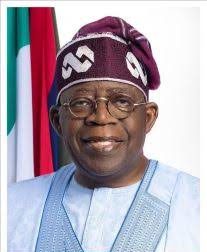
Among other things, the President helps in making Kaduna largely secure, argues ABDULLAHI YUSUF FAROUK The formal launch of the All Progressives Congress (APC) presidential campaign in Kaduna State last Saturday has come and gone, but its significance extends far beyond the impressive crowd, elaborate organisation and political excitement that characterised the occasion. One of the major talking points is the fact that it provided the host Governor, Senator Uba Sani, with a powerful platform to, as always, demonstrate his abiding faith in President Bola Ahmed Tinubu’s capacity and good intentions for Nigeria and why he deserves another four years in office. The governor’s compelling case rests on a straightforward argument: Kaduna State has a significant stake in the continuation of the Tinubu administration because the emerging gains in security, federal infrastructure investments, educational development, healthcare delivery and intergovernmental cooperation require sustained commitment to translate their full potential into lasting prosperity. For Uba Sani, beyond the political spectacle, the more consequential question is what the partnership between the Federal Government and Kaduna State has delivered; what remains unfinished and why continuity under President Tinubu could be beneficial to Kaduna and the wider North. His argument is that the relationship has moved beyond partisan solidarity to encompass practical cooperation on some of the most pressing challenges confronting the people. And within the short time allocated for him to speak, he succinctly highlighted them. For Kaduna State and by extension the North, security is not an abstract political talking point. It is the foundation upon which virtually every other development aspiration rests. For years, banditry, kidnapping and violent attacks devastated communities, disrupted agricultural activities, endangered travellers and weakened public confidence. Farmers became afraid to visit their farmlands, businesses suffered, and families endured the anguish of displacement and separation from their loved ones. The consequences of insecurity were particularly devastating in rural communities, where agriculture and local commerce sustain livelihoods. It is against this background that Governor Sani’s emphasis on security cooperation with the Tinubu administration assumes considerable significance. The governor has consistently recognised that state governments cannot defeat complex security threats acting alone. He recalled how it was a thug of war to campaign in certain areas of the state in 2023, but the situation is completely reversed today. And the argument for Tinubu’s re-election is that continuity will sustain the effective measures, correct weaknesses and intensify the fight against criminal elements. For Governor Uba Sani, the opportunity to consolidate security cooperation with the Federal Government offers a substantial reason to support Tinubu for another term. A more secure Kaduna would not only protect lives; it would also restore farming, revive commerce, encourage investment and strengthen the economic foundations of Northern Nigeria. If security creates the conditions for development, infrastructure provides the pathways through which economic opportunities reach the people. Here, the Tinubu administration’s interventions in Kaduna offer Governor Sani another important pillar of his re-election argument. Consider the proposed Kaduna Light Rail Project, estimated at about ₦1 trillion, which is intended to transform transportation within the state capital. The proposed network comprises a 30-kilometre corridor from Rigachikun to Sabon Tasha and a 20-kilometre line linking Millennium City and Rigasa. If successfully implemented, the project could change the way residents move around Kaduna, ease transportation difficulties, improve access to workplaces and commercial centres, and create opportunities for businesses along its corridors. Its significance extends beyond the immediate convenience of urban commuters. Efficient transportation can reduce the economic costs of congestion, strengthen the productivity of workers and make a city more attractive to investors. The reconstruction of the Kaduna–Mando–Birnin Gwari Road is equally significant. The 122-kilometre project, flagged off in August 2026, is intended to reconnect communities, facilitate commercial activities and improve movement along a corridor that has experienced serious security difficulties. The ongoing Abuja–Kaduna–Kano Super Highway project, part of which was inaugurated during the campaign flag-off, represents another strategic investment whose potential benefits extend across Northern Nigeria. By strengthening connectivity between important commercial centres, the project could facilitate trade, improve the movement of goods and people, and deepen regional economic integration. These investments give the governor a substantive argument for Tinubu’s re-election. The case is not simply that the President has approved projects, but that a continuing federal commitment could help bring important investments to completion and allow their benefits to spread across the state and the region. For Kaduna, the connection between federal support and state development is particularly important. A governor who enjoys a productive working relationship with the President is better positioned to pursue projects that require federal approval, financing, coordination or implementation. During his June 2025 visit to Kaduna, President Tinubu inaugurated the Bola Ahmed Tinubu Specialist Hospital, a 300-bed facility, alongside an Institute of Vocational Training and Skills Development. The visit also featured the introduction of 100 compressed natural gas buses. The hospital represents an important addition to Kaduna’s healthcare infrastructure, while the vocational institute offers opportunities for skills acquisition and workforce development. These interventions speak to two fundamental needs: accessible healthcare and the ability of young people to acquire practical skills that can translate into employment and entrepreneurship. Federal support for educational development in Kaduna has also featured in the wider conversation about the state’s future. Initiatives reported in July 2026 included the upgrade of the Federal College of Education in Zaria to the Federal University of Education, the establishment of the Federal University of Applied Sciences and plans to upgrade Kaduna Polytechnic to a Federal University of Technology. These are developments that have the capacity to expand access to higher education, strengthen technical training and improve the supply of skilled professionals needed by the modern economy. Kaduna occupies a strategic position in Northern Nigeria. Its commercial connections, educational institutions, agricultural communities and transport corridors make its development important to the wider region. When roads connecting Kaduna to other commercial centres improve, the benefits can extend to neighbouring states. When security improves in vulnerable communities, agricultural production and inter-state commerce stand to gain. When educational institutions expand their capacity, they can serve students from across the North. The Abuja–Kaduna–Kano corridor, in particular, carries considerable economic significance because of its potential to strengthen the movement of people, agricultural products and manufactured goods across important markets. This wider regional perspective strengthens Governor Uba Sani’s case for Tinubu’s re-election. The argument is that the Federal Government’s investments in Kaduna are not isolated projects but components of a broader development effort capable of strengthening Northern Nigeria’s economic integration. Governor Sani’s display of the productive relationship between the Tinubu administration and Kaduna State Government which he heads is to debunk the notion that President Tinubu is against the North as it is being made to appear in certain quarters, especially by opposition elements. Governor Uba Sani’s most compelling argument for the reelection of President Tinubu actually lies in the fact that in 2023, the APC lost the presidential election in the state. By openly showcasing the gains that a President who did not win the state in 2023, Governor Sani is simply saying ‘do it this time and see the wonders of voting right’. Uba Sani’s case for President Bola Tinubu’s re-election also rests on the prospect of consolidating a working partnership that has opened important avenues for security interventions, infrastructure development, educational expansion and healthcare investment in Kaduna State. For Kaduna and Northern Nigeria, the central question is whether the existing direction can be strengthened to deliver more comprehensive security, better connectivity, stronger institutions and wider economic opportunities. Governor Uba Sani’s argument is that the work already initiated, the cooperation established and the opportunities created offer a credible reason to give the administration another four years to consolidate its gains. And, all things considered, he is right. Farouk, a Geologist and Human Rights Activist, writes from Kaduna
THE CASE FOR TINUBU’S RE-ELECTION
Full Article
Original Source
Read the full article at Thisdaylive →KhanList aggregates and links to publicly available news content. We do not host full articles from third-party sources. Always verify important information with original sources.