
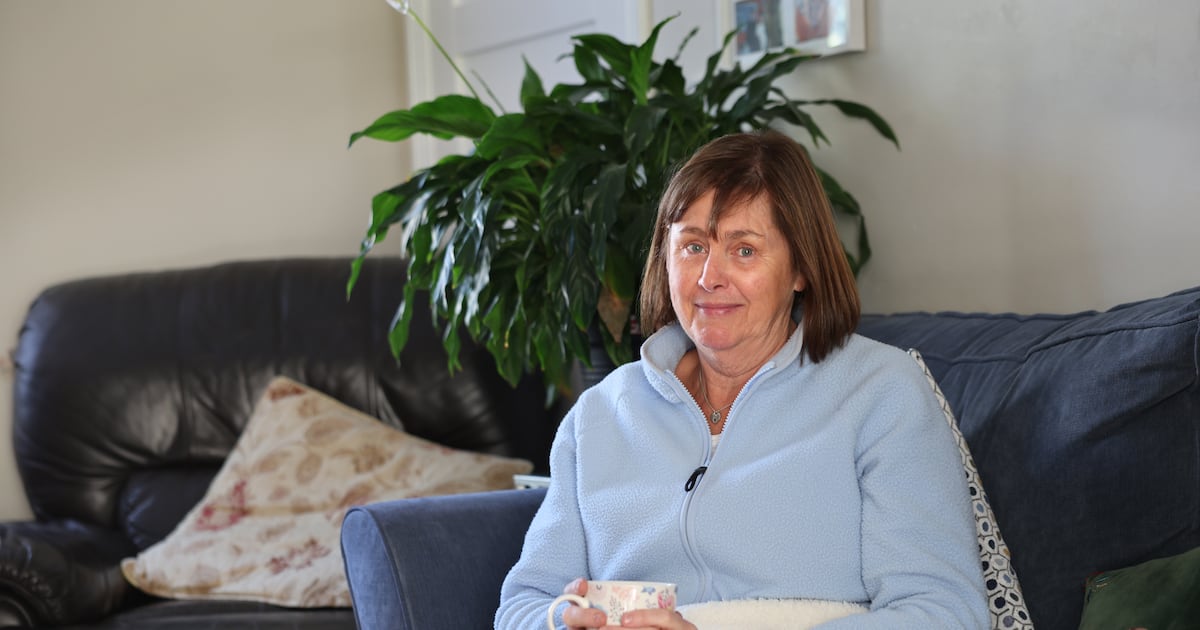
As Minister for Finance Simon Harris and Minister for Public Expenditure Jack Chambers prepare to deliver Budget 2027, The Irish Times has spoken to parents, homeowners, professionals, farmers, healthcare workers and people with disabilities to hear about their priorities and concerns.Homeowner Ailish Scully has delayed ordering heating oil this winter for her home in Moycullen, Co Galway, until after the budget – in the hope the Government cuts fuel taxes. The native of Swords in Dublin bought 500 litres last February for €475 and her tank is running low. “It was dear then, but now it’s just gone mad altogether. Last time I looked, it was nearly €900 for 500 litres,” she says. READ MOREThe 62-year-old mother of five adult children volunteers with Cancer Care West. Her husband Declan, from Santry in Dublin, is an accountant with PennEngineering in Mervue, Galway city. Their Moycullen home of almost 25 years has an open fire and wood-pellet stove, but oil heats their radiators and water. Retrofitting an air-to-water heating system would be “very expensive” but Ailish would like more State grants to help install solar panels, windows and insulation to improve their home’s energy rating and “save money” on bills. Ailish acknowledges that international events caused oil prices to spike – by more than 60 per cent in the past year, according to Fuels for Ireland – but she feels the Government could ease the burden. Until then, Ailish says: “I’ll be sitting here in my big fleece blanket keeping myself warm.”Professional Damien Owens seems less concerned about what the budget can do for him than for young professionals like his daughter.Damien Owens wants help for young people. Photograph: Dara Mac Dónaill/The Irish Times Aged in her late 20s, she moved home in recent years to save for a house.“No adult child wants to be living with their parents. They should be living their own life, getting out there and doing it,” he says.The 64-year-old, who lives in Clontarf, Co Dublin, has been an engineer for more than 40 years, the last four of which he has spent as director general of the representative body Engineers Ireland.When Owens was starting out as an electronic engineer, having graduated in the 1980s, he says the “social contract” was “largely facilitated” at the time.“Housing is one thing that young people are finding demoralising because they’ve fulfilled their part of the social contract in getting the education, getting a job to keep the economy going and pay tax.“The other part of the social contract then, is that they should be able to get affordable housing.”[ Budget 2027: Measures on pensions, welfare, income tax and more take shapeOpens in new window ]Believing that most new builds are for rent, he says measures should be introduced in this year’s budget to encourage a “purchasable supply” of houses.Lamenting increasingly costly groceries, energy and fuel, alongside the housing crisis, Owens believes there could be a “bigger exodus” of young professionals if Budget 2027 does little to alleviate pressure.“If you’re a professional, you’ve invested in your future, you’ve invested in your career, and now really what people want to see is the State investing in them,” he says.Owens believes workers are entering the higher rate of tax “very early”, which is a “key issue” that should be addressed.“We all know that Ireland isn’t a cheap place to live, but I think you’re happy to pay the taxes when you get the services that you need and that’s the key to it.” Cafe OwnerWhen The Matcha Bar opened for business in July 2024, so many people queued for a taste of the Japanese green drink that the line wrapped around the internal courtyard of the Powerscourt Townhouse Centre in Dublin 2. [ Ian O’Riordan: Does the Government truly understand the value of sport?Opens in new window ]“We started as a six week pop-up,” says owner Elaine Fitzsimons, “then I spoke to the landlords and asked could I extend the lease.”A little over two years later, “it’s going really well”, she says. “I think there was definitely an appetite for matcha in Ireland. When I started it, it was my own problem I was solving – I selfishly wanted a good matcha place.”But running a busy cafe with six staff total is no mean feat. “I think hospitality is extremely difficult in that it’s really hard to get staff,” Fitzsimons says. And new staff means more tax obligations: auto-enrolment in a pension scheme, employer PRSI rates, and an increasing minimum wage. While auto-enrolment is “a fantastic initiative”, Fitzsimons says, “I do think small businesses need supports with that because it adds a whole chunk on top of your bills”. Lower PRSI rates would be beneficial too, she says.“And then energy bills,” she says, followed by a sigh. “My last few months of bills – oh my God.”“We had to get air-con because it was so hot this summer, I think that tripled our bill over the course of the month,” Fitzsimons says. “That makes it super challenging – and, probably, had I known all of this before, I don’t know if I would have opened.” Farmer Cork farmer Noel Hurley has a long list of measures which he would like to see addressed in the budget to assist farmers – from rebates on diesel to increased support grants.A native of Kilbrittain in west Cork, Hurley (58) moved to Kildorrery in north Cork almost 40 years ago as a farm manager and today he farms 300 acres and milks 200 cows there, along with his son Sean. Hurley and his wife Elizabeth, daughter Lisa and Sean all live in their modern farmhouse.Noel Hurley with his son Sean at Ballyshonock, Kildorrery, near Mitchelstown in Cork. Photograph: Nick Bradshaw/The Irish Times When they built the house in 2007, the Hurleys put in geothermal heating so they don’t have a home heating fuel bill, and solar panels on the farm buildings have cut his electricity bill for milking and cooling machines from €17,000 to €8,000, but there is no escaping the issue of diesel prices.Hurley says that “everything that goes into this yard and goes out of this yard runs on diesel” and while he would like to go green, he doesn’t believe he will ever see an electric tractor capable of doing the work required. Hurley burns 5,000 litres of green diesel annually and while green diesel was 90 cent a litre last year, this year he is paying at least on average 150 cents, so his own fuel bill has gone from €4,500 to over €7,000 and he is paying €9,000 more to contractors to cut silage this year. “The Government gave €85 million for the Fuel Income Support Scheme in April as a 20 cent a litre rebate – €45 million of this is still to be used, we need to see this paid out and ring-fenced for farmers and contractors. Carbon tax also needs to be scrapped. My milk production costs are up by €90,000 on last year and milk prices are down an average of 10 cent a litre so we need all the help we can get on costs.”Small Business OwnerSeptember can be a slow month for selling bicycles: the summertime spike in sales has begun to fall off, and it’s a while away until children’s bikes are bought en masse as Christmas gifts. But within 15 minutes on a Wednesday morning, Donnybrook Bikes sees three customers, two deliveries and two phone calls in its small premises off the Dublin 4 village’s main street. [ Budget builders: the money Ministers who are two sides of the same coinOpens in new window ]“Sometimes, you make great margins on the sale of bikes, but you can’t rely on that alone,” says Ruairi Parsons, the general manager of the shop that opened in 2014. “You also need to concentrate on repairs,” he says, which make up about half of the business’s revenue. “Especially over the winter months … if the weather is brutal, there’s not many people thinking of buying bikes”. Budget 2027’s release date in early October may then provide well-timed assistance.Parsons’ immediate response to what the Government could do to enhance his business’ results is not to reduce tax or alleviate energy costs. “I suppose, the obvious one would be to put more money into bike lanes on the roads,” he says.“A lot of people are put off by” sharing the road with buses, he says, “and just won’t hop on a bike”.The Cycle to Work Scheme “definitely has” attracted more customers, but it caps the price for eligible electric bikes at €1,500. Parsons says this could be increased to €2,000 to allow for more customers to avail of the scheme and better quality bikes to be sold. The margin on bike sales “aren’t great”, he says, before pointing to a red road bike with a €1,000 price tag below its handlebars. “That probably cost me €600 and the tax man gets €230 … so I’m making €170 on that,” and that 23 per cent VAT takes its toll: “We’re forever paying the tax man,” he says.Parent with child in creche With Budget 2027 looming, childcare is once again a key area of interest with parents hoping for additional supports. A €200 cap per month per child is a stated goal, but it remains to be seen whether this will be delivered on. [ Alternative budget ideas: A €500 ‘everyday costs’ card, cheap e-bikes, a State building firmOpens in new window ]Caroline De Bank is a mother-of-three who lives in Tubbercurry, Co Sligo. Her daughter Millie (4) attends creche at the local Family Resource Centre. She says the care her daughter receives is “exemplary” and she feels recruitment and retention should be an area where additional funding is allocated in the childcare sector. “It’s a bit of a postcode lottery at the moment,” she tells The Irish Times. While grants of €750,000 have been available to purchase or construct new premises for community early learning or childcare services since 2025, De Bank feels staffing issues in these centres will persist without additional supports as staff can find better pay and conditions elsewhere. She adds that these issues also exist in private childcare facilities. DeBank, who is a community nurse, says she has friends who own creches and “constantly find themselves in the red”. She feels “headway has certainly been made in the last four years” regarding childcare costs in Ireland. However, she wants to see plans to support childcare staff and families. She hopes for more strategic thinking from Government and the relevant stakeholders, saying “a 10-year plan would make more sense than stopgap measures”.PensionerRobert Walker (75), who lives alone in north Co Dublin, wants to see a “fair” increase in the old-age pension and greater investment in the health service. A retired steel fabricator, he bought his one-bedroom apartment after the break-up of his marriage Robert Walker says more should be spent on the health service. Photograph Nick Bradshaw / The Irish Times “I don’t have a mortgage or rent, but I have management fees of €1,800 a year [€34.60 a week],” he says.“I live on the pension [€299.30 weekly] and the living alone allowance [€22 a week]. I’ll get the fuel allowance [€38 a week, for 28 weeks from late September], which is a great help.“I still struggle to pay the bills. The ESB bill can be high – €200 every two months. The storage heaters are electric, which are very expensive so I don’t have them on much.”He also has bin charges and broadband, mobile phone and insurance bills.A pressing worry is that his water-pump is failing, meaning water pressure is often too low to take a shower. “That will be €600 or €700 to replace and I just don’t have that.”He buys ready-meals for dinner. “They’re about €6. Sometimes I do scrambled eggs or a sandwich for dinner. I wouldn’t do a full dinner every day. Everything is so expensive. A pound of butter – that’s €5. That used to be about €2.50.“I heard the increase in the pension is to be €7.50. It doesn’t sound fair to me. And they need to spend more on the health service. I was in A&E for 40 hours a while ago. It never used to be like that.”Single motherCatherine Rossiter (52) is a single mother of 13-year-old twins, one of whom is profoundly disabled and one who was recently diagnosed with autism. She works full-time in third-level education.Catherine Rossiter wants to see more tailored supports. Photograph: Nick Bradshaw/The Irish Times She wants to see greater targeted supports, through refundable tax-credits possibly, for single parent families and for families with disabled children.“My [disabled] daughter needs to be warm as she is immobile. I keep the sittingroom at 22 degrees. I feel very lucky I have a wood-burning stove, which keeps costs down,” she says.“I had to convert the garage to provide a downstairs bedroom and bathroom for my daughter. That cost €60,000, which I had to borrow. I couldn’t get any grant help. The income threshold for the adaptation grant needs to move.“I have a significant mortgage which I’ll be paying until I am 70. The groceries are about €200 a week – and that is about €40 more than a year ago. I am counting pennies at the end of every month.”She thinks the Government “is very disconnected from the ordinary person”.“I would like to see more tailored supports, especially for single-parent families. Married couples get advantageous tax credits. I think single parents should get something similar.“And I’ll be watching out for the new cost-of-disability payment, to see who gets it and how much it is.”Person with disabilityMartin Hoey (54), who sustained a brain injury in 2006, has a hidden disability. He has had huge anxiety for years after he was the victim of an assault and still has difficulties.He would like to see a “good start” to the new disability support payment and funding for disabled people’s organisations (DPOs). Hoey had to retire from his job as a paramedic, initially receiving invalidity benefit. Gradually he re-entered the workforce and now works part-time.[ Middle earners could be €750 better off post-budget, but they may not be impressedOpens in new window ]He receives a half-rate partial capacity benefit of €127 a week, plus €185.40 in respect of his adult dependent wife, and €78 in respect of their 14 year-old daughter – €390.40 per week for the three of them.His wage from his work fluctuates, depending on the hours he is needed.His partially blind wife lost her means-tested blind-pension when he got part-time work. “We have a council house in Dublin and the rent is €230 a week. We have two adult children at home and their wages are counted for the rent, but it all comes out of my payment,” he says.“I wouldn’t say we have a life of luxury. We are doing okay, but we are looking at the cost of ESB, which is going up all the time.”Because he cannot work full-time he is home more than he would be otherwise. He is dreading a cold winter. “The gas heating is on very sparingly. It is too expensive.”Healthcare Assistant Lifford-based healthcare assistant Dermott Foy spends a good part of his time on the road between visits to service users in rural Donegal.Working to support a mix of older people, those just out of hospital and those with disabilities, he has been hit by the cost of running the car he relies on to get around while they, he says, are highly dependent on domestic heating to stay warm heading into the winter. Fuel, then, is top of his priority list in advance of Tuesday’s budget.In addition to the already increased maintenance costs on a car he cannot afford to let him down, he says: “My fuel spend has maybe doubled this year because you’re completely reliant on your vehicle in this job,” he says. “I’d say I’m looking at €60 to €70 a week extra now on top of what I had been spending.”Foy receives mileage from the HSE, but he says: “It might have been close to break-even on what I was spending before, but it doesn’t even come close now.”For Foy, action on fuel prices, car costs and home heating, is the absolute priority in this budget. “It’s hitting a lot of people really hard,” he says.
The budget I want: A home owner, house hunter, parent, pensioner and business owner
Full Article
Original Source
Read the full article at Irishtimes →KhanList aggregates and links to publicly available news content. We do not host full articles from third-party sources. Always verify important information with original sources.