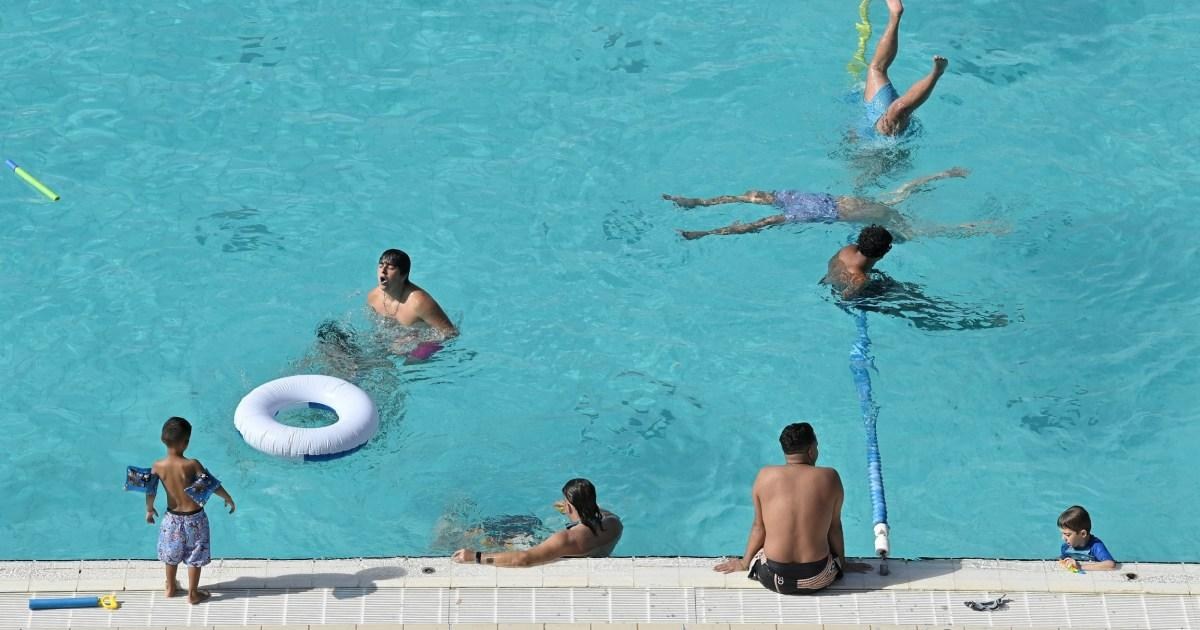
To view this video please enable JavaScript, and consider upgrading to a web browser that supports HTML5 video Hundreds of swimming pools in Spain are at high risk of becoming a public health hazard due to a revolting trend. If you’re eating, we suggest putting your food down before reading further. Unfortunately, the so-called ‘brown challenge’ (reto marrón) is exactly what you probably think it is. What started as an albeit very grim prank on Instagram and TikTok has grown into a very real health crisis, as it involves either defecating directly into a public pool or secretly putting faeces in a bag inside a swimsuit to release it in the water. The idea is that the joker will record the moment and post it online with the aim of getting the pool to close. Already, the ‘prank’ has caused more than 300 swimming pools to shut across the country. Sign up for all of the latest stories Start your day informed with Metro's News Updates newsletter or get Breaking News alerts the moment it happens. Hundreds of pools in Spain have become a health hazard thanks to a revolting online trend (Picture: Pau Barrena/AFP via Getty Images) It goes without saying that such behaviour poses numerous hygiene hazards, as faeces can transmit bacteria and viruses into the water. Bacteria include norovirus and Salmonella, and parasites such as Cryptosporidium, which pool chlorine does not kill. Should a fellow swimmer accidentally swallow or inhale the dirty water, it can cause problems like stomach pains, vomiting, fever, diarrhoea, and more. Children are most vulnerable in this case, as they swallow more water while swimming. So, it’s no surprise that the disturbing trend is causing havoc in Spanish pools, which must be emptied and closed immediately if faeces are found. By law, the pools should remain closed to the public for 24 to 48 hours, during which time the pools will be cleaned and filtered thoroughly before being tested several times to ensure the water is safe. Children are especially vulnerable to contracting infections as a result of the ‘brown challenge’ (Picture: Reuters) In some instances, pools have had to be drained entirely and then refilled, using thousands of litres of water, which isn’t cheap, especially given how small-town pools are typically the most affected, as they’re hotspots for family gatherings. Scheduled events then have to be cancelled, and locals are left without pools on some of the hottest days. Attempting to crack down on the foolish antics, around 50 municipalities have issued public alerts. Local councils are now punishing those responsible, too, with fines ranging from €1,000 to €3,000. Offenders will then, understandably, be banned from re-entering the pool. But in places like Picassent, the city council is taking further action, having escalated cases to court and fined several youngsters €5,000. Meanwhile, pools are also enforcing police surveillance, although identifying perpetrators can prove difficult, since pools cannot install cameras or demand ID on entry. Alas, this is not a new phenomenon, as the city of Zamora has seen some of its pools close six times already this year. In 2025, more than 300 swimming pools had to close for the same reason. Apologies in advance to anyone holidaying in Spain this year. Get in touch with our news team by emailing us at webnews@metro.co.uk. For more stories like this, check our news page. Arrow MORE: I saw the solar eclipse from a giant floating theatre — it was like winning the cosmic lottery Arrow MORE: Prue Leith reveals hospitalisation after husband ‘feared she was having a stroke’ Arrow MORE: Noticed fruit and veg in the shop looking a bit different to usual? This is why News Updates Stay on top of the headlines with daily email updates.
The ‘brown challenge’ is spreading across Spain – and it’s seriously disgusting
Full Article
Original Source
Read the full article at Metro →KhanList aggregates and links to publicly available news content. We do not host full articles from third-party sources. Always verify important information with original sources.