
6 min readThis story was originally published on March 6, 2026.Here’s what you’ll learn when you read this story:A massive study using brain scans of 35,000 people showed that those in positions of great socioeconomic power exhibit measurable differences in the white-matter networks that help different regions of the brain communicate.Powerful people can still be empathetic, but their brains gradually engage the empathy response less than people who inhabit lower social positions. It’s why executives can inhabit the same organization yet experience completely different perceptions of the same reality compared with workers in lower positions, various studies show.It could be that the brain’s radar for scanning other people’s feelings is not as urgent for someone who faces few social consequences. Over time, the brain adapts, and this can reshape how someone perceives others, researchers theorize.“What kind of world do the ultra-powerful actually live in?”The question is ricocheting across social media following new revelations about Jeffrey Epstein’s private island, the center of a scandal involving the sexual abuse of minors, trafficking networks, and a glittering elite orbit that included princes, billionaires, politicians, Hollywood figures, and tech titans.But the deeper question haunting many observers is psychological: How can individuals allegedly involved in such acts return to smiling, relatable public personas—to philanthropy, boardrooms, spouses, and children—as if nothing happened? Is their reality really so different?Science suggests this last “lay” question may actually be hitting a neuroscientific chord.A large 2025 study in Molecular Psychiatry, drawing on genetic data from nearly one million people and brain scans from about 35,000 participants in UK Biobank, a massive biomedical database tracking the health and genetics of volunteers in Britain, found that socioeconomic status is linked to measurable differences in brain structure, particularly in the white-matter networks that help different regions of the brain communicate.Using a genetic technique known as Mendelian randomization to tease apart cause and effect, the researchers found that higher socioeconomic status appears to protect the brain from white-matter lesions associated with aging, cognitive decline, and dementia. In other words, the study found that social position may leave measurable traces in the brain over time.That potentially influences how people process information and interpret the world around them, says Elizabeth Mateer, PhD, a neuropsychology fellow at Harvard Medical School. “This study reinforces a broader point: social position is biologically embedded. If that’s true, then sustained power—like sustained deprivation—could gradually shape how the brain processes the social world, including how much weight it gives to other people’s inner lives.”“The brain is a prediction machine,” Mateer adds. “It constantly allocates attention based on what appears most relevant, rewarding, or threatening.” When someone faces few social consequences, the brain pays less attention to subtle social cues. Over time, this can reshape how you perceive others. By this point, we are treading not so much on moral terrain as neurocognitive: When the cost of ignoring other people’s signals is low, the brain quietly retunes its radar.That said, the Molecular Psychiatry study did not directly measure empathy, and Mateer warns against genetic determinism. No, extreme power doesn’t transform those frequenting the rarefied circles into unfeeling monsters or wipe out their ability to register other people’s suffering (though certain members walking the extreme VIP-access corridors of power with preexisting traits such as psychopathy may be a whole different beast).“It’s that when someone holds extreme power, it can affect how often and automatically they engage [empathy],” Mateer says.Still, the broader suspicion that extreme power can distort human judgment is hardly new. As far back as The Republic and The Laws, fourth-century B.C.E. Greek philosopher Plato argued that most people are easily corrupted by power unless exceptional safeguards—or exceptional individuals—are in place. Modern neuroscience is beginning to take notes.Take this well-known experiment by neuroscientist Jeremy Hogeveen and colleagues: participants primed to feel powerful showed reduced “motor resonance” in the brain, a neural mirroring response that normally helps us simulate other people’s actions and emotions. In other words, their brains literally resonated with others less.Behavioral research also points in the same direction. In a series of studies led by psychologist Paul Piff at the University of California, Berkeley, drivers of expensive cars were far more likely to ignore pedestrians at crosswalks, and wealthier participants in laboratory experiments were more willing to bend rules or take resources meant for others.Taken together, the findings hint at a striking possibility: When people climb far enough up the social ladder, the brain’s automatic radar for other minds may begin to dim. The other person, especially someone lower on the totem pole, starts to disappear from the mental landscape of the one above.“Empathy goes first—and it goes fast,” says Shonna Waters, PhD, an organizational psychologist who studies what she calls the “altitude sickness” of leadership; she has taught leadership and organizational behavior at Georgetown University.“The neuroscience is pretty uncomfortable,” Waters says. “People in positions of power show reduced activity in mirror neuron systems, the circuitry responsible for empathy and perspective-taking.” The shift isn’t necessarily about character, she stresses. It’s about the environments powerful people inhabit.Her team’s research tracking more than 1,600 employees suggests the result can be striking: executives and frontline workers can inhabit the same organization yet experience completely different realities. Those in power tend to see opportunity and optimism; those following orders often report anxiety and uncertainty.It’s not cynicism or bad faith. As people rise in power, the environment around them gradually filters itself: good news travels upward more readily, conflicts find resolution before they ever reach the executive level, and social circles narrow to people whose realities increasingly resemble their own, Waters continues. The result can be familiar: benefits programs designed with features employees can’t use, AI transformation strategies announced with confidence while workers fear job loss, and many “people-first” culture initiatives that never quite reach below the VP level. “Leaders and employees are often responding to two genuinely different realities.”“When people say these elites live in a different world, it’s neurologically accurate,” concludes Waters. “Power filters signals.”But there’s hope: Waters suggests there’s something people in powerful positions can do to stay psychologically in touch with those below them in the power structure: build “structural empathy.” While this work involves a multifaceted approach, it involves actions such as accepting anonymous submissions, shadowing one team for a day, and using reverse mentoring to learn from junior colleagues, she writes in an article for the online entrepreneurial newsletter from Inc.But if unchecked power acts like some sort of altered-state-of-consciousness drug, is anyone capable of holding it without being changed by it?Plato thought so. In The Republic and The Laws, he imagined the rare “odd one out,” the individual capable of holding authority without being consumed by it. Modern neuroscience is echoing the exploration of this concept from another direction.Neuropsychologist Chris Frith has argued that human perception is built on shared mental models of the world. These models can, under certain circumstances, drift into collective distortion, from cult psychology to mass delusions. It’s as though reality is a fragile, shared hallucination.He has also pointed to the role of the “odd one out”: the societal anomaly of an individual who resists the pull of the group, perhaps because they are genetically predisposed to holding on to their judgment when everyone else begins to blend into the hallucination. If such people exist, might they also be capable of resisting power’s machinations? And if so, will the Epstein story reveal such a person?For the time being, the oddest ones out—the clearest dissenting voices—have not come from inside the system of power at all. They have come from the victims.Download Pop Mech Digital IssuesPopular MechanicsPopular MechanicsPopular MechanicsPopular MechanicsStav Dimitropoulos is a Gold and Community Anthem Award–winning journalist, and writes about consciousness, science, and culture for Popular Mechanics, Nature, and the BBC. Her work often explores mind-stretching angles where science meets philosophy. Her debut nonfiction book, Slow, Lazy, Gluttons (Greystone Books, 2026) asks: What if the traits society shames — laziness, darkness, nostalgia, and more — are actually survival superpowers?
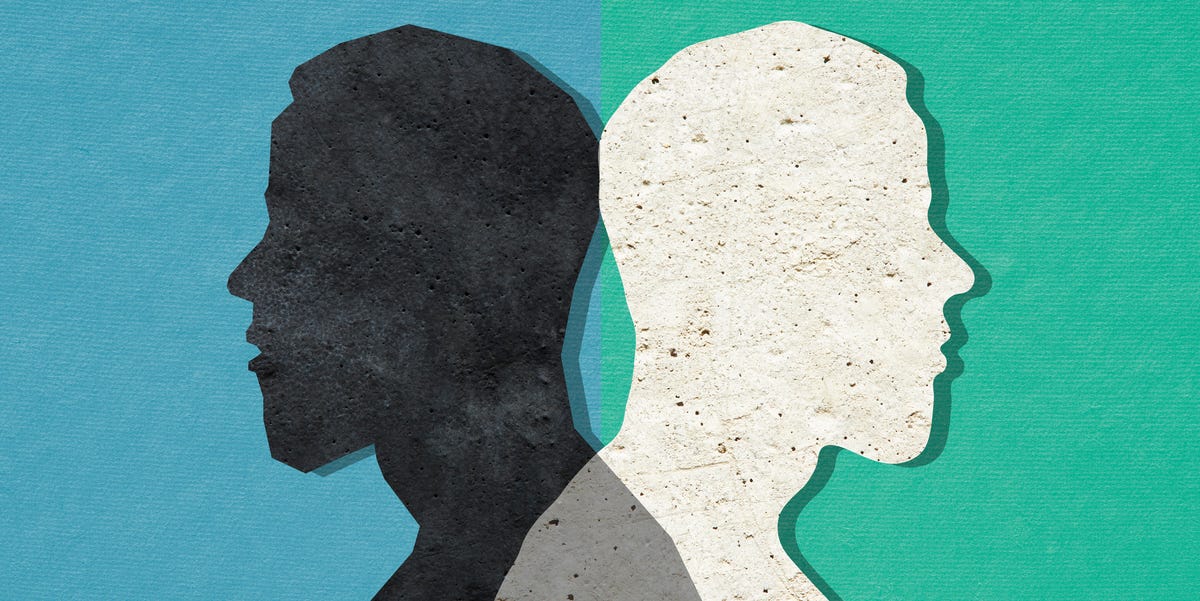
The Brains of Ultra-Powerful People Experience an Altered State of Reality, Research Suggests
Full Article
Original Source
Read the full article at Popularmechanics →KhanList aggregates and links to publicly available news content. We do not host full articles from third-party sources. Always verify important information with original sources.