
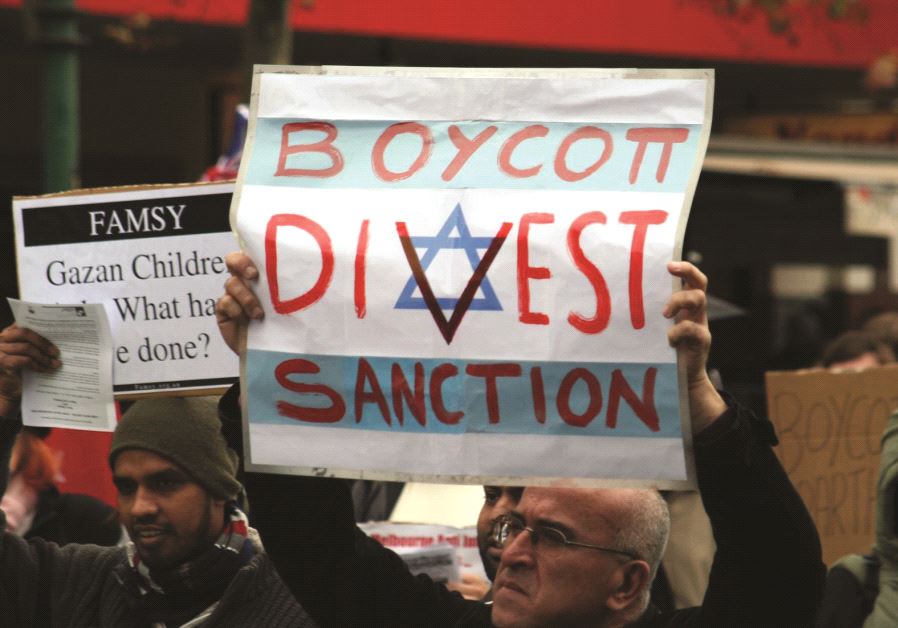
SEPTEMBER 12, 2026 16:58For more than two decades, various organizations have sought to change Israeli policy through boycotts targeting products, companies, academic institutions, and Israeli communities in Judea and Samaria. Now, government sanctions are also being added to the equation, such as those announced by the United Kingdom.One basic point must be made: no boycott can change history or undermine the connection between the Jewish people and the Land of Israel.But after decades of boycotts, it is worth asking: Has the boycott achieved its goal?The answer is no.The settlement movement has not stopped. The policies of successive Israeli governments have not changed as a result of boycotts. And over the past 25 years, hundreds of companies and businesses have been established in Judea and Samaria, alongside new industrial zones and factories.Pro-Palestine encampment stands at Cornell University on April 29, 2024. (credit: SCREENSHOT/TWITTER, SECTION 27A COPYRIGHT ACT)Take Airbnb, for example.In 2018, the company announced that it would remove approximately 200 properties in Judea and Samaria from its platform. Ironically, however, the decision exposed tens of millions of tourists around the world to a simple fact: there are Airbnb properties in the biblical heartland, and people can visit.Less than six months later, Airbnb reversed its decision. The boycott generated headlines, but it did not change reality.The story of Ben & Jerry’s is also well known. In 2021, the company announced that it would not renew the sale of its products in what it called the “Occupied Palestinian Territory,” while emphasizing that it was not leaving Israel.Following a prolonged campaign in which I was personally involved, the parent company, Unilever, sold its Israeli business to its Israeli licensee. As a result, Ben & Jerry’s products continued to be sold in Israel, including in Judea and Samaria.Israeli policy unchanged by boycottsOnce again, the boycott created a media storm, but it did not change Israeli policy.And that is the point: a boycott can cause harm and generate noise. But there is a significant distance between causing damage and changing policy. Boycotts fuel antisemitism. But they do not change Israel.But here is where things get interesting: the boycott does have an impact. For better, too.In the United States, it has generated a backlash. Thirty-seven states have already adopted laws or other measures against BDS, including restrictions on public contracts or investments involving companies that participate in boycotts against Israel.And last week, on September 3, the US House of Representatives passed the Protect Economic and Academic Freedom Act by a vote of 237-169. The bill seeks to restrict certain federal funding to academic institutions participating in boycotts against Israel. The legislation still requires Senate approval.A paradox has emerged: the boycott intended to isolate Israel has created an opposite movement in the United States, a movement seeking to protect Israel from boycotts through legislation.And this impact is reaching Judea and Samaria as well. For example, American businesspeople have approached American Friends of Judea and Samaria seeking investment opportunities in Judea and Samaria, both as a response to British boycott efforts and because they believe that investing in the biblical heartland can bring prosperity to their businesses in America.The boycott did not stop the settlement movement.It did not change Israeli policy.But it has encouraged more Americans to organize, take action, and deepen their connections with Israel and Judea and Samaria.Therefore, instead of defending against each boycott separately, we should turn this challenge into an opportunity: strengthen the relationship between America and Israel, protect freedom of commerce, and encourage Americans to visit, do business, and invest in Judea and Samaria.That is how we can turn the boycott into something that has an impact, for better.The writer is the former CEO of the Yesha Council and CEO of American Friends of Judea and Samaria.Follow us on Google
The boycott was meant to isolate Israeli settlements - it is doing the opposite - opinion
Full Article
Original Source
Read the full article at Jpost →KhanList aggregates and links to publicly available news content. We do not host full articles from third-party sources. Always verify important information with original sources.