
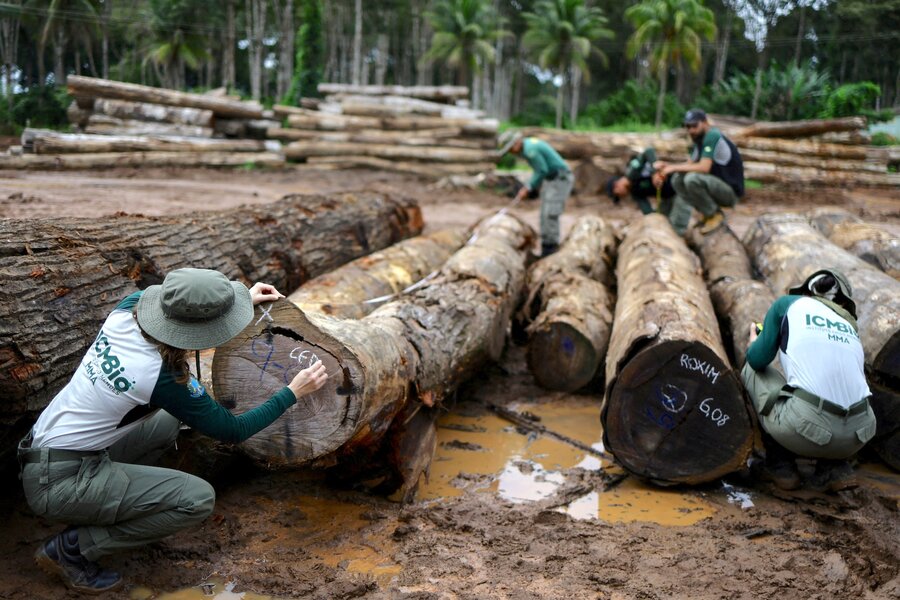
For over three decades, the International Convention on Biodiversity has brought together governments and civil society to protect and preserve what the United Nations describes as “the living fabric of our planet.” This year’s gathering, taking place in Armenia from Oct. 19 to 30, is a sobering assessment of the mending that’s taken place so far.The 23 targets set at a previous session include extending conservation protections to 30% of the world’s land and water areas, restoring degraded ecosystems, and recovering threatened species – and doing all this in tandem with longtime or Indigenous human inhabitants of those areas.To date, 90% of countries have established biodiversity goals. And “implementation is underway across all targets,” according to the International Institute for Sustainable Development. Technology transfers and scientific cooperation are taking place. Deforestation in the Amazon has fallen. And species such as the Central Asian saiga antelope and California condor have recorded notable comebacks. Yet there is a vast gap in financial commitments for the estimated $200 billion a year needed to boost biodiversity. Delegates to the conference pushed hard for another target – a $500 billion reduction in subsidies to businesses and agriculture seen as harmful to nature.One architect of the 23 biodiversity targets, Canada’s former environmental minister Steven Guilbeault, acknowledges “the context has changed” since they were set in 2022. Now, with wars, extreme weather, and strained public finances, “leaders feel pressure” and biodiversity “is perceived as a ‘nice-to-have,’” he wrote in The Guardian last week.“This is a false dichotomy,” Mr. Guilbeault asserted. “Nature is a critical asset for national prosperity and economic security.” So are people, especially the longtime Indigenous inhabitants of areas targeted for protection or restoration. Deepen your worldviewwith Monitor Highlights.Politics with respectGet political stories with respectful analysis.There‘s a world of new ideas in everyBooks newsletter.There‘s more to life, enrich yours withCulture & Learning weekly.Follow humanity‘s discoveries withScience & Nature stories in your inbox.Gain a spiritual perspectivefrom the stories in your inbox.Want to understand the deeper impact of critical events? Learn the Monitor‘s insight.Already a subscriber? Log in to hide ads. “Governments can establish targets and regulations, but implementation ultimately takes place across ... communities,” Lucy Mulenkei, a Kenyan delegate, told the news site Mongabay. “Without genuine partnership [and] meaningful inclusion, ... the 2030 nature goals will never be achieved.”Beyond the use or misuse of natural resources, however, is an even grander concept of nature that can inspire conservation efforts. It’s what the late American novelist and environmentalist Wallace Stegner called “the wilderness idea, which is a resource in itself ... an intangible and spiritual resource.” ALREADY A SUBSCRIBER? LoginReal news can be honest, hopeful, credible, constructive.The Christian Science Monitor was founded in 1908 to lift the standard of journalism and uplift humanity. We aim to “speak the truth in love.” Our goal is not to tell you what to think, but to give you the essential knowledge and understanding to come to your own intelligent conclusions. Join us in this mission by subscribing.
The boosts and busts in biodiversity targets
Full Article
Original Source
Read the full article at Csmonitor →KhanList aggregates and links to publicly available news content. We do not host full articles from third-party sources. Always verify important information with original sources.