
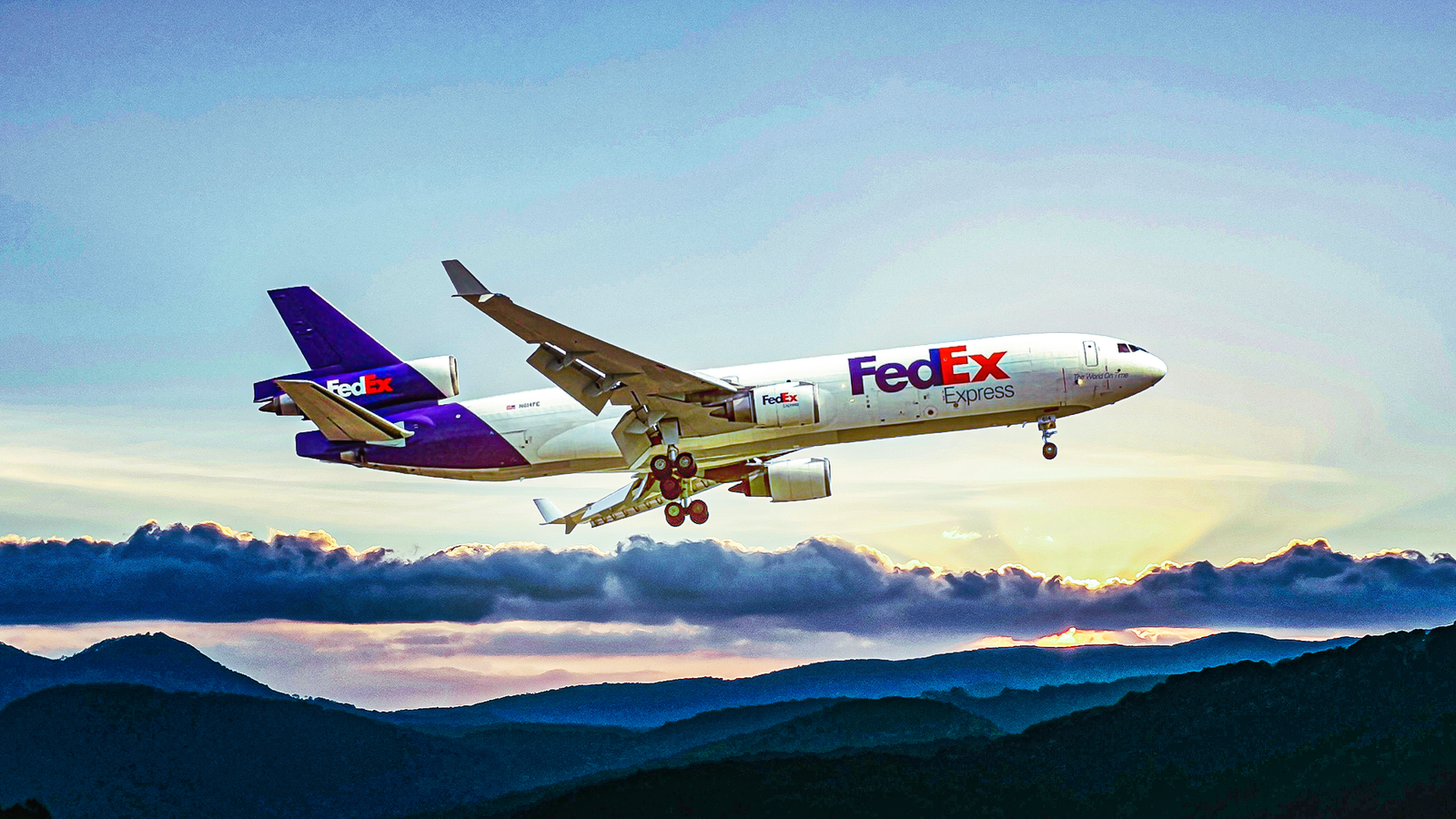
The McDonnell Douglas MD-11 has been a workhorse of the global air cargo industry since it entered service in 1990. While passenger airlines had largely abandoned the three-engine widebody, UPS and FedEx continued to rely on it to move millions of packages across their networks. That era is now coming to an end, but replacing the MD-11 is proving more complicated than simply ordering another freighter. UPS has already retired all 26 of its MD-11s, turning to Boeing 767-300 freighters to help restore its lost capacity. FedEx has taken a different approach, retaining 29 examples as of May 2026 and planning to withdraw the fleet by the end of 2032. So, which Boeing aircraft are taking over the MD-11's workload, and why are cargo operators choosing a combination of smaller and larger freighters instead of a direct replacement? Why The MD-11 Is Disappearing From Cargo Fleets Credit: Mason Brighton | Shutterstock The MD-11 enjoyed a much longer career in cargo operations than it did in passenger service. Developed by McDonnell Douglas as a long-range widebody trijet, it offered airlines and freight operators a combination of substantial payload capacity and intercontinental range. Although passenger airlines gradually replaced it with newer twin-engine aircraft, cargo companies found plenty of work for the aging aircraft. UPS and FedEx became two of its most important operators. The MD-11 was well suited to their overnight delivery networks, which require aircraft capable of carrying large shipments between major sorting hubs. Its three-engine configuration was also less of a concern when cargo demand justified the operating costs. However, the economics of operating older three-engine aircraft have changed. Modern twin-engine freighters can carry substantial loads over long distances while requiring fewer engines, reducing maintenance requirements and fuel consumption. The Boeing 777F, for example, offers more structural payload than the MD-11 while covering long-haul routes without a third engine. The decisive moment for the MD-11 came on November 4, 2025, when UPS Flight 2976 crashed shortly after takeoff from Louisville Muhammad Ali International Airport (SDF). The accident killed all three crew members and 11 people on the ground. Following the crash, the Federal Aviation Administration (FAA) issued an emergency airworthiness directive prohibiting MD-11 operations until the required inspections and corrective actions had been completed. The National Transportation Safety Board's investigation documented the accident and continues to examine its circumstances. UPS subsequently decided to retire its entire MD-11 fleet instead of returning the aircraft to service. FedEx, however, chose to resume operations after the necessary inspections and retain the remaining aircraft for several more years. The two companies now face the same challenge, but their replacement strategies look very different. How UPS Is Replacing Its MD-11 Fleet With Boeing 767 Freighters Credit: Bjoern Wylezich | Shutterstock UPS had already established a substantial Boeing 767 operation before retiring its MD-11s. According to its 2025 Annual Report, the company listed 26 MD-11 aircraft in its fleet figures and confirmed that it had permanently grounded and retired the entire type during the fourth quarter of 2025. At year-end, UPS had 99 Boeing 767-300 aircraft and another 18 on order, according to AeroCorner. This made the 767 a natural choice for rebuilding capacity. UPS did not need to introduce an unfamiliar aircraft into its operations, and its existing fleet provided a foundation for handling additional shipments. The company also operates Boeing 757, 747, and Airbus A300 aircraft, giving its network other options for distributing freight, according to planespotters.net. The retirement nevertheless came with a financial cost. In its June 2026 financial filing, UPS reported that it had taken delivery of five additional Boeing 767-300 aircraft during the first six months of 2026. And, as of November 2026, the airline already operates 110 Boeing 767 aircraft. The company accounted for these aircraft as finance leases. The company also acknowledged that the loss of the MD-11 fleet had increased third-party aircraft leasing expenses as it dealt with capacity constraints. There is a catch, though. The Boeing 767-300F is not a direct replacement for the MD-11 in terms of payload or range. The 767 belongs to a smaller widebody category, meaning that UPS cannot simply assign every former MD-11 route to a single 767 and expect identical results. Some shipments may need to be distributed across additional flights or transferred to larger aircraft. UPS can use its Boeing 747 freighters on longer routes that require greater payload capacity, while the 767s handle smaller shipments and shorter sectors. This approach allows the company to match aircraft size to demand, though it also requires careful scheduling. FedEx, meanwhile, has chosen to keep its MD-11s flying while it builds up its replacement capacity. Why FedEx Is Keeping Its Remaining MD-11s Until 2032 Credit: Robin Guess | Shutterstock FedEx is taking a much slower approach to retiring its MD-11 fleet. Its 2026 Annual Report recorded 29 MD-11s as of May 31, 2026, alongside 59 Boeing 777Fs and 152 Boeing 767Fs. The company plans to retire the remaining three-engine aircraft by the end of 2032. The decision follows an earlier change in FedEx's fleet plans. In 2023, the company had targeted the end of 2028 for the retirement of its MD-11 fleet. However, it extended the deadline in 2025, explaining that the revised schedule would better match aircraft capacity with anticipated shipment volumes. In other words, FedEx decided that keeping the aircraft for longer made more sense than withdrawing them before replacement capacity was needed. The November 2025 grounding also disrupted FedEx's operations. The company explained in its annual report that the FAA issued an emergency airworthiness directive prohibiting MD-11 flights until the required inspections and corrective actions were completed. Following FAA approval of Boeing-developed inspection and return-to-service protocols in May 2026, FedEx began bringing its aircraft back into commercial service. It expected the entire fleet to return to service by the end of calendar year 2026. FedEx also reported saving 120 million gallons of jet fuel in 2025 through aircraft modernization efforts, including retiring less efficient three-engine aircraft and introducing newer models. The figure covers its broader modernization program, not the MD-11 retirement alone. For FedEx, the MD-11 is a temporary source of capacity while the company adjusts its network. Its Boeing 767 and 777 fleets will eventually take over the remaining work, but the two aircraft serve different purposes. Boeing 777F & 767F: Two Different Replacements For The MD-11 Credit: Suparat Chairatprasert | Shutterstock The Boeing 777F is the closest modern alternative to the MD-11 for operators that need a large long-range freighter. In fact, its maximum structural payload is considerably greater than the older trijet's. FedEx lists the 777F's maximum gross structural payload at 233,300 lb (105.8 tonnes), compared with 192,600 lb (87.4 tonnes) for the MD-11. Powered by two General Electric GE90 engines, the 777F can fly approximately 5,000 nautical miles (9,260 kilometers) with a 107-tonne payload, according to Boeing's official freighter specifications. This makes it well suited to high-volume international routes where cargo companies need to transport substantial shipments without intermediate stops. Aircraft type FedEx fleet, November 2026 Maximum structural payload Range at maximum payload Boeing 777F 60 233,300 lb (105.8 tonnes) 5,000 nautical miles (9,260 km) McDonnell Douglas MD-11 28 192,600 lb (87.4 tonnes) 3,520 nautical miles (6,650 km) Boeing 767F 152 127,100 lb (57.7 tonnes) 3,300 nautical miles (6,100 km) Source: Planespotters.net, Boeing, FedEx The 767F occupies a different position. Its maximum structural payload is 127,100 (57.7 tonnes) in FedEx's published figures, making it considerably smaller than the MD-11 and 777F. However, that does not make it a less useful aircraft. It can serve routes where a larger freighter would carry unnecessary capacity, allowing operators to match aircraft size to shipment volume. For express delivery companies, this distinction matters. Their networks connect major international gateways with regional sorting facilities, and not every route generates enough freight to justify a Boeing 777F. A 767 can handle smaller shipments while the larger aircraft transports heavier loads between major hubs. Basically, the two Boeing models complement one another. The 777F provides the payload and range needed for long-distance cargo operations, while the 767F offers flexibility across domestic and medium-haul routes. Both also benefit from the operating economics of a modern twin-engine aircraft. This is not the only way cargo operators are obtaining replacement capacity. Passenger-to-freighter conversions have also become an important part of the market, offering another source of widebody aircraft without relying entirely on new production. Why Cargo Airlines Are Turning To Boeing Freighter Conversions Credit: Karolis Kavolelis | Shutterstock Buying factory-built freighters is not always the quickest or cheapest way to expand a cargo fleet. Production slots are limited, aircraft require substantial capital investment, and operators may need additional capacity before new deliveries become available. Passenger-to-freighter conversions offer an alternative by giving older passenger aircraft a second career carrying cargo. The Boeing 767-300BCF is one example. It allows operators to obtain a widebody freighter by converting an existing passenger aircraft rather than purchasing a new factory-built freighter. The Boeing 777-300ERSF, developed by Israel Aerospace Industries (IAI), takes the same idea into the larger widebody category. The 777-300ERSF, nicknamed the Big Twin, is based on the passenger 777-300ER. Its conversion program demonstrates how an aircraft originally designed for passenger operations can be adapted to transport large cargo loads. The aircraft received certification in September 2025, providing another option for freight operators seeking long-range twin-engine capacity. As discussed in our analysis of Boeing 777 freighter conversions, these programs are attracting attention because they can help bridge the gap between retiring older aircraft and obtaining new freighters. They also make use of passenger aircraft that might otherwise leave commercial service. However, conversions are not a permanent solution to the industry's capacity requirements. Suitable passenger aircraft must be available, and their age, condition, and remaining service life all affect the financial viability of the project. A conversion also requires structural modifications, cargo doors, reinforced floors, and the necessary certification. For UPS and FedEx, converted aircraft could provide another way to manage capacity as the MD-11 disappears. The bigger question is whether the supply of suitable donor aircraft will meet the cargo industry's needs over the next decade. The Boeing 767 And 777 Will Define The MD-11's Successors Credit: GingChen | Shutterstock The MD-11's departure does not mean the cargo industry has found a single aircraft to replace everything the trijet once did. Instead, UPS and FedEx are building their future fleets around a combination of aircraft with different payloads, ranges, and operating costs. The Boeing 767 and 777 are at the center of this change, but their roles are not interchangeable. UPS has already made its decision. After retiring its MD-11 fleet, it is relying on additional Boeing 767-300 aircraft, alongside its existing 747 and A300 fleets, to maintain its cargo network. The five 767 deliveries recorded in the first half of 2026 are an early indication of how the company is rebuilding its capacity. FedEx has more time to complete the same process. Its MD-11 fleet is scheduled to disappear by the end of 2032, with the company's Boeing 777F and 767F fleets expected to take on the remaining work. Its decision to extend the retirement deadline also suggests there is no reason to retire an aircraft before replacement capacity is available. The financial results will be worth watching. UPS recorded a $182 million charge related to retiring its MD-11 fleet in 2025, while FedEx reported 120 million gallons of fuel savings through its wider aircraft modernization program. These figures illustrate the costs of removing older aircraft and the potential benefits of operating a more efficient fleet, although they measure different things. The MD-11 served the cargo industry successfully for many years, but its successors will not be a single aircraft type. Boeing's 767 and 777 freighters, together with converted passenger aircraft, will divide the work once performed by the trijet. The real test for UPS and FedEx will be whether they can maintain the same reach and shipment capacity without the aircraft that helped build their global cargo networks.
The Boeing Freighters Replacing The McDonnell Douglas MD-11
Full Article
Original Source
Read the full article at Simpleflying →KhanList aggregates and links to publicly available news content. We do not host full articles from third-party sources. Always verify important information with original sources.