
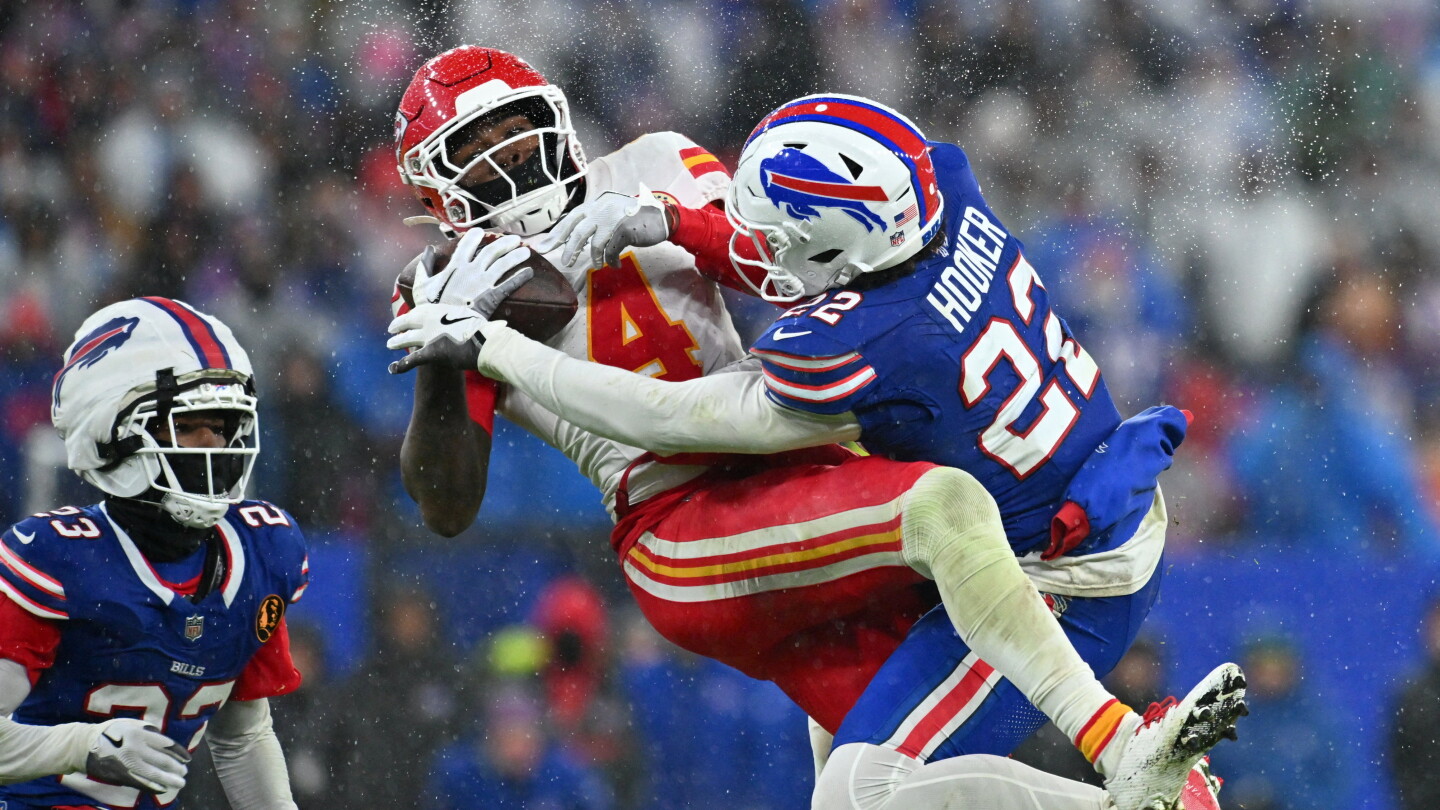
Every time the football-following world collectively concludes that it understands what a catch is, something happens to shake the faith in both the language of the rule and its application.Most recently, multiple things have made many wonder, once again, what the hell a catch is — and isn’t.Last Sunday, Jaguars receiver Parker Washington apparently made a touchdown catch that was ruled not to be a catch on the field. Replay review upheld the ruling, over the objection of CBS rules analyst Gene Steratore. That night, 49ers receiver Mike Evans made a touchdown catch that perhaps should have been ruled not a catch, based on the notion that Evans didn’t get two feet down in the end zone after finally securing control of the ball. There was no full-blown review of the play (and, apparently, no phone calls from the outside to do so).On Monday night, Bengals receiver Tee Higgins made a touchdown catch that looked a lot like the Parker Washington play. It was ruled a touchdown and, as with the Evans play, no replay review occurred. Then, on Thanksgiving night, Chiefs receiver Rashee Rice made a catch for a potential first down late in the game at Buffalo. It was ruled a catch on the field. The replay process overturned it, apparently based on the notion that, when the ball touched the ground, it also moved.The current issue with the catch rule isn’t the “football move” niceties that plagued the process for years. It’s whether and when the replay standard will overturn the ruling on the field.And while the NFL undoubtedly will take another look at the situation during the offseason (ESPNFL reports that it did in 2025), it’s not enough to simply remind everyone that the replay process should overturn rulings on the field when it’s “clear and obvious” that those rulings were incorrect. Given the number of people who are in position to preside over replay rulings (and no one ever knows who they are), it’s impossible to create one consistent standard.The deeper problem seems to be this: When the rule regarding what is and isn’t a catch is inherently not “clear and obvious,” how can there ever be “clear and obvious” evidence that the ruling on the field was wrong?The current rules allow a catch to be made in situations where it’s not clearly and obviously a catch, in the traditional sense. But it’s still a catch. So why not tweak the rules to require more clarity that a catch has been made? That could be accomplished by revising what it means to “secure[] control of the ball with his hand(s) or arm(s) prior to the ball touching the ground.”First, control doesn’t mean securing the ball in the elbow or the back of the hand. Control means having one or both palms, or at least two or more fingers, on the ball at all times.Second, if the player hits the ground out of bounds in the process of making the catch, there can be no movement of the ball — of any kind. No bobble, no wobble, no shift. No movement of any kind.Third, and perhaps most importantly, the ball can never touch the ground.It goes all the way back to the Bert Emanuel play from the 1999 NFC Championship. The NFL changed the rule to allow the ball to touch the ground, as long as the player otherwise had control of the ball.But why should the ball be allowed to ever hit the ground? Catching the ball implies (or at least it should) that the ball is protected at all times from touching the ground. Otherwise, it’s not a catch.While those changes would make it harder to make a catch, it would make it much easier for everyone to know what is and isn’t a catch.So that’s the heart of the problem. The league’s expansion of what it means to catch the ball has made it harder (to at times the point of impossible) to decide what it means in the finest of the margins to have caught the ball.As recently explained regarding the game clock at the end of Chiefs-Bills, football is a game of margins. Inches, seconds, and catches. The best way to fix the catch rule would be to trim the margins away and apply a far brighter line as to what it means to catch the ball. If that happens, it should always be clear and obvious that the ball has, or hasn’t, been caught.
The best way to revise the catch rule would be to revisit what it means to catch the ball
Full Article
Original Source
Read the full article at Nbcsports →KhanList aggregates and links to publicly available news content. We do not host full articles from third-party sources. Always verify important information with original sources.