
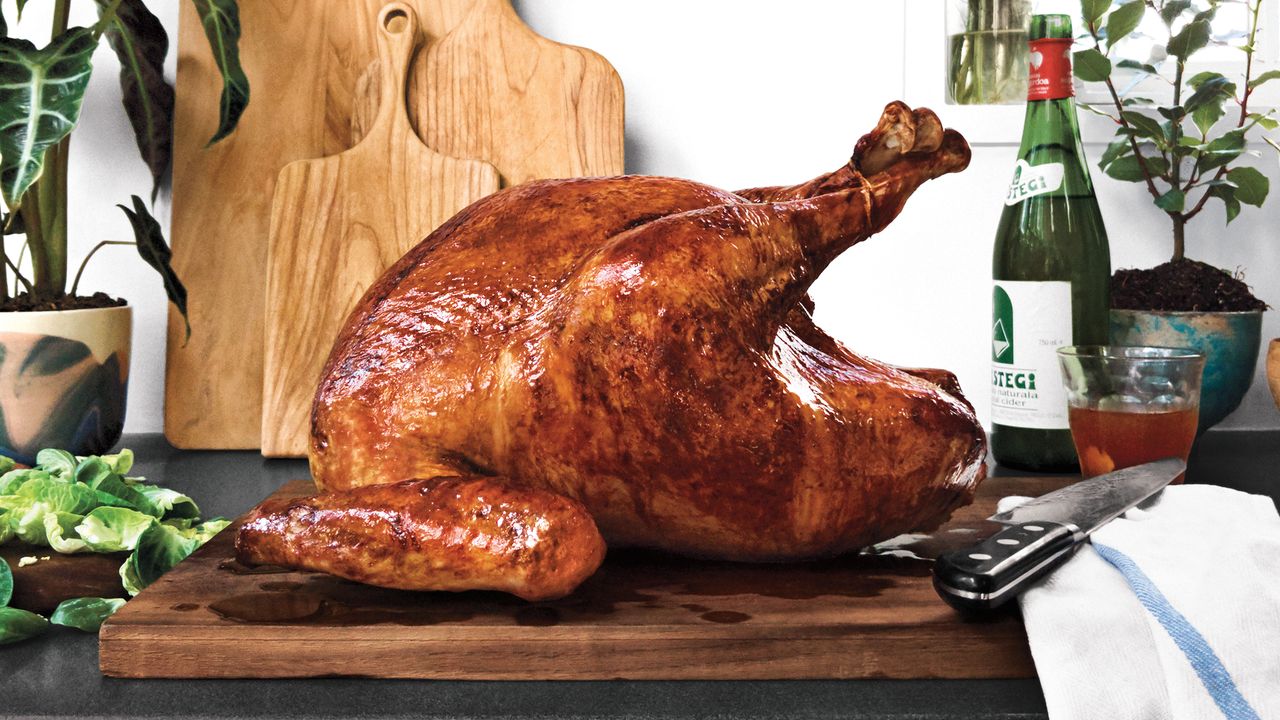
Developing the Thanksgiving turkey for Bon Appétit is a particular kind of pressure. The bird will be the centerpiece of hundreds of families' holiday meals (we hope). There’s not much room for error. We want deeply browned, crispy skin and juicy, well-seasoned meat, every time.Andy Baraghani got the assignment for our 2018 Thanksgiving menu, and his Dry-Brined Turkey With Tangy Honey Glaze has been a go-to for many of our editors ever since. The method is straightforward but strategic: Dry-brine the bird well in advance, get butter under the skin, glaze rather than baste, and start it in a hot oven before dropping the temperature to gently finish cooking. Here’s why each step matters.Why this turkey worksDry-brining is keyAndy’s recipe calls for massaging the turkey with a dry brine, then letting it chill in the fridge. It’s a technique we often use with chicken, and it’s especially useful for a whole turkey; the salt seasons the meat throughout while helping it retain moisture as it cooks.Why dry-brine instead of wet-brine? Maybe in the past you’ve filled a huge cooler or tub with saltwater, constructing an elaborate dunk tank for the bird. Our opinion: It’s a pain, it’s a mess, and that bucket takes up way too much refrigerator real estate. A dry brine gets the job done without waterlogging the turkey or diluting its flavor.To dry-brine a turkey, first remove the neck and giblets from the cavity, then pat the bird dry with paper towels. Andy keeps things simple with kosher salt and brown sugar. Don’t skip the sugar: It caramelizes in the oven, helping the skin develop a deep golden-brown color.Massage the dry brine all over the bird—outside and inside the cavity—at least 12 hours and up to 2 days before you plan to roast it. Then let the turkey hang out, uncovered, in the fridge until you’re ready to cook.Our never-fail turkey is excellent in every way that other turkeys often fall short. Period.View RecipeWatch Andy make this Thanksgiving turkeyButter over and under the skinWhile the oven preheats, rub a whole stick of unsalted butter over the turkey and underneath the skin. Unsalted is important here; there’s already plenty of salt from the dry brine.Loosening the skin lets you get the butter directly onto the meat, helping keep it juicy while encouraging the exterior to turn golden brown. It’s not pretty work, but it’s worth it.Andy doesn’t add vegetables or aromatics to the pan either. A few rogue thyme sprigs are more likely to burn than impart much flavor.Glaze, don’t basteIf crispy skin is your goal—and when has it ever not been?—basting can sabotage your mission. Brushing or spritzing the turkey with stock or pan juices reintroduces moisture to the skin, working against all that careful drying.Glazing is another story. This recipe combines vinegar, honey, Worcestershire sauce, rosemary, garlic, orange zest, and butter into a sweet-tart glaze. Brush it over the turkey every 30 minutes as it roasts, and watch as it caramelizes into a glossy, deeply browned shellac.Skip the roasting panIf you only break out the ginormous roasting pan once a year, you may not need it at all. High-sided roasting pans can block the circulation of hot air around the turkey, resulting in less-even browning.Instead, roast the bird on a wire rack set inside a rimmed sheet pan, which gives more of its exterior exposure to the heat. If the thought of balancing a big, heavy turkey on a rack without high walls makes you nervous, a regular roasting pan will still work.Pour 1 cup of water into the bottom of the sheet pan to keep the drippings from reducing too much and creating a smoke show in your kitchen. Just don’t add too much: Excess water can create steam and sog out the skin.Start hot, then lower the heatThis recipe starts the oven hot to jump-start browning, then lowers the temperature to gently cook the turkey through. For a 12–14-lb. bird, roast at 450° for 30 minutes, then reduce the heat to 300° and continue cooking for 65–85 minutes, glazing every 30 minutes.That puts the total roasting time at just under 2 hours—but turkey cooking time depends on the size of your bird and the method you’re using. Our guide to how long to cook a turkey has timings for birds of different sizes and preparations.Still shopping? Here’s how much turkey you need per person.Juicy turkey breast is possible, people. Let’s make dreams happen. Photo by Michael Graydon + Nikole Herriott, food styling by Rebecca Jurkevich, prop styling by Kalen KaminskiKeep an eye on the temperatureThis is where a meat thermometer comes in handy. Insert it into the thickest part of the breast, near the neck, about halfway through the final cooking stage, then check it every 20–30 minutes—or every time you glaze.When the internal temperature registers 150°, remove the bird from the oven. We know that sounds low, but don’t be alarmed. The turkey’s temperature will continue to rise to an acceptable temperature of 160°F within about 30 minutes after the oven roasting is done.You can check the dark meat too, but turkey legs and thighs generally reach temperature before the breast does—and can withstand a higher internal temperature (up to 190°) while remaining juicy.Give it a restThe bird’s been through a lot. Let it rest.Rest the turkey on a cutting board for at least 30 minutes and up to 1 hour. This allows the juices to redistribute throughout the meat. Resist the temptation to cover it with aluminum foil: A whole turkey retains heat remarkably well, while trapping steam against the skin can turn it soggy.Use the downtime to put the finishing touches on your mashed potatoes, green bean casserole, cranberry sauce, turkey gravy, and other Thanksgiving side dishes. Or take a crash course in how to carve a turkey, a skill you will no doubt need very shortly.As for the leftover turkey, you need not limit yourself to turkey sandwiches and post-Thanksgiving melts. Turn it into pot pie, pozole, or congee. Assuming, of course, there even are any leftovers.Additional reporting contributed by Alex Beggs.
The Best Way to Cook a Thanksgiving Turkey
Full Article
Original Source
Read the full article at Bonappetit →KhanList aggregates and links to publicly available news content. We do not host full articles from third-party sources. Always verify important information with original sources.