
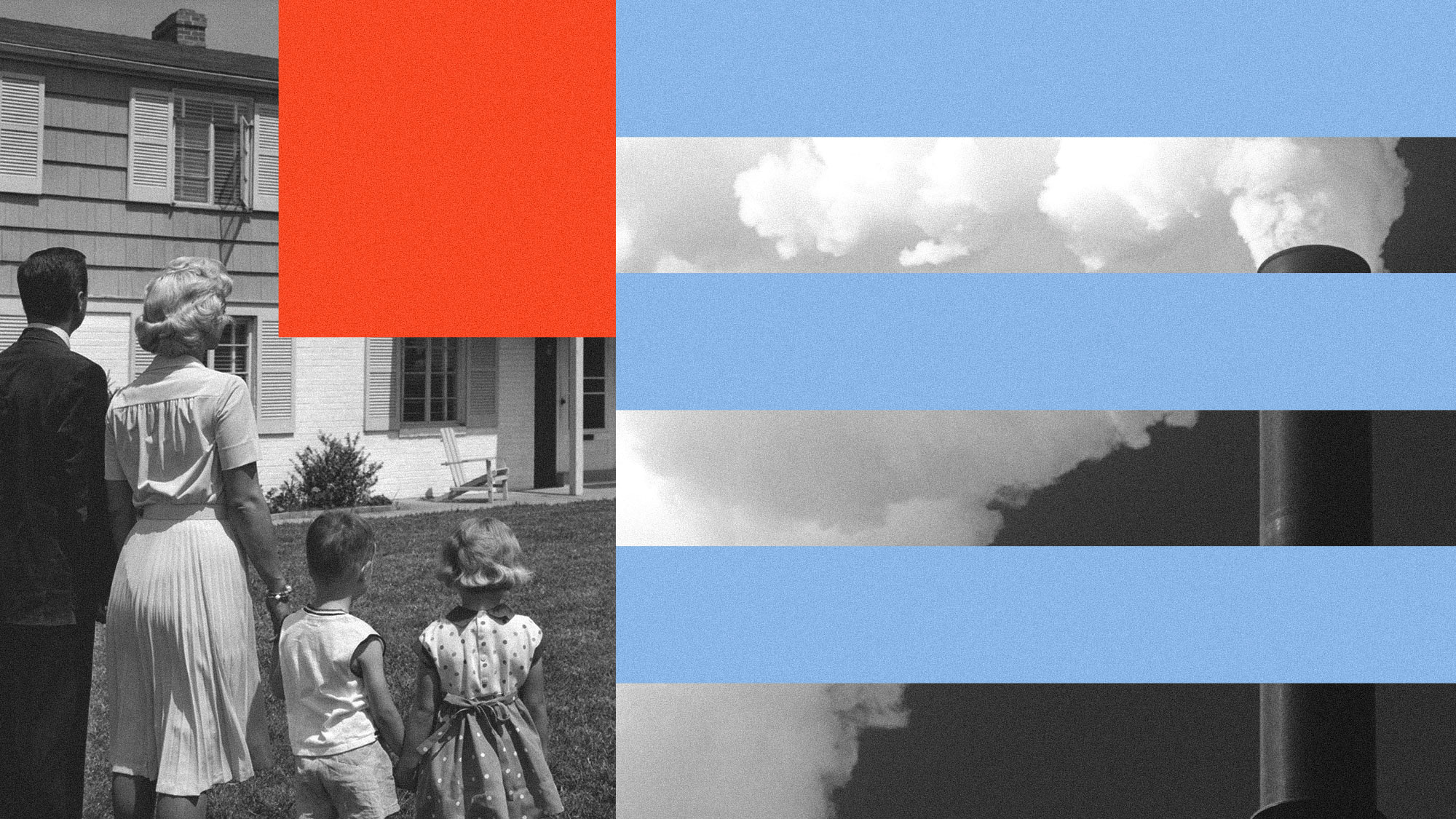
To Sierra Isley, the American Dream brings to mind a home ringed by a white picket fence. “The house in the suburbs is just what you’re taught growing up,” the 26-year-old said. “You know, that’s what you see on TV.” What she wanted for her life was a bit different from that picket-fence ideal, but she still saw the prospect of buying her first house two years ago as a chance to live out what she called “that big dream that everybody has as a kid.” Isley and her girlfriend, Jamie, were moving from Philadelphia to Asheville, North Carolina, and found a home they liked, a three-bedroom brick house with lots of natural light and a big tree out front. With some help from their parents, they put down a deposit and got their offer accepted. But when they went to sign the closing papers, a complication got in the way: The house had a huge lien on it. After consulting with lawyers, they decided to break the contract and hunt for an apartment to rent in Asheville. It was a blessing in disguise. One month later, while Sierra and Jamie were still unpacking boxes and building furniture, the remnants of Hurricane Helene turned Asheville into a disaster zone. The basement of their apartment flooded, but they were luckier than some of their neighbors, whose homes had been destroyed. Owning a home has long been seen as a cornerstone of the American Dream — a way to build wealth that you could use one day to pay for your children’s education and fund your retirement. That arrangement was always more precarious than it was made out to be. But as fires and floods damage homes and drive up insurance rates, pouring your life savings into a house has become riskier than ever. In a report called “Property Prices in Peril,” the firm First Street projected last year that climate risks could knock nearly $1.5 trillion off the value of American homes by 2055. For some people, the sociologist Rebecca Elliott wrote, “the American dream of homeownership may become a nightmare.” A fallen tree on a home in the aftermath of Hurricane Helene in Asheville, North Carolina, in September 2024. Sean Rayford / Getty Images Americans are beginning to grasp the threat that climate change poses to their aspirations. According to exclusive polling for Grist from the think tank Data for Progress, 58 percent of likely U.S. voters believe that climate change will hinder their ability to achieve the American Dream over the next 20 years, including 42 percent of Republicans. The survey suggests that people are worried that climate change will increase the cost of living, a concern so widespread that it’s expected to sway the midterm elections on Tuesday. The irony is that fossil fuels have long been promoted as necessary ingredients for the American “way of life.” Starting a century ago, oil and gas companies led extensive campaigns to tie their products to comfort and prosperity, a narrative that has been repeatedly deployed by politicians and oil industry executives to thwart climate action. President Donald Trump’s administration has often said that efforts to rein in fossil fuels threaten the American Dream. Earlier this year, when the administration scrapped Biden-era rules to cut emissions from cars, along with the Environmental Protection Agency’s authority to regulate climate change, it touted the effort as “restoring the American Dream.” Read Next But the fossil-fueled American Dream is in the process of destroying itself. Greenhouse gas emissions from burning coal, oil, and gas have ushered in a new period of precarity, undermining the promise that each generation can expect a better life than the last. Scientific reports warn that climate change “imperil[s] the quality of life” for communities in the United States, disrupting livelihoods and cultural traditions. Either Americans decide to reimagine what makes up the American Dream and abandon that oil-soaked version of prosperity, or climate change will dismantle it for them. The memories of living through Hurricane Helene are still fresh in Isley’s mind. Hauling water from their flooded basement up to the toilet to flush it when the water ran out. Driving to Jamie’s parents’ house in Atlanta, holed up in a room with both of their cats until they couldn’t take it anymore. Coming back to Asheville and cooking meals in the Crock-Pot with disposable liners because even when the water was running again, it wasn’t safe to wash dishes with. Two years later, Isley browses Zillow for fun, but she looks at homes through a post-disaster lens. “Now I have that fear in the back of my mind — anywhere near a river, or even a stream, if there’s a little bit of water on the map, I’m like, ‘Oh, no,’” she said. Jamie is trans, and after Trump was elected in 2024, the two of them briefly entertained the idea of moving somewhere with more protective policies, like California. But Isley’s mind immediately went to wildfires. Out of the question. Sierra Isley on a hiking trail in Asheville. Courtesy of Sierra Isley Isley had fled from hurricanes before, when she lived in Florida during college. She thought she’d be safe from them tucked away in the Blue Ridge Mountains. Asheville was supposed to be a “climate haven,” somewhere that would fare better than the rest of the country as the world warmed. Those promises were shattered when almost 14 inches of rain fell on Asheville over three days in September 2024. The French Broad River overflowed its banks, flooding homes and destroying parts of the town’s River Arts District. In western North Carolina, more than 74,000 homes were damaged, and only about 4 percent had flood insurance, resulting in $9.5 billion in uninsured residential property losses. Home values in western North Carolina have declined since the storm, especially in the hardest-hit counties. Asheville’s average home price shrunk 5 percent over the past year, while the national average increased 1.2 percent. To some degree, housing markets are already pricing in the risk of increased environmental hazards. Homes within FEMA’s high-risk flood zones sell for 2.8 percent less, on average, than what they would otherwise sell for, according to a 2023 study published in the journal Nature Climate Change. The researchers found that homes exposed to flood risk were still overvalued by between $121 billion and $237 billion, though — and they identified Appalachia as a hot spot of overvaluation, one year before Helene hit. The devaluation of homes in high-risk zones is unfolding unevenly and causing “tremendous social harm,” said Elliott, a sociology professor at The London School of Economics and Political Science. Homes are billed as a way for people to build wealth, but they can turn into a trap. After Superstorm Sandy devastated New York City and the New Jersey coast in 2012, many homeowners couldn’t sell their houses for enough money to buy a new place, leaving them stranded. Even homes that haven’t seen any kind of devastation are at risk of losing value as more people become wary of living in floodplains, coastal places exposed to storms, and wildfire-prone areas. “Those homes could become, in effect, economically worthless even before they are physically uninhabitable,” Elliott wrote in a study about property values and climate change. After Superstorm Sandy in 2012, a New Jersey home was spray-painted with the phrases “for sale” and “Sandy special.” Mark Wilson / Getty Images Insurance is meant to offer a measure of safety when taking on a huge debt for a mortgage on a house. Douglas Heller, the director of insurance at the Consumer Federation of America, called it “the safety net for the American Dream.” But insurance rates are part of what’s making homeownership unaffordable for so many. Since 2020, property insurance costs have ballooned almost 80 percent, with the average single-family mortgage holder now paying $209 per month. Homeowners in the riskiest areas are paying substantially more, and many in California have been dropped by their insurers. Home insurance rates are rising faster in the Midwest than any other region, driven by the costs of severe storms. “We are, for a lot of people, on the edge of a dysfunctional insurance marketplace,” Heller said. The more extreme weather we’re seeing is only part of the story: He argues that the insurance industry has become a “climate opportunist,” using climate change as an excuse to justify excessive rate increases. People relying on Social Security benefits who own condos around Lake Tahoe are particularly vulnerable to rising rates, said Andrew Engler, the founder and CEO of Rock Rose Risk, who helps people in California protect their homes against wildfire and get their insurance premiums down. They’re facing ballooning homeowners association payments, to share the cost of insurance in a risky wildfire area, on a limited paycheck. If they try to move, their properties are worth significantly less because of the huge HOA bills, Engler said. Economists estimate that rising insurance costs linked to disaster risk have reduced the growth of home prices by more than $40,000 in the most hurricane- and wildfire-prone ZIP codes. Renting might make you more nimble, but it doesn’t insulate you from these costs. One reason rents are going up is because landlords’ property insurance rates are increasing. “Whether you are a homeowner or a renter, we’re all paying for living under the increased risks of climate change,” said Caroline Nagy, the associate director of housing policy at Americans for Financial Reform. That makes it harder for people to save for a home — if that’s even a good idea anymore. When Sierra Isley walks around her neighborhood these days, she sees the evidence of Helene all around her — in the form of banners with the slogan “Asheville Strong” and shirts that say “WNC Strong.” One of the most surprising things about disasters might be the way that people who live through them rise to the occasion and come together. In the aftermath of the Helene, with the power and cell service knocked out, Sierra and Jamie walked all around town, talking to their neighbors to try to learn what had happened. People started congregating at the fire station where there was fresh water. “It’s hard to put into words what that experience was like, but I’ve never felt more of a community, and really having to lean on my neighbors and feeling like my neighbors were leaning on me,” Isley said. While the American Dream is usually all about independence and personal freedom, living through a disaster has a way of revealing how people depend on each other. The experience can prompt people to hold tightly to what they have, doubling down on protecting their communities, said Nick Tinoco, a sociology researcher in a doctoral program at the University of California, Los Angeles, who interviewed survivors of the 2018 Woolsey Fire in Los Angeles County. Some of the residents he talked to have taken things into their own hands and organized volunteer fire brigades, and plan to stay behind to defend their neighborhoods during future fires. A white picket fence is all that remained of a home in Malibu, California, after the Woolsey Fire tore through in 2018. David Crane / Digital First Media / Los Angeles Daily News via Getty Images As supposedly safe “climate havens” like Asheville experience more disasters, the idea that people can simply move out of harm’s way is losing its grip. “I think we have to just reckon with the fact that we’re going to have to make people secure in the places that they live,” Elliott said. She thinks it’s time to rethink the bargain of the American Dream — the expectation that so much of a person’s economic future depends on the fate of a single structure. Many young people have begun to define success differently. A poll from Ipsos last year showed that 46 percent of baby boomers associate homeownership with the American Dream, but only 13 percent of Gen Zers do, suggesting that there’s room for its defining features to change. Sierra and Jamie couldn’t help but wonder what happened to the house they’d almost bought, and they drove over to check it out soon after Hurricane Helene hit. It was still standing, but they couldn’t see if there was any damage hidden inside. “Who knows if it flooded or anything like that, what kind of storm damage it took, and that would have immediately been our problem,” Isley said. Living through Hurricane Helene didn’t just make Isley relieved she hadn’t bought a house in Asheville. It has shaped what she wants for her life, helping her discover a passion for public health and pushing her to want to work in emergency preparedness. Now she’s applying to schools to pursue a master’s degree in public health. “I think I owe it to people like me, people in other rural communities who are going to face the same kind of climate change emergencies, to use my skills to help combat climate change and natural disasters,” Isley said. “I just feel such a calling.”
The American Dream wasn’t built for climate change
Full Article
Original Source
Read the full article at Grist →KhanList aggregates and links to publicly available news content. We do not host full articles from third-party sources. Always verify important information with original sources.