
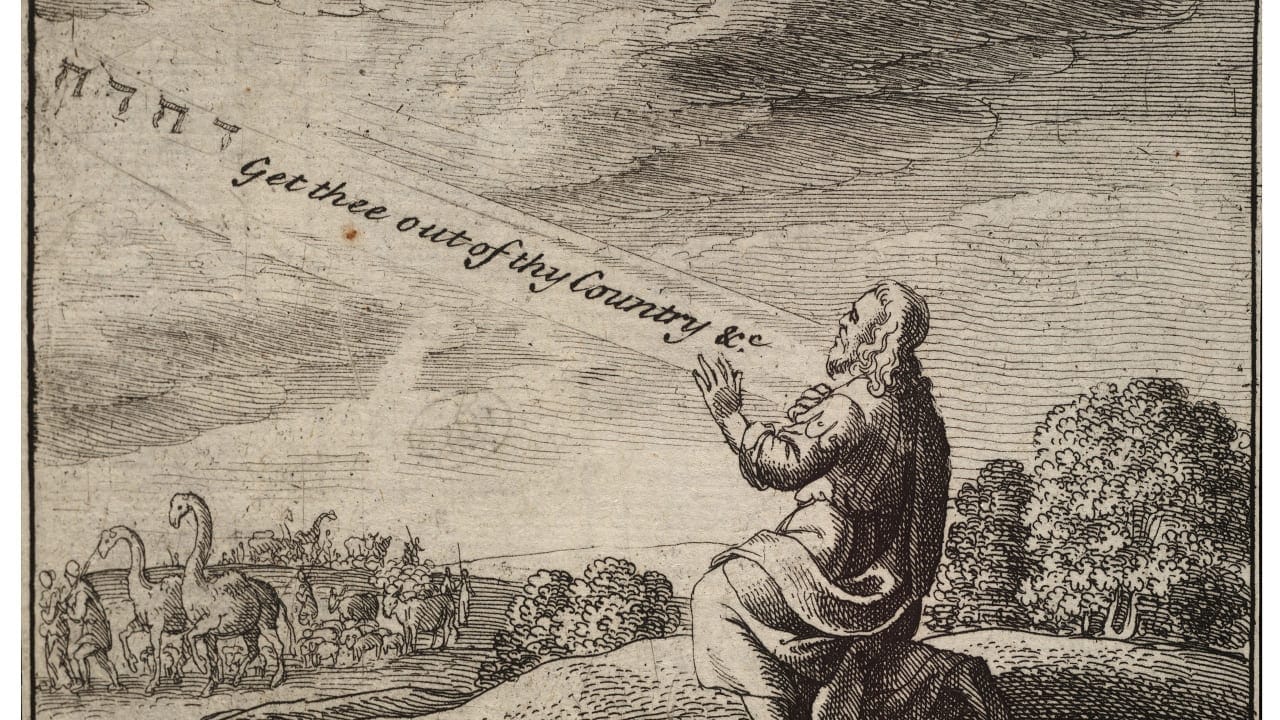
OCTOBER 24, 2026 04:43This Shabbat, Parashat Lech Lecha, 42 communities across Israel will mark Shabbat Aliyah.The timing is apt: the Torah portion opens with God’s command to Abraham, “Lech lecha me’artzecha ... el ha’aretz asher ar’eka,” leave your land for the land that I will show you.Abraham’s was the first aliyah; every journey since echoes that departure from the familiar towards an uncertain future in our ancestral land.Young Israel of Ramat Poleg in Netanya is among the participating communities. Our honored guest is Dr. Norman Goldwasser, a clinical psychologist who recently left Miami Beach for Israel. His aliyah began not at Ben-Gurion Airport, but over a century ago.New olim from North America with Rabbi Yehoshua Fass, Co-Founder and Executive Director of Nefesh B’Nefesh and Aliyah and Integration Minister Pnina Tamano-Shata. (credit: SHAHAR AZRAN)In 1919, Norman’s grandfather left the Galician town of Chrzanow by boat for the Holy Land.His family’s dry-goods business brought contact with the town’s non-Jewish population, and he sensed danger in the antisemitism that followed Germany’s defeat in World War I.He intended to establish himself here and then bring his wife and children. He never had the chance.He died of malaria in 1920 and was buried on the Mount of Olives. Of the seven children and their descendants whom he had hoped to bring to safety, almost all were murdered by the Nazis. Only Norman’s father and one brother survived.When Norman first visited the grave in 1968, he found words that would shape his life. His father had inscribed the words, “Hassid vehalutz,” a hassid and a pioneer.Norman’s family belonged to the Zalishitzer branch of Bobover hassidim, a community almost obliterated in the Holocaust. The inscription united deep hassidic loyalty with passionate love of the Land of Israel.Norman calls his pull towards Israel an “epigenetic yerusha,” an inheritance embedded in his being. His grandfather had passed on the mission he could not complete.That was not the family’s only interrupted aliyah. More than 25 years later, Norman’s father met his mother in a displaced persons camp. He had endured years in concentration camps; she had survived two years hiding in the forests of Ukraine.After more than two years in the camp, they married and prepared to emigrate to British Mandate Palestine.British restrictions on Jewish immigration blocked them, so they went instead to the United States and settled in Newport News, Virginia, where Norman was born and raised.America gave the family safety and opportunity, and Norman built a distinguished career there. Yet he never entirely belonged. He grew up in the Baptist Belt as one of relatively few children of Holocaust survivors.At camp and yeshiva, he was the boy with the southern accent. In Spanish-speaking Miami, where he never learned Spanish, he again felt like an outsider.A sense of belonging in a time of warThen came October 7, 2023.Norman was staying at a hotel about 20 kilometers west of Jerusalem. While guests prayed in the hotel synagogue that morning, a missile was intercepted directly above the building. The explosion shook the hotel.In the protected room, people screamed and cried as earlier traumas broke into the present.One woman had survived the 2001 Sbarro bombing in Jerusalem. More than two decades later, its terror returned so forcefully that she again felt the pain of the glass that had pierced her body.Norman had spent decades treating trauma, particularly with eye movement desensitisation and reprocessing, or EMDR. He stepped forward and helped her return to the present and regain control.Two days later, another young woman was too frightened to leave the protected room for the airport while missiles were falling. Her father’s urgent pleas deepened her panic. Norman asked him to wait in the lobby and worked quietly with her.After a short period of EMDR, she calmed, assessed the danger, and walked out to her anxious family. They caught their flight.When her mother thanked him in tears, Norman understood that his place was here, where Israel needed the expertise he had spent a lifetime acquiring.He returned six times to volunteer with soldiers, families, and other trauma victims, and to train Israeli clinicians in EMDR. He made aliyah earlier this year.There is something moving about finding one’s place in Israel by helping Israelis through one of our darkest mornings. Norman arrived with the skills this wounded country needed.That is one reason Shabbat Aliyah matters. Olim are often discussed chiefly in terms of what they need: Hebrew, housing, employment, schools, and help with the bewildering bureaucracy.Those needs are real. Anyone who has stood in the wrong government queue with the wrong form knows that.Yet olim also bring experience, knowledge, traditions, and a fierce desire to contribute. They become doctors, teachers, soldiers, volunteers, and neighbors who strengthen our communities.In Norman’s case, expertise forged over decades reached Israel when it was needed most.Answering the callShabbat Aliyah recognizes both sides of the journey: the courage to begin again and our duty to welcome olim, not as permanent guests but as members of the household. We must hear their stories, help them find their place, and allow them to shape Israel rather than merely fit into it.Norman now sits in his Jerusalem apartment looking at the Knesset, illuminated in cobalt blue. To him, it represents Jewish self-determination and the promise that Jews from the four corners of the earth will always have somewhere to seek shelter.He does not romanticize Israel. He wrote: “And despite all of the confusing political turmoil, ridiculous traffic, outrageous prices of groceries, and bureaucratic madness, I still feel I belong.”That sentence alone suggests he has already become thoroughly Israeli.Aliyah should never become a slogan or a means of judging Jews whose responsibilities keep them elsewhere. It is a deeply personal decision, complicated by family, health, work, and circumstances outsiders cannot see.Shabbat Aliyah honors those who made the journey; it does not diminish those who have not.Yet Lech Lecha reminds us that Jewish history is advanced by people willing to answer a call whose consequences they cannot know.Norman ends his account with another verse from the Torah portion: “For all the land that you see, to you I will give it and to your descendants, forever” (Genesis 13:15).His grandfather answered that call in 1919. His parents prepared to answer it after the Holocaust. History stopped both journeys. Over a century later, their grandson completed them.Between his grandfather’s grave and his Jerusalem window lies a century of Jewish tragedy, survival, and return. When Norman described what aliyah has finally given him, he used the simplest and most powerful word of all: “Home.”The writer is a rabbi and physician. He writes and teaches on Jewish ethics, leadership, and resilience. His work appears on rabbidrjonathanlieberman.substack.com and youtube.com. @rabbidrjonathanliebermanFollow us on Google
The aliyah that took a century shows what olim can bring to Israel - opinion
Full Article
Original Source
Read the full article at Jpost →KhanList aggregates and links to publicly available news content. We do not host full articles from third-party sources. Always verify important information with original sources.