
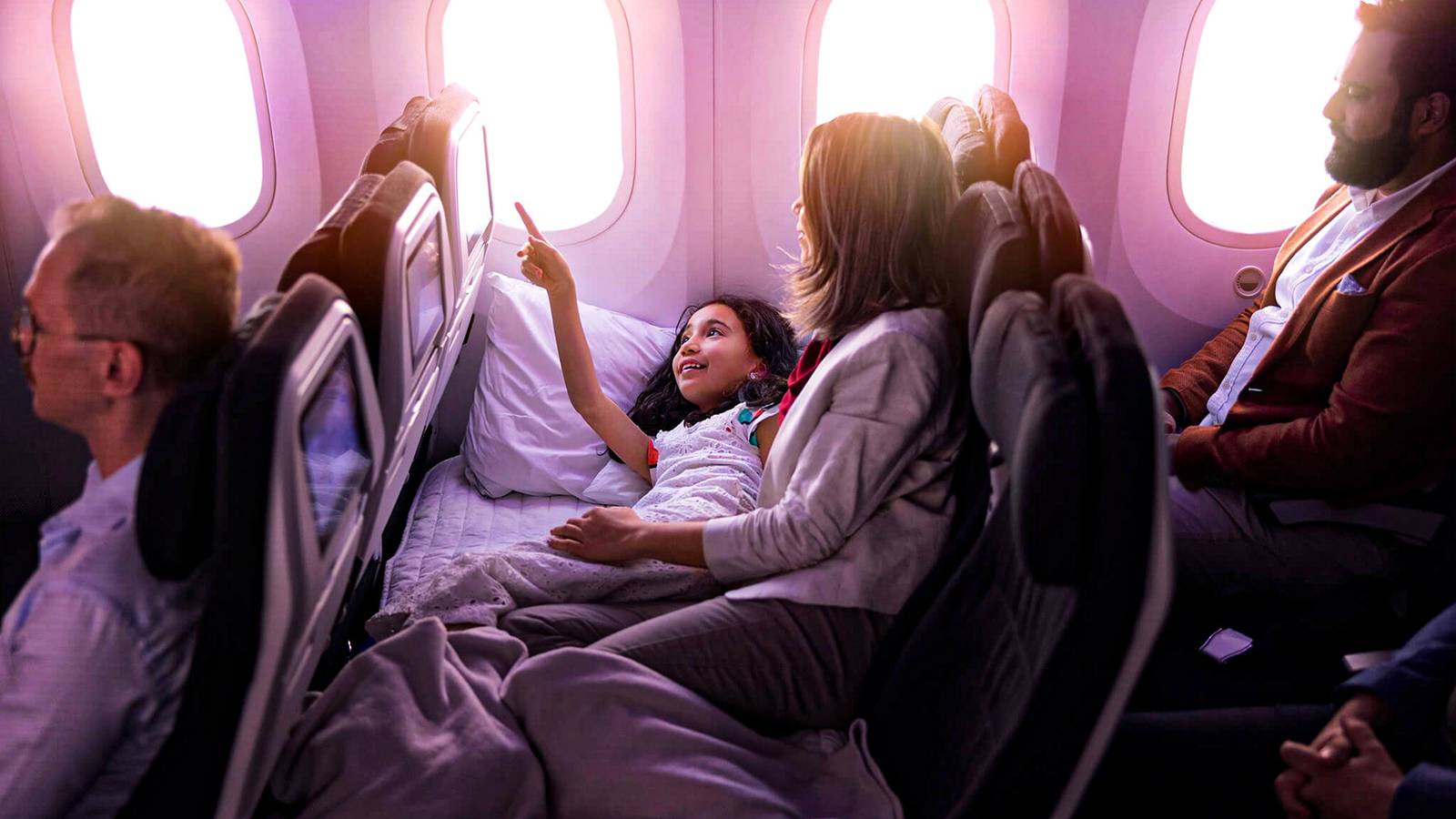
Published Oct 31, 2026, 9:00 AM EDT Based in the UK, Josh is a keen writer with a degree in Military History. Having worked previously as a financial journalist, he has covered the aviation industry extensively, reporting on airlines' results and monthly passenger statistics in the aftermath of the pandemic, alongside the likes of regulation around sustainable fuels, and the prospects for hydrogen-powered commercial flight. He joins Simple Flying with a lifelong love of all things aviation. Airlines have always been creative when it comes to thinking up new product classes to meet the needs of a range of different passengers. At the dawn of commercial aviation, only a privileged few could afford airfares, and they were limited to armchair-style seats in a single class. Fast-forward to today, and it is not uncommon to find three- or even four-class layouts on a single plane, each with varying fare options. It is unsurprising, therefore, that carriers are continuously developing everything from first class to standard economy to compete for travelers with a range of financial means. Where lie-flat options have progressively filled the business and first class space recently, similar products have made their way into main economy cabins at some airlines. In some cases, these offer a much cheaper way of securing a bed to stretch out and sleep on flights than buying a business- or first-class ticket. What Do Lie-Flat Economy Products Look Like? Credit: Air New Zealand Where this has happened, space in economy cabins has generally been slightly repurposed rather than entirely refurbished or overhauled to create bed-like offerings for passengers. That means converting existing seats in rows of either three or four into one single bed. Naturally, that is far simpler and cheaper for airlines than stripping seats out altogether. Mattresses, bedding, and specialist leg rests that fold up at a 90-degree angle offer a fairly seamless way to convert individual rows, for instance. In turn, those unwilling or unable to splash out on premium fares can access a lie-flat product in the main cabin. The caveat is that the level of service tends to remain in line with that of standard economy. That said, that may well be a positive for some, since the bells and whistles associated with business- or first-class products are not always necessary in everyone’s eyes. Either way, lie-flat economy-class products exist at some carriers as another way to fill the gap between standard and premium options. The concept is by no means new, too. Air New Zealand’s Skycouch Dates Back Over A Decade The lie-flat economy product itself dates back to the early 2010s and the release of Air New Zealand’s Skycouch fare. Here, rows of three economy seats spanning from windows to aisles were marketed as one to be used as a bed for one, two, or even three people — where couples traveled with a young child — at a time. According to the carrier’s website, Skycouch is currently offered on select long-haul flights operated by its Boeing 777-300ER and Boeing 787-9 aircraft. Each makeshift bed measures five feet, one inch (1.55 meters) long and 29 inches (74 centimeters) wide, and uses individual, adjustable leg rests to create a flat surface for travelers to lie on. Extra bedding, a seat liner, and a Skycouch kit containing specialist safety straps or a cuddle belt, as Air New Zealand calls it, are then provided to complete the offering. Importantly, Skycouch gives flyers access to “enhanced comfort without paying premium cabin prices,” as Air New Zealand writes. Passengers initially book a standard seat before being given the chance to pay extra for the upgrade to a Skycouch, if available, when selecting where they want to sit later on. The idea was so successful that a string of airlines have licensed it from Air New Zealand since Skycouch was introduced. Several Airlines Now Offer Lie-Flat Options In Economy At least ten airlines have rolled out a version of the lie-flat economy bed over the years in some form. The majority of these remain available today, including at some major airlines. United Airlines is set to add another to the list, too, with the rollout of its Relax Row planned for next year and set to stretch to 200 aircraft by 2030. Just a few years after Air New Zealand debuted Skycouch, Taiwan’s China Airlines introduced its own Family Couch in 2014. This came to be available on 777-300ERs and Airbus A350-900s within the carrier’s fleet, but was subsequently dropped in 2018 due to lackluster demand. Azul Brazilian Airlines, Kazakhstan’s Air Astana, and France’s Air Austral released their own versions in the meantime. Come 2019, All Nippon Airways and Thomas Cook had followed suit, with Lufthansa and Vietnam Airlines then introducing their own versions in 2020 and 2023, respectively. Airlines that have rolled out lie-flat economy beds over the years: Airline Product name Year introduced Notes Air New Zealand Skycouch 2010 On Boeing 777-300ER and Boeing 787-9 China Airlines Family Couch 2014 Discontinued Azul Brazilian Airlines Skysofa 2014 Discontinued Air Astana Economy Sleeper 2015 On select long-haul international routes Air Austral Extra Couchette 2016 On new Boeing 777s All Nippon Airways COUCHII 2019 On Airbus A380s Thomas Cook Sleeper Seat 2019 Airline went bankrupt soon after Lufthansa Sleeper’s Row 2020 On all long-haul flights operated by widebody fleet Vietnam Airlines Sky Sofa 2023 Primarily on long-haul widebody fleet United Airlines Relax Row 2027 Targeted Where these offerings are still available, they are usually cheaper than business-class fares and can be more affordable than premium economy even. That is, for a bed-like product without the perks typically afforded to higher-paying customers. As such, if extras like lounge access and upgraded meals aren't a priority, lie-flat economy options can be a solid alternative. Lie-Flat Beds, But For A Fraction Of The Price Credit: All Nippon Airways Of course, pricing between airlines for their economy bed fares does not follow a one-figure-fits-all pattern. Rates vary by how many people use each, and airlines usually market them as add-ons to a standard economy fare. That means passengers often pay for their seat and then the price of the lie-flat product on top of that. Regardless, the cost of a bed in economy should more often than not be cheaper than a more luxurious lie-flat offering in business class. Among the airlines mentioned above, Vietnam Airlines states online that its Sky Sofa starts at $250 for a range of flights within Asia, for instance. In Air New Zealand’s case, the price of upgrading to Skycouch sits between $100 and $200 for flights departing the United States — though that is for three customers, so in addition to each fare. Lufthansa’s Sleeper’s Row has previously been reported to start at the equivalent of $178, and All Nippon Airways launched COUCHII for as little as $60. Note, prices provided for the Lufthansa and All Nippon Airways products were based on exchange rates as of the time of writing in late October. Example lie-flat economy product starting prices: Airline Product Starting price All Nippon Airways COUCHii ¥9,600 (~$60) Vietnam Airlines Sky Sofa $250 Lufthansa Sleeper’s Row €159 (~$178) Air New Zealand Skycouch $100 *Historic guide prices based on online results and carriers’ websites While these are just a handful of figures, and airlines tier prices for their lie-flat economy options based on factors like seasonality and the number of occupants, they offer useful context. Indeed, it is not uncommon for long-haul business class tickets to go for several thousand dollars in contrast, albeit for a likely more private and luxurious experience. One thing to bear in mind about such economy beds, however, is availability. Lie-Flat Economy Availability Varies, However Given each takes up space that would otherwise be occupied by several fare-paying customers, airlines tend to offer lie-flat economy options based on availability. In other words, buying a standard seat with the hope of later upgrading to a relatively cheap bed in the main cabin can mean ultimately missing out on the chance to lie down altogether. When Lufthansa rolled out Sleeper’s Row on all long-haul flights operated by its widebody fleet earlier this year, it noted customers could only book it at “short notice during check-in or at the gate.” Vietnam Airlines conversely writes on its website that Sky Sofa is “subject to actual operational conditions at the time of departure and seat availability on each flight." Air New Zealand also lays out similar terms online, given Skycouch is offered at the point of seat selection rather than initial booking. Simply put, the usual practice among airlines is to market such products if possible. If there are no spare seats on an actual flight, for example, no one in economy gets the benefit of a bed to stretch out on. At least that has been the case historically, with Air New Zealand planning to roll out a more permanent option later this year. Air New Zealand’s New Skynest Credit: Air New Zealand Air New Zealand will introduce Skynest on ultra-long-haul connections between New York and Auckland in December. Located between the main and premium economy cabins aboard some 787-9s, each Skynest compartment will house six individual bunk beds for those from either class to book for up to four hours per flight. Per the carrier, these will measure six feet, eight inches (2.03 meters) in length and 25 inches (64 centimeters) at the shoulder, effectively acting as add-ons to seats. Reportedly, each session will cost $292 per person, offering another cost-effective way to get quality sleep onboard without forking out for the most premium seats.
The Airlines Selling Main Cabin Beds For A Fraction Of Business Class Fares
Full Article
Original Source
Read the full article at Simpleflying →KhanList aggregates and links to publicly available news content. We do not host full articles from third-party sources. Always verify important information with original sources.