
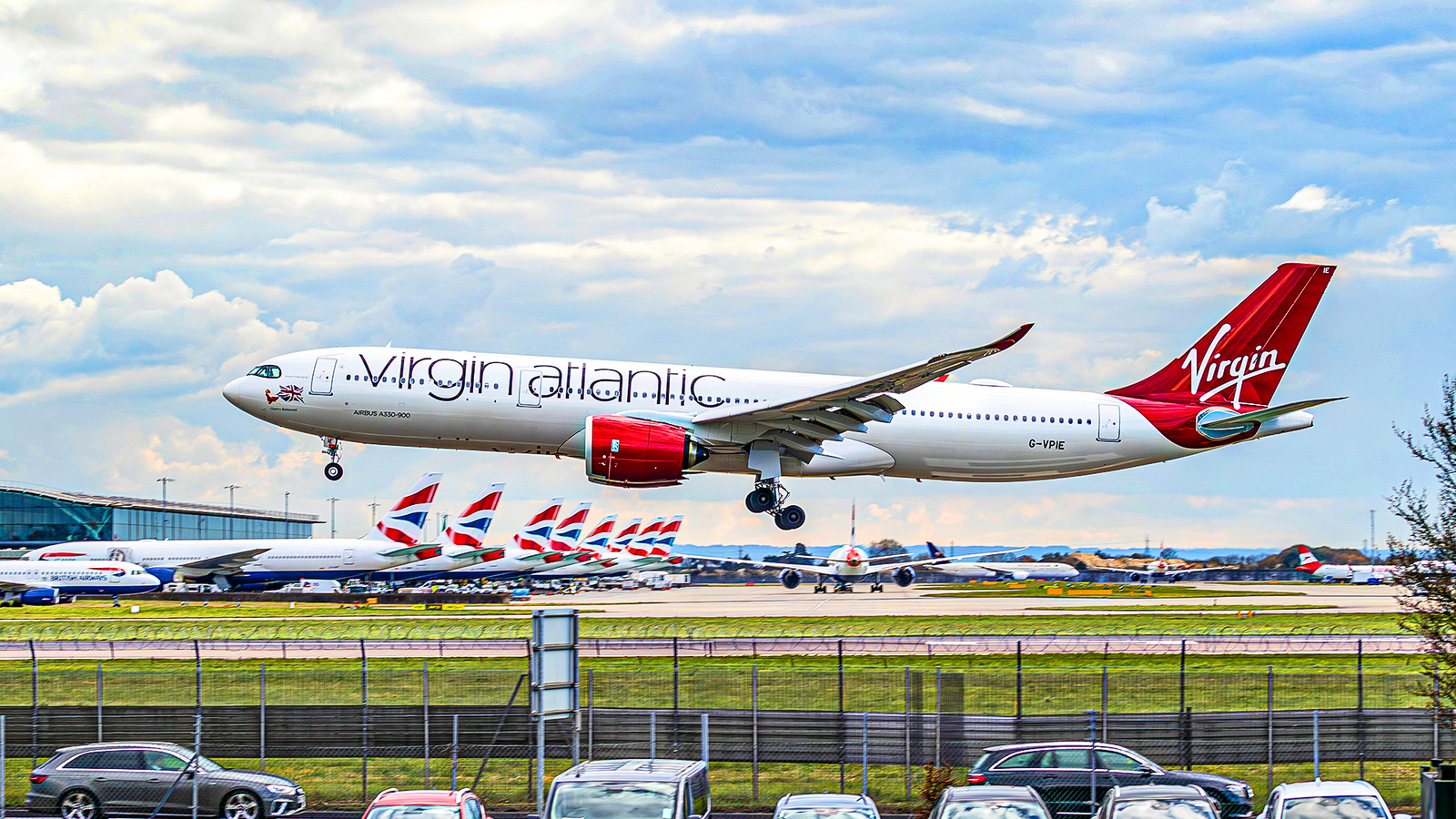
All of the widebodies in production: the A330-900, Airbus A350 family, Boeing 787 family, and upcoming 777X family have the potential to offer airlines the best value for money. Which, in the real world, is highly contingent on missions, existing inventory, requirements, and a large range of other factors specific to individual airlines. To say the A330-900 beats the A350 in value for money is narrowly true only in these cases where the stars align. And align they do, as the A330-900 has attracted an impressive 500+ orderbook, including some cases where the A350-900 may have been a viable alternative. Some airlines (such as Delta) are replacing their A330ceo with a mixed fleet of A330-900s and A350s. Others (such as Qantas) are replacing them with A350s and 787s, while China Eastern is replacing its A330ceos with A330neos. Still others may go another way and partially replace them with long-range narrowbody A321XLRs on thinner routes. Here are some of the benefits of the A330-900 specifically (not the failed A330-800). From The A350-800 To The A330neo Credit: KeleX Pictures l Shutterstock Airbus originally intended to produce the widebody A350 in three variants: the shortened A350-800, the standard A350-900, and the stretched A350-1000. Some airlines, such as Hawaiian Airlines, placed orders for the A350-800. However, Airbus then decided to cancel the A350-800 variant and upgrade the legacy A330ceo in two variants, the shorter A330-800 and stretched A330-900, collectively the A330neo. Hawaiian switched its order to the A330-800. However, as time went on, it became clear that the A330-800 was unpopular, and unpopularity has a habit of breeding more unpopularity, with airlines getting cold feet about being left with a variant few other airlines wanted. Ultimately, Hawaiian (and other airlines) canceled its orders for the A330-800 and purchased the Boeing 787-9, only to see its future parent, Alaska Airlines, snatch them away. The real story of the A330neo is not the dismal failure of the A330-800, but the success of the A330-900. As an upgrade to an existing aircraft, its development was much cheaper and faster than developing a clean-sheet aircraft. By September 2026, Airbus had accumulated around 511 firm orders for the A330-900, with the remaining A330neo orders being the residual 13 A330-800 orders. It is somewhat ironic that this article is dedicated to the success of the A330-900 when the sister A330-800 is one of history's worst-selling airliners. Both The A350 & A330-900 Are Successful Credit: JetKat l Shutterstock The A350 is not a failure in any way. It is one of the world's most successful twin-engine widebody aircraft families ever developed. To date, it has accumulated around 1,628 firm orders, around three times more than the A330neo (almost all of which are for the Airbus A330-900). However, the expectations of the two aircraft are different. The A330neo comes with new wings, new engines (Rolls-Royce's new Trent 7000 engine), modernized avionics, and other improvements, but it remains, at its core, a 1990s airliner. Airbus elected to capitalize on the low-hanging fruit that two decades of technological development offered, and forego the marginal benefit of a clean-sheet design. While the clean-sheet A350 (and rival 787) is substantively made up of advanced composites and titanium, allowing the aircraft to be lighter, more efficient, and have a higher cabin pressure, the A330neo remains a mostly aluminum aircraft. Airbus says the A330neo offers around a 25% improvement in fuel burn per seat compared with older-generation aircraft like the Boeing 767-300ER. It also says the A330neo offers up to 7% lower operating costs per seat than the rival Boeing 787. Caution should be taken with this second claim, and it would heavily depend on assumptions, missions, and other specific factors. Boeing likely runs its own calculations with a different set of assumptions and comes up with an inverse conclusion. The A330-900 Is 'Cheap' When Bought Brand-New Credit: Markus Mainka l Shutterstock One advantage the A330neo boasts is that it lacks the high development costs of a clean-sheet design. For airlines, the trade-off is that the aircraft may be a bit less fuel-efficient than it could otherwise be, but also somewhat cheaper to purchase or lease. This is a trade-off that has been judged worthwhile by many airlines, although list prices of aircraft can be misleading given that airlines tend to receive discounts, especially in bulk. It is better to focus on market values and lease rates: these are what airlines actually spend on their aircraft, rather than the fancy figures that manufacturers put in their brochures. A recent analysis by Acumen shows the five-year market value of Boeing 787-9s, Boeing 787-10s, A350-1000s, and A350-900s clustering around $120 million to $130 million. Select widebody market purchase prices Five-year-old (per Acumen) Brand new (per ICLG Aviation) Airbus A330-900 Approx. $87 million $118.5 million Airbus A350-900 $120–130 million $168 million Airbus A350-1000 $120–130 million $181 million Boeing 787-9 $120–130 million $160 million Boeing 787-10 $120–130 million $168 million The market value of the Boeing 777-300ER is lower at around $110 million, possibly on account of its relatively poor fuel economy relative to the previous aircraft. Meanwhile, the shortened 787-8 sits at just under $100 million. The A330-900 is priced at around $87 million, making it considerably cheaper in capital terms. According to the 2026 ICLG Aviation Finance & Leasing report published in June 2026, a new A330-900 costs around $118.5 million. This is much less than the A350-900 at $168 million, the A350-1000 at $181 million, the Boeing 787-9 at $160 million, and the Boeing 787-10 at $168 million. Lower Lease Rates & Older-Generation Aircraft Credit: ValentinDayon l Shutterstock Many airlines lease their aircraft, and these rates largely mirror the current market value. For factory-new aircraft, the going lease rate for the A330-900 is within the range of $902,000 to $975,000 per month. Meanwhile, its A350-900 counterpart is around $1.19 million to $1.25 million a month, and the stretched A350-1000 is higher still. When it comes to the relevant Dreamliners for this comparison, the Boeing 787-9 is being leased at around $1.07 million to $1.15 million a month, and the stretched 787-10 is generating $1.13 million to $1.23 million a month in leasing revenue. Naturally, the market values and lease rates for legacy Boeing 777s and Airbus A330-200s and A330-300s are much lower. However, these aircraft are much less fuel-efficient, and their maintenance expenses rise as they age. The quad-engined A340-300 and A340-600 are also no longer relevant as a point of comparison for the A330-900, as the A340 family has almost completely retired as scheduled passenger aircraft in mainline airlines. A few A340-300s remain to be phased out, while Lufthansa has finally withdrawn the last of its A340-600s. Some of these old A340s are finding an epilogue in sanctioned countries like Iran, but this is irrelevant to where market forces are operating freely. The Benefit Of Commonality Credit: Dr David Sing l Shutterstock One of the most important things airlines look for when structuring their fleets is commonality. Maintenance is one of the leading expenses for maintaining aircraft and commonality is one of the main ways to reduce the expense. Extreme examples of airlines pursuing commonality are Southwest and Ryanair (only Boeing 737s) and IndiGo (A320s). The older bones of the A330neo are a disadvantage in fuel efficiency, as discussed above, but it does come with an upside beyond basic cost. The A330neo shares around 95% of its airframe spare parts with older A330ceos. This allows the almost 150 airlines already flying the A330ceo to add or switch to the A330neo with minimal training and lower marginal maintenance burden. Notably, pilots going from the ceo to neo only need half a day of computer-based self-study. This commonality can save airlines around $6 million per aircraft in maintenance, although exact savings will vary considerably. The A330neo also boasts commonality with the clean-sheet A350, even if it's less than with its A330ceo predecessor. This is relevant for airlines like Delta, which operate both the A330 and A350. Naturally, all this means the A330neo faces an uphill battle convincing airlines already operating Boeing aircraft to switch. The argument inverts. Delivery Timelines With Apples & Oranges Credit: Joao Fachetti l Shutterstock Paradoxically, one of the strengths of the A330neo is precisely that the A350 and Boeing 787 are successful and popular. The massive popularity of those two aircraft has created massive backorders, with Airbus and Boeing struggling to ramp up production. An airline placing a new order today may have to go to the back of the queue and expect to get the aircraft sometime in the mid 2030s. Still, the three-times greater A350 order book is muted by the fact that its production rate is higher. Assuming a new order goes to the back of the queue and using Airbus' September 2026 production guidance, new orders for A350-900s will be delivered in 6–8 years (2032-2034). The A330-900 ordered today may be delivered around a year earlier (2031-2034). Planned production rates are 12 for the flagship A350 and five for the A330neo. The elephant in the room in this conversation about the strength of the A330neo relative to the A350 (and 787) is that they are different aircraft. The A330-900 is not a direct one-for-one equivalent to the A350-900. Forgetting costs and fuel efficiency, they are different aircraft, with different capacities and ranges, and have been optimized for different missions. There is overlap, but that only goes so far.
The Aircraft That Beat The A350 As Airbus' Best Value & Most Operationally Practical Incremental Upgrade
Full Article
Original Source
Read the full article at Simpleflying →KhanList aggregates and links to publicly available news content. We do not host full articles from third-party sources. Always verify important information with original sources.