
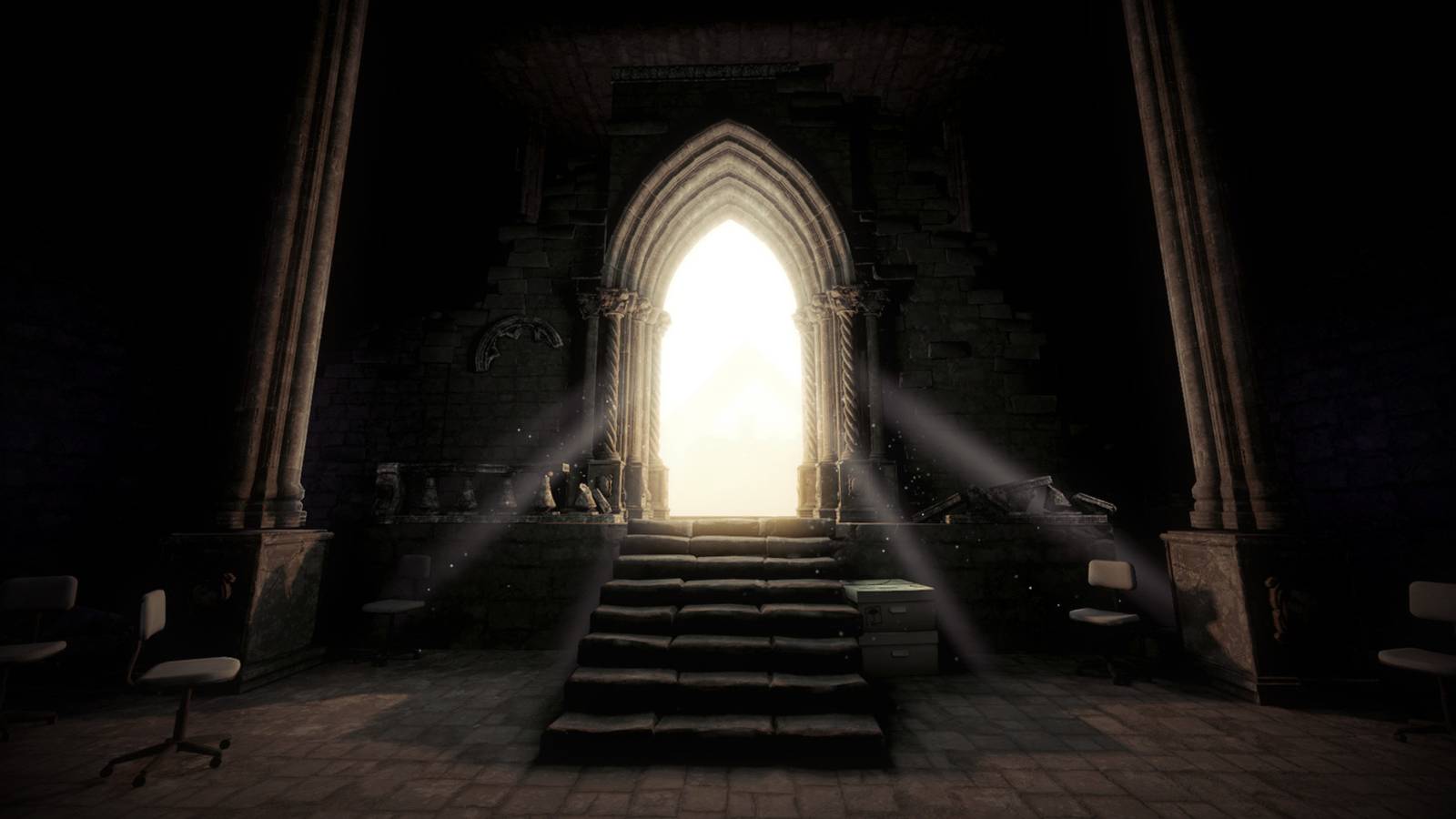
Image via Galactic Cafe Published Oct 2, 2026, 6:48 PM EDT Lucas Kloberdanz-Dyck is a writer for Collider. He grew up creating lists, stories, and worlds, which led to his love of anime and video games. He attended Sheridan College where he earned an Honours Bachelor of Game Design. Lucas and his group won 1st place for technical innovation at LevelUp Toronto 2023, and he was also an intern for the Oakville Film Festival of Arts. Sign in to your Collider account For decades, video games have been one of the most popular mediums, with games such as Red Dead Redemption 2 and The Legend of Zelda: Ocarina of Time establishing themselves as classics. Gamers mostly play these titles because they are fun or offer an unbridled sense of immersion and amazement. However, fans play video games for many different reasons, and nowadays, it is increasingly common for these titles to be intelligent in design and story. Many gamers don't view video games as intelligent, but there are plenty of masterpieces that test the player's knowledge with smart puzzles and thought-provoking narratives. That is why this list will feature eight of the most intelligent video games based on aspects such as design, gameplay, narrative, thought-provoking themes, political discussion, complex mechanics, and overall quality. These aren't just math games, but they will test your knowledge and be fun at the same time, because that is what the smartest games do. 8 'Papers, Please' (2013) Image via 3909 LLC Intelligence is a broad spectrum from IQ to EQ and everything in between, but it can also feature politically important games such as Papers, Please. Gamers take the role of an immigration officer at a border checkpoint in a dystopian world. The player must review documents, passports, and any other information to properly gauge who to let in and who to restrict access. However, they have to take their own home struggles, refugee stories, and demanding work into consideration. Video games are best when they immerse players in the role, and Papers, Please does that marvellously. It isn't a power fantasy or grand adventure, but a grounded game that forces gamers to question their ethics. The gameplay isn't anything fantastic, but it is the way the game handles this mundane task and turns it into a fascinating political critique. The design is done in an intelligent way to force players to confront uncomfortable truths and their own moral biases. Image via Konami Hideo Kojima is one of the most famous game designers of all time, and while he has plenty of masterpieces, his magnum opus is arguably Metal Gear Solid, with Metal Gear Solid 2: Sons of Liberty being the best in the series. After a failed mission, Solid Snake is presumed dead. Years later, Raiden, a special operative, is on a mission to infiltrate a terrorist organization, only to learn it is staged, and a test to control human behavior. Metal Gear Solid 2: Sons of Liberty is known for its stealth gameplay and engaging narrative that creates an epic video game experience from start to finish. However, it is more than that, also boasting a sense of intelligence in its design and story. It predicted plenty of future truths such as digital echo chambers and fake news, with its plot constantly subverting expectations to keep the player on their toes. 6 'Superliminal' (2019) Image via Pillow Castle AAA games are the most popular type because they have massive budgets, but they often play it safe to deliver a well-rounded experience. Indie games, on the other hand, take risks and try new things because of passionate developers, which is why most of the games on this list are indie titles, like Superliminal. The player is a patient in dream therapy, but when the program malfunctions, they are now stuck in a surreal dreamscape that they can only escape by manipulating the size and perspective of the objects. A lot of video games use their intelligence to create intriguing gameplay with unbelievable mechanics, and that is exactly what Superliminal does. Optical illusions are always fun, but this game takes that to the next level by allowing players to manipulate them in order to solve puzzles. It must have taken years of design to perfect these puzzles, and in turn, the players must be intelligent to change their normal ways of thinking to adapt to the game. 5 'The Stanley Parable' (2013) Video games are anything but dull and boring, and sometimes they can even make the mundane interesting, which is what The Stanley Parable does. The titular character is an everyday office worker who comes to work like any other day, only to find his employees are gone. Guided by an omnipresent voice, the player can either listen to it or do their own thing, learning about the mysteries of the company, why no one showed up to work, and who that voice is. The Stanley Parable is witty and smart in its writing, boasting incredible dialog that creates an eerie, yet engaging vibe. As one of the funniest video games, it uses its humor and intelligent comedy alongside its gameplay, which makes the simple task of walking fun. However, this game shows off its true knowledge in the way it guides the player, trying to predict what they would do or control them, brilliantly relating to the illusion of choice themes. Collider Exclusive · Universe Personality Quiz Which Iconic Universe Do You Belong in the Most? Star Wars · Lord of the Rings · Harry Potter · Game of Thrones · Star Trek Five legendary universes. Five completely different visions of what the world could be — or already was. One of them is the world your instincts, your values, and your particular way of existing were built for. Eight questions will tell you which one. 🚀Star Wars 💍Lord of the Rings 🧙Harry Potter 👑Game of Thrones 🖖Star Trek FIND YOUR UNIVERSE → 01 What gives your life its deepest sense of meaning? Every universe is built around a different answer to this question. ABeing part of something larger than myself — a cause, a rebellion, a fight for freedom that outlasts me. BThe journey itself — the places I'll go, the companions beside me, the world I'll discover on the way. CLearning — unlocking what I'm capable of, understanding the world's hidden mechanics, growing into something more. DLegacy — the name I leave behind, the power I build, the mark I make before the world moves on without me. EUnderstanding — exploring what exists beyond the horizon and asking what it means to be alive in a universe this vast. NEXT QUESTION → 02 Which kind of world do you most want to inhabit? The environment shapes who you become. Choose carefully. AA galaxy of planets, each with its own culture — connected by conflict, trade, and the Force. BAncient lands of breathtaking beauty, deep history, and a creeping darkness at the edges. CA world hidden inside our own — full of wonder, community, and magic waiting to be learned. DA brutal, beautiful continent where power is everything and every alliance is a calculation. EA future where humanity has reached the stars — and must decide what kind of species it wants to be. NEXT QUESTION → 03 How do you prefer your conflicts resolved? The shape of a world's conflicts tells you everything about its soul. AThrough sacrifice and courage — someone has to make the impossible choice so others don't have to. BThrough fellowship — the impossible becomes possible when the right people walk the same road. CThrough growth — confronting what you fear, understanding what you lack, and becoming equal to the challenge. DThrough strategy — outthinking, outmaneuvering, positioning yourself so the outcome was never in doubt. EThrough dialogue — finding the third option, the peaceful resolution, the answer that doesn't require a body count. NEXT QUESTION → 04 Who do you want beside you when things get difficult? Your ideal companions reveal the world you were made for. AA small crew — a pilot, a rogue, a warrior — each broken in their own way, unbeatable together. BA fellowship of different kinds of people, bound by purpose and deepened by the long road. CFriends who grew up alongside me — who knew me before I knew myself, and stayed anyway. DAllies whose loyalty I've earned — and tested — and whose ambitions align with mine, for now. EA crew of brilliant, curious, principled people from every corner of known space. NEXT QUESTION → 05 What is your relationship with power? How you seek, wield, or resist power is the map of who you are. AI want to use it to protect — and I'm terrified of what I might become if I'm not careful. BI distrust it. The most important power in this story is the courage to give it up. CI want to earn it — through knowledge, through effort, through becoming someone worthy of it. DI want to wield it. Preferably before someone else decides to wield it against me. EI want to understand it — its structures, its limits, its ethical dimensions. Power without accountability is the real threat. NEXT QUESTION → 06 How does your universe treat good and evil? A world's moral architecture tells you more about it than any map. AThere is a dark side and a light side — and the choice between them is always present, always personal. BEvil is real and ancient and patient — and goodness, however small, is the only thing that can undo it. CGood and evil are real, but they live inside people — and people are complicated, always capable of both. DGood and evil are mostly a matter of perspective and proximity. Power is the only honest currency. EEvil is usually the result of ignorance, fear, or broken systems — and understanding it is the first step to solving it. NEXT QUESTION → 07 What role would you naturally fall into? Every universe has archetypes. Which one fits you without trying? AThe reluctant hero — ordinary origins, extraordinary moment, changed forever by the choice to act. BThe unlikely carrier — the one nobody expected to matter most, quietly bearing the weight of everything. CThe student — not yet who I'll become, learning through every mistake, growing into something the world needs. DThe player — sharp enough to see the game for what it is, ambitious enough to try to win it. EThe explorer — drawn to the unknown, driven by curiosity, most alive when standing somewhere no one has stood before. NEXT QUESTION → 08 What do you ultimately believe about the future? The answer to this is the clearest window into which universe already lives inside you. AThat hope is real — that even in the darkest galaxy, a new hope is always possible. CThat even the smallest person can change the course of the future, if they have the courage to try. CThat love and friendship and doing what's right will matter in the end, even when everything says otherwise. DThat the wheel keeps turning — that power shifts, winters end, and what endures is those willing to fight for it. EThat humanity — or whatever we become — is capable of extraordinary things, if we choose to be. REVEAL MY UNIVERSE → Your Universe Has Been Chosen You Belong In…Your answers point to the iconic universe your values, your instincts, and your particular way of seeing the world were built for. This is where you would find your people — and your purpose. Star WarsYou believe in the cause — in the idea that freedom is worth fighting for even when the odds are impossible and the empire is vast. You are drawn to the moral clarity of a universe where hope itself is a form of resistance. You'd find your people in the Rebellion — a ragtag coalition of true believers held together by conviction more than resources. Star Wars is fundamentally a story about ordinary people choosing to matter in an extraordinary conflict — and that is exactly your kind of story. The Force may or may not be with you. But the will to use it for something larger than yourself certainly is. Lord of the RingsYou understand, in the deepest part of yourself, that the journey matters as much as the destination — and that the world's beauty is worth protecting even at great cost. Middle-earth is a world of ancient wonder, deep friendship, and a darkness that only retreats when enough small acts of courage accumulate. You would thrive here because you value the fellowship more than the glory — the road more than the arrival. Tolkien's universe rewards patience, loyalty, and the willingness to carry something heavy across a very long distance. Those are not burdens to you. They are simply how you move through the world. Harry PotterYou believe that love, loyalty, and doing what's right are not naive sentiments — they are the most powerful forces in any world, magical or otherwise. The Wizarding World is a place of wonder hidden in plain sight, where learning is transformative and the bonds you form at school follow you into every battle. You would flourish here because you take both the magic and the friendships seriously — and you understand that one without the other is incomplete. Harry Potter's universe ultimately rewards those who choose to stand for something even when standing is terrifying. That choice — made quietly, without guarantee — is something you understand completely. Game of ThronesYou see the world clearly — its power structures, its hypocrisies, its brutal arithmetic — and you are not paralysed by that clarity. You use it. Westeros is a world that rewards intelligence, adaptability, and the willingness to understand that every alliance is also a negotiation. You would survive here — possibly thrive here — because you don't confuse the world as it is with the world as you'd like it to be. Game of Thrones is a story about what happens when the idealists and the realists collide. You are sharp enough to know which one lasts longer. Winter always comes. You are already prepared. Star TrekYou believe the future is worth building — that curiosity, cooperation, and the expansion of understanding are not just ideals but the most practical path forward for any civilisation. Star Trek is a universe where the questions matter as much as the answers, and where encountering something utterly alien is cause for wonder rather than fear. You would belong here because you are fundamentally optimistic about what intelligence and decency can achieve — while being honest about how hard that achievement is. The Federation is the universe's most ambitious thought experiment: what if we actually got better? You don't just hope that's possible. You think it's the only thing worth working toward. ↻ RETAKE THE QUIZ 4 'Planescape: Torment' (1999) Image via Black Isle Studios Role-playing games are a great way to embody the character and be immersed in a fantastical world, and one of the greatest from this genre is Planescape: Torment. Players control the Nameless One, an amnesiac immortal who must travel and explore a bizarre dimension to learn about their past lives and why they hold the secret of immortality, all without combat. Video games that can be smart and entertaining at the same time are few in number, but they amount to some of the greatest titles ever, and Planescape: Torment achieves this. Most games use combat as the main gameplay feature, but this one uses discussion and philosophical debate. It uses this to answer the question "What can change the nature of man?" It is a philosophical video game that is intelligent in the way it views the world and the questions it asks. 3 'Civilization VI' (2016) Image via Firaxis Games It is normal for some of the most intelligent video games to be from the strategy genre, since they need to be complex while also having a balanced system. Civilization VI is one such game, with players taking control over an entire dynasty throughout history. Gamers must manage the culture, tools, progression, politics, and military in order to evolve their society from the Stone Age to the current age to whatever is bound for the future. This game pushed the bounds of the genre by letting gamers define the borders themselves, allocate the world wonders, and map out topography. With the ability to make the map itself, players can flex their strategic muscles to shape the course of the game. Not only does this require intelligence, but the mechanics and system itself need to be complex in nature and cover a variety of topics in-depth, proving why it is one of the greatest strategy video games ever. 2 'SpaceChem' (2011) Image via Zachtronics Gameplay is the core of any video game, and some titles are just glorified programming systems; for those who enjoy that, SpaceChem is the game for them. Gamers play as a reactor engineer for the titular company, and their goal is to manufacture new chemicals and build more factories. However, when corporate espionage and alien artifacts get involved, the player begins to question what work they are actually doing. The story alongside SpaceChem is good enough for players to get hooked, but the real meat and potatoes is the gameplay that feels like a visual language, partly because it is. This algorithmic game requires only the brightest minds to navigate complex processes that are disguised as genuine software engineering. This intelligent gameplay of SpaceChem isn't for everyone, but it is still a magnificent feat of design that must have taken ages to program. 1 'Portal 2' (2011) Image via Valve This list has talked a lot about fun and intelligence weaving together, and no game does that better than Portal 2, Valve's magnum opus. Set years after the first game, Chell wakes up in the same scientific testing facility, except this time it is worn down. Greeted by a robot, the two form a plan to escape while making their way through the facility. However, after waking GLaDOS up, the crazed robot is on a mission to take Chell down, no matter the cost. Studying is never fun, but learning can be, especially when it is handled in a way that players don't realize they are, and that is what Portal 2 excels at. The tutorial and the way it teaches and leads players is genius, displaying intelligent design. On top of this, the narrative is witty and charming, creating an endearing game with smart dialog that is well thought through. Portal 2 was a monocultural video game event because it was fun and intelligent, especially with the gameplay and portal gun mechanic that offered a creative way to solve thought-provoking puzzles.
The 8 Most Intelligent Video Games Ever Made, Ranked
Full Article
Original Source
Read the full article at Collider →KhanList aggregates and links to publicly available news content. We do not host full articles from third-party sources. Always verify important information with original sources.