
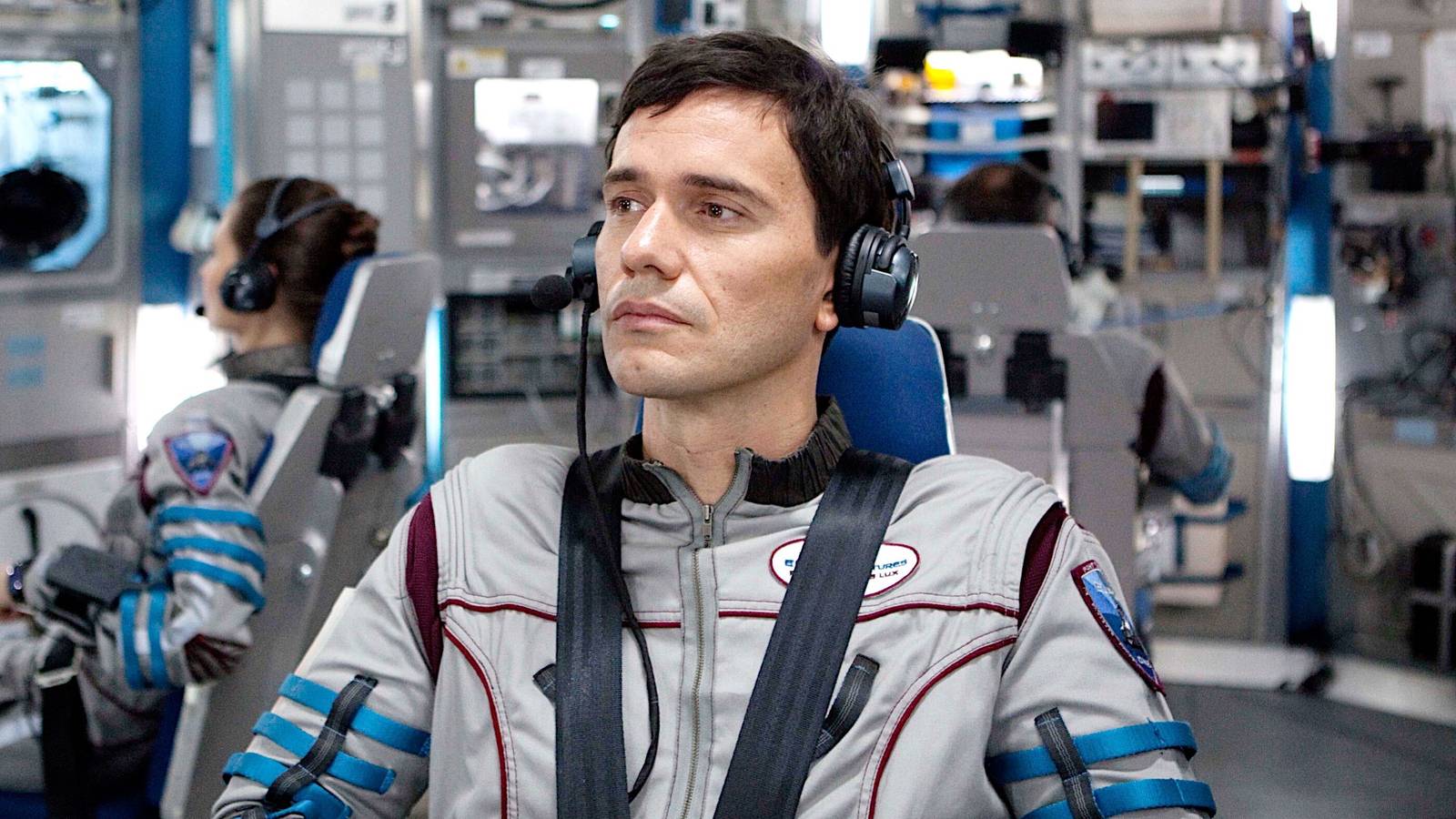
Image via Magnolia Pictures/courtesy Everett Collection Published Nov 22, 2026, 10:33 AM EST Diego Pineda has been a devout storyteller his whole life. He has self-published a fantasy novel and a book of short stories, and is actively working on publishing his second novel. A lifelong fan of watching movies and talking about them endlessly, he writes reviews and analyses on his Instagram page dedicated to cinema, and occasionally on his blog. His favorite filmmakers are Andrei Tarkovsky and Charlie Chaplin. He loves modern Mexican cinema and thinks it's tragically underappreciated. Other interests of Diego's include reading, gaming, roller coasters, writing reviews on his Letterboxd account (username: DPP_reviews), and going down rabbit holes of whatever topic he's interested in at any given point. Sign in to your Collider account What, exactly, makes a movie "gritty" is a relatively subjective matter. For the most part, though, these are films defined by a harsh, unpolished, and realistic tone. They prioritize raw emotional potency over any sort of elegant escapism, and are often visually desaturated, grounded in their storytelling, and full of flawed characters and sharp social commentary. One genre that gets along particularly well with gritty filmmaking is science fiction, as has been demonstrated by many an incredible masterpiece over the years. But where "soft" sci-fi (a branch of the genre that focuses on human emotions and soft sciences like sociology and political science) is typically more polished, "hard" sci-fi films (which adhere as strictly as possible to real-world physics and natural laws) are often far better-suited for gritty tones. From underappreciated modern gems like Sunshine to foundational classics like THX 1138, plenty of the greatest hard science fiction films ever made can very reasonably be described as gritty in their stories, tone, or aesthetics. 8 'Sunshine' (2007) Image via Searchlight Pictures Danny Boyle has time and again proven himself to be one of the most versatile filmmakers currently working in Hollywood and in the UK, and some of his most unique works come from his collaborations with screenwriter Alex Garland. Case in point: Sunshine, which Garland was inspired to write after learning of scientific ideas regarding the heat death of the universe. Boyle and Garland worked closely with scientific advisers like particle physicist Brian Cox in order to ensure the film was as scientifically plausible as possible. Whenever the creatives behind a hard sci-fi movie hire scientific advisers, that's how you know that you're in for a hell of a ride—and that is, indeed, the best way to describe Sunshine. But even though the movie pivots softly into the realm of far softer science fiction in its third act, it's still one of the most perfect R-rated hard sci-fi movies ever, with a uniquely gritty atmosphere coming largely from the pure, almost surreal existential dread generated by its premise. 7 'Moon' (2009) Image via Sony Pictures Classics While it's almost inarguably among the most underappreciated sci-fi movies of the 21st century so far, Duncan Jones' Moon (his directorial debut) has nevertheless only continued to grow into more and more of a cult classic as the years have passed. It was made on a modest budget and made an equally modest amount of money at the box office, but with the brilliance of Nathan Parker's script and of Sam Rockwell's lead performance, it may well be one of the best hard sci-fi films of the last 26 years. Moon is not gritty in that it's action-packed or filled with complicated conflicts, but rather in how visceral its story about corporate exploitation and how corporations see humans as disposable really is. Add to that a grimy, desperately industrial aesthetic and the strong sense of psychological realism of Rockwell's performance, and you get one of the most psychologically intense science fiction thrillers that the big screen has ever seen. 6 'Europa Report' (2013) Image via Start Motion Pictures It's not perfect, but Sebastián Cordero's Europa Report is nonetheless one of the most intense hard sci-fi movies ever made, as well as one of the most unique found footage movies of all time. Grounded in scientific realism and made to feel all the more matter-of-fact by its found-footage approach to the story, it's a low-budget masterpiece whose non-linear style truly creates a sense of immersion much akin to watching a documentary about space exploration. To ensure realistic depictions of gravity, radiation physics, and the surface geography of the eponymous Jupiter moon, the people behind the film actually consulted NASA scientists, and it paid off in spades. But on top of feeling scientifically plausible from beginning to end, Europa Report feels unique thanks to how much of an anti-Hollywood depiction of survival in space it presents. Stripping away any traditional form of sci-fi heroism, the movie instead depicts space as a completely indifferent vacuum that kills indiscriminately and punishes any kind of error. It's a cold, unceremonious movie, and hard sci-fi fans wouldn't have it any other way. 5 'High Life' (2018) Image via A24 Many of history's greatest science fiction movies—hard sci-fi certainly included—have been substantially divisive, and Claire Denis' High Life is no exception. Starring Robert Pattinson at the top of his game, it's one of the most perfect hard sci-fi movies of the past 10 years, and it was developed with the help of physicist and black hole expert Aurélien Barrau as a consultant. Visually stunning and intellectually challenging in ways that not just everyone might appreciate, it's nevertheless one of the most potently thought-provoking sci-fi films in recent memory. It's a boldly arthouse-coded approach to the genre, one that subverts traditional science fiction tropes by turning its focus inward to the decaying bodies and psyches of its crew, rather than the cold void of space. This makes it a masterpiece that feels far more psychologically gritty than it does physically or aesthetically gritty, and that works surprisingly well under Denis' magnificent direction. It's a movie full of blood, sweat, tears, and all other sorts of bodily fluids, making it irresistibly yet unceremoniously realistic. COLLIDERInteractive Long-range scan active Movies/Science Fiction/Survival Assessment Collider Survival Assessment Which Sci-Fi WorldWould You Survive? 8 questions · 5 worlds · one honest verdict Five of the great screen futures, and not one of them is built for comfort. Answer eight questions about instinct, loyalty and the line you would cross, and the scan will tell you which one you would still be standing in. Worlds in range ▦︎The Matrix ◈︎Mad Max ◑︎Blade Runner ▲︎Dune ✦︎Star Wars Begin the scan Question 01 of 08INSTINCT The world as you know it ends overnight. What is your first move? No wrong answer. There is a wrong hesitation.AFind out what is really going on behind all of it BGrab a vehicle and as much fuel as you can carry CKeep your head down and show up to work anyway DLearn the rules of whoever is in charge now EFind other people and start organizing ← Back Keys 1 to 5 or A to E · Enter to advance Next Question 02 of 08RESOURCE You can stockpile exactly one thing. What is it? Choose carefully. You are not getting a second run.AInformation nobody else has BFuel CClean money and cleaner documents DWater EA ship that can get you off-world ← Back Keys 1 to 5 or A to E · Enter to advance Next Question 03 of 08THREAT Which kind of enemy scares you the most? Be honest about what keeps you up.AOne that can be anywhere, wearing anyone's face BA convoy of people who want what you are carrying CSomeone who looks exactly like you DA rival family that has been planning your downfall for generations EAn empire with unlimited resources and no patience ← Back Keys 1 to 5 or A to E · Enter to advance Next Question 04 of 08AUTHORITY How do you handle the people in charge? Every world has them. Even the ones that pretend otherwise.AAssume they are lying and work around them BNobody is in charge where I am CFollow the orders, file the report, stay invisible DStudy them, get close to them, outlast them EJoin whoever is fighting them ← Back Keys 1 to 5 or A to E · Enter to advance Next Question 05 of 08ENVIRONMENT Pick the place you would rather wake up in: You will be there a while.AA grey city that feels slightly too perfect BAn endless desert highway CA rainy neon street at three in the morning DA dune sea with a fortress on the horizon EA crowded spaceport full of strangers ← Back Keys 1 to 5 or A to E · Enter to advance Next Question 06 of 08ALLIANCE Who do you want standing next to you? Pick one. You only get one.AA guide who knows far more than they are telling you BOne person you trust and nobody else CNobody. You work alone DA loyal circle you grew up with EA crew of misfits who argue the whole way ← Back Keys 1 to 5 or A to E · Enter to advance Next Question 07 of 08MORALITY Which line would you cross to survive? Everybody crosses one.ALying to the people closest to you BTaking what you need by force CLooking the other way DPlaying a long game that costs other people dearly EBlowing something very expensive up ← Back Keys 1 to 5 or A to E · Enter to advance Next Question 08 of 08PURPOSE What are you really fighting for? Last question. Make it count.AThe truth, whatever it turns out to be BTomorrow. Just tomorrow CSomething that finally feels like a real life DYour family's name EEveryone who cannot fight for themselves ← Back Keys 1 to 5 or A to E · Enter to advance Run the scan Scan completeYou would survive ▦︎ The Matrix The Resistance, Zion You take the red pill, you stay in Wonderland, and I show you how deep the rabbit hole goes. You would survive The Matrix because you were never fully sold on the version of reality you were handed. You notice the seams. You ask the second question. In a world built to keep people comfortable and incurious, that instinct is the whole fight, and it is why Morpheus would have found you long before you found him. From the Collider file The Wachowskis' 1999 film won four Academy Awards, including Visual Effects and Film Editing. Bullet time was shot with a rig of roughly 120 still cameras firing in sequence around the actors. Keanu Reeves trained in martial arts for about four months before a frame was shot, recovering from neck surgery the whole time. It opened the same year as Fight Club and eXistenZ, in a run of films about not trusting the world in front of you. Red pill energy Pattern spotter Built to question ◈︎ Mad Max The Wasteland Oh, what a day. What a lovely day. You would survive the Wasteland because you do not waste energy mourning the world that ended. You move, you improvise, and you are very good with whatever is bolted to the thing in front of you. Furiosa would let you drive. That is not a compliment anybody earns easily. From the Collider file Mad Max: Fury Road won six Academy Awards in 2016, more than any other film that year. George Miller storyboarded the entire film as roughly 3,500 panels before there was a script. The chase was shot almost entirely practical in the Namib Desert, with real vehicles and real stunt performers. Anya Taylor-Joy and Chris Hemsworth carried the prequel, Furiosa: A Mad Max Saga, in 2024. Keeps moving Improviser Good with engines ◑︎ Blade Runner Los Angeles, 2049 All those moments will be lost in time, like tears in rain. You would survive 2049 because you know how to be small in a very loud city. You keep your head down, you do the job, and you hold onto one private thing that belongs only to you. That quiet stubbornness is exactly what both Deckard and K run on, and it is what keeps either of them going when the case stops making sense. From the Collider file Blade Runner 2049 won Roger Deakins his first Oscar for cinematography, on his fourteenth nomination. The film also took Best Visual Effects, 35 years after Ridley Scott's 1982 original. Villeneuve shot it on large-format film and kept the fog and rain practical on set wherever he could. Three short films by Luke Scott and Shinichiro Watanabe bridge the 30-year gap between the two movies. Keeps her head down Private Noir soul ▲︎ Dune Arrakis Fear is the mind-killer. Fear is the little-death that brings total obliteration. You would survive Arrakis because you think in decades while everyone around you thinks in weeks. You read the room, you learn the customs, you wait. The desert does not reward speed. It rewards people who understand that patience is a weapon, which is the one lesson the Fremen never had to be taught. From the Collider file Denis Villeneuve's Dune won six Academy Awards in 2022, including Cinematography and Original Score. Hans Zimmer turned down Christopher Nolan's Tenet so he could score Dune instead. Dune: Part Two arrived in 2024 and brought in Austin Butler, Florence Pugh and Christopher Walken. David Lynch's 1984 version and Alejandro Jodorowsky's unmade one are both their own legends by now. Plays the long game Reads the room Patient ✦︎ Star Wars A Galaxy Far, Far Away Rebellions are built on hope. You would survive the galaxy because you never try to survive it alone. You collect people. You end up in the middle of other folks' problems and you stay anyway. Every version of this story, from the Falcon's crew to the Ghost's, runs on somebody exactly like that holding the group together. From the Collider file The 1977 original won six Academy Awards plus a special achievement award for sound effects. John Williams' score was recorded by the London Symphony Orchestra and became the best-selling symphonic film soundtrack ever. Andor took the galaxy somewhere colder and earned Emmy nominations for drama series in both seasons. The saga now runs across eleven feature films and a growing shelf of series on Disney+. Collects people Shows up Hope merchant Compatibility readout · top three 1 2 3 ↻ Retake the quiz Copied to your clipboard Scan filed byCOLLIDERCollider.com · The Sci-Fi Desk 4 'THX 1138' (1971) Image via Lucasfilm Before he revolutionized not only the science fiction genre, but cinema as a whole, with 1977's Star Wars, George Lucas made his feature directorial debut with the social science fiction masterpiece THX 1138. Based on Lucas' 1967 student film Electronic Labyrinth: THX 1138 4EB, the movie received mixed reviews from critics and underperformed at the box office upon release, but in the years since, it has become one of the biggest hard sci-fi cult classics of the entire 20th century. THX 1138 crafts a totalitarian dystopian society which feels so real that it's nothing short of terrifying. It's an alienating, deeply alienating kind of sci-fi movie, with a gritty tone that feels as soul-crushingly visceral as it does terrifyingly sterile. Without any horror elements of any sort, THX 1138 crafts a totalitarian dystopian society which feels so real that it's nothing short of terrifying. Many dystopian movies that are described as "gritty" use rusty metal, rain-slicked urban hellscapes, and literal grit in order to achieve that kind of tone, but not THX. Instead, Lucas achieves that feeling of detachment from blindingly white and overwhelmingly empty sterility. 3 'Gravity' (2013) Image via Warner Bros. Pictures With its having made nearly $800 million dollars at the box office worldwide, Gravity is Alfonso Cuarón's second-highest-grossing movie to date by a pretty decent margin. It's science fiction that leans far more toward the "science" part than the "fiction" part, and that's exactly what makes it one of the greatest hard science fiction movies that the world has seen in years. Led by Sandra Bullock at her very best, it's a must-see for fans of the genre. There's a wide variety of reasons why Gravity is one of the most masterfully gritty films of its kind, not least of which is the fact that it's among the most perfectly-written hard sci-fi movies ever made. Add to that some of the most groundbreaking CGI that the film industry has ever seen, and it should be perfectly understandable how Cuarón managed to make a film that's so exhausting, so powerfully claustrophobic, and so sensorially punishing. 2 'Primer' (2004) Image via THINKFilm Shane Carruth's Primer is a cult classic that's absolutely legendary among fans of sci-fi movies made on shoestring budgets, and for good reason. Made for less than $10,000 dollars, it's nevertheless one of the best—and most fascinatingly realistic—time travel movies ever made. Carruth studied physics in order to help him make the plot plausible and the characters' technical dialogue sound as authentic as possible, and the research definitely paid off. Indeed, Primer is one of those hard sci-fi movies that are perfect from the first scene to the last, a love letter to science fiction filmmaking that's as dedicated as possible to scientific and technological realism. That commitment to realism inevitably ends up translating in the form of pure grittiness as well, which is further boosted by the visceral aesthetics of the movie, taking full advantage of its admirably low budget. 1 'Children of Men' (2006) Image via Universal Pictures Right after he established himself as a true Hollywood titan with 2004's Harry Potter and the Prisoner of Azkaban, Alfonso Cuarón was given a creative blank check to adapt P. D. James' 1992 novel The Children of Men. The result? 2006's Children of Men, which bombed at the box office at the time of its release, but soon started gaining more and more of a cult following. Today, it's so universally acclaimed that it's just about as mainstream of a modern sci-fi classic as they come. Calling Children of Men the single grittiest hard sci-fi movie of all time is a take as cold as Antarctica. It's grit that you can practically feel deep in your body, present across virtually all aspects of the movie: Its dark story, its dystopian world-building, its damp and dirty visuals, and its gray cinematography. From top to bottom and from beginning to end, Children of Men serves as a masterclass in how to make an apocalyptic sci-fi film that, while undeniably gritty, also has a refreshingly hopeful and humanist core.
The 8 Grittiest Hard Sci-Fi Movies, Ranked
Full Article
Original Source
Read the full article at Collider →KhanList aggregates and links to publicly available news content. We do not host full articles from third-party sources. Always verify important information with original sources.