
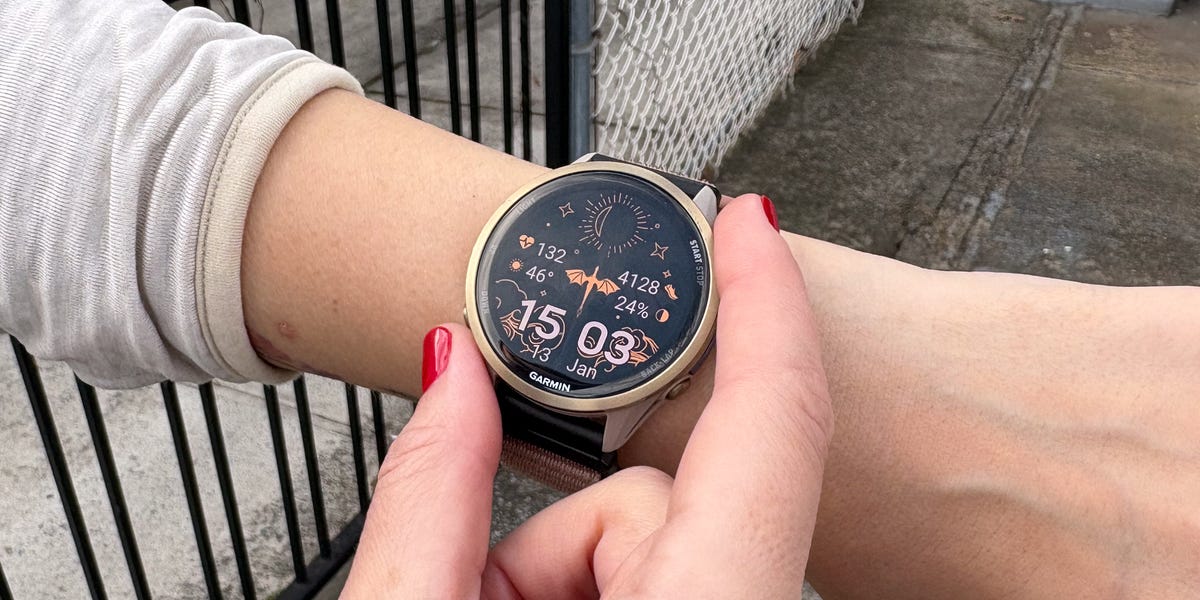
I review a ton of running watches, cycling through all of the various features and idiosyncrasies to find which watch would suit which runner best, which watches deserve a place on our lists, and which don’t measure up. Sometimes, there are watches that are really cool, and do a lot of work, but they offer more than what the average runner needs to log their daily miles and monitor their fitness. But for backwoods adventure runners, ultrarunners, or runners who put a lot of demand on their machines, advanced GPS running watches like the ones on this list offer a bit more of everything—from cellular and satellite connectivity to off-road trail mapping to sturdier cases, more multisport functionality, and all around just more. As an ultrarunner, I am frequently testing watches for 50, 75, or even 100 miles at a stretch. Often these miles are spent deep in the woods in Upstate New York on trails that are poorly marked and pretty treacherous. Sometimes, there simply isn’t cell service to be had. On top of that, I routinely test them during Hyrox, kayaking, paddle boarding, weight training, hiking, and even skiing—when there’s actually snow on the ground. My daily runs tend toward miles spent in New York City, which you wouldn’t think is an issue, but the tall buildings can thwart GPS pretty hard.Looking for more running tech? Read our reviews of the best wireless headphones for running, headlamps for runners, and basic running watches.Best Overall: Garmin Fenix 9 Pro Solar Best Budget: Amazfit Balance UltraBest for Rucking Miles: Garmin Enduro 3Best for Multisport Runners: Suunto Vertical 2Best for iOS Fans: Apple Watch Ultra 4Best for Marathoners: Garmin Forerunner 970Trevor RaabStore your favorite playlists and podcasts in your watch’s library and leave your phone at home.Full ReviewsProsSuper light on wristIncredible battery lifeSolar optionTons of storageConsDelay on start/between lapsKey SpecsBattery lifeSize dependant, style dependent, starting at 10 days, up to a monthWeight91 gFlashlightYes, multiple colors and modesSatellite connectionYesGPS typeMultiband GPSCell connectivityYesWater resistanceUp to 40 metersThe Fenix 9 is not flawless, but dang, it is as close to it as I’ve ever tested.I’ve put over 300 miles on the Pro Solar, so I’ll get my little nitpicks out of the way first. Annoyingly, there’s a lag of about half a second to a second when you start a workout, and again when you switch between laps that the 8 did not have. It’s not the most annoying thing in the world, but alas. Also, the app is still the Garmin Connect app. (I will beat this drum until they fix it.)Now? My happy place, the good stuff. The solar ring on the Pro Solar model puts this watch so far ahead of every other run watch on the market that it can’t even see the others from the rearview. The 51mm is rated for up to 57 days in smartwatch mode with solar, and the 47mm gets up to 34. In the 51mm’s max battery GPS mode, that stretches to 186 hours, or up to 1,000 with solar. I took this out in the backwoodsiest of backwoods Adirondack trails, where I forced it to rely wholly on satellite, and I ran it for 12 solid hours, and it barely ticked the battery.And that multi-band GPS with SatIQ? It’s the best in class, and it locks you down in a hurry. The inReach satellite connectivity lets me run those backwoods and feel safe about doing so. (Though, I still bring a SatCom.)It’s built like a beast without feeling like one. This is the first Fenix with a titanium case, plus a sapphire lens and a 10 ATM water rating, so rain, sweat, and my early morning postrun ocean swims don’t screw it up.It’s chockablock with performance and training metrics, and with Epic, their new multiday activity tracker, it’s better than ever. It’s light on the wrist, and it’s easy to use even with sweaty or sea salty fingers.My favorite little bonus is the flashlight. It’s dimmable and comes in white, red, or green, so it’s great for visibility on early morning runs and also for finding crap at the bottom of my purse.The base Fenix 9 is a solid watch too, but the Pro Solar is the one I’d get. It’s simply a very fine watch.Trevor RaabWe use features like navigation and music playback, and drain watch batteries to determine their longevity.Jeff DengateWe test GPS accuracy in both urban and rural areas, using a measuring wheel as a control.ProsWicked long battery lifeEasy to navigate appGreat for running and HyroxConsThe buttons are easily depressed, accidentally starting activitiesKey SpecsBattery lifeUp to 30 daysWeight77 gFlashlightYesSatellite connectionNoGPS typeDual bandCell connectivityYesWater resistance100 metersYou might not be familiar with this brand, but when I tell you, they are punching so far above their weight class with this watch that you would think a 10-year-old just knocked out Floyd Mayweather, I’m not kidding.The Amazfit Balance Ultra costs $599.99. For that you get a Grade 5 titanium case, a sapphire lens, and a 10 ATM rating that also covers freediving and recreational scuba. It weighs 57 grams without the strap, which is a lot of watch for so little weight. It’s a bit on the thicker side, but not so high profile it’s going to get caught on doors.Battery is where things start to get unbelievable. The 780 mAh cell battery is rated for up to 30 days of typical use and 10 with the always-on display. In accurate GPS mode you get 50 hours, and power-saving GPS stretches to about 90 in our testing. Unless you’re running through the weekend, you’ll hit your limit before the watch does.For tracking, it uses dual-band GPS across six satellite systems that ends up acting just like a typical multiband GPS on par with a Coros or a Suunto. That is clutch when you run between tall buildings or under tree cover and your watch would otherwise decide you swam across the Hudson. The 1.5-inch AMOLED screen is bright enough that it can be read in direct sun for the most part.I will say that the dang buttons on the side are far too easy to depress, leading to accidentally starting activities, but overall, it’s incredible.ProsUnreal solar-boosted battery lifePack Weight and Next Fork tools genuinely enhance trainingReliable, pinpoint GPSLight yet rugged for long daysConsSo many features it takes time to learnFewer lifestyle functions than smartwatch competitorsFeatures at a GlanceBattery lifeUp to 35 days (smartwatch mode, extended with solar)Weight2.4 oz (68 g)FlashlightYesSatellite connectionYes (multi-band GNSS)GPS typeMulti-band (GPS, GLONASS, Galileo)Cell connectivityYes (LTE options available)Water resistance10 ATMThe Garmin Enduro 3 is built for runners who crave distance and dependability. Everything about it feels engineered for endurance—the rugged design, precise tracking, and especially the solar-powered battery that seems to last forever. You don’t even think about charging most days; it just handles your training, races, and long trail days without missing a beat. The safety and satellite coverage give you extra peace of mind when you’re out alone, far from cell service or the nearest trailhead.Two features stand out on every serious run. The Pack Weight tool adjusts your effort estimates based on how heavy your gear is, which makes your performance data feel more real—especially on long mountain efforts. And the Next Fork guide keeps you on track, showing how far it is to the next junction so that you don’t have to stop and fumble through maps. Add Garmin’s multi-band GPS into the mix, and route logs are spot-on, no matter how deep into the woods you go.For ultrarunners or anyone training big, the Enduro 3 is reliability wrapped around your wrist—with battery life that feels almost unfair.ProsExceptional battery life and power managementIndustry-leading offline maps with clear detailDurable build for extreme conditionsExcellent multisport and navigation capabilitiesConsToo bulky for daily wearNo LTE or smartwatch-style connectivityInterface takes time to fully masterFeatures at a GlanceBattery lifeUp to 60 days (smartwatch mode)Weight3.1 oz (88 g)FlashlightNoSatellite connectionYes (dual-band GNSS)GPS typeMulti-band (GPS, GLONASS, Galileo, BeiDou, QZSS)Cell connectivityNoWater resistance10 ATMI’ve been using the Suunto Vertical 2 off and on for a while now, and I’ve come to see it as a true multisport powerhouse rather than an everyday watch. It’s the one I pull out when training or adventures get serious—long runs, big mountain weekends, or backcountry routes where accuracy and endurance matter more than aesthetics. What sets it apart immediately are its maps—they’re crisp, easy to read, and fully offline, which makes navigation seamless even in the most remote terrain.Battery life is another standout feature. The Vertical 2 easily lasts up to 60 days in smartwatch mode and delivers exceptional runtime with dual-band GNSS tracking, something that still amazes me every time I scroll through my recorded routes after multi-hour training blocks. The titanium and sapphire glass construction give it a premium, expedition-ready feel, and the watch itself feels built to handle harsh conditions without flinching.It’s definitely not what I’d wear every day—it’s large, rugged, and purpose-built—but that’s exactly the point. For athletes who bounce between cycling, running, skiing, hiking, and more, the Vertical 2 is a multisport dream, offering a level of mapping, tracking, and battery endurance suited for endless exploration.ProsLightweight and comfortable for daily wearAccurate multi-band GPS and robust multisport trackingStrong coaching and performance analytics suiteSeamlessly blends training features with smartwatch convenienceConsBattery life shorter than solar modelsAdvanced features can feel overwhelming at firstPremium price point for non-solar versionFeatures at a GlanceBattery lifeUp to 20 days (smartwatch mode)Weight1.8 oz (51 g)FlashlightYesSatellite connectionYes (multi-band GNSS)GPS typeMulti-band (GPS, GLONASS, Galileo)Cell connectivityYes (LTE options available)Water resistance5 ATMThe Garmin Forerunner 970 has been my daily watch for months, and it feels like the perfect blend of lifestyle usability and serious athletic performance. It’s light, comfortable, and sleek enough to wear all day—but underneath that understated design is a fully loaded training tool built for racing, coaching, and multidiscipline endurance work. Whether I’m tracking an interval session, planning an ultra-block, or guiding athletes through structured workouts, the 970 handles it all seamlessly.GPS precision is exceptional thanks to its multi-band GNSS system, locking on quickly and maintaining accuracy even through tree cover and narrow streets. The built-in coaching and training readiness tools have become part of my daily routine—providing recovery insights, suggested sessions, and race forecasts that actually feel tailored. For multisport training, it transitions modes smoothly, syncing effortlessly with sensors and Garmin Connect data.As someone who loves to spend their hard-earned money on running in a pack of fellow weirdos at races, the pace predictor and race features are a big draw for the Garmin Forerunner 970. I sync my races from Garmin Connect, and the watch spits out predicted times for 5K up to marathons based on my VO2 max, training load, and recent runs, updating as I log more miles. What seals it for me are the race markers overlaid on the course profile, showing projected splits and elevation-adjusted pacing so I can visualize where to surge or conserve energy without second-guessing midrace. It's like having a personal coach whispering realistic goal times right before the gun goes off, turning pricey pack running into a heart-thumping hunt for a PR.Battery life remains solid, though not as extreme as Garmin’s solar or expedition-focused models, lasting up to 20 days in smartwatch mode. Add in smart notifications, music storage, contactless payments, and wrist-based navigation, and it becomes a rare hybrid—a true performance watch that fits effortlessly into everyday life.Garmin Forerunner 970 ReviewProsMuch improved batteryNew and improved heart rate sensorSeamlessly integrates with the systemFabulous appsKey SpecsBattery lifeDependent upon type, up to 10 days for baseWeight63 grams without the strapFlashlightYesSatellite connectionYesGPS typeMultibandCell connectivityYesWater resistance100 metersThe Apple Watch Ultra 4 is a vast improvement over the Ultra 3, which is a polite way of saying the Ultra 3 had room to grow.GPS now locks on fast, Apple says there’s no change here, but other members of my team and I noticed a difference. It might be in the software updates, but it’s better. I'm no longer starting runs before the watch has made up its mind. Once it has locked on, though, it commits to a story that isn’t quite true. Distance runs consistently one to one and a half percent long. During a marathon, that’s a few tenths of a mile I didn't earn.Battery, thankfully, is finally impressing me. It’s leaps and bounds better, and it charges absurdly fast. I top it up while the coffee brews and I take my shower, and by the time I’m done, it’s fully loaded and ready to go.Heart rate is the big jump. Against a Holter monitor, it stayed within two to three bpm on steady efforts. Run hard and it drifts to five to seven. I do wish it sampled my heart rate every second of every day instead of every five, but overall I don’t think the difference is huge, and when you combine that with the beauty of their apps, it’s hardly a thing.What’s missing for me is lactate threshold. I can live without many advanced run metrics, but I like knowing my threshold for training runs.In their new and improved health app, the ECG and hypertension alerts are useful, the cycle insights are spot on, and the morning report doesn’t make me feel graded. Transit pay, apps, and phone integration are unmatched. Satellite calling is extremely easy compared to any other watch I’ve tried. It’s a freaking great watch, overall.Apple Watch Ultra 4 ReviewWhat to ConsiderWhen you step into the world of high-end GPS running watches, the sheer number of options can feel overwhelming—until you see the immense power packed into these bad boys. The essentials are non-negotiable: rock-solid multi-band GPS precision, exceptional battery life (no one wants to lose tracking on a 50K run), accurate heart rate and recovery metrics, and seamless integration with your training plans. Every watch on this list delivers on those core requirements.Created by Jeff Dengate using Google MapsDual-frequency GPS reception helps your watch track distance more accurately. Kevin R. WexlerTurn-by-turn navigation lets you design and explore new routes.Where they start to spread their wings is everything layered on top. The bells and whistles are kinda wild. Things like dual-frequency GPS for navigating deep woods (or mountaintops), topo and trail maps that actually make sense when you’re lost, and multisport modes that keep up whether you’re running, swimming, skiing, triathlon training, or rolling through a Hyrox circuit. Barometric altitude readings, pulse ox sensors, and training readiness scores just round out the “how cooked am I?” data we’ve all come to both love and loathe in equal measure.Some watches, though, don’t just tell you about your fitness—they could save your butt in a sticky situation. The Garmin Fenix 8 Pro works with Garmin’s inReach satellite system, letting you text or send an SOS nowhere near cell service. The Apple Watch Ultra takes a slightly different route with built-in satellite SOS and cellular, so if you’re off-grid and something goes sideways, you’re not shouting into the void. These are the kinds of features that make the difference between just tracking a run and actually trusting your gear if things go sideways.Who These Watches Are ForLet’s be honest—most runners don’t need a watch this powerful. But if you’re out there chasing hours instead of miles, exploring trail networks that don’t even show up on Google Maps, or toggling between swim intervals, mountain climbs, and winter ski sessions, these make a world of difference. Basically, if you’re a runner like me with electricity in your veins and the ADHD that drives you toward multisport or off-the-beaten-trail running, these watches are for you.Safety and Staying FoundOne of the quietest but most important reasons these watches shine is safety. With incident detection, live tracking, fall alerts, and SOS tools that actually connect you to help, they turn your wrist into a mini rescue hub. The Garmins can ping your emergency contacts automatically or connect through inReach. The Apple Watch Ultra fires off emergency signals via satellite if you end up out of range. And even the Suunto Vertical and Coros Vertix 2S earn their stripes here with detailed offline maps and batteries that cruise through multi-day efforts.Basically, these aren’t just training tools—they’re peace of mind on your wrist. When you’re 10 miles deep in a trail system and the forest gets quiet, it’s nice knowing your watch is smarter about directions and safety than your phone or maybe even you.Cat Bowen, senior editor of commerce; reviews, is a seasoned runner with more than 20 years of distance running experience, including dozens of marathons, half marathons, and even a few ultra marathons. For over a decade, she has tested parenting, fitness, home, and running gear and written in-depth guides to help readers with their next purchase. Holding multiple advanced degrees and currently studying kinesiology, Cat Bowen brings research-backed insight to all of her guides. Passionate about women’s health and neurodivergent inclusion, she advocates for closing research gaps and helping others—especially AudHD people—find joy in running and fitness.Jeff is Runner-in-Chief for Runner’s World and the director of product testing. He has tested and reviewed running shoes, GPS watches, headphones, apparel, and more for nearly two decades. He regularly tests more than 100 pairs of shoes each year, and once had a 257-day streak running in different models. Jeff can usually be found on the roads, racing anything from the mile to a marathon, but he also enjoys racing up mountains and on snowshoes. When he’s not running, you’ll probably find him hanging from a ladder making repairs and renovations to his house (he’s also director of product testing for Popular Mechanics).
The 6 Best Advanced GPS Running Watches for Top-Tier Training and Tracking
Full Article
Original Source
Read the full article at Runnersworld →KhanList aggregates and links to publicly available news content. We do not host full articles from third-party sources. Always verify important information with original sources.