
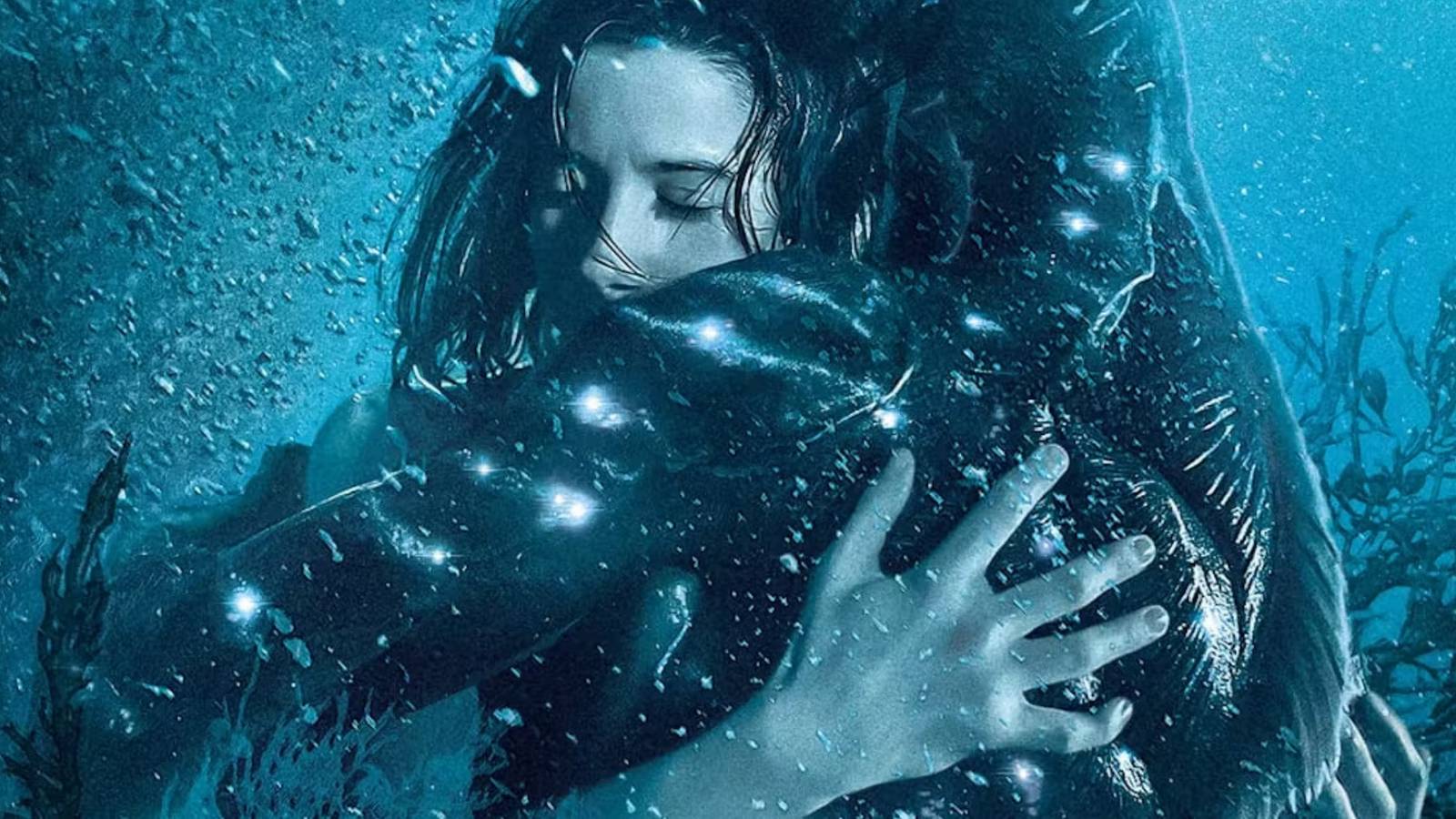
Image via Fox Searchlight Pictures Updated Sep 10, 2026, 6:36 AM EDT Born with Autism (formerly classified as Asperger syndrome), Tyler B. Searle has been obsessed with storytelling since he was old enough to speak. He gravitated towards fairy tales, mythology, the fantasy genre, and animated movies and shows aimed at family audiences. When not writing, Tyler enjoys watching more cartoons and reading fantasy books in his home in Ontario, Canada. Sign in to your Collider account From 2000 to 2003, The Lord of the Rings topped the box office and proved that fantasy movies could be successful blockbusters. 2001 saw Harry Potter and the Philosopher's Stone hit theatres, as well as Shrek, which caught audiences with its satirical take on the fairy tale tropes that had allowed Disney to dominate the 1990s. This led to a massive boom of fantasy media over the rest of the decade as everyone tried to re-create these early hits, to varying degrees of success. However, the 2010s saw the rise of the MCU and Disney live-action remakes, so fantasy films took more of a backseat compared to the previous decade and began to carve a space on TV following the success of Game of Thrones. Of course, fantasy films never went away, and plenty of classics still came out that delighted audiences then and now. This list will rank the best fantasy movies of the 2010s based on their execution, plots, performances, legacy, and overall quality. 15 'Ne Zha' (2019) Image via Chengdu Coco Cartoon The Supreme Lord Yuanshi Tianzun (He Yuxiang/Jamieson Price) splits the destructive Chaos Pearl into two halves: the Spirit Pearl, meant to be reincarnated as the third son of Li Jing (Chen Hao/Vincent Rodriguez III), defender of the Chentang Pass, and the Demon Orb, which Tianzun curses to be struck by divine lightning in three years time. However, one of his disciples, Shen Gongbao (Yang Wei/Daniel Riordan), ensures that Li Jing's son, Ne Zha (Lü Yanting and Joseph Cao/Lexi Foley, Griffin Puatu, and Jordan Cole), is instead a reincarnation of the Demon Orb, while he gives the Spirit Pearl to the dragons to be reborn as the Dragon King Ao Guang's (Li Nan/Christopher Swindle) third son, Au Bing (Han Mo/Aleks Le). Ne Zha is given to the tutelage of the Taoist immortal Taiyi Zhenren (Zhang Jiaming/Mike Pollock) in the hopes that his demonic nature can be tamed and his life spared. Ne Zha is the movie that helped open Chinese animation to the global market, and it's not hard to see why. The animation is beautiful, resulting in some expressive character designs, vibrant colors, and fast-paced action sequences, especially when Ne Zha and Au Bing unleash their full powers. The story can feel a little rushed in places, but it's still an effective tale about nature vs nurture, the bonds of friendship, and self-sacrifice. 14 'ParaNorman' (2012) Image via Focus Features Norman Babcock (Kodi Smit-McPhee) is the town pariah of Blithe Hollow due to his peculiar ability to see and interact with the spirits of the dead, which, of course, nobody believes. One day, he is approached by his crazed great-uncle, Mr. Prenderghast (John Goodman), who warns Norman that he must soon perform a ritual to save the town before dying of a heart attack. Sure enough, the spirit of a vengeful witch awakens and raises the dead, forcing Norman and his friends to delve into the town's shady history to find a way to stop her. ParaNorman is the follow-up to Laika's 2009 smash hit, Coraline, and is another standout example of how to do a dark family film. It's a story about the dangers of fear and how it can lead people to do terrible things, such as ostracizing people who don't conform to the norm or even punishing the innocent for what they could do. The characters do a good job of further reinforcing this theme, as just like Norman, the side characters are more than they seem on the surface. Once they spend time getting to know one another, they form a charming little fellowship to face the undead apocalypse. 13 'Kubo and the Two Strings' (2016) Image via Focus Features Kubo (Art Parkinson) is a young boy who spends his days manipulating origami with his magical shamisen, telling stories of his samurai father, Hanzo, to earn money for him and his ill mother (Charlize Theron). He ends up staying out after dark while attending the village's Bon Festival, and is attacked by his aunts on the orders of his grandfather, the Moon King (Ralph Fiennes). Kubo's mother sends him away with magic, telling him to find his father's armor, and he finds allies in Monkey (Charlize Theron), his snow monkey charm brought to life by his mother's magic, and Beetle (Matthew McConaughey), a cursed warrior who believes he served Hanzo before losing his memories. Kubo and the Two Strings is another phenomenal stop-motion film from Laika, and is one of the best films to show the scope of their ambition and skill. One of the obstacles Kubo must overcome is a titanic skeleton guardian, which required the construction of a model sixteen feet tall and weighing 400lbs, making it one of, if not the, largest stop-motion puppets ever built. Aside from its technical achievements, the story is a bittersweet and beautiful journey about grief, loss, memory, and the power of stories. 12 'Coco' (2017) Image via Disney Miguel (Anthony Gonzalez) is a young boy from Mexico who aspires to be a musician like his hero, Ernesto de la Cruz (Benjamin Bratt), which goes against the wishes of his family, who ban music after being abandoned by the mysterious musician father of Miguel's great-grandmother, Coco (Libertad García Fonzi and Ana Ofelia Murguía). After finding proof that de la Cruz might be Miguel's unknown great-great-grandfather, he tries to steal his guitar from a museum, but is cursed and transported to the Land of the Dead unless he can receive the blessing of a family member before sunrise. Refusing his great-great-grandmother Imelda's (Alanna Ubach) help if he gives up music. Miguel sets off to find de la Cruz, and teams up with Héctor (Gael García Bernal), an eccentric musician who asks Miguel to help him visit his daughter before she forgets him. Coco is widely regarded as one of Pixar's best films of the 2010s thanks to the strong emotions it evokes. Miguel's struggles are relatable to anyone who struggles to both find acceptance in their family and pursue their dream, and while at first his music-hating family is presented as extremists, even they become more sympathetic as more of the backstory is revealed. It also has some catchy songs, bright and vibrant animation, and a respectful depiction of Mexican culture. 11 'The Lego Movie' (2014) Image via Warner Bros. Emmet (Chris Pratt) is an energetic but uncreative blue-collar worker in Lego City who is happy to live his life by the rules set out by the city's leader, Lord Business (Will Ferrell). That is, until he meets a Master Builder named Wyldstyle (Elizabeth Banks) and stumbles upon a red object called the Piece of Resistance, which bonds itself to his back. Wyldstyle explains that this has marked Emmet as The Special, who is destined to stop Lord Business and his weapon, the Kragle, which can freeze anything. The Lego Movie exceeded all expectations on release, to the point that audiences were furious that it was excluded from the Best Animated Feature award in 2015. Its animation perfectly matches the look of old stop-motion LEGO films seen on early YouTube, and its story is a hilarious yet poignant take on the hero's journey while saying that everyone has it in them to do great things. It's also brimming with memorable side characters, including a wise mentor in the wizard Vitruvius (Morgan Freeman), a hilariously egotistical and broody Batman (Will Arnett), and Benny (Charlie Day), an astronaut obsessed with making spaceships. 10 'Harry Potter and the Deathly Hallows - Parts 1 and 2' (2010-2011) Image via Warner Bros. Pictures Rather than attend his final year at Hogwarts, Harry Potter (Daniel Radcliffe) and his friends Ron Weasley (Rupert Grint) and Hermione Granger (Emma Watson) set off to find and destroy the remaining horcruxes containing fragments of Lord Voldemort's (Ralph Fiennes) soul. During their travels, Harry learns of three powerful artifacts known as the Deathly Hallows, which, when combined, can make one master over death. Unfortunately, Voldemort is also looking for one of them, the Elder Wand, said to be the most powerful wand ever forged. The two-part Harry Potter and the Deathly Hallows films are a worthy sendoff to such a genre-defining franchise. By splitting the plot over two movies instead of condensing it into one, the characters and their struggles could get more time, such as Harry coming to terms with the fact that his mentor, Albus Dumbledore (Sir Michael Gambon), may have held many dark secrets. Amidst its climactic battles and impressive displays of magic, the film also makes sure to highlight the power of love and the importance of accepting one's mortality rather than fighting against fate. 9 'Tangled' (2010) Image via Walt Disney Studios Motion Pictures/Courtesy Everett Collection Rapunzel (Delaney Rose Stein and Mandy Moore) is the princess of Corona who was kidnapped by a witch named Mother Gothel (Donna Murphy) to use her magic hair to maintain her youth and beauty. She locked her in a tower for eighteen years, causing Rapunzel to long for the chance to attend a festival of floating lanterns. One day, a thief named Flynn Rider (Zachary Levi) sneaks into the tower to hide, and Rapunzel blackmails him into taking her to the festival. Tangled went through a tricky production cycle to become one of Disney's most successful films of the 2010s, and cemented their shift to 3D animation. A big part of its success is how it updates the fairy tale into a light-hearted and fun story that still hits some emotional highs, especially through the budding relationship between Flynn and Rapunzel. Beyond that, Alan Menken returns to do the music, and the animation is gorgeous, with hilarious slapstick, on-point facial animation, and stellar animation on the hair. Collider Exclusive · Oscar Best Picture Quiz Which Oscar Best PictureIs Your Perfect Movie? Parasite · Everything Everywhere · Oppenheimer · Birdman · No Country Five Oscar Best Picture winners. Five completely different visions of what cinema can be — and what it can do to you. One of them is the film that was made for the way your mind works. Ten questions will figure out which one. 🪜Parasite 🌀Everything Everywhere ☢️Oppenheimer 🐦Birdman 🪙No Country for Old Men FIND YOUR FILM → 01 What kind of film experience do you actually want? The best movies don't just entertain — they leave something behind. ASomething that pulls the rug out — that makes me think I'm watching one kind of film and then reveals I'm watching another entirely. BSomething overwhelming — funny, sad, absurd, and genuinely moving, all at once. CSomething grand and weighty — a film that makes me feel the full scale of what I'm watching. DSomething formally daring — a film that pushes what cinema can even do. ESomething lean and relentless — pure tension with no wasted frame. NEXT QUESTION → 02 Which idea grabs you most in a film? Great films are driven by a central obsession. What's yours? AClass, inequality, and what people are willing to do when desperation meets opportunity. BIdentity, family, and the chaos of trying to hold your life together when everything is falling apart. CGenius, moral responsibility, and the catastrophic weight of a decision you can never take back. DEgo, legacy, and the terror of becoming irrelevant while you're still alive to watch it happen. EEvil, chance, and whether moral order actually exists or if we just tell ourselves it does. NEXT QUESTION → 03 How do you like your story told? Form is content. The way a story is shaped changes what it means. AGenre-twisting — I want it to start in one lane and migrate into something completely different. BMaximalist and genre-blending — comedy, action, drama, sci-fi, all in one ride. CEpic and non-linear — cutting between timelines, building a mosaic of cause and consequence. DA single unbroken flow — I want to feel like I'm living it in real time, no cuts to safety. ESpare and precise — every scene doing exactly what it needs to do and nothing more. NEXT QUESTION → 04 What makes a truly great antagonist? The opposition defines the protagonist. What kind of opposition fascinates you? AA system — invisible, structural, and almost impossible to fight because it has no single face. BThe self — the ways we sabotage, abandon, and fail the people we love most. CHistory — the unstoppable momentum of events that no single person can stop or redirect. DThe industry — the machinery of culture that chews up talent and spits out irrelevance. EPure, implacable evil — a force so certain of itself it becomes almost philosophical. NEXT QUESTION → 05 What do you want from a film's ending? The final note is the one that lingers. What do you want it to sound like? AShock and inevitability — a conclusion that recontextualises everything that came before it. BEarned emotion — I want to cry, laugh, and feel genuinely hopeful, even if the world is a mess. CDevastation and grandeur — an ending that makes me sit in silence for a few minutes after. DAmbiguity — something that leaves enough open that I'm still thinking about it days later. EBleakness — an honest refusal to pretend the world is tidier than it actually is. NEXT QUESTION → 06 Which setting pulls you in most? Where a film takes place shapes everything — mood, stakes, what's even possible. AA gleaming modern city with a hidden underside — beauty masking rot, wealth masking desperation. BA collapsing suburban life that opens onto something infinite — the multiverse of a single ordinary person. CThe corridors of power and science at a world-historical turning point — where decisions echo for decades. DThe grimy, alive chaos of New York and Hollywood — fame as both destination and trap. EVast, indifferent landscape — desert and highway where violence arrives without warning or reason. NEXT QUESTION → 07 What cinematic craft impresses you most? Every great film has a signature — a technical or artistic element that makes it unmistakable. AProduction design and mise-en-scène — every frame composed to carry meaning beneath the surface. BEditing and tonal control — the ability to move between registers without losing the audience. CScore and sound design — music that becomes inseparable from the dread and awe of what you're watching. DCinematography as performance — the camera not recording events but participating in them. ESilence and restraint — what's left unsaid and unshown doing more work than any dialogue could. NEXT QUESTION → 08 What kind of main character do you root for? The protagonist is the lens. Who you choose to follow says something about you. ASomeone smart and resourceful who makes increasingly dangerous decisions under pressure. BSomeone overwhelmed and ordinary who turns out to be capable of something extraordinary. CA brilliant, tortured figure whose gifts and flaws are inseparable from each other. DA self-destructive artist whose ego is both their superpower and their undoing. EA quiet, principled person trying to make sense of a world that has stopped making sense. NEXT QUESTION → 09 How do you feel about a film that takes its time? Pace is a choice. Some films sprint; others let tension accumulate slowly, deliberately. AI love a slow build when I know the payoff is going to be seismic — patience for a devastating reveal. BGive me relentless momentum — I want to feel breathless and emotionally spent by the end. CEpic runtime doesn't scare me — if the material demands three hours, give me three hours. DI want it to feel propulsive even when nothing is technically happening — restless energy throughout. EDeliberate and unhurried — I want dread to accumulate in the spaces between the action. NEXT QUESTION → 10 What do you want to feel walking out of the cinema? The best films leave a mark. What kind of mark do you want? AUnsettled — like I've just seen something I can't fully explain but can't stop thinking about. BMoved and energised — like the film reminded me what actually matters and gave me something to hold onto. CHumbled — like I've been in the presence of something genuinely important and overwhelming. DExhilarated — like I've just seen cinema doing something it's never quite done before. EHaunted — like a cold, quiet dread that stays with me for days. REVEAL MY FILM → The Academy Has Decided Your Perfect Film Is…Your answers have pointed to one Oscar Best Picture winner above all others. This is the film that was made for the way your mind works. ParasiteYou are drawn to films that operate on multiple levels simultaneously — that begin in one genre and quietly, brilliantly migrate into another. Bong Joon-ho's Parasite is a film about class, desire, and the architecture of inequality that manages to be darkly funny, deeply suspenseful, and genuinely shocking across a single extraordinary running time. Your instinct is for cinema that hides its true intentions until the moment it's ready to reveal them. Parasite is exactly that — a film that rewards close attention and punishes assumptions, right up to its devastating final image. Everything Everywhere All at OnceYou want it all — and this film gives you all of it. The Daniels' Everything Everywhere All at Once is one of the most maximalist films ever made: action comedy, multiverse sci-fi, family drama, existential crisis, and a genuinely earned emotional core that sneaks up on you amid the chaos. You are someone who responds to ambition, who doesn't want cinema to choose between being entertaining and being meaningful. This film refuses that choice entirely. It is overwhelming by design, and its overwhelming nature is precisely the point — because the feeling of being crushed by infinite possibility is exactly what it's about. OppenheimerYou are drawn to cinema on a grand scale — films that understand history not as a backdrop but as a force, and that place their characters inside that force and watch what happens. Christopher Nolan's Oppenheimer is a film about the terrifying gap between what we can do and what we should do, told with the full weight of one of the most consequential moments in human history behind it. You want your films to feel important without feeling self-important — to earn their ambition through sheer craft and the gravity of their subject. Oppenheimer does exactly that. It is enormous, complicated, and refuses easy comfort. BirdmanYou are drawn to films that foreground their own construction — that make the how of the filmmaking part of the what it's about. Alejandro González Iñárritu's Birdman, shot to appear as a single continuous take, is cinema examining itself through the cracked mirror of a fading actor's ego. You respond to formal daring, to the feeling that a film is doing something that probably shouldn't be possible. Michael Keaton's performance and Emmanuel Lubezki's restless camera create something genuinely unlike anything else — a film that is simultaneously about creativity, relevance, self-destruction, and the impossibility of ever truly knowing if your work means anything at all. No Country for Old MenYou are drawn to cinema that trusts silence, that refuses to explain itself, and that treats dread as a form of meaning. The Coen Brothers' No Country for Old Men is a film about the arrival of a new kind of evil — implacable, arbitrary, and utterly indifferent to the moral frameworks we use to make sense of the world. It is one of the most formally controlled films ever made, and its controlled restraint is what makes it so terrifying. You want your films to haunt you, not comfort you. You are not interested in resolution if resolution would be dishonest. No Country for Old Men is honest in a way that most cinema never dares to be. ↻ RETAKE THE QUIZ 8 'Midnight in Paris' (2011) Image via Sony Pictures Classics Aspiring screenwriter Gil Pender (Owen Wilson) and his fiancée, Inez (Rachel McAdams), travel to Paris with her family. Gill quickly becomes enamoured by the city and begins looking into the culture of the 1920s for inspiration. One day, while walking the streets at midnight, he is mysteriously transported to the 1920s and gets the chance to speak to such people as Ernest Hemingway (Corey Stoll), Gertrude Stein (Kathy Bates), and Zelda Fitzgerald (Alison Pill). Midnight in Paris is a charming tale that focuses on finding the beauty in the world and the joys and trappings of nostalgia. It does a beautiful job of re-creating the early 20th century, and even in the present, there is a whimsical air about the film, as if walking through a dream. Wilson's performance as Gil is spectacular for how seamlessly he slips into the neurotic everyman role, but the supporting actors are especially worth praising. Indeed, their performances as the historical figures are so engaging that you'll remember them even if the character only had one scene, such as Adrian Brody's appearance as Salvador Dalí. 7 'A Monster Calls' (2016) Image via Focus Features Conor O'Malley (Lewis MacDougall) is a young English boy whose life is in turmoil. His mother (Felicity Jones) is ill, forcing him to interact with his strict grandmother (Sigourney Weaver) when she comes over to help around the house; his father (Toby Kebbell) lives in the United States of America with his new family; and bullies frequently pick on him at school. One night, an old yew tree on a nearby hill transforms into a monster (Liam Neeson), who tells Conor that he has come to help by telling the boy three stories, and once finished, Conor will tell him a fourth. Based on the book of the same name by Patrick Ness, who also wrote the screenplay, A Monster Calls is a thrilling and emotionally raw coming-of-age story that knows how to use its fantasy elements sparingly. Most of the film is dedicated to seeing how Conor copes with the changes in his life and builds into a powerful message regarding grief and the complexity of human nature. The monster's stories are some of the most memorable parts of the film: they are brought to life through beautiful watercolor-inspired animation, and the themes are more complex than they first appear, tying into Conor's emotional state at the time or the lesson he needs to learn. 6 'How to Train Your Dragon' (2010) Image via Paramount Pictures The Viking village of Berk has had a long-standing feud with dragons, who periodically burn down their houses and raid their sheep. As their chief, Stoick the Vast (Gerard Butler), prepares a raid on their nest, he sends his scrawny son, Hiccup (Jay Baruchel), to dragon training so that he can become a warrior. Unknown to Stoick or the other Vikings, Hiccup manages to shoot down the most elusive dragon species, a Nightfury he calls Toothless (Randy Thom), but rather than kill him, Hiccup observes and later befriends him. How to Train Your Dragon kickstarted one of DreamWorks' most successful franchises and even got a live-action remake. The reason for its enduring popularity is obvious: the film delivers a very strong emotional message regarding overcoming prejudice and the embrace of the new, told through a hilarious and touching relationship between Hiccup and Toothless, and gorgeous animation. It's also chock-full of unique and creative dragon designs, which is a breath of fresh air when compared to the generic body shape seen in the likes of Reign of Fire, Game of Thrones, and everything in between.
The 15 Greatest Fantasy Movies of the 2010s, Ranked
Full Article
Original Source
Read the full article at Collider →KhanList aggregates and links to publicly available news content. We do not host full articles from third-party sources. Always verify important information with original sources.