
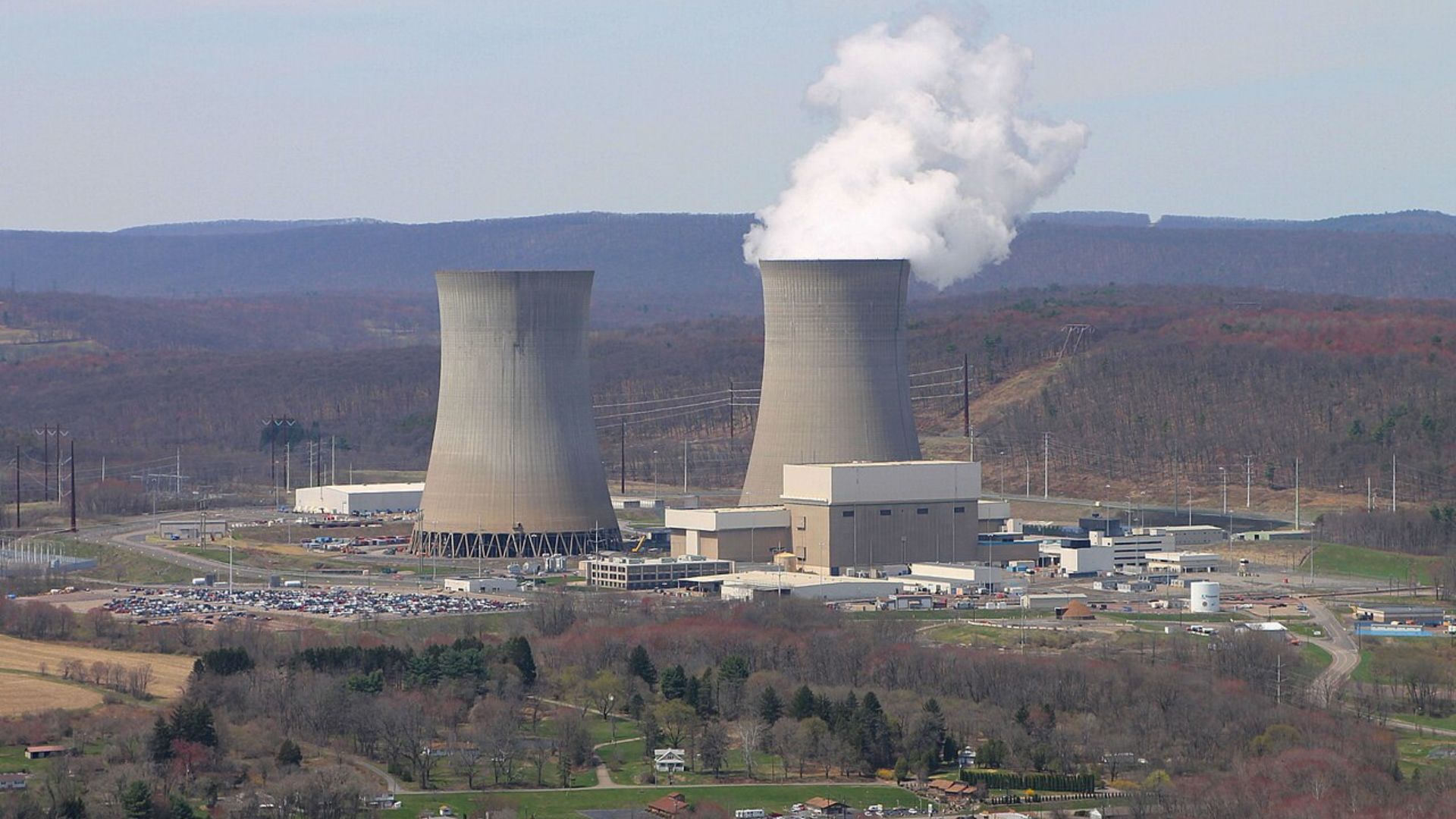
Electricity demand can swing sharply over the course of a day, but the grid needs power long after the evening rush has passed. Nuclear power helps meet that round-the-clock demand, supplying roughly one-fifth of US electricity with reactors that typically run for months between refueling outages and produce no carbon dioxide while generating power. Some nuclear stations can deliver more electricity than others simply because they have more reactors. Others can generate just as much power with fewer, larger reactors. Here are the ten largest operating nuclear power plants in the US, ranked by net summer generating capacity. 1. Plant Vogtle, Georgia (4,530 MW) Wikimedia Commons Plant Vogtle’s rise to the top was nearly four decades in the making. Its first two reactors entered commercial service in 1987 and 1989, and the site remained a two-reactor station until Unit 3 came online in 2023. Unit 4 followed in April 2024, making the eastern Georgia plant the only operating four-reactor nuclear station in the country. The two newer units account for nearly half of Vogtle’s capacity, giving it a lead of almost 600 megawatts over Palo Verde. 2. Palo Verde Generating Station, Arizona (3,937 MW) Drive about 55 miles west of downtown Phoenix, and you’ll find three nuclear reactors in a place with no major body of water beside them. Palo Verde solved that siting problem by drawing on a resource the Phoenix area already produced in abundance. The resource was municipal wastewater. The station takes treated wastewater from nearby communities and processes it further for use in its cooling towers. Arizona Public Service says Palo Verde recycles more than 20 billion gallons a year, helping sustain a plant that supplies electricity across several Southwestern states. 3. Browns Ferry Nuclear Plant, Alabama (3,662 MW) Browns Ferry takes its name from a ferry crossing on the Tennessee River in northern Alabama. The Tennessee Valley Authority began generating nuclear power there in 1974, and a third reactor entered commercial service in 1977. All three units are boiling-water reactors, which produce steam directly in the reactor vessel to drive their turbines. Together they put Browns Ferry more than a gigawatt ahead of fourth-place Oconee, the largest drop between any two neighbors on this list. 4. Oconee Nuclear Station, South Carolina (2,600 MW) When Oconee’s first reactor entered service in July 1973, Duke Energy was building what would briefly become the world’s largest nuclear station. The three reactors still make Oconee the largest nuclear plant in Duke’s fleet and give it a narrow edge over the South Texas Project in this ranking. The plant sits on Lake Keowee, where two generations of power technology share the same waterfront. The lake supplies water for plant cooling, and the nearby Keowee hydroelectric station has historically supplied standby power as well as electricity for the grid. 5. South Texas Project, Texas (2,580 MW) Wikimedia Commons The South Texas Project gets within 20 megawatts of Oconee with one fewer reactor. Its two pressurized-water units, which entered commercial service in 1988 and 1989, each have a net summer capacity of roughly 1,290 megawatts. The plant sits between Bay City and Palacios near the Texas Gulf Coast, but its cooling water comes from a reservoir of its own. At around 7,000 acres (about 2,830 hectares), that reservoir gives a sense of how much land the infrastructure around a two-reactor station can occupy. 6. Peach Bottom Atomic Power Station, Pennsylvania (2,549 MW) Peach Bottom’s generating units are numbered 2 and 3, a reminder that the site near Delta started out with a very different reactor. Unit 1 was a high-temperature, gas-cooled demonstration reactor that shut down in 1974, the same year its two larger neighbors entered service. The operating units use boiling-water technology and together put Peach Bottom within about 31 megawatts of the South Texas Project. They also give Pennsylvania its largest nuclear station, with Susquehanna close behind. 7. Susquehanna Steam Electric Station, Pennsylvania (2,494 MW) Susquehanna’s two reactors entered service in the 1980s, decades before the data center campus next door became part of the plant’s story. In June 2025, operator Talen Energy announced an expanded deal to supply electricity from the station to Amazon Web Services. The deal covers Amazon’s adjacent campus and allows deliveries to other sites in Pennsylvania. That gives the plant a role in meeting demand from cloud computing and AI at a station built more than 40 years ago. 8. Comanche Peak Nuclear Power Plant, Texas (2,400 MW) Texas’ second entry sits inland near Glen Rose, southwest of Fort Worth. Comanche Peak’s first reactor entered commercial service in 1990, and its second followed three years later, bringing another large block of nuclear capacity onto the Texas grid. Both reactors draw cooling water from the neighboring reservoir, which absorbs heat released as steam condenses back into water. Between Comanche Peak and the South Texas Project, Texas has nearly 5,000 megawatts of nuclear generating capacity at just two sites. 9. Braidwood Generating Station, Illinois (2,332 MW) Both Braidwood reactors began commercial operation in 1988, making the Will County station younger than several others on this list. Their combined capacity puts Braidwood at the top of Illinois’ nuclear fleet, ahead of Byron by roughly 32 megawatts. The plant’s cooling lake doubles as a fishing spot and waterfowl refuge. It was filled with water pumped from the Kankakee River in the early 1980s, flooding several former strip-mine pits in the process. 10. McGuire Nuclear Station, North Carolina (2,316 MW) Wikimedia Commons Lake Norman was already producing electricity before McGuire’s first reactor came online. Duke created the lake in 1963 by damming the Catawba River at the Cowans Ford hydroelectric station, then built the nuclear plant on its shore near Charlotte. McGuire’s two reactors entered commercial service in 1981 and 1984, and the station uses the lake for cooling. It takes the final spot by just 5.5 megawatts over Duke’s Catawba Nuclear Station in neighboring South Carolina. Conclusion Together, the ten largest nuclear power plants in the US have about 29 gigawatts of generating capacity. That’s nearly a third of the country’s nuclear capacity concentrated at just ten sites. Most of these plants have been generating electricity for decades. With newer reactors like those at Plant Vogtle now in service, the US relies on a mix of old and new units to keep power flowing around the clock. Get the latest in engineering, tech, space & science - delivered daily to your inbox.Atharva is a full-time content writer with a post-graduate degree in media & amp; entertainment and a graduate degree in electronics & telecommunications. He has written in the sports and technology domains respectively. In his leisure time, Atharva loves learning about digital marketing and watching soccer matches. His main goal behind joining Interesting Engineering is to learn more about how the recent technological advancements are helping human beings on both societal and individual levels in their daily lives.
The 10 largest US nuclear plants each have more than 2,300 MW of capacity
Full Article
Original Source
Read the full article at Interestingengineering →KhanList aggregates and links to publicly available news content. We do not host full articles from third-party sources. Always verify important information with original sources.