
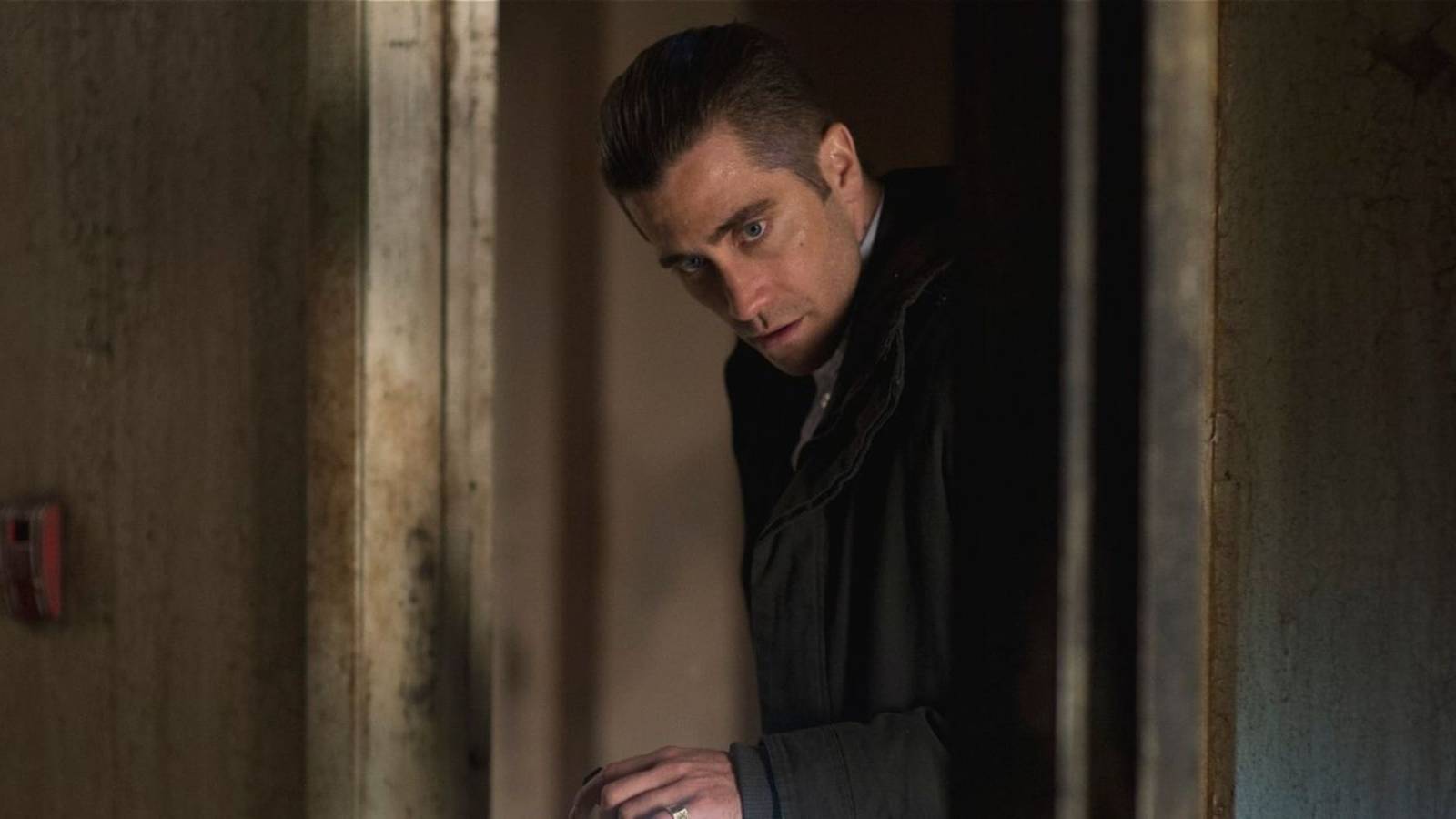
Image via Warner Bros. Published Sep 26, 2026, 1:28 PM EDT Writing from the Chicagoland area in Illinois, Robert is an avid movie watcher and will take just about any excuse to find time to go to his local movie theaters. Robert graduated from Bradley University with degrees in Journalism and Game Design with a minor in Film Studies. Robert tries his best to keep up with all the latest movie releases, from those released in theaters to those released on streaming. While he doesn't always keep up with the latest TV shows, he makes it a goal to watch nearly every major new release possible. He has been honing his craft and following any and all movie news all his life, leading up to now, where he has a vast knowledge of film and film history. He also logs every movie that he watches on his Letterboxd page, and has hosted a weekly online movie night with his closest friends for over 6 years. Sign in to your Collider account The thriller is far from an exclusively American genre—there have been many exceptional thrillers released in all parts of the world that have helped evolve and elevate the genre to new heights. At the same time, however, it's difficult to ignore just how widely influential and important the wide array of top-notch American thrillers have been to the genre, as Hollywood's classic genre of grit and sleaze has been a fan favorite ever since the golden age. Throughout each era of American filmmaking history, there have been prominent and well-crafted thrillers that have enchanted the masses and caught them in a flurry of striking, oftentimes even unsettling subject matter. This selection only scratches the surface of the wide array of amazing American thrillers released over the past century, yet they continuously stand out as some of the greatest that the genre has to offer. 10 'Shutter Island' (2010) Image via Paramount Pictures While often associated with gangster films more than outright thrillers, few filmmakers have laid claim to as many masterpieces in American cinema as Martin Scorsese. As far as the genre is concerned, easily his most recognizable and acclaimed work is Shutter Island, a powerful psychological mystery thriller that taps into themes of memory distorting to shield us from guilt and trauma. With a masterful plot twist at its center and an amazing central performance from Leonardo DiCaprio, the film has been in the all-timer conversation since its release. The film sees DiCaprio as U.S. Marshal Teddy Daniels, who is working to uncover the truth behind the disappearance of a patient from a hospital for the criminally insane. However, his attempts at finding the truth of this case are frequently cut short by an increasing number of troubling visions and an increased fervor in trying to find the man responsible for killing his wife. Things only get stranger and more dangerous as Teddy begins to suspect foul play with the doctors conducting heinous experiments. 9 'Sorcerer' (1977) Image via Universal Pictures/ Paramount Pictures Director William Friedkin had already cemented himself in the history books of cinema in the '70s with his work directing The French Connection and The Exorcist in the first half of the decade. However, while not nearly as popular as these other two masterpieces, there is an argument to be made that Sorcerer, his legendary adaptation of The Wages of Fear, is his true magnum opus and one of the best thrillers of the '70s. Despite there already being a great French adaptation of the same novel decades prior, Friedkin's adaptation stands as a masterpiece in its own right, defined by exceptional scale and jaw-dropping production design. The film follows a quartet of men, each from different parts of the globe and with their own dark pasts and secrets, converging together on the same remote South American town as they embark on a trip to risk their lives transporting cases of unstable dynamite across the dangerous jungle. With even the smallest mistake risking their lives, they go on a ruthless jungle adventure facing the elements head-on for a potential chance of regaining normal lives. 8 'Vertigo' (1958) Image via Paramount Pictures It's impossible to overstate just how massive an influence and legacy Alfred Hitchcock has left on the culture and strength of Hollywood thrillers, laying claim to being one of the most recognizable and acclaimed thrillers ever made. Still, even among Hitchcock's highly illustrious filmography, Vertigo stands out as one of the greatest psychological thrillers ever made. The way it blends mystery, tension, and groundbreaking visuals has made it one of the most celebrated cinematic achievements of the '50s. The film sees James Stewart as a former police detective who has retired after an incident gave him an extreme fear of heights that causes vertigo. However, he will find himself back in the world of corruption and mystery when he is hired as a private investigator to uncover the truth about an acquaintance's wife (Kim Novak). To make things more complicated, he begins to fall for her as he investigates, causing the lines between truth, justice, and passion to begin to blur. 7 'Chinatown' (1974) Image via Paramount Pictures Often considered to be one of the greatest neo-noir films ever made, Roman Polanski's Chinatown is a brilliant mystery thriller that soars thanks to its exceptional filmmaking style and two generational lead performances from Jack Nicholson and Faye Dunaway. It's a film defined by its signature sense of edge and sleaze, with immaculate worldbuilding that doesn't hold back in depicting the cutthroat nature of '30s LA and its sinister criminal underbelly. The film follows private investigator Jake Gittes (Nicholson) as he attempts to uncover a dangerous municipal conspiracy that involves murder, incest, and illegal manipulation of the city's water supply. The case gets more intricate and chaotic as more truths are revealed, with the web of deception proving so all-encompassing that it's hard for Jake to not get caught in it. While Polanski himself may not have aged gracefully, his keen eye for filmmaking brilliance has made Chinatown a timeless icon of American thriller filmmaking. Collider Exclusive · Oscar Best Picture Quiz Which Oscar Best PictureIs Your Perfect Movie? Parasite · Everything Everywhere · Oppenheimer · Birdman · No Country Five Oscar Best Picture winners. Five completely different visions of what cinema can be — and what it can do to you. One of them is the film that was made for the way your mind works. Ten questions will figure out which one. 🪜Parasite 🌀Everything Everywhere ☢️Oppenheimer 🐦Birdman 🪙No Country for Old Men FIND YOUR FILM → 01 What kind of film experience do you actually want? The best movies don't just entertain — they leave something behind. ASomething that pulls the rug out — that makes me think I'm watching one kind of film and then reveals I'm watching another entirely. BSomething overwhelming — funny, sad, absurd, and genuinely moving, all at once. CSomething grand and weighty — a film that makes me feel the full scale of what I'm watching. DSomething formally daring — a film that pushes what cinema can even do. ESomething lean and relentless — pure tension with no wasted frame. NEXT QUESTION → 02 Which idea grabs you most in a film? Great films are driven by a central obsession. What's yours? AClass, inequality, and what people are willing to do when desperation meets opportunity. BIdentity, family, and the chaos of trying to hold your life together when everything is falling apart. CGenius, moral responsibility, and the catastrophic weight of a decision you can never take back. DEgo, legacy, and the terror of becoming irrelevant while you're still alive to watch it happen. EEvil, chance, and whether moral order actually exists or if we just tell ourselves it does. NEXT QUESTION → 03 How do you like your story told? Form is content. The way a story is shaped changes what it means. AGenre-twisting — I want it to start in one lane and migrate into something completely different. BMaximalist and genre-blending — comedy, action, drama, sci-fi, all in one ride. CEpic and non-linear — cutting between timelines, building a mosaic of cause and consequence. DA single unbroken flow — I want to feel like I'm living it in real time, no cuts to safety. ESpare and precise — every scene doing exactly what it needs to do and nothing more. NEXT QUESTION → 04 What makes a truly great antagonist? The opposition defines the protagonist. What kind of opposition fascinates you? AA system — invisible, structural, and almost impossible to fight because it has no single face. BThe self — the ways we sabotage, abandon, and fail the people we love most. CHistory — the unstoppable momentum of events that no single person can stop or redirect. DThe industry — the machinery of culture that chews up talent and spits out irrelevance. EPure, implacable evil — a force so certain of itself it becomes almost philosophical. NEXT QUESTION → 05 What do you want from a film's ending? The final note is the one that lingers. What do you want it to sound like? AShock and inevitability — a conclusion that recontextualises everything that came before it. BEarned emotion — I want to cry, laugh, and feel genuinely hopeful, even if the world is a mess. CDevastation and grandeur — an ending that makes me sit in silence for a few minutes after. DAmbiguity — something that leaves enough open that I'm still thinking about it days later. EBleakness — an honest refusal to pretend the world is tidier than it actually is. NEXT QUESTION → 06 Which setting pulls you in most? Where a film takes place shapes everything — mood, stakes, what's even possible. AA gleaming modern city with a hidden underside — beauty masking rot, wealth masking desperation. BA collapsing suburban life that opens onto something infinite — the multiverse of a single ordinary person. CThe corridors of power and science at a world-historical turning point — where decisions echo for decades. DThe grimy, alive chaos of New York and Hollywood — fame as both destination and trap. EVast, indifferent landscape — desert and highway where violence arrives without warning or reason. NEXT QUESTION → 07 What cinematic craft impresses you most? Every great film has a signature — a technical or artistic element that makes it unmistakable. AProduction design and mise-en-scène — every frame composed to carry meaning beneath the surface. BEditing and tonal control — the ability to move between registers without losing the audience. CScore and sound design — music that becomes inseparable from the dread and awe of what you're watching. DCinematography as performance — the camera not recording events but participating in them. ESilence and restraint — what's left unsaid and unshown doing more work than any dialogue could. NEXT QUESTION → 08 What kind of main character do you root for? The protagonist is the lens. Who you choose to follow says something about you. ASomeone smart and resourceful who makes increasingly dangerous decisions under pressure. BSomeone overwhelmed and ordinary who turns out to be capable of something extraordinary. CA brilliant, tortured figure whose gifts and flaws are inseparable from each other. DA self-destructive artist whose ego is both their superpower and their undoing. EA quiet, principled person trying to make sense of a world that has stopped making sense. NEXT QUESTION → 09 How do you feel about a film that takes its time? Pace is a choice. Some films sprint; others let tension accumulate slowly, deliberately. AI love a slow build when I know the payoff is going to be seismic — patience for a devastating reveal. BGive me relentless momentum — I want to feel breathless and emotionally spent by the end. CEpic runtime doesn't scare me — if the material demands three hours, give me three hours. DI want it to feel propulsive even when nothing is technically happening — restless energy throughout. EDeliberate and unhurried — I want dread to accumulate in the spaces between the action. NEXT QUESTION → 10 What do you want to feel walking out of the cinema? The best films leave a mark. What kind of mark do you want? AUnsettled — like I've just seen something I can't fully explain but can't stop thinking about. BMoved and energised — like the film reminded me what actually matters and gave me something to hold onto. CHumbled — like I've been in the presence of something genuinely important and overwhelming. DExhilarated — like I've just seen cinema doing something it's never quite done before. EHaunted — like a cold, quiet dread that stays with me for days. REVEAL MY FILM → The Academy Has Decided Your Perfect Film Is…Your answers have pointed to one Oscar Best Picture winner above all others. This is the film that was made for the way your mind works. ParasiteYou are drawn to films that operate on multiple levels simultaneously — that begin in one genre and quietly, brilliantly migrate into another. Bong Joon-ho's Parasite is a film about class, desire, and the architecture of inequality that manages to be darkly funny, deeply suspenseful, and genuinely shocking across a single extraordinary running time. Your instinct is for cinema that hides its true intentions until the moment it's ready to reveal them. Parasite is exactly that — a film that rewards close attention and punishes assumptions, right up to its devastating final image. Everything Everywhere All at OnceYou want it all — and this film gives you all of it. The Daniels' Everything Everywhere All at Once is one of the most maximalist films ever made: action comedy, multiverse sci-fi, family drama, existential crisis, and a genuinely earned emotional core that sneaks up on you amid the chaos. You are someone who responds to ambition, who doesn't want cinema to choose between being entertaining and being meaningful. This film refuses that choice entirely. It is overwhelming by design, and its overwhelming nature is precisely the point — because the feeling of being crushed by infinite possibility is exactly what it's about. OppenheimerYou are drawn to cinema on a grand scale — films that understand history not as a backdrop but as a force, and that place their characters inside that force and watch what happens. Christopher Nolan's Oppenheimer is a film about the terrifying gap between what we can do and what we should do, told with the full weight of one of the most consequential moments in human history behind it. You want your films to feel important without feeling self-important — to earn their ambition through sheer craft and the gravity of their subject. Oppenheimer does exactly that. It is enormous, complicated, and refuses easy comfort. BirdmanYou are drawn to films that foreground their own construction — that make the how of the filmmaking part of the what it's about. Alejandro González Iñárritu's Birdman, shot to appear as a single continuous take, is cinema examining itself through the cracked mirror of a fading actor's ego. You respond to formal daring, to the feeling that a film is doing something that probably shouldn't be possible. Michael Keaton's performance and Emmanuel Lubezki's restless camera create something genuinely unlike anything else — a film that is simultaneously about creativity, relevance, self-destruction, and the impossibility of ever truly knowing if your work means anything at all. No Country for Old MenYou are drawn to cinema that trusts silence, that refuses to explain itself, and that treats dread as a form of meaning. The Coen Brothers' No Country for Old Men is a film about the arrival of a new kind of evil — implacable, arbitrary, and utterly indifferent to the moral frameworks we use to make sense of the world. It is one of the most formally controlled films ever made, and its controlled restraint is what makes it so terrifying. You want your films to haunt you, not comfort you. You are not interested in resolution if resolution would be dishonest. No Country for Old Men is honest in a way that most cinema never dares to be. ↻ RETAKE THE QUIZ 6 'No Country For Old Men' (2007) Image via Miramax Films While most of the other cinematic offerings of the Coen Brothers employ a signature darkly comedic tone, No Country for Old Men abandons their comedic angle to create an exceptionally dark Western thriller that is considered one of the 2000s greatest cinematic masterpieces. This bleak exploration of death across the Texas desert was massively celebrated upon release, yet its reputation has exponentially grown in the time since its release as the magnum opus of the Coen Brothers. The film sees a chaotic chase across the desert when a local welder (Josh Brolin) stumbles upon dozens of dead bodies and 2 million dollars, placing him in the crosshairs of methodical killer Annthon Chigurh (Javier Bardem), with a local sheriff (Tommy Lee Jones) right on his tail. It plays to a lot of the classic narrative strengths of previous Coen films, yet with a more grounded, sinister tone that revels in the pain of what happens on-screen. 5 'Double Indemnity' (1944) Image via Paramount Pictures Often considered one of the originators of the film noir genre, Double Indemnity is one of many masterpieces from director Billy Wilder that helped set the standard for numerous other legendary films during Hollywood's golden era. Many of the great conventions of noir thrillers were not only popularized in this film, but were arguably perfected. It's one of the best examples of a film being both important to film history and still aging amazingly well to modern audiences. The film follows insurance salesman Walter Neff (Fred MacMurray), who finds himself at the center of a ruthless plot to murder the husband of a woman he's been flirting with (Barbara Stanwyck) so that they can claim his life insurance payment for profit. The mental toll of this crime is chipping away at Neff's psyche, though, made worse by the young woman egging him on to commit the deed even despite the suspicion of a claims manager. 4 'The Silence of the Lambs' (1991) Image via Orion Pictures The Silence of the Lambs was already a massively celebrated thriller novel, yet Jonathan Demme's exceptional film adaptation was what truly elevated the story into being a household name and one of the most celebrated movies of the '90s. From its brutal story of torture and sadism to the brilliant performances at its center, The Silence of the Lambs has a way of engrossing and engaging the audience in a way very few horror thrillers have ever been able to do. The film follows young FBI student Clarice Starling (Jodie Foster), who has been tasked with interviewing the notorious psychiatrist turned psychopath cannibal Hannibal Lecter (Anthony Hopkins). There are hopes that their interview could provide new information about an ongoing serial killer investigation, with Clarice's distinct strengths and insights as a young woman acting as enough of a bait to draw information out of Lecter. 3 'Prisoners' (2013) Image via Warner Bros. While many great American thrillers have been released in the 21st century so far, the arguable apex of the genre is Prisoners, an exceptionally dark crime thriller from director Denis Villeneuve. More than simply a story of fighting to uncover the truth in a dark situation, Prisoners finds strength in showing the pain of a character succumbing to their worst impulses and committing atrocities in the name of answers and perceived justice. The film sees a community broken down into a state of panic and distress after the disappearance of two young girls. One of the fathers, Keller Dover (Hugh Jackman), begins to act on minuscule leads with his own sense of justice to find the truth, while the celebrated Detective Loki (Jake Gyllenhaal) comes to realize that this kidnapping case may just be his most difficult case yet. Villeneuve's exceptional visual style of filmmaking elevates this powerful psychological thriller, making it a fan-favorite that has captivated audiences since its release. 2 'Se7en' (1995) Image via New Line Cinema Few American filmmakers of the modern era have made such a striking and unmistakable mark on the thriller as David Fincher, who has grown to be one of the most celebrated and versatile filmmakers of all time. Between all of his legendary films, the continuous choice for his greatest thriller is Se7en, a masterpiece of societal dread and human sin told through a classic police procedural thriller. This cat-and-mouse story has been a defining icon of the genre since its release, immediately putting Fincher in the spotlight as a must-watch director leading into the new millennium. The film sees Brad Pitt and Morgan Freeman as a duo of homicide detectives on the hunt for a ruthless serial killer who has been basing his crimes on the seven deadly sins. As the bodies pile up, it becomes a race to uncover the plans of the killer and put a stop to his crimes before his master plan is fully enacted. Se7en's reputation precedes itself, growing more acclaimed with each passing year as the must-watch American thriller of the past 40 years. 1 'Rear Window' (1954) Image via Paramount Pictures It simply wouldn't feel right for any other film to be atop this list of legendary American thrillers than a Hitchcockian masterpiece, and Rear Window is the undeniable choice. It utilizes the inherent strengths of thriller filmmaking better than any other film in American film history, making the absolute most out of its single location thanks to an amazing story, pitch-perfect editing, and legendary performances across the board. The film follows wheelchair-bound L. B. Jeffries (James Stewart), a photographer who grows a fascination with spying on his neighbors from his secluded apartment. However, things take a shocking turn when he witnesses what he believes to be a murder, becoming increasingly obsessed with spying on his neighbors despite both the moral implications and the increasing demand for attention from his girlfriend (Grace Kelly). If someone were to witness only one American thriller in their lifetime, Rear Window is about as perfect a choice as one can get. Rear Window Release Date September 1, 1954 Cast James Stewart, Grace Kelly, Wendell Corey, Thelma Ritter, Raymond Burr, Judith Evelyn, Ross Bagdasarian, Georgine Darcy, Sara Berner, Frank Cady, Jesslyn Fax, Rand Harper, Irene Winston, Jerry Antes, Benny Bartlett, Sue Casey, Iphigenie Castiglioni, James Cornell, Don Dunning, Marla English, Bess Flowers, Art Gilmore, Fred Graham, Kathryn Grant, Havis Davenport Runtime 112 minutes Director Alfred Hitchcock Writers John Michael Hayes
The 10 Greatest American Thrillers of All Time, Ranked
Full Article
Original Source
Read the full article at Collider →KhanList aggregates and links to publicly available news content. We do not host full articles from third-party sources. Always verify important information with original sources.