
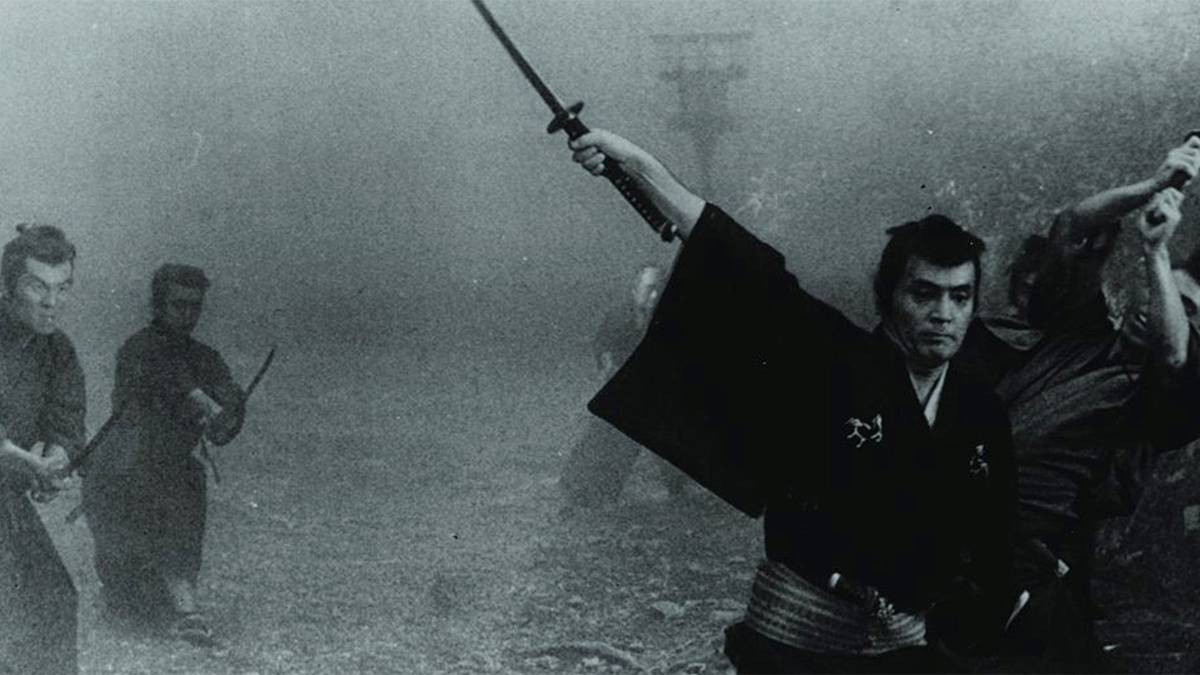
Image via Toho Published Oct 2, 2026, 9:41 PM EDT Diego Pineda has been a devout storyteller his whole life. He has self-published a fantasy novel and a book of short stories, and is actively working on publishing his second novel. A lifelong fan of watching movies and talking about them endlessly, he writes reviews and analyses on his Instagram page dedicated to cinema, and occasionally on his blog. His favorite filmmakers are Andrei Tarkovsky and Charlie Chaplin. He loves modern Mexican cinema and thinks it's tragically underappreciated. Other interests of Diego's include reading, gaming, roller coasters, writing reviews on his Letterboxd account (username: DPP_reviews), and going down rabbit holes of whatever topic he's interested in at any given point. Sign in to your Collider account Samurai cinema first became popular in Japan around the early 1910s as film adaptations of traditional Kabuki theater, a classical form of Japanese dance-dramas with heavily-stylized performances and glamorous costumes and makeup. Around the 1920s, though, the genre shifted its focus to samurai sword-fighting films (chanbara). By the 1950s, thanks to the tremendous success of Akira Kurosawa's cinema, the samurai movie genre had become popular and well-known worldwide. Today, it's seen as one of the most deliriously entertaining and highly influential film genres in history, having produced several of the greatest action movie masterpieces of all time. There are ten particular samurai movies, however, that easily stand out as the best of the bunch. In order to count as a proper samurai film, it's not enough for a movie to merely feature a samurai character; it must specifically be about samurai characters and check the boxes that make up the genre's traditional tropes. 10 'The Last Samurai' (2003) Image via Warner Bros. Pictures Though Japan has logically been the producer of the vast majority of film history's greatest samurai movies, there have also been a few solid ones produced in Hollywood, the heart of world filmmaking since the 1920s. The best of the bunch is almost unarguably Edward Zwick's The Last Samurai, a period drama inspired by the 1877 Satsuma Rebellion and starring Tom Cruise. History buffs have historically had a considerable level of distaste for Last Samurai, but people who think that even historically inaccurate movies can be masterpieces have loved it for the past 23 years. Exciting, visually gorgeous, deeply emotional, and bolstered by both Tom Cruise's powerful lead performance and Hans Zimmer's legendary score, it's proof that exceptional samurai films can be (and have been) made outside Japan. 9 'Kubo and the Two Strings' (2016) Image via Laika People who think that animated films don't deserve to be considered side-to-side with their live-action peers are wrong when it comes to any genre, and samurai cinema is no exception. What more proof could be needed than the stop-motion-animated masterpiece Kubo and the Two Strings, far and away one of the greatest animated movies of the 21st century? For one, LAIKA's animation is some of the most intricately complex and visually stunning that the stop-motion medium has ever seen. Add to that a deeply emotional story about grief, the power of memories, and the beauty of storytelling, and you get a deeply special samurai flick that could serve as a perfect introduction to the genre for the little ones of the family. 8 'Lone Wolf and Cub: Baby Cart at the River Styx' (1972) Image via Toho Kazuo Koike and Goseki Kojima's Lone Wolf and Cub manga series began serialization in 1970, and produced alongside the manga were six films starring Tomisaburo Wakayama as Ogami Ittō and Tomikawa Akihiro as Daigoro. The second of these movies was Baby Cart at the River Styx, which, on top of being almost universally recognized as the best of the series, is also generally praised as one of the greatest and most essential samurai movies of all time. While master directors like Kurosawa mastered gritty, traditional samurai storytelling, films like Baby Cart at the River Styx popularized the samurai exploitation film movement, subverting the usual tropes of chambara cinema in ways that have aged like fine wine in terms of both artistic and entertainment values. Pulpy, visceral, and exquisitely over-the-top, it's a must-see for people who find old-school samurai cinema unappealing. 7 'Sanjuro' (1962) Image via Toho Conversations on the greatest filmmakers in the history of both the samurai genre and Japan as a whole are always fighting over second place, because the top spot has always been almost universally agreed to be occupied by a single man: Akira Kurosawa. One of Kurosawa's many cornerstones of the samurai movie genre is Sanjuro, with a story based on Shūgorō Yamamoto's short story Peaceful Days. It's top-tier jidaigeki cinema, a genre of Japanese period dramas set in pre-modern Japan, usually during the Edo period. People who think that Kurosawa only ever made the same kinds of samurai flicks ought to watch Sanjuro, a gem that wittily and cleverly subverts the traditional tropes of the genre with a masterful performance by Toshiro Mifune and a delightfully dark sense of humor. 6 'The Sword of Doom' (1966) Image via Toho When it comes to old-school samurai cinema, it's not all Kurosawa. Case in point: Kihachi Okamoto, who took the eponymous serial novel by Kaizan Nakazato and made The Sword of Doom. If there were a hypothetical Mount Rushmore of samurai movies, there are those who would argue that Sword of Doom, a brilliantly subversive samurai classic, would need to be right up there. Led by a magnetically intense performance by Tatsuya Nakadai, one of the genre's biggest icons, Sword of Doom intelligently deconstructs the myth of the samurai hero by potently displaying the destructive power of violence. Stunning visuals, breathtaking action, and one of the greatest endings in the genre's history are but a few of the reasons why Sword of Doom is essential samurai cinema viewing. Collider Exclusive · Action Franchise Quiz What Action Series Would You Thrive In? Wick · Fast · Mission · Die Hard Four franchises. Four completely different ideas of what a hero is: the assassin with a code, the family that never leaves anyone behind, the man who does his own stunts, and the guy who simply refuses to die. Only one of them runs on your particular brand of trouble. Eight questions will tell you which one you would survive. 🐕Wick 🏁Fast 🧨Mission 🎄Die Hard FIND YOUR FRANCHISE → 01 How does a room know you've walked into it? Every action hero arrives differently. Some of them arrive before they arrive. ASomeone recognises me, and the temperature in the room drops without a single word being said. BLoudly and warmly. I arrive with my people, and we're already laughing about something. CI'm the one who told everybody where to stand. I walked this room twice before anyone else arrived. DBy accident. I wasn't supposed to be here, and now I'm the only one who can do anything about it. NEXT QUESTION → 02 It turns physical. What does your fighting actually look like? Choreography is character. Yours says something about you. AEconomical and devastating. Trained technique, no wasted motion, finished before most people notice it started. BLoud, heavy and weirdly joyful. I'm not elegant, I hit like a truck, and I always have backup. CTo plan, until the plan breaks. Then I improvise at full sprint and refuse to stop moving. DBadly, honestly, and with a lot of swearing. I take more damage than I deal and I still don't go down. NEXT QUESTION → 03 Who is standing beside you when it starts? Some franchises are built on a team. Others are built on one person walking in alone. ANobody. I have contacts, favours and people who owe me, but when it begins I work alone. BEveryone. My people are the entire point, and I'd trade the whole mission for any one of them. CA small hand-picked team I trust completely, and I'd still take the worst part of the job myself. DA voice on the other end of a radio and a building full of people who don't know I exist. NEXT QUESTION → 04 It has gone badly wrong. What keeps you upright? Act two exists to find out what you're actually made of. AFocus, commitment and sheer will. Grief is fuel if you point it in the right direction. BThe people counting on me. I don't appear to have a limit when it's family on the line. CRefusing to accept the odds. Somebody has to do the impossible part, and it's going to be me. DSpite, mostly. And a growing sense that these people picked the wrong building. NEXT QUESTION → 05 There's a vehicle. What are you driving, and how? No action franchise has ever survived without a car chase. This one is yours. AA black muscle car I am unreasonably attached to, and I will dismantle an entire empire over it. BSomething impossibly modified, at impossible speed, off an impossible ramp. Physics is a suggestion. CA motorbike at full throttle through a city I memorised last night. And then off a cliff. DA borrowed car, badly, while somebody in the passenger seat politely asks me to slow down. NEXT QUESTION → 06 How do you feel about the people giving the orders? There is always an institution. There is rarely a good one. AThere are rules and I respect them absolutely, right up until somebody breaks one against me. BI don't take orders. I take care of people, and everything else tends to sort itself out. CI serve the mission, not the memo. If my people are in danger, the orders come second. DThey're in a van outside telling me what I'm doing wrong while I'm the one bleeding on broken glass. NEXT QUESTION → 07 Underneath all of it, what are you actually doing this for? The stunts are the reason people come. This is the reason they stay. ASomething was taken from me that can't be replaced, and I've been settling that account ever since. BBelonging. I built a family out of people who had nowhere else, and I'll defend it with everything. CThe conviction that if I stop, people die. I don't know how to hand that to anyone else. DI just wanted to get through the holidays with my family. Everything after that was self-defence. NEXT QUESTION → 08 When the credits roll, what do people say about you? Every franchise is really an argument about what makes someone worth watching. AThat I was a myth people warned each other about in whispers, and that they were right to. BThat I never left anyone behind, the door was always open, and there was always a place at the table. CThat I did the impossible part myself, every single time, and never asked anyone to risk it for me. DThat I was just a guy in the wrong place at the wrong time, who turned out to be very hard to kill. REVEAL MY FRANCHISE → Casting Has Been Completed Your Franchise Is…Four action series. One of them is built around exactly the way you handle pressure, people, and a room that has just gone very quiet. Here is where you would survive the trilogy, and probably headline it. John WickYou are precision with a grudge. You don't posture, you don't escalate, and you don't warn anybody twice. That is exactly why the people who know you are so careful never to be the reason you start. The Wick films run on discipline: an underworld with actual etiquette, a hero who honours every rule of it, and a world that unravels the instant someone breaks one against him. You share that quality. You are extraordinarily reasonable right up to the line, and then completely immovable past it. Focus, commitment and sheer will. You'd be the one carrying grief through three sequels and turning it into technique rather than noise. People wouldn't call you dangerous. They'd say your name quietly and let that do the work. Fast & FuriousYou understand the thing the whole franchise is secretly about: the cars are spectacular, but the crew is the point. You collect people, you keep them, and you'd drive through a building for any one of them. This series went from street racing to orbit without ever changing its actual subject, because loyalty scales and plot doesn't have to. You have the same instinct. You build a family out of whoever turns up, and then you defend it past the point of reason. You'd thrive here because the franchise rewards exactly your strengths: warmth, nerve, an absolute refusal to leave anyone behind, and a relaxed relationship with physics. The mission can wait. The barbecue cannot. Mission: ImpossibleYou over-prepare and then take the dangerous part yourself anyway. It looks like control, but it's really responsibility. You have never worked out how to ask somebody else to carry the risk. This is the franchise of the plan that collapses on schedule: the team, the mask, the rooftop, and the one person sprinting flat out because sprinting is all that's left. You share that refusal to accept an outcome. Told the odds, you treat them as an administrative error. You'd thrive here because these films reward competence and loyalty in equal measure. The mission matters, but nobody on the team gets left on the wrong side of a door. Some people delegate the cliff. You have never once been that person. Die HardYou are not the most trained person in the building, the best equipped, or the one anybody would have picked. You are simply the one still standing at the end, which turns out to be the only qualification that matters. Die Hard invented the modern action hero by making him mortal: outgunned, out-planned, bleeding, and extremely funny about it. You share that stubbornness. Adversity doesn't make you noble, it makes you sarcastic, and then it makes you unstoppable. You'd thrive here because these films reward improvisation and nerve over preparation, and you've never had the luxury of preparing anyway. You didn't want any of this. You just declined to be the person who let it happen. ↻ RETAKE THE QUIZ Image via Toho It's a well-known fact that George Lucas drew heavy inspiration from samurai cinema and Akira Kurosawa in particular to make Star Wars, and the primary cinematic inspiration for the film was Kurosawa's The Hidden Fortress, one of the best movie classics of 1958. Blending a kinetic and delectably pulpy sense of adventure with a sharp sense of humor and a unique structure, it's no wonder why many recognize it as one of the most brilliant cinematic masterpieces of the '50s as a whole. [Places] two selfish, constantly-bickering farmers (who clearly inspired Star Wars' R2-D2 and C-3PO) in the protagonist spotlight. By placing two selfish, constantly-bickering farmers (who clearly inspired Star Wars' R2-D2 and C-3PO) in the protagonist spotlight, Kurosawa greatly succeeded at his goal of making The Hidden Fortress one of the most accessible, crowd-pleasing action-adventure outings that the samurai movie genre had ever seen. Stylish, fast-paced, and irresistibly fun, it's a perfect antidote to how heavy and dark the genre can sometimes get. 4 'Yojimbo' (1961) Image via Toho Sanjuro was a sequel to Yojimbo, one of the most successful masterpieces of Akira Kurosawa's career. It was the film that further enshrined Toshiro Mifune as the undeniable poster boy of the samurai film genre, and it still remains one of the most influential action movies of all time. Sergio Leone went as far as plagiarizing its story for the legendary Spaghetti Western A Fistful of Dollars, leading to a lawsuit by Toho and Kurosawa that the studio and filmmaker went on to win. But though Yojimbo has been constantly imitated, it has never been truly matched. It's a masterclass in heavily visual storytelling and one of the most foundational antihero movies of all time, a rōnin masterpiece that challenges the usual tropes of the genre in all sorts of fascinating ways. Darkly humorous and filled with some of the most legendary action set pieces of 20th-century Japanese cinema, it's a cinematic gem unlike any other that the genre ever produced. 3 'Kagemusha' (1980) Image via Toho The samurai movie genre started heavily going out of fashion around the late 1970s, closely mirroring the trajectory of its American counterpart, the Western. By the time he made Kagemusha, Kurosawa was keenly aware that the Golden Age of the samurai genre had passed. So, he made this intentionally subversive jidaigeki masterpiece, one that's less focused on sword fights than on a deeply philosophical study of identity, power, and the illusion of the samurai code. The result is one of the most nearly-perfect epic movies ever made, a unique samurai masterpiece whose specific de-emphasis on combat naturally makes it deeply thought-provoking. Executive-produced by George Lucas and Francis Ford Coppola, Kagemusha is also one of the most visually gorgeous movies the big screen has ever seen, the sort of painterly gem that must be seen to be believed. 2 'Harakiri' (1962) Image via Shochiku Harakiri is the highest-rated movie in history on Letterboxd and one of the highest-rated Japanese movies on IMDb, and for good reason. This truly is just about as close as cinema can ever come to perfection, far and away one of the most powerful revenge stories that the big screen has ever delivered. Directed by a powerhouse Masaki Kobayashi and starring Tatsuya Nakadai at the top of his game, it's essential viewing for pretty much anyone who loves cinema. It's a powerfully violent deconstruction of the myth of samurai heroism and the samurai code, brilliantly balancing some visually striking and undeniably thrilling action set pieces with a deeply meditative, uniquely structured narrative. With its wonderfully humanist story, its flawless pacing, and its jaw-dropping cinematography, it's no wonder why it has been so universally acclaimed for so long. 1 'Seven Samurai' (1954) Image via Toho Akira Kurosawa is an auteur with such a wildly stacked filmography that, when people hold conversations on what his magnum opus is, there is always an inevitable variety of answers being brought up. There is always one film, however, that's most often recognized not only as the crown jewel of his filmography, but even as the single greatest Asian movie in history: Seven Samurai, perhaps the peak of action filmmaking. Where can one even begin singing the praises of a movie that's as faultless as Seven Samurai? For one, the cast ensemble is one of the best in action movie history, including the role that made Toshiro Mifune an international star. Then, there's the action, which includes set pieces so epic and so stunning that not a single second of Seven Samurai's three-and-a-half-hour runtime is ever boring. But the real star of the show is the deeply moving, thematically nuanced, and universally appealing story, one of the most enthralling that cinema has ever told.
The 10 Best Samurai Movies in Film History
Full Article
Original Source
Read the full article at Collider →KhanList aggregates and links to publicly available news content. We do not host full articles from third-party sources. Always verify important information with original sources.