
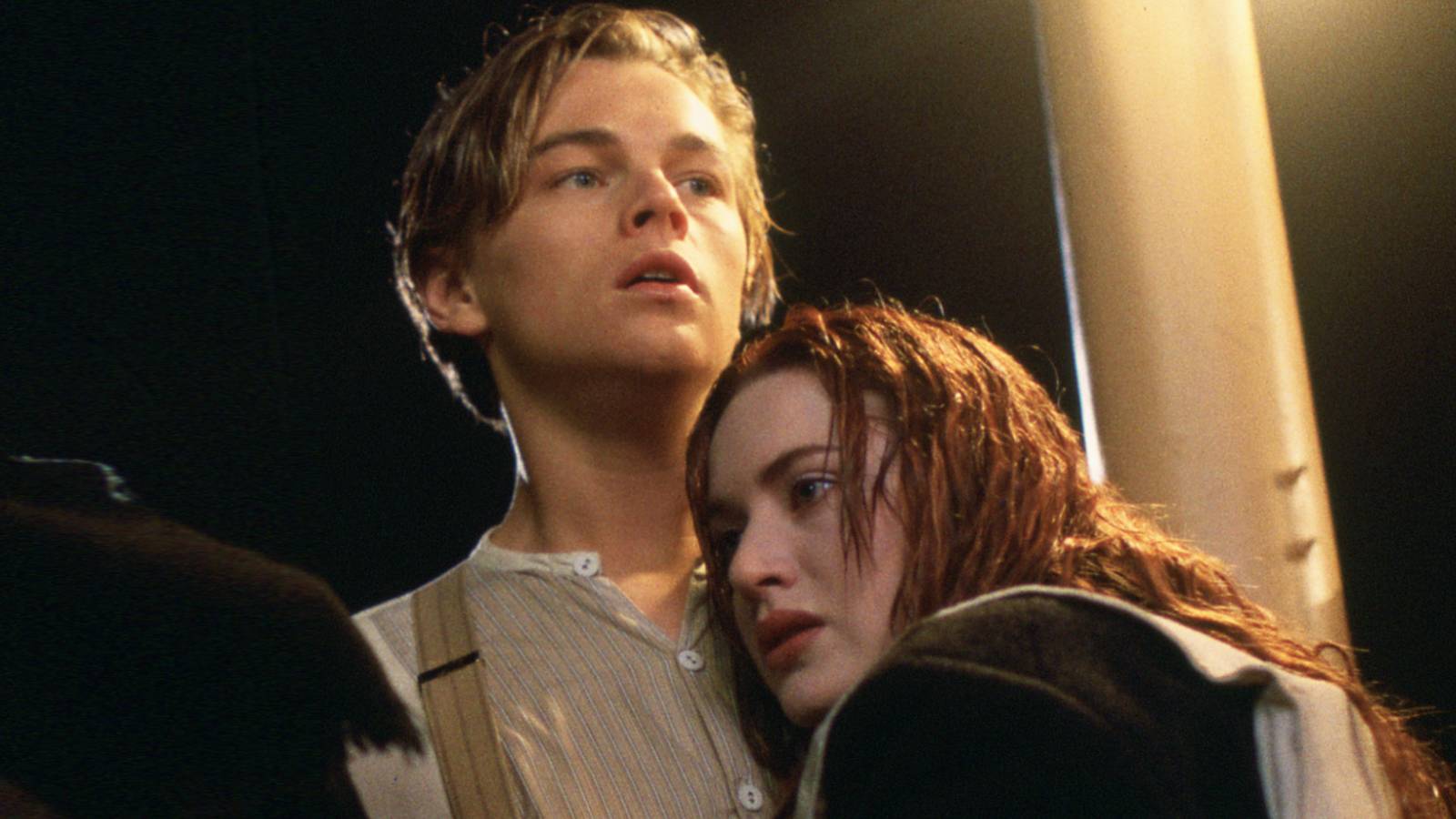
Image via Paramount Pictures Published Sep 8, 2026, 12:05 AM EDT Michael Block is a 14 time GLAM Award nominated writer, producer, and host of the podcast Block Talk. Throughout his time in the entertainment industry, he has worked on and off Broadway as a stage manager, written several produced plays, critiqued hundreds of theatrical performances, drag and cabaret shows, and has produced events randing from drag competitoons to variety concerts! On Block Talk, he interviews nightlife personalities, covers the wide world of entertainment through features, ranking episodes, and recaps ALL of Drag Race, as well as Dragula and Survivor. He has interviewed hundreds of RuGirls that span the globe at DragCon NYC, DragCon LA, and DragCon UK. In his free time, he makes one-of-a-kind jewelry and gift baskets with his mom. He is a proud member of the LGBTQ+ community. Sign in to your Collider account One of the most beloved genres of cinema is romance. Why? Because we often compare our desires for love and passion to the moments we see on screen. While life may not be a perfect Hollywood love story, we admire these stories because they represent something we strive for. Movie history has provided us with some of the very best romantic films ever. From heartbreaking tragedies to hilarious comedies, love knows no bounds. While there are certainly hundreds of great romantic films, these ten represent a perfect smattering of styles, genres, time periods, and narratives. These romantic movies have become timeless because they are simply sensational stories that remind us that love is real. 1 'Brokeback Mountain' (2005) Image via Focus Features Love is about doing whatever you must to be with the one who holds your heart. That’s the core of the tragically beautiful Brokeback Mountain. Adapted from a short story by Annie Proulx, the romantic Neo-Western depicts the complex, decades-long secret relationship between two cowboys, Ennis Del Mar (Heath Ledger) and Jack Twist (Jake Gyllenhaal), in the American West from 1963 to 1983. Isolated in the wilderness, Ennis and Jack develop a deep emotional bond that turns into a passionate romance. Set in a time when same-sex relationships were considered taboo, Brokeback Mountain explores isolated loneliness, repressed identity, and the high emotional cost of living a secret life constrained by societal expectations. The Oscar-nominated film offers a brilliant analysis of queer romance that resonated upon release, as it was released at a time when LGBTQ+ rights were still not widely mainstream. Brokeback Mountain depicted a brutal yet tender love forced to overcome the tragic weight of external stress and internal turmoil. The ideals of a hypermasculine cowboy are shattered as the men are portrayed with deep emotions as two people who deeply love one another. From subtle glances, long silences, and stolen moments to rich intimacy, Brokeback Mountain defied the norms of gay relationships, becoming a beacon of genuine queer love. That said, in the end, the crushing loss will stay with you forever. 2 'Casablanca' (1942) Image via Warner Bros. Pictures There’s no denying that Casablanca is one of the greatest films of all time. A major reason why is the core love story. Directed by Michael Curtiz, Casablanca follows Rick Blaine (Humphrey Bogart), a cynical, upscale nightclub and café owner in Morocco who must choose between his old love, Ilsa Lund (Ingrid Bergman), and helping her husband, Victor Laszlo (Paul Henreid), escape the Nazis. In the ultimate test of duty and heart, Casablanca becomes a tale of sacrifice, moral courage, and putting the greater good above personal heartbreak. With a profoundly perfect final scene, Casablanca is romance to the core. For those classic film aficionados, Casablanca remains top-tier cinema and a crucial viewing for its brilliant balance of a vivid love story and a profound war story. On the surface, Rick and Ilsa’s love is a micro moment against the macro event, and yet their decision can alter the world’s future should he decide to choose her. Instead, it’s inferred that love endures in the end. Even though they are permanently separated, true love means parting ways for the greater good. “We’ll always have Paris,” he says. Bogart and Bergman have magnetic chemistry that makes their final moments utterly bittersweet. Casablanca is the ultimate love-triangle tale in which bitter honesty leads to immense devastation. We can all learn something from Rick Blaine. 3 'Dirty Dancing' (1987) It’s safe to say that upon watching Dirty Dancing, you’ve had the time of your life. The epitome of ‘80s romance, Dirty Dancing is the timeless coming-of-age story of Frances "Baby" Houseman (Jennifer Grey) who falls in love with a working-class dance instructor named Johnny Castle (Patrick Swayze) while on a family vacation in the Catskills in 1963. While stepping in for Johnny’s dance partner, the pair fall in love despite coming from very different social classes. Approaching major social topics of the era beyond fairy-tale fluff, the film will forever be defined by the power of intimacy forged through dance. For a romance to resonate, there absolutely must be on-screen chemistry. That’s exactly what Grey and Swayze had. With a natural connection, there was innate authenticity that allowed you to champion Baby and Johnny. And Swayze’s professional dance background made him all the more alluring. From the lift in the lake to the final dance sequence, these moments not only defined the decade but also cemented the film in pop culture greatness. Dirty Dancing moved beyond a love story, as Baby’s sexual awakening and transformation were universally resonant. With a powerful, moving musical score that drives the emotional narrative, Dirty Dancing remains a legendary romantic movie. 4 'Ghost' (1990) Image Via Paramount Pictures Maybe Patrick Swayze was the romance whisperer because here he comes again. Directed by Jerry Zucker, the 1990 classic Ghost tells the story of a murdered banker named Sam Wheat (Swayze) who returns as a spirit to protect his girlfriend Molly Jensen (Demi Moore) from his friend and coworker, Carl Bruner (Tony Goldwyn), who hired a killer, Willie Lopez (Rick Aviles), to kill him. Realizing she’s in danger, Sam uses a storefront psychic named Oda Mae Brown (Whoopi Goldberg) to warn her. With magic from the great beyond, Sam and Molly celebrate enduring love without words. Moving beyond a supernatural thriller, Ghost remains the blueprint for profoundly projective moments on screen. Ghost set the bar for how love can be in love and death. The film reminds viewers to express their feelings immediately because time is short, creating a powerful universal resonance. It also marked how romantic the word “ditto” can be. Speaking from experience, “likewise” doesn’t hold the same emotional weight. Ghost will forever be remembered for the infamous clay-spinning scene set to the Righteous Brothers' "Unchained Melody.” The scene showcased intense physical intimacy with emotional vulnerability. The movie cleverly mixed supernatural fantasy, a murder mystery, and era comedic relief that set the tone for romantic films that followed. 5 'Gone with the Wind' (1939) Image via MGM Perhaps the greatest period drama ever is Gone with the Wind. The historical epic romance directed by Victor Fleming tells the story of strong-willed Southern belle Scarlett O'Hara (Vivien Leigh) at her Georgia plantation of Tara, where she embarks on a passionate relationship with the roguish profiteer Rhett Butler (Clark Gable). Depicting a specific moment in time during the American Civil War and Reconstruction era, the adaptation of the Margaret Mitchell drama explores unrequited longing, pride, and the tragic realization of true love only after it is lost. Gone with the Wind is the ultimate romantic epic, as a sweeping backdrop sets the tone for an unforgettable, bittersweet conclusion. Though certainly controversial by today’s standards, there’s no denying the classic nature of Gone with the Wind. Focusing on the central love story, Scarlett O'Hara and Rhett Butler are not traditionally perfect romantic leads but rather complex, flawed individuals. They are stubborn, selfish, and fiercely independent, leading to their mesmerizing, turbulent push-and-pull. Scarlett’s transformation from a pampered debutante to a hardened survivor highlights human endurance during total societal collapse. Rhett combines the classic charm of a cynical rogue with rare emotional honesty and depth. With legendary dialogue and a haunting conclusion, frankly, my dear, Gone with the Wind remains a brilliant cinematic moment. Collider Exclusive · Oscar Best Picture Quiz Which Oscar Best PictureIs Your Perfect Movie? Parasite · Everything Everywhere · Oppenheimer · Birdman · No Country Five Oscar Best Picture winners. Five completely different visions of what cinema can be — and what it can do to you. One of them is the film that was made for the way your mind works. Ten questions will figure out which one. 🪜Parasite 🌀Everything Everywhere ☢️Oppenheimer 🐦Birdman 🪙No Country for Old Men FIND YOUR FILM → 01 What kind of film experience do you actually want? The best movies don't just entertain — they leave something behind. ASomething that pulls the rug out — that makes me think I'm watching one kind of film and then reveals I'm watching another entirely. BSomething overwhelming — funny, sad, absurd, and genuinely moving, all at once. CSomething grand and weighty — a film that makes me feel the full scale of what I'm watching. DSomething formally daring — a film that pushes what cinema can even do. ESomething lean and relentless — pure tension with no wasted frame. NEXT QUESTION → 02 Which idea grabs you most in a film? Great films are driven by a central obsession. What's yours? AClass, inequality, and what people are willing to do when desperation meets opportunity. BIdentity, family, and the chaos of trying to hold your life together when everything is falling apart. CGenius, moral responsibility, and the catastrophic weight of a decision you can never take back. DEgo, legacy, and the terror of becoming irrelevant while you're still alive to watch it happen. EEvil, chance, and whether moral order actually exists or if we just tell ourselves it does. NEXT QUESTION → 03 How do you like your story told? Form is content. The way a story is shaped changes what it means. AGenre-twisting — I want it to start in one lane and migrate into something completely different. BMaximalist and genre-blending — comedy, action, drama, sci-fi, all in one ride. CEpic and non-linear — cutting between timelines, building a mosaic of cause and consequence. DA single unbroken flow — I want to feel like I'm living it in real time, no cuts to safety. ESpare and precise — every scene doing exactly what it needs to do and nothing more. NEXT QUESTION → 04 What makes a truly great antagonist? The opposition defines the protagonist. What kind of opposition fascinates you? AA system — invisible, structural, and almost impossible to fight because it has no single face. BThe self — the ways we sabotage, abandon, and fail the people we love most. CHistory — the unstoppable momentum of events that no single person can stop or redirect. DThe industry — the machinery of culture that chews up talent and spits out irrelevance. EPure, implacable evil — a force so certain of itself it becomes almost philosophical. NEXT QUESTION → 05 What do you want from a film's ending? The final note is the one that lingers. What do you want it to sound like? AShock and inevitability — a conclusion that recontextualises everything that came before it. BEarned emotion — I want to cry, laugh, and feel genuinely hopeful, even if the world is a mess. CDevastation and grandeur — an ending that makes me sit in silence for a few minutes after. DAmbiguity — something that leaves enough open that I'm still thinking about it days later. EBleakness — an honest refusal to pretend the world is tidier than it actually is. NEXT QUESTION → 06 Which setting pulls you in most? Where a film takes place shapes everything — mood, stakes, what's even possible. AA gleaming modern city with a hidden underside — beauty masking rot, wealth masking desperation. BA collapsing suburban life that opens onto something infinite — the multiverse of a single ordinary person. CThe corridors of power and science at a world-historical turning point — where decisions echo for decades. DThe grimy, alive chaos of New York and Hollywood — fame as both destination and trap. EVast, indifferent landscape — desert and highway where violence arrives without warning or reason. NEXT QUESTION → 07 What cinematic craft impresses you most? Every great film has a signature — a technical or artistic element that makes it unmistakable. AProduction design and mise-en-scène — every frame composed to carry meaning beneath the surface. BEditing and tonal control — the ability to move between registers without losing the audience. CScore and sound design — music that becomes inseparable from the dread and awe of what you're watching. DCinematography as performance — the camera not recording events but participating in them. ESilence and restraint — what's left unsaid and unshown doing more work than any dialogue could. NEXT QUESTION → 08 What kind of main character do you root for? The protagonist is the lens. Who you choose to follow says something about you. ASomeone smart and resourceful who makes increasingly dangerous decisions under pressure. BSomeone overwhelmed and ordinary who turns out to be capable of something extraordinary. CA brilliant, tortured figure whose gifts and flaws are inseparable from each other. DA self-destructive artist whose ego is both their superpower and their undoing. EA quiet, principled person trying to make sense of a world that has stopped making sense. NEXT QUESTION → 09 How do you feel about a film that takes its time? Pace is a choice. Some films sprint; others let tension accumulate slowly, deliberately. AI love a slow build when I know the payoff is going to be seismic — patience for a devastating reveal. BGive me relentless momentum — I want to feel breathless and emotionally spent by the end. CEpic runtime doesn't scare me — if the material demands three hours, give me three hours. DI want it to feel propulsive even when nothing is technically happening — restless energy throughout. EDeliberate and unhurried — I want dread to accumulate in the spaces between the action. NEXT QUESTION → 10 What do you want to feel walking out of the cinema? The best films leave a mark. What kind of mark do you want? AUnsettled — like I've just seen something I can't fully explain but can't stop thinking about. BMoved and energised — like the film reminded me what actually matters and gave me something to hold onto. CHumbled — like I've been in the presence of something genuinely important and overwhelming. DExhilarated — like I've just seen cinema doing something it's never quite done before. EHaunted — like a cold, quiet dread that stays with me for days. REVEAL MY FILM → The Academy Has Decided Your Perfect Film Is…Your answers have pointed to one Oscar Best Picture winner above all others. This is the film that was made for the way your mind works. ParasiteYou are drawn to films that operate on multiple levels simultaneously — that begin in one genre and quietly, brilliantly migrate into another. Bong Joon-ho's Parasite is a film about class, desire, and the architecture of inequality that manages to be darkly funny, deeply suspenseful, and genuinely shocking across a single extraordinary running time. Your instinct is for cinema that hides its true intentions until the moment it's ready to reveal them. Parasite is exactly that — a film that rewards close attention and punishes assumptions, right up to its devastating final image. Everything Everywhere All at OnceYou want it all — and this film gives you all of it. The Daniels' Everything Everywhere All at Once is one of the most maximalist films ever made: action comedy, multiverse sci-fi, family drama, existential crisis, and a genuinely earned emotional core that sneaks up on you amid the chaos. You are someone who responds to ambition, who doesn't want cinema to choose between being entertaining and being meaningful. This film refuses that choice entirely. It is overwhelming by design, and its overwhelming nature is precisely the point — because the feeling of being crushed by infinite possibility is exactly what it's about. OppenheimerYou are drawn to cinema on a grand scale — films that understand history not as a backdrop but as a force, and that place their characters inside that force and watch what happens. Christopher Nolan's Oppenheimer is a film about the terrifying gap between what we can do and what we should do, told with the full weight of one of the most consequential moments in human history behind it. You want your films to feel important without feeling self-important — to earn their ambition through sheer craft and the gravity of their subject. Oppenheimer does exactly that. It is enormous, complicated, and refuses easy comfort. BirdmanYou are drawn to films that foreground their own construction — that make the how of the filmmaking part of the what it's about. Alejandro González Iñárritu's Birdman, shot to appear as a single continuous take, is cinema examining itself through the cracked mirror of a fading actor's ego. You respond to formal daring, to the feeling that a film is doing something that probably shouldn't be possible. Michael Keaton's performance and Emmanuel Lubezki's restless camera create something genuinely unlike anything else — a film that is simultaneously about creativity, relevance, self-destruction, and the impossibility of ever truly knowing if your work means anything at all. No Country for Old MenYou are drawn to cinema that trusts silence, that refuses to explain itself, and that treats dread as a form of meaning. The Coen Brothers' No Country for Old Men is a film about the arrival of a new kind of evil — implacable, arbitrary, and utterly indifferent to the moral frameworks we use to make sense of the world. It is one of the most formally controlled films ever made, and its controlled restraint is what makes it so terrifying. You want your films to haunt you, not comfort you. You are not interested in resolution if resolution would be dishonest. No Country for Old Men is honest in a way that most cinema never dares to be. ↻ RETAKE THE QUIZ 6 'Moulin Rouge' (2001) Image via 20th Century Studios Many musicals include a timeless romance at the center of the story, but very rarely are they as iconic as that of Christian (Ewan McGregor) and Satine (Nicole Kidman) in Moulin Rouge! In Baz Luhrmann’s vibrant jukebox musical film, the story follows a young and idealistic poet who joins a lively group of bohemian artists as he falls in love with the sparkling diamond-star courtesan of the famous Moulin Rouge cabaret club. In a case of mistaken identity, Satine mistakes Christian for a wealthy investor, but he wins her heart with a barrage of love songs. A ticking-clock romance where Satine’s fate is revealed in the beginning, the fabulous affair becomes a high-stakes race to savor every moment. Featuring a sweeping soundtrack of classic songs, Moulin Rouge brings the highs and lows of love through a tragedy that reminds us that all you need is love. A film that is utterly spectacular, spectacular, Moulin Rouge helped revive the movie musical in the 21st century. The film treats love as an all-consuming emotion, making it an instantly accessible film. It anchors the film through the pillars of truth, beauty, freedom, and love, where the greatest gift is knowing the feeling is to love and receive love in return. While Moulin Rouge may have been a fine romance without its brilliant score, the use of a genre-blending musical identity lifts it up to where it belongs. From Elton John to Madonna with Nirvana in between, it has universal relevance. "The Elephant Love Medley" remains one of the great musical cinematic moments. Though Moulin Rouge is a tragic, doomed story, the journey to get there is, in the end, breathlessly beautiful. 7 'Roman Holiday' (1953) Image via Paramount Pictures One of the most beloved classic romantic comedies of all time is Roman Holiday. The William Wyler-directed film, based on a story by Dalton Trumbo, tells the story of bored European Princess Ann (Audrey Hepburn) who escapes her rigid royal duties to explore Rome on her own. She’s then discovered by American newsman Joe Bradley (Gregory Peck), who hopes to use her identity for a scoop. Falling in love in the process, they come to the revelation that their worlds are too far apart. With a fairy-tale charm and a bittersweet look at love, duty, and sacrifice, Roman Holiday is romantic escapism at its finest. A realistic depiction of love through a heightened, fantastical entry, Roman Holiday celebrates love through its memorable moments. Wyler shot the entire film on location in Rome, giving the film a tangible, dreamy, authentic atmosphere. Between riding on a Vespa scooter and visiting the Mouth of Truth, the setting was as important as the iconic performances. Hepburn earned an Oscar for her first major Hollywood role, captivating audiences with her innocence and elegance. Peck’s calm sincerity provided the right balance for an effortless spark. While it may not be a happily ever after, Roman Holiday established the blueprint for vacation romances, giving audiences hope that they may find their royal romance during the international escapades. 8 'The Princess Bride' (1987) Image via 20th Century Studios We all wish to have a happily ever after, and our expectation for such may be due to the greatest romantasy film of all time, The Princess Bride. Told through the framing device of a grandfather (Peter Falk) telling a story to his grandson (Fred Savage), The Princess Bride follows a farmhand named Westley (Carey Elwes) who tries to rescue his true love, Princess Buttercup (Robin Wright), from evil Prince Humperdinck (Chris Sarandon). A triumphant story of true love, the Rob Reiner-directed film effortlessly blends fairy-tale romance, revenge, friendship, and humor into a sensationally delightful tale that continues to be passed down through generations. Though The Princess Bride pokes fun at the genre and traditional fairy-tale tropes, it remains a classic example of true love. Being self-aware allows the audience to go on the journey through honest accessibility. The Princess Bride may be set in a far-off land, but at its core, it reminds viewers that love is worth fighting for. What makes the film universal is that it pairs typical romantic elements with high-stakes swashbuckling adventure for fully pumped action. Hearing Westley utter “As you wish” remains one of the most romantic lines of devotion in cinema. Called off with an iconic kiss, The Princess Bride is a bona fide classic. 9 'Titanic' (1997) Image via Paramount Pictures Yes, Titanic depicts the worst disaster in history, but that film is one damn good romance! Brought to life by James Cameron, the epic romance film depicts the tragic 1912 maiden voyage of the RMS Titanic, where wealthy Rose DeWitt Bukater (Kate Winslet) embarks on a forbidden romance with lower-class Jack Dawson (Leonardo DiCaprio). From an intimate sketch to a moment at the bow of the ship, their love only grows until a tragic end. Whether there was room on the door or not, their love is unified in the complete adoration cinephiles have for the film. Titanic is proof that love knows no societal boundaries. An intense film in all respects of the word, Titanic redefined romance forever. A truly beautifully crafted masterpiece, Titanic rewrote history by humanizing the tragedy in a profound manner. With the emotional stakes astronomically high, the sinking of the ship feels like a knife in the heart. By centering on Jack and Rose, it allowed the audience to genuinely emote by the tragedy that eventually hits. DiCaprio and Winslet brought an electric magnetism built on playful humor and deep affection. Of course, having one of the greatest romantic movie songs attached to the film elevates the romance even further. Titanic is an anomaly. There will simply never be another disaster film that can replicate this type of narrative without coming off as derivative. 10 'When Harry Met Sally' (1989) Image via Columbia Pictures The romcom is how we imagine our romantic lives playing out. If there was ever one that might be the most authentic, it’s When Harry Met Sally. Directed by Rob Reiner and written by Nora Ephron, the story centers on whether men and women can ever truly be just platonic friends. Charting the evolving relationship between Harry Burns (Billy Crystal) and Sally Albright (Meg Ryan), the film showcases how friendship truly can lead to everlasting love. When Harry Met Sally is a grounded, funny, and honest look at why the greatest relationships are the ones that stand the test of time. When Harry Met Sally is a film that takes its time. Rather than diving in head-first, Ephron’s text allows the duo to simmer. This means a deep, platonic bond can grows before romance ever enters the picture. Sally feels like a real person. Harry is cynical, neurotic, and sharp-tongued, while Sally is particular, vibrant, and resistant to chaos. Both characters experience true personal growth, learning from failed relationships, aging, and shifts in perspective. Crystal and Ryan have an enigmatic chemistry that became the goalpost for every ‘90s on-screen romcom duo. The Katz Deli scene may be the very best in a romantic comedy for its unexpected nature and the brilliance of its performance. Balancing genuine pain and warmth, When Harry Met Sally is the gold standard romcom.
The 10 Best Romantic Movies in Film History
Full Article
Original Source
Read the full article at Collider →KhanList aggregates and links to publicly available news content. We do not host full articles from third-party sources. Always verify important information with original sources.