
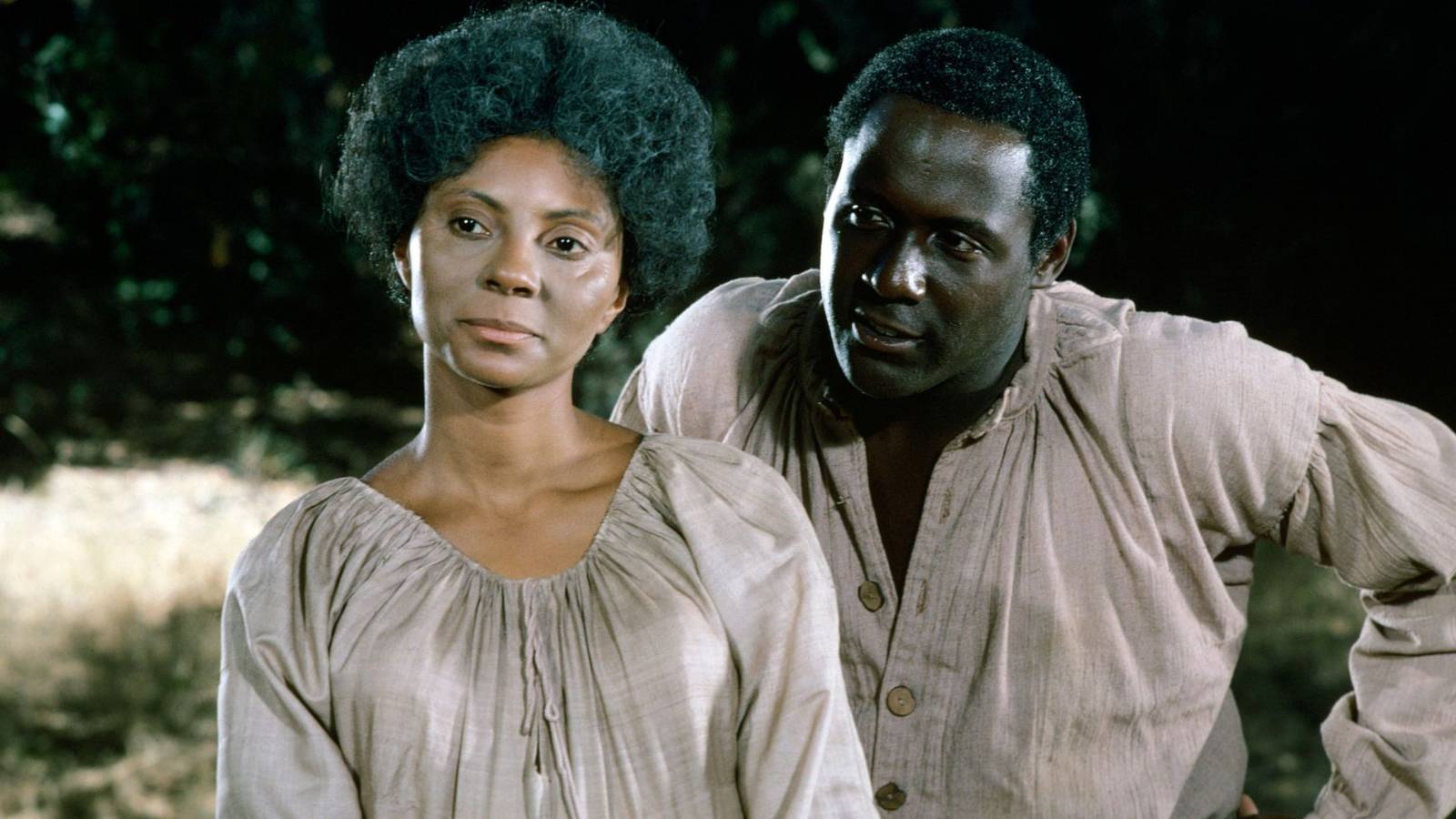
Image via ABC Published Oct 25, 2026, 5:46 PM EDT Michael Block is a 14 time GLAM Award nominated writer, producer, and host of the podcast Block Talk. Throughout his time in the entertainment industry, he has worked on and off Broadway as a stage manager, written several produced plays, critiqued hundreds of theatrical performances, drag and cabaret shows, and has produced events randing from drag competitoons to variety concerts! On Block Talk, he interviews nightlife personalities, covers the wide world of entertainment through features, ranking episodes, and recaps ALL of Drag Race, as well as Dragula and Survivor. He has interviewed hundreds of RuGirls that span the globe at DragCon NYC, DragCon LA, and DragCon UK. In his free time, he makes one-of-a-kind jewelry and gift baskets with his mom. He is a proud member of the LGBTQ+ community. Sign in to your Collider account Long before the age of streaming, and even before the rise of premium cable, it was all about network television. While much focus went to long-running series, the short-form miniseries rose to prominence as must-see events. They transformed television into a massive, shared national event at a time when only three major broadcast networks existed. They gave sprawling literary blockbusters and historical epics the time and budget they needed, rather than single made-for-TV films. Networks used them as high-stakes programming to win "sweeps" ratings periods, boost network prestige, and tackle heavy or controversial social issues. We are here to celebrate ten of the very best of all time. From epic historical dramas to a profound religious retelling, these ten miniseries changed the game and inspired new ways to tell stories on the small screen. These miniseries are simply the best network TV has ever known. 10 'The Winds of War' (1983) ABC Image via ABC While Band of Brothers reinvigorated the war drama in the 21st century, the genre first made major waves in 1983 with the ABC miniseries The Winds of War. An adaptation of Herman Wouk’s 1971 novel, the World War II drama spans the critical years leading up to the war, starting in the spring of 1939 and concluding with the Japanese attack on Pearl Harbor in December 1941. At the center of the story is U.S. Navy Commander Victor "Pug" Henry (Robert Mitchum), a naval attaché assigned to the American embassy in Hitler's Berlin. As Pug observes the rise of Nazi Germany, his wife Rhoda (Polly Bergen) and their children, Warren (Ben Murphy), Madeline (Lisa Eilbacher), and Byron (Jan-Michael Vincent), navigate their own separate romantic, military, and personal crises across the globe. Incorporating historical documentary footage narrated by William Woodson to contextualize real-world geopolitical and military turning points, The Winds of War set the tone for where war miniseries could go. The seven-part series was a monumental television achievement thanks to its meticulous historical ambition. Produced and directed by Dan Curtis with a budget exceeding $40 million, the 14.5- to 18-hour miniseries spanned 267 locations across six countries and two continents. The series wove in real historical events and encounters with figures like Franklin D. Roosevelt (Ralph Bellamy), Winston Churchill (Howard Long), Adolf Hitler (Günter Meisner), Joseph Stalin (Anatoly Chaguinian), and Benito Mussolini (Enzo G. Castellari), mixing the micro and macro stakes of the war. Earning three Primetime Emmy Awards and multiple Golden Globe nominations, The Winds of War became the gold standard. 9 'V' (1983) NBC Image via NBC It might sound surprising that during the heyday of miniseries, networks took a swing with science fiction stories. Such was the case for NBC’s V. The thriller follows an alien invasion disguised as a peaceful mission, offering advanced technology and medical breakthroughs in exchange for Earth's chemicals. A human cameraman, Mike Donovan (Marc Singer), and a medical student, Juliet Parrish (Faye Grant), discover the Visitors' true identities: carnivorous, reptilian humanoids who plan to steal Earth's water and harvest humanity as a food supply. Used as an allegory for Nazism and the rise of fascism, V showcases how ordinary citizens choose between collaboration, apathy, or underground resistance. V was groundbreaking for its high-concept science fiction spectacle paired with a deeply grounded, real-world political allegory. Creator Kenneth Johnson originally conceived the story as an adaptation of Sinclair Lewis’ anti-fascist novel It Can't Happen Here before being requested to give it an alien spin. The alien "Visitors" and their red-and-black regalia, youth clubs, and propaganda directly reflected the totalitarian occupation of Nazi Germany. In a time when cliffhangers and twists were becoming common practice, revelations like human-looking alien leaders, such as Diana (Jane Badler), as reptilian creatures who view humans as a food source, created one of the most shocking and memorable moments of the decade. The 200-minute, two-part event drew roughly 40% of the U.S. television audience, became a ratings powerhouse for NBC, and set a high-water mark for event television. The series’ epic success launched a sequel miniseries, V: The Final Battle, and a weekly series in 1984. 8 'Rich Man, Poor Man' (1976) ABC Image via ABC Bringing Irwin Shaw’s 1969 novel of the same name, Rich Man, Poor Man follows the lives of two German-American brothers, Rudy (Peter Strauss), an ambitious, college-bound brother who climbs his way up through business and politics to become wealthy and successful, and Tom Jordache (Nick Nolte), the rebellious, troubled brother who works as a prizefighter, from the end of World War II through the late 1960s. Their lives are shaped by their embittered immigrant parents, Axel and Mary Jordache (Ed Asner and Dorothy McGuire), Julie Prescott (Susan Blakely), Rudy's high-school sweetheart who gets caught between the two brothers, and Anthony Falconetti (William Smith), Tom's principal nemesis. Rich Man, Poor Man examines how two sons from the same impoverished background can end up on opposite sides of the socioeconomic ladder. Over 12 parts, Rich Man, Poor Man became appointment television. The series explored a unique family drama that engaged viewers so much they became fully invested in Tom and Rudy's trials and tribulations. Their compelling contrast drove the narrative, capturing deep social themes, postwar class struggles, and bitter family rivalries that resonated widely with baby boomer audiences. It also helped launch Nolte into Hollywood stardom. Airing twice a week during sweeps, momentum turned the multi-decade family feud into cultural watercooler conversation. As one of the earliest and most successful American television miniseries, it set the template for serialized dramatic event television and spawned a sequel, Rich Man, Poor Man Book II. 7 'Shögun' (1980) NBC Image via NBC Not to be confused with the 2024 remake, Shōgun lifted James Clavell’s novel into an ambitious five-episode event. The series follows John Blackthorne (Richard Chamberlain), an English navigator whose ship wrecks off the coast of feudal Japan in the year 1600. He is thrust into a high-stakes power struggle between Lord Yoshi Toranaga (Toshirō Mifune), who aims to become the shōgun, and his chief rival, Lord Ishido (Nobuo Kaneko). Loosely inspired by the real-life historical navigator William Adams, Shōgun delivered unprecedented cinematic scale through on-location filming in Japan, using real castles and temples. The series famously used the stylistic choice that the Japanese dialogue has no English subtitles, forcing viewers to experience the story closely from Blackthorne's disoriented, outsider perspective, furthering the fully immersive experience. The miniseries ignited a widespread American fascination with Japanese history and cuisine. Airing over multiple nights, the ABC miniseries captured an estimated 32% to over 50% of American households, making it, at the time, the second-most-watched miniseries of all time. Earning multiple Emmy and Golden Globe Awards, Shōgun defied expectations for how certain narratives could be told on network television. Shōgun paved the way to prove nothing is off limits. 6 'Jesus of Nazareth' (1977) NBC Image via ITV There had truly never been an epic at such monumental scale until NBC’s four-part television event, Jesus of Nazareth. Directed by Franco Zeffirelli and co-written by Anthony Burgess and Suso Cecchi d'Amico, the drama dramatizes the life, ministry, crucifixion, and resurrection of Jesus Christ (Robert Powell). The six-hour series harmonizes accounts from the four New Testament Gospels, spanning from before the Nativity, beginning with Mary’s (Olivia Hussey) betrothal and the Annunciation by the angel Gabriel,through the profound end. Jesus of Nazareth explores the historical, political, religious, and economic tensions of first-century Judea under Roman rule. Jesus of Nazareth was revered for Zeffirelli’s naturalistic approach to the life of Christ. Filmed across Morocco and Tunisia, the series’ enormous budget gave it a cinematic look rarely seen on television at the time. Powell played Jesus with a serene, intense, and otherworldly presence, famous for his minimal blinking and piercing gaze. Additionally, Jesus of Nazareth boasted a stellar ensemble that included Laurence Olivier, Anne Bancroft, Christopher Plummer, James Earl Jones, and Anthony Quinn. When it premiered on NBC in the United States and ITV in the UK, it drew an estimated 90 million American viewers and received a public endorsement from Pope Paul VI. It helped to revolutionize the miniseries format. 5 'The Thorn Birds' (1983) ABC Image via Warner Home Video Audiences crave a juicy romance, and that’s exactly what The Thorn Birds was. Based on Colleen McCullough's novel, the four-part ABC miniseries follows the Irish-migrant Cleary family over six decades, from the 1920s to the 1960s, primarily set on a massive sheep station named Drogheda in the Australian outback. The central storyline revolves around the lifelong, agonizing attraction between Meggie Cleary (Rachel Ward) and Father Ralph de Bricassart (Richard Chamberlain), an ambitious Roman Catholic priest. Pressured by Meggie's wealthy, manipulative aunt Mary Carson (Barbara Stanwyck), who covets Ralph for herself, Ralph chooses his career and desire to rise within the church hierarchy over Meggie. Spanning multiple generations, The Thorn Birds tracks the consequences of unresolved devotion and deep family tragedies. If there’s one thing that captivated audiences about The Thorn Birds, it was its heavy mix of forbidden love, sacrifice, church ambition, and family tragedy. The sweeping romantic melodrama appealed to audiences who flocked to their TVs to watch the star-studded ensemble tackle McCullough’s extraordinary story. Arriving during the golden age of grand, multi-night television events, The Thorn Birds drew the nation in as it tuned in to the 10-hour saga, reaching an estimated 110 to 110+ million viewers. The series won six Emmy Awards, with Stanwyck, Richard Kiley, and Jean Simmons winning individual acting awards. 4 'The Stand' (1994) ABC Image via ABC If any man's body of work was ripe for the miniseries, it was Stephen King. Perhaps his very best was the ABC adaptation of The Stand. The landmark post-apocalyptic horror miniseries chronicles the accidental leak of a weaponized super-flu strain called "Captain Trips,” which wipes out 99.4% of the global human population. The small percentage of immune survivors begin to experience shared dreams and premonitions as they are drawn toward two opposing spiritual figures: Mother Abigail Freemantle (Ruby Dee), a benevolent, 108-year-old prophetess who gathers the good survivors to build a peaceful community in Boulder, Colorado, and Randall Flagg (Jamey Sheridan), a dark, demonic figure known who establishes a ruthless, authoritarian society in Las Vegas, Nevada. Establishing a clash between good and evil, the four-part thriller was a faithful adaptation that was given the King stamp of approval as he wrote the screenplay. With an ambitious approach, The Stand masterfully captures the core structure and dialogue of King’s 1,152-page epic through a seamless vision. Though it looked like a product of its time to the modern eye, even the limitations of network television didn’t keep the project from capturing the horrors of a dying world on a massive post-apocalyptic scale. With a star-studded cast led by Gary Sinise and a flurry of high-profile cameos, including Kareem Abdul-Jabbar, Kathy Bates, Ed Harris, and Sam Raimi, The Stand gave everyone a reason to tune in. Watched by nearly 19 million homes, the acclaimed miniseries continued the push to bring daring horror premises to the small screen. 3 'North and South' (1985) ABC Image via ABC In ABC's landmark adaptation of John Jakes' bestselling novel North and South, the six-episode miniseries follows Orry Main (Patrick Swayze), heir to a South Carolina slave-owning plantation, and George Hazard (James Read), son of a Pennsylvania ironworks industrialist. As close friends at the U.S. Military Academy at West Point, North and South spans from 1842 to the outbreak of the Civil War in 1861, capturing the rising political and social tensions of antebellum America. Chronicling the nation's drift toward the Civil War, the series depicts the diverse viewpoints of the two men, their families, and their rivals. North and South was presented with a massive production scale, extraordinary A-list cast, and sweeping romantic melodrama. To bring strict authenticity, the production utilized thousands of custom-made period costumes and extensive historical sets to capture the era. The story's appeal was the character-driven bond between two men as it's tested and pulled apart by the approaching war. North and South brought the historical stakes while balancing the soapy, emotional storytelling, drawing roughly 100 million viewers. Becoming a pop culture phenomenon, North and South spawned two more miniseries based on Jake's subsequent books. 2 'Lonesome Dove' (1989) CBS Image via CBS The way the West was won in the world of miniseries was the iconic Lonesome Dove. Directed by Simon Wincer, Lonesome Dove adapts Larry McMurtry's novel. The sprawling Western epic follows two retired Texas Rangers, Gus McCrae (Robert Duvall) and Woodrow F. Call (Tommy Lee Jones), as they depart their dusty border town of Lonesome Dove, Texas, to drive a cattle herd to the Montana Territory. Joined by a diverse group of travelers, including former outlaw Jake Spoon (Robert Urich), aspiring young cowboy Newt Dobbs (Ricky Schorder), and loyal scout Joshua Deets (Danny Glover), the series captures the deadly 3,000-mile cattle drive across the untamed American frontier. Spanning four parts and six and a half hours, the series explores core themes of aging, unrequited love, deep friendship, regret, and the unglamorous realities of life and death in the Old West. Lonesome Dove combined a faithful adaptation with a powerhouse ensemble, cinematic scope, and an unflinching realism to reshape the Western on the small screen. With deep reverence for the source material, writer Bill Wittliff's script captured the sprawling narrative, earthy dialogue, and philosophical weight found in McMurtry's text. Lonesome Dove rejects the romanticized version of the frontier, instead portraying a harsh, morally grey, and devastatingly unpredictable West where loss, danger, and the struggle for survival are constant. Drawing in 26 million households and earning 7 Emmy Awards, Lonesome Dove single-handedly revitalized both the Western and prestige miniseries on network television. 1 'Roots' (1977) ABC Image via ABC Hands down, Roots is the most influential and important miniseries in television history. Based on Alex Haley's novel, the eight-part miniseries follows Kunta Kinte (LeVar Burton) from his capture by slave traders and transport to colonial Virginia through his resistance as an enslaved man named Toby. The story then expands to follow the generational lineage of his daughter, Kizzy Reynolds (Leslie Uggams), and her son, Chicken George Moore (Ben Vereen). The epic saga tracks the family through major milestones in American history, namely the Revolutionary War, slave uprisings, the Civil War, and Emancipation. Over eight consecutive nights, Roots made U.S. television history, reaching over 100 million viewers by its finale. Roots was a landmark television series, becoming culturally relevant and poignant. Prior to Roots, Black stories on network television were largely confined to sitcoms like Good Times and The Jeffersons. Roots reinvigorated Black narratives by presenting truthful, sweeping dramatic storytelling to the forefront of American homes. The series' impact went beyond the show, driving a massive wave of intrigue about African American genealogy as the country was forced to confront 200 years of history head-on. Winning nine Emmy Awards, a Golden Globe, and a Peabody Award, Roots remains a significant part of television history. Roots Release Date 1977 - 1977-00-00 Network ABC Showrunner David L. Wolper
The 10 Best Network TV Miniseries of All Time, Ranked
Full Article
Original Source
Read the full article at Collider →KhanList aggregates and links to publicly available news content. We do not host full articles from third-party sources. Always verify important information with original sources.