
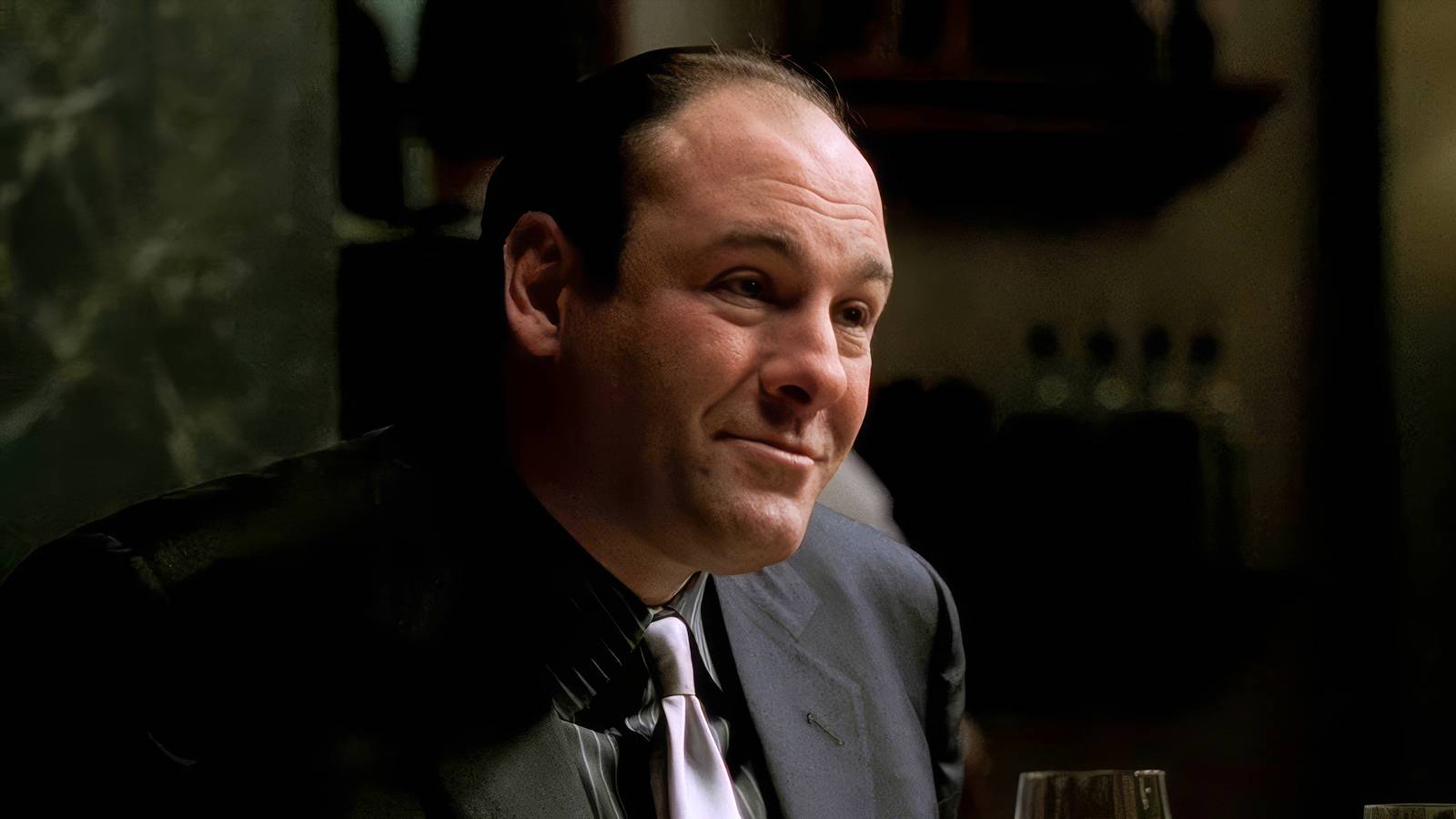
Image via HBO Published Nov 22, 2026, 8:03 PM EST Sign in to your Collider account The Sopranos spent six seasons dismantling the gangster fantasy from the inside, which is why it is considered one of the greatest television dramas ever made. Tony Soprano’s (James Gandolfini) anxiety over his family expectations and the pressures of leading a criminal organization made criminal life feel a lot less glamorous than it had on screen before. That contradiction became the heart of HBO’s decade-defining show, where viewers found themselves understanding and even rooting for the bad guys at times. For anyone looking to revisit that same mix of family drama and morally messy characters, here are great novels fans of The Sopranos will love. 10 'Billy Bathgate' (1989) Goodreads Rating: 3.82 Image via Random House Billy Bathgate captures gangster life at its most horrific. E. L. Doctorow tells the story through Billy, a Bronx teenager who becomes fascinated by notorious mobster Dutch Schultz and manages to work his way into his inner circle. At first, Billy runs errands, watches how Schultz conducts business, and slowly gains access to rooms he never imagined entering. The closer he gets, though, the more obvious it becomes that this world runs on fear as much as money. This perspective becomes the strongest hook of the story. Billy sees Schultz as a larger-than-life figure before he begins noticing the paranoia, sudden bursts of violence, and constant suspicion surrounding him. The gangsters can be charming and funny one moment, then brutally practical the next. Billy is learning how organized crime works at the same time the reader is, which makes every new privilege feel exciting and dangerous in equal measure. The book is actually a great companion to The Sopranos in how both stories explore the gap between the mythology of being a gangster and the reality of actually living that life. 9 'Prizzi's Honor' (1982) Goodreads Rating: 3.85 Image via Coward, McCann & Geoghegan Prizzi’s Honor brings love and crime together in the most fascinating way. Richard Condon’s novel follows hitman Charley Partanna, who works for the powerful Prizzi crime family, and becomes obsessed with Irene Walker after spotting her at a family wedding. At first, she seems completely removed from Charley’s world. Then he discovers that Irene is a professional killer herself, with ties to the Mob. Not just that, but she has even cheated the Prizzis out of a huge amount of money. Suddenly, Charley is stuck between the woman he wants to marry and the family he has spent his entire life serving. This setup gives the novel its darkly humorous personality. Charley can discuss murder like routine office work, yet he has no idea what to do once romance and loyalty start interfering with one another. The Prizzis constantly talk about loyalty and honor, but those values only seem to matter when they serve the family’s interests. That contradiction gives the novel the same appeal as The Sopranos, where mob life is dangerous and ridiculous at the same time. 8 'The Family Hightower' (2014) Goodreads Rating: 3.85 Image via Seven Stories Press Brian Francis Slattery’s The Family Hightower follows two cousins, both named Peter Hightower after their grandfather. One, usually called Peter, grows up far away from the family’s criminal world and eventually becomes a journalist in Granada. The other, Petey, takes a very different path and becomes involved with criminals in Cleveland and later Ukraine. When Petey gets into serious trouble and disappears, his associates accidentally go after the wrong Peter, and so the wrong cousin is dragged into a world he barely understands. That is just the beginning, though. As Peter tries to understand why people want him dead, he begins uncovering his relatives’ long history with organized crime and the fortune built around it. The novel jumps across generations and countries to gradually reveal how the original Peter Hightower’s choices continue shaping people decades later. Money is everywhere in the story, but Slattery is much more interested in what happens once a family has so much of it that greed, loyalty, and criminality start feeling like the same thing. The 2014 novel treats crime as something passed down like a family tradition, and that personal take is what makes the story so memorable. 7 'City on Fire' (2026) Goodreads Rating: 3.98 Image via Pegasus Crime/ Simon & Schuster City on Fire is not a traditional gangster novel, but it plays with the familiar beats of the genre. Simon Elegant sets the story in Hong Kong during the 2019 protest movement and follows disgraced Superintendent Killian Tong, who is pulled back into action when a dismembered body is discovered in a landfill. He initially sees this as a chance to rebuild his career, but things take a dark turn when the investigation starts pointing toward powerful people who would do anything to make the case disappear. At the same time, Killian’s younger sister Jun is deeply involved in the anti-government protests and wants almost nothing to do with him. That puts Killian in an impossible position where he is trying to do his job inside an institution he increasingly distrusts while someone he loves is actively fighting against it. The story uses this premise to explore themes of corruption, guilt, family, and the questionable things people do to survive inside powerful systems. City on Fire is a very different world from Tony Soprano’s New Jersey, but the moral tension feels surprisingly familiar. 6 'The Friends of Eddie Coyle' (1970) Goodreads Rating: 4.03 Image via Picador The Friends of Eddie Coyle feels like it belongs in the same world as Tony Soprano. George V. Higgins follows Eddie Coyle, an aging, low-level Boston gunrunner who is facing prison after a hijacking conviction. Eddie knows another sentence could finish him, so he starts feeding information to ATF agent Dave Foley in the hope of getting some leniency. The problem is that he is still supplying guns to criminals at the same time, which leaves him trapped between people who are happy to use him and people who will kill him if they think he has talked. Much like The Sopranos, the novel makes its criminal world feel rather ordinary. Higgins tells the story through conversations, favors, and unexpected betrayals rather than flashy violence. Even the dialogue doesn’t feel inherently gangster because the characters in the story treat crime like any other job. That realism is probably thanks to the author’s work as a prosecutor in Boston, which gives his work a familiarity with that setting like no other. Collider Exclusive · Villain Personality Quiz Which Criminal Mastermind Would Be Your Nemesis? Lecter · Joker · Moriarty · Chigurh Four of the finest criminal minds ever put on screen. One of them would look at you and see something worth their time. Eight questions decide which one comes for you, why they picked you, and what they would want when they arrived. 🍷Lecter 🃏Joker ♟️Moriarty 🪙Chigurh MEET YOUR NEMESIS → 01 What would a criminal mastermind notice about you first? Great villains choose their opponents carefully. Something about you got their attention. AMy manners, and everything I am careful not to say. BThat I still believe people are basically decent. CThat I am clever, and quietly enjoy proving it. DThat I handle things myself, and always have. NEXT QUESTION → 02 How do they make first contact? The introduction tells you everything about what is coming next. AA polite letter. Beautiful handwriting. Quietly wrong. BSomething on fire, with a message left beside it. CA puzzle, left where only I would look. DNo contact. Just the aftermath, and a coin. NEXT QUESTION → 03 What do you actually believe about right and wrong? Every nemesis is really an argument about the thing you believe most. AThere are lines. Mine are private and absolute. BRules are the only thing keeping us from being animals. CMorality is a system, and systems can be solved. DThings happen. Most of it was never up to me. NEXT QUESTION → 04 What finally gets under your skin? Everybody has a pressure point. Finding yours is the whole plan. ABeing seen clearly by somebody I cannot read. BWatching good people do something ugly. CLosing to someone who was simply better prepared. DHaving no move left that changes anything. NEXT QUESTION → 05 They have made their move. How do you fight back? This is the part of the film where the audience finds out who you are. ACarefully, and never where they expect to be touched. BLoudly. I would rather lose than play their game. CWith a better plan. I can out-think this. DDirectly, once, with whatever is closest to hand. NEXT QUESTION → 06 What would they use against you? A good villain never brings a weapon you have not already handed them. AMy privacy. I have kept far too much to myself. BMy conscience. I will not cross the line they want. CMy ego. I cannot resist a worthy opponent. DMy certainty that I can handle it alone. NEXT QUESTION → 07 What do they actually want from you? The money is never the point. Something else always is. ATo understand me better than anyone ever has. BTo prove I am no better than they are. CTo finally be beaten by someone worth the trouble. DNothing at all. I stepped into the wrong path. NEXT QUESTION → 08 How does it end between the two of you? Eight questions in, this is the one that decides who comes for you. AA conversation I will be replaying for years. BA choice forced on me that has no clean answer. COne final move, and the better mind wins. DA coin in the air, and nothing I can say. REVEAL MY NEMESIS → The Case File Is Complete Your Nemesis Is…Four criminal masterminds. One of them was always going to be yours. Here is who comes for you, why they picked you out of everyone available, and what they want from the encounter. Hannibal LecterYour nemesis does not want to beat you. He wants to know you completely, and he is patient enough to wait for it. The frightening part is how good the conversation is. Lecter is the most dangerous kind of opponent: the one who finds you interesting. He never raises his voice, because he has never needed to. You keep a great deal to yourself and you are careful about what you show. That reserve is exactly the door he would knock on. The films understood something other thrillers missed. The horror is not the violence. It is being perfectly understood by the wrong person. He would be unfailingly polite about all of it. That is the worst part. The JokerYour nemesis is not after money, territory or revenge. He is after a demonstration, and you are the person he has chosen to prove his point on. The Joker only picks opponents who believe in something. Your decency is not a defence against him. It is the entire reason he showed up. He has no plan you can predict and nothing you can take away, which removes every tool you would normally reach for. His whole argument is that you are one bad day away from being him, and you would spend the rest of your life proving him wrong. He would call it a magic trick. You would call it the worst night of your life. MoriartyYour nemesis respects you, which sounds flattering until you work out what it means. He chose you because nobody else was worth his time. Moriarty is the original criminal mastermind, the template every later one borrows from: a mind the equal of the hero's, pointed the wrong way. You enjoy being the cleverest person in the room. He is counting on exactly that, and he has already built the room. This is the rare nemesis who would be genuinely disappointed if you lost badly. He needs the game to be worth playing. It ends the way these things always end. Two people, one problem, and only one way down. Anton ChigurhYour nemesis has no personal interest in you whatsoever, and that is precisely what makes him unsurvivable. You are not a rival. You are a stop on the way. Chigurh does not negotiate, gloat or explain. He arrives, he asks one question, and the answer was decided long before you opened your mouth. You trust yourself to handle things. He is the one problem in the world that has no interest in how capable you are. No Country for Old Men rewrote the screen villain by removing the thing audiences quietly rely on: the sense that talking might work. Call it. He will wait. ↻ RETAKE THE QUIZ 5 'Clockers' (1992) Goodreads Rating: 4.12 Image via Bloomsbury Paperbacks Clockers perfectly captures the addiction of criminal life. Richard Price centers the novel on Strike, a young crack dealer working the housing projects of a New Jersey city, and Rocco Klein, a veteran homicide detective who has grown numb to the murders he investigates. Their lives collide when Strike’s hardworking brother Victor unexpectedly confesses to killing another drug dealer. Rocco immediately thinks something is wrong. Victor has no criminal history, while Strike spends every day around the drug trade, so the detective becomes convinced that the wrong brother has confessed and starts putting pressure on Strike instead. That mystery gives the novel its momentum, but Clockers is really interested in the world surrounding it. The story moves between cops and dealers until both sides start feeling like parts of the same broken system. In its essence, the novel captures the hostile relationship between the police and the communities they patrol, and that is where fans of The Sopranos will find something familiar. The author never presents crime as glamorous, but also makes sure to talk about people trying to survive inside a system that doesn’t offer them much choice. 4 'Gangster' (2001) Goodreads Rating: 4.18 Image via Ballentine Books Gangster is one of the more underrated crime novels on this list, especially for readers who like mob stories that actually spend time inside the culture instead of just using it as background. Lorenzo Carcaterra’s gripping story follows New York mob boss Angelo Vestieri, whose life is told largely through the people closest to him as he lies dying. The story traces Angelo from his early years running numbers to becoming one of the most powerful gangsters in the city, all while living by a strict code built around loyalty, respect, and retaliation. Later in life, he takes an abandoned boy named Gabe under his wing and starts preparing him to become the kind of man who can eventually inherit that world. Their relationship becomes the emotional center of the novel. The closer Gabe gets to becoming Angelo’s successor, the more he starts to understand the cost of the code the mob boss has lived by. This reality makes him wonder if he even wants the life Angelo has spent decades building for him. That tension should immediately appeal to fans of The Sopranos. Gangster understands that organized crime can feel like a family, a career, and a prison all at once. The book is not as famous as some of the other titles in the genre, but that makes it a better recommendation for anyone who has already worked through the obvious reads. 3 'The Winter of Frankie Machine' (2006) Goodreads Rating: 4.20 Image via Knopf/ Penguin/Randomhouse The Winter of Frankie Machine is one of the best gangster novels about what happens after a criminal puts down the gun. Don Winslow’s masterpiece follows Frank Machianno, a former West Coast hitman known as Frankie Machine, who has left the Mob behind and built an almost comically normal life in San Diego. He runs several small businesses, spends time surfing, looks after his daughter, and has become a respected figure around the waterfront. When an old boss asks him to handle one final meeting, Frank reluctantly agrees, only to discover that the meeting is actually an attempt to kill him. From there, the novel becomes both a manhunt and a trip through Frank’s past. He has to work out who wants him dead, but the list is huge thanks to the enemies, grudges, and unfinished business he left hanging when he decided to turn his life around. The stark contrast between Frank’s two lives is the foundation the entire novel hinges on. Frank may have started over, but when his life is threatened, he goes right back to thinking like Frankie Machine, only to realize that there is no clean retirement from this kind of life. 2 'I, Claudius' (1934) Goodreads Rating: 4.24 Image via Vintage International I, Claudius doesn’t exactly follow the Mafia, but it explores how easy it is for any powerful family to start behaving like it. Robert Graves tells the story of Claudius, the awkward and physically disabled member of Rome’s imperial family who survives only because almost everyone around him considers him harmless. From the sidelines, he watches Augustus’s household tear itself apart through poisoning, affairs, political marriages, betrayals, and the endless question of who will inherit power next. Claudius may not look like a threat, but that gives him the perfect position to observe everything happening around him. This perspective is what makes the novel such a treat. Claudius is surrounded by people who constantly preach duty to Rome while privately protecting their own interests. This turns every dinner, marriage, and family conversation into something that carries political consequences, and that’s where the story’s constant sense of danger comes from. I, Claudius may be set in ancient Rome, but its combination of dysfunctional family drama and ruthless succession politics makes it feel surprisingly close to a mob saga like The Sopranos. 1 'The Godfather' (1969) Goodreads Rating: 4.40 Image via Penguin Random House The Godfather is the ultimate gangster story because it understands that a crime family is still a family first, much like The Sopranos. Mario Puzo’s novel follows Don Vito Corleone, the head of one of New York’s most powerful Mafia families, as he balances business, loyalty, and the constant threat of betrayal. His youngest son Michael wants nothing to do with that world and initially sees himself as completely separate from it. However, when violence starts closing in on the Corleones, Michael is slowly pulled into the very life he spent years trying to avoid. That arc is what has given the novel its real power. The Godfather unfolds with assassinations, rival families, secret meetings, and all the criminal drama expected from a gangster epic, but the story is just as interested in weddings, marriages, and what the characters owe to their family name. No other gangster story has shaped the modern image of the Mafia like The Godfather. Even after decades, Puzo’s work stands in a league of its own.
The 10 Best Books for 'Sopranos' Fans, Ranked According to Goodreads
Full Article
Original Source
Read the full article at Collider →KhanList aggregates and links to publicly available news content. We do not host full articles from third-party sources. Always verify important information with original sources.