
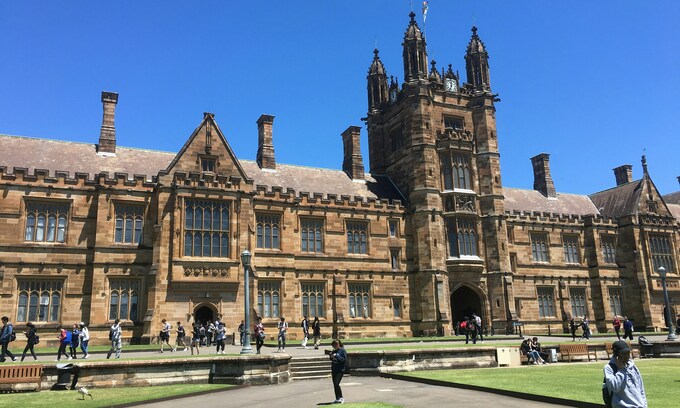
Thai students will not be affected by Australia's latest visa restrictions banning most international students from bringing family members with them, Australian authorities have confirmed, as Canberra seeks to deepen cooperation with Thailand in trade, migration and regional security. Matt Thistlethwaite, Australia's Assistant Minister for Foreign Affairs and Trade and Assistant Minister for Immigration, made the announcement last week during a two-day official visit to Thailand.Speaking in Bangkok on Sept. 23, Thistlethwaite said Thailand had been excluded from several new migration restrictions because of the close ties between the two countries, the Bangkok Post reported.He said Thai students would not be subject to the new restrictions, with Thailand among ASEAN and Pacific countries exempted from several of the measures."There's no restrictions on Thai people coming to study in Australia, bringing their family members as well. We're very welcoming of Thai students coming to Australia to study at our universities and technical colleges, and it's been a growing relationship that we're happy to foster into the future," he said, as seen in a transcript published on the Department of Foreign Affairs and Trade's website."We're seeing more and more Thai students studying at Australian universities, and the Thai diaspora in Australia is about 80,000, and we have the third largest Thai diaspora of any country in the world, and that's something that Australia is very, very proud of, and we want to encourage more of, and the Free Trade Agreement helps us to do that," he said. The Quadrangle Clocktower at the University of Sydney in Camperdown, New South Wales, Australia, in 2020. Photo by Unsplash Australia recently introduced tightening rules for international students.Australian Home Affairs Minister Tony Burke announced on Sept. 17 new measures that will limit accompanying family members for most student and post-study work visa holders, crack down on "visa hopping" by tightening rules on switching courses and visa types to extend stays, apply "No Further Stay" conditions to visitor visas, and prioritize visa applications for skilled workers in industries with labor shortages.The measures form part of Canberra's efforts to bring net overseas migration down from about 290,000 to 225,000 by 2027-28.Vietnamese students may also be spared from the new restrictionsBrian Quang Dinh, director of consultancy Edunetwork Australia, told Vietnam News Agency in Sydney the key message from the latest changes was that Australia still needs international students and skilled workers but wants to ensure temporary visas are used for their intended purposes.He said Burke's announcement specified that ASEAN countries and Pacific island nations, along with certain groups of students such as PhD candidates, would be exempt from some of the new restrictions.Vietnamese passport holders are currently among those allowed to continue bringing family members, subject to applicable conditions, he said.The restrictions come after the hard-right One Nation party, which has been surging in recent polls, said it would slash the number of temporary migrants by 750,000 over three years to give Australians "breathing space," Reuters reported.One Nation, which describes its approach as "Australia first" and whose policies have drawn comparisons to those of U.S. President Donald Trump, said it would aim to restrict net overseas migration to 130,000 after the initial three years, with the program expected to be reviewed annually.Australia’s migration intake, driven largely by international students, backpackers and temporary skilled workers, surged after the country reopened its borders in February 2022 following nearly two years of Covid-19 restrictions, according to Reuters.
Thai students spared as Australia bans international students from bringing family
Full Article
Original Source
Read the full article at E →KhanList aggregates and links to publicly available news content. We do not host full articles from third-party sources. Always verify important information with original sources.